
To prevent costly errors with cash counting machines, guarantee proper loading by neatly stacking bills and handling them gently. Regularly calibrate and clean your machine following manufacturer guidelines to keep sensors accurate. Place the machine on a stable surface in a well-lit area and train staff on correct operation. Consistently perform quality checks to catch issues early. Staying attentive to maintenance and proper use allows you to maximize accuracy—discover more tips for flawless cash handling as you continue.
Key Takeaways
- Properly load bills in small stacks and handle them gently to prevent jams and misalignments.
- Regularly clean sensors and rollers, and perform calibration checks to maintain machine accuracy.
- Place the machine on a stable, level surface in a well-lit area to ensure consistent readings.
- Train staff thoroughly on correct loading, handling, and troubleshooting procedures to reduce human errors.
- Schedule routine maintenance and updates to avoid mechanical issues and ensure optimal machine performance.
Why Cash Counting Accuracy Matters and How Your Machine Helps
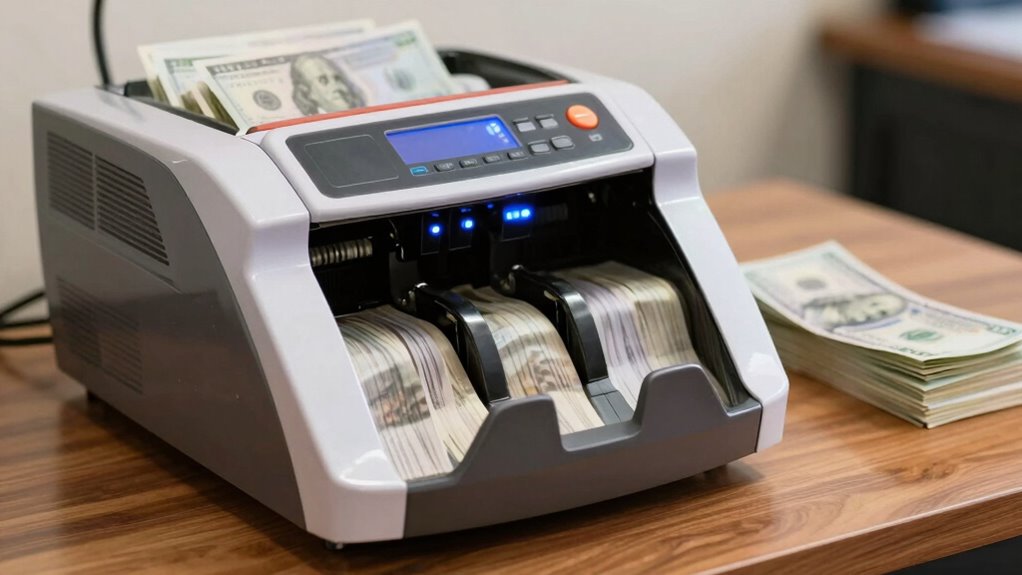
Accurate cash counting is essential for maintaining financial integrity and avoiding costly errors. When your cash totals are precise, you prevent discrepancies that could lead to financial losses or audit issues. Cash accuracy ensures you can trust your financial records and make informed decisions. Your cash counting machine plays a crucial role in error prevention by providing consistent, reliable counts quickly and efficiently. These machines reduce manual handling, minimizing the chances of miscounts caused by human error. Proper maintenance practices help ensure that your equipment continues to operate at peak accuracy levels, reducing downtime and costly repairs. Regular calibration and following manufacturer guidelines are vital to maintaining machine performance and accuracy over time. Additionally, keeping your equipment free from dust and debris supports optimal machine function and reduces the risk of malfunctions. Implementing routine inspections can detect potential issues early, preventing inaccuracies before they impact your cash counts. By automating the process, you gain confidence in your cash totals, streamline your operations, and reduce the risk of theft or fraud. Proper filtration and maintenance of your equipment ensures sustained accuracy and longevity. Ultimately, investing in a quality cash counting machine helps you maintain accuracy and safeguard your business’s financial health.
Common Cash Counting Errors and How to Spot Them
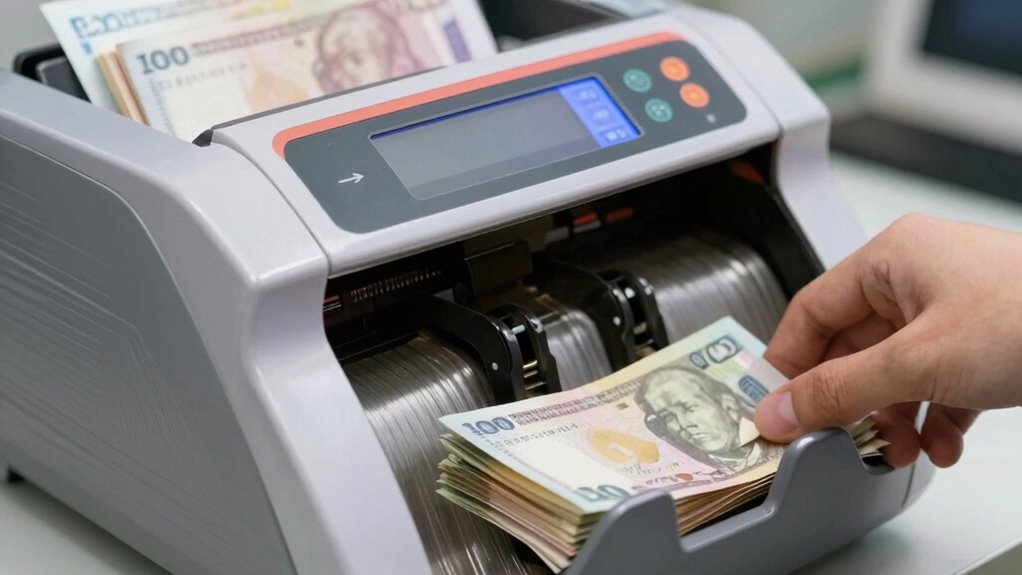
Even the best cash counting machines can encounter errors if not monitored properly. Common issues include miscounts caused by counterfeit bills, machine malfunctions, or debris jamming the sensors. To spot errors, watch for these signs:
Even top cash counters can error without proper monitoring—look for miscounts, jams, or unusual noises.
- Inconsistent totals between counts or sudden drops, indicating potential counterfeit bills.
- Repeated error messages or alarms from the machine, often due to malfunctions.
- Bills that appear misaligned or stuck, which can lead to inaccurate counts.
- Unusual noise or irregular operation, hinting at mechanical issues or debris interference.
- Regular maintenance and cleaning help prevent machine malfunctions and ensure accurate counting. Additionally, understanding cash handling procedures can reduce the likelihood of errors during the counting process. Staying aware of quality control measures can further enhance accuracy and prevent costly mistakes. Incorporating proper training for operators can also significantly minimize human errors that might impact the counting accuracy. Moreover, employing advanced sensors can detect counterfeit bills more reliably, further reducing errors.
How to Properly Load and Handle Your Cash Counter for Best Results
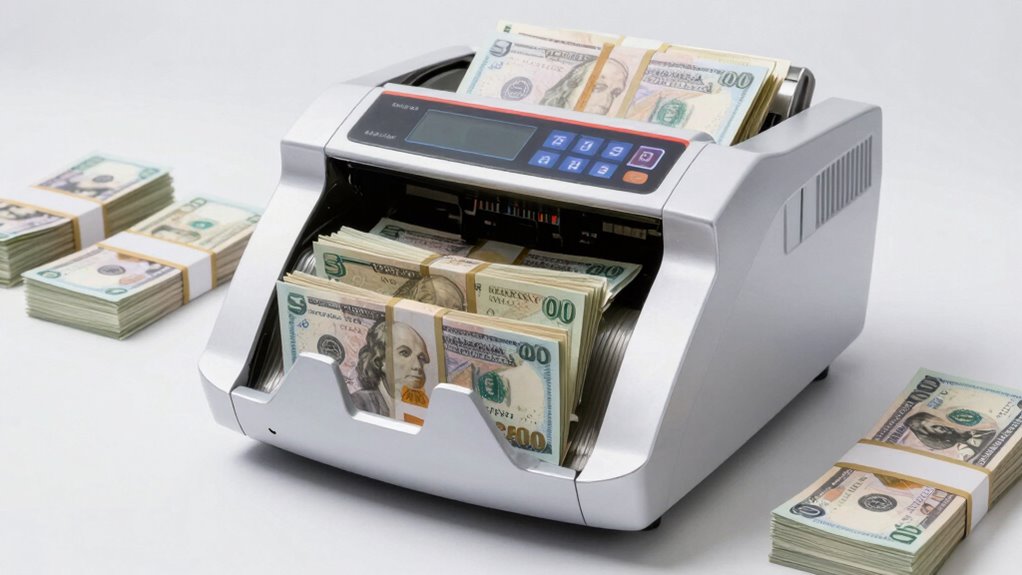
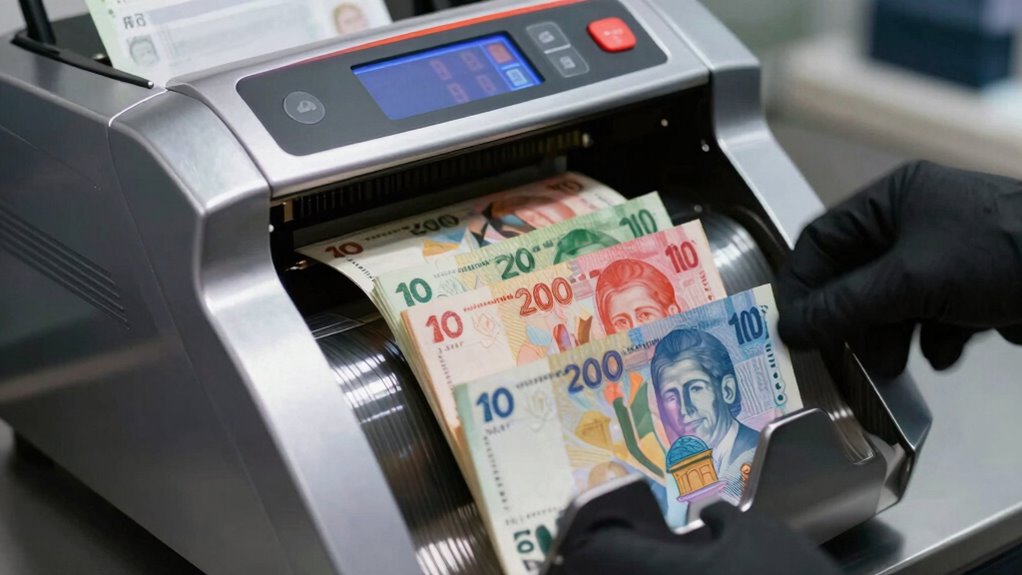
To guarantee accurate counting, you need to load notes correctly, making sure they’re aligned and free of folds. Handle bills gently to prevent damage that could cause errors or jams. Regularly cleaning your machine keeps it running smoothly and extends its lifespan. Additionally, understanding the ethical implications of cash handling can help you maintain integrity and transparency during transactions. Incorporating proper maintenance practices can further enhance the accuracy and longevity of your cash counting machines. Paying attention to machine calibration ensures consistent performance and reduces the risk of miscounts over time. Proper calibration techniques are essential for maintaining measurement accuracy, which directly impacts overall counting reliability. Recognizing the importance of conducive environmental conditions such as proper lighting and stable temperature can also improve your machine’s performance and accuracy.
Load Notes Correctly
Properly loading notes into your cash counting machine is essential for accurate and efficient counting. Proper note organization helps prevent jams and errors. To guarantee the best results, follow these steps:
- Arrange notes neatly, aligning edges and avoiding folds.
- Load notes in small stacks to prevent overloading.
- Keep notes flat and free of wrinkles or tears.
- Insert notes smoothly into the machine, ensuring they’re properly aligned.
Handle Bills Gently
Handling bills gently is essential for maintaining their condition and ensuring your cash counter operates smoothly. When handling bills, avoid rough or excessive force, as this can cause tears, creases, or other damage that hampers accurate counting. Proper handling helps preserve the bill’s quality, which is especially important if the cash will be circulated again. Always pick up bills carefully, using both hands when possible, and avoid bending or folding them unnecessarily. When loading bills into the machine, do so smoothly and steadily to prevent jams or misfeeds. Using proper bill orientation during loading can further improve accuracy and reduce machine errors. This careful handling promotes bill preservation and reduces errors, making your counting process more efficient. Remember, gentle handling isn’t just about protecting bills; it also extends the lifespan of your cash counter. Additionally, understanding affiliate disclosure policies can help you choose the right equipment and accessories to support your cash handling needs. For optimal results, consider the durability of bills over time and how gentle handling can help maintain their integrity. Practicing correct handling techniques can also reduce the likelihood of costly machine repairs caused by mishandling.
Regularly Clean Machine
Regular cleaning of your cash counter is essential to keep it functioning efficiently and accurately. Dust, dirt, and debris can interfere with counterfeit detection sensors and cause miscounts. To maintain ideal performance, follow these steps:
- Turn off and unplug your machine before cleaning.
- Use a soft, lint-free cloth to wipe down the exterior and the bill path.
- Gently clean sensors and counterfeit detection components with compressed air or a soft brush.
- Regularly update the software to ensure the latest counterfeit detection features and accuracy improvements are in place.
- Proper handling and machine maintenance can extend the lifespan of your cash counter and improve its overall reliability. Additionally, consistent sensor calibration is vital for maintaining detection accuracy over time.
- Incorporate routine preventive maintenance checks to identify and address potential issues early, ensuring continuous optimal performance.
Tips for Calibrating and Maintaining Your Cash Counting Machine
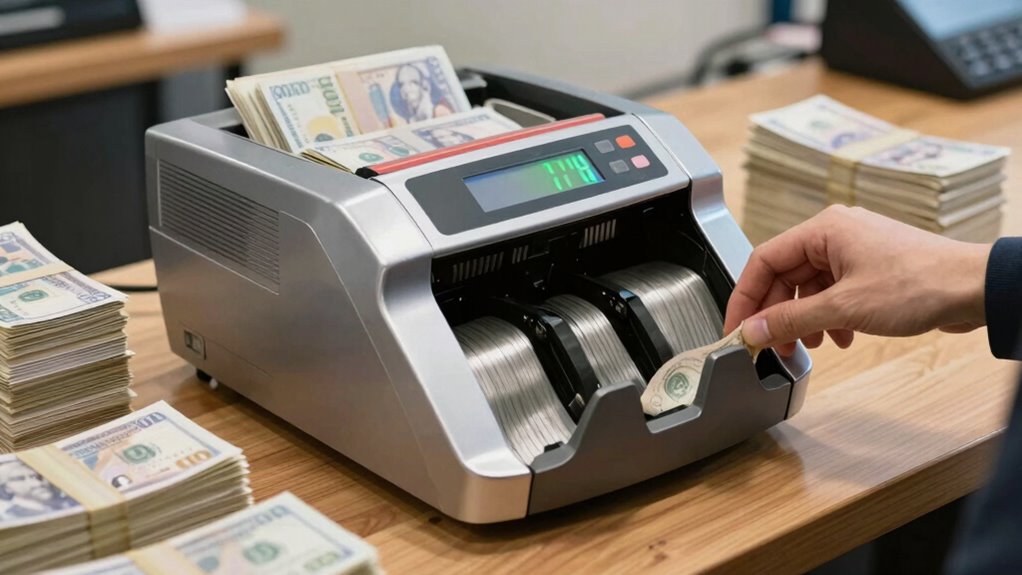
To keep your cash counting machine running smoothly, it’s crucial to perform regular calibration checks. You should also follow proper cleaning procedures and stick to scheduled maintenance routines. These steps help guarantee accuracy, extend the machine’s lifespan, and prevent costly breakdowns.
Regular Calibration Checks
Making certain your cash counting machine remains accurate requires consistent calibration checks. Regularly verifying sensor accuracy helps prevent errors and maintains peak performance. Set appropriate calibration intervals based on usage frequency; more active machines need more frequent checks. During calibration, confirm the sensors respond correctly to known currency samples. This process ensures your machine’s readings stay precise over time. Ignoring calibration can lead to miscounts and costly mistakes, especially during high-volume counting. The key steps include:
- Schedule calibration based on manufacturer recommendations and usage.
- Use standard currency samples for testing sensor accuracy.
- Document calibration dates and results for accountability.
- Adjust calibration settings if sensor inaccuracies are detected.
Proper Cleaning Procedures
Keeping your cash counting machine clean is essential for maintaining its accuracy and longevity. Dust accumulation can interfere with sensors and moving parts, causing errors. Regularly wipe the exterior and internal components with a soft cloth. Use compressed air to remove dust from hard-to-reach areas. Proper lubricant application on moving parts reduces friction and wear, ensuring smooth operation. Be cautious not to over-lubricate, as excess can attract dust and debris.
| Cleaning Step | Tools Needed | Frequency |
|---|---|---|
| Remove dust and debris | Soft cloth, compressed air | Weekly or after heavy use |
| Apply lubricant | Precision oil or lubricant | Every 1-3 months |
| Wipe sensors and rollers | Lint-free cloth | Monthly |
Follow these steps to keep your machine performing accurately.
Scheduled Maintenance Routines
Regularly scheduled maintenance is essential for keeping your cash counting machine accurate and reliable. Consistent upkeep ensures peak performance, reduces errors, and enhances cash handling security. To maintain peak operation, follow these routines:
- Perform regular machine firmware updates to improve functionality and address security vulnerabilities.
- Calibrate the machine periodically to ensure counting accuracy, especially after firmware updates or repairs.
- Clean and inspect sensors and rollers to prevent jams and miscounts.
- Check for software alerts or error messages and address them promptly to avoid costly downtime.
Adhering to these maintenance routines keeps your machine calibrated, secure against tampering, and ready for accurate, efficient cash handling every day.
How to Set Up Your Cash Counter for Peak Performance
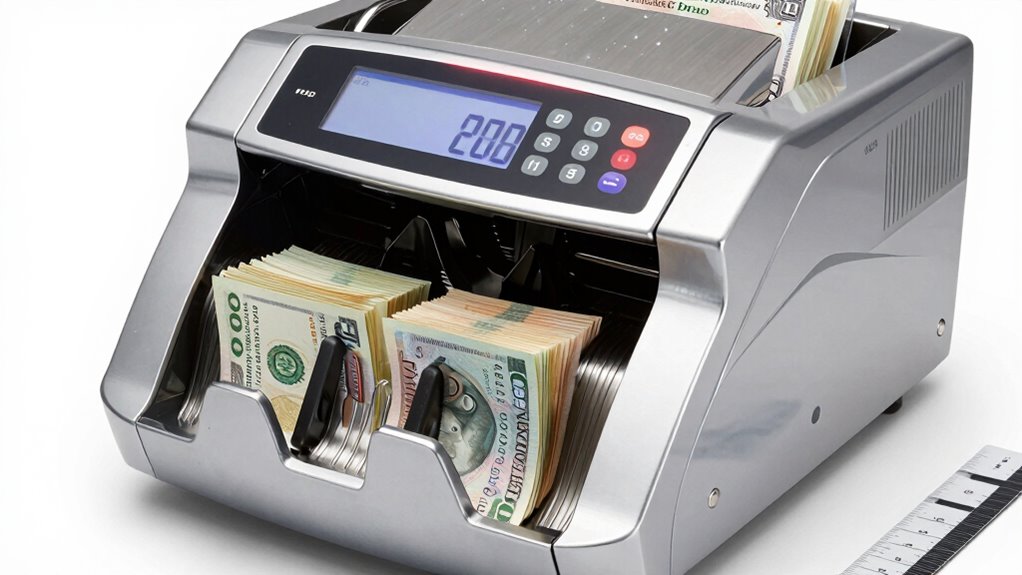
To get the most accurate and efficient results from your cash counter, start by carefully placing the machine on a stable, level surface in a well-lit area. Proper cash counter setup guarantees consistent performance and reduces errors. Make sure the surface is flat to prevent misreads caused by uneven positioning. Check that the machine is close to power sources and that cords are organized to avoid interference during operation. Adjust the settings according to your currency type and denomination size, following the manufacturer’s instructions. Regularly verify that the hopper and sensors are clean and free of debris. These peak performance tips help optimize your cash counter’s accuracy and longevity. A well-prepared setup minimizes downtime and maximizes counting speed, making your cash handling more reliable.
Training Staff to Use Cash Counters Correctly and Avoid Mistakes
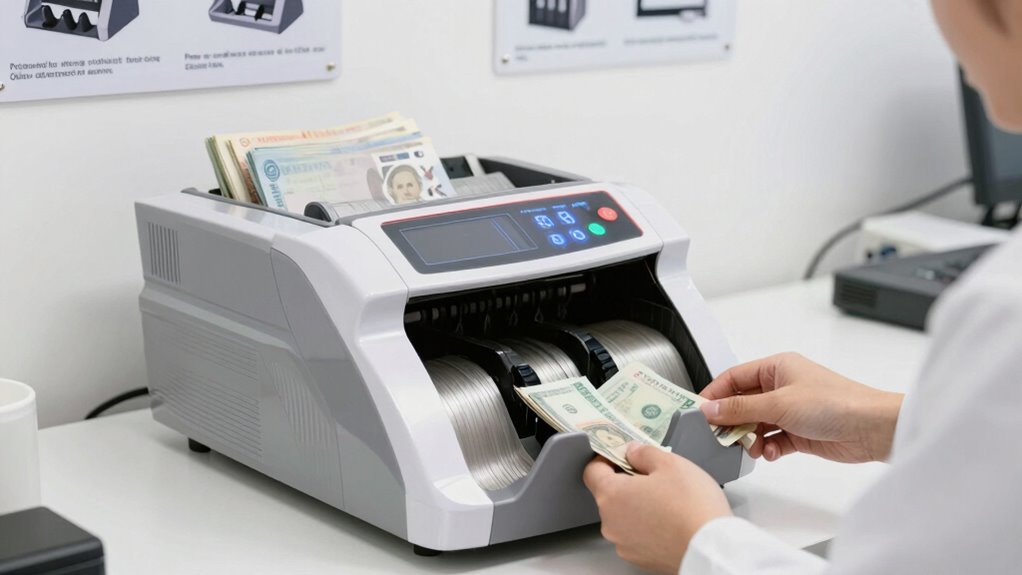
Training staff effectively is essential to guarantee they operate cash counters accurately and avoid costly mistakes. Proper employee training ensures your team handles cash efficiently and reduces errors. Focus on clear instructions and hands-on practice to build confidence in cash handling procedures.
Effective staff training ensures accurate cash handling and minimizes costly errors.
Here are four key tips:
- Demonstrate correct cash handling techniques before allowing independent operation.
- Emphasize the importance of double-checking amounts during counting.
- Provide regular refresher sessions to reinforce proper use.
- Encourage questions and feedback to identify and correct mistakes early.
How to Perform Quality Checks to Keep Cash Counting Accurate
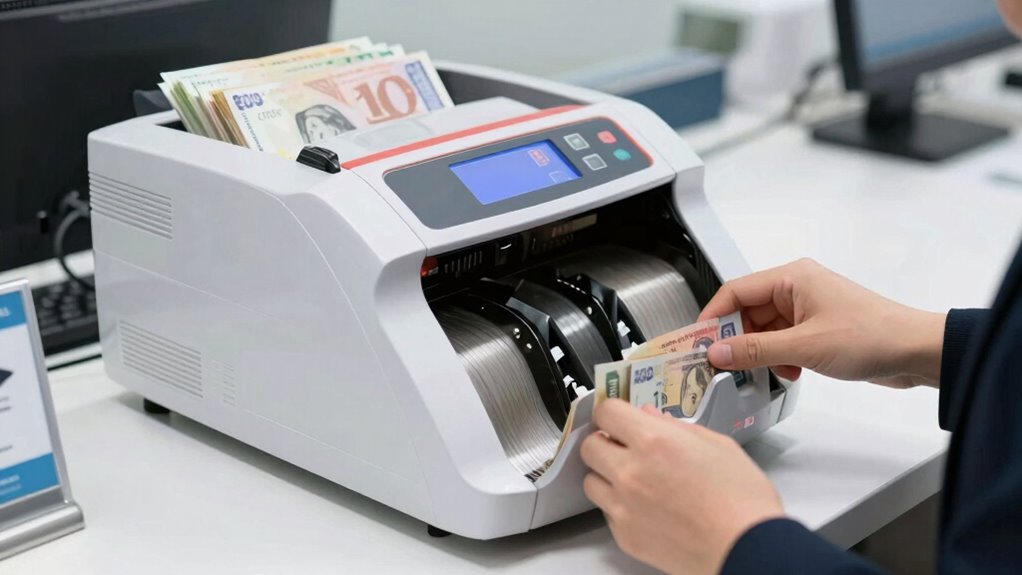
After training staff on proper cash handling techniques, it’s important to implement quality checks that make certain every count remains accurate. Regular quality assurance helps catch errors early and ensures the cash counting process stays reliable. Start by double-checking a sample of counts periodically to verify accuracy, and compare machine results with manual counts when necessary. Use error prevention protocols, such as inspecting bills for damage or misalignment before counting, to reduce mistakes. Maintain detailed records of counts and discrepancies to identify patterns that could indicate issues. Consistent quality checks establish accountability and reinforce correct procedures. By actively monitoring and verifying cash counts, you minimize errors and uphold the integrity of your cash handling system, ultimately saving time and reducing costly mistakes.
Frequently Asked Questions
How Often Should I Update My Cash Counting Machine’s Software?
You should update your cash counting machine’s software as soon as new updates become available. Regular software updates ensure you get the latest features and security patches, which protect against potential vulnerabilities and improve accuracy. Check for updates weekly or monthly, depending on your usage. Don’t delay installing security patches; they’re vital for preventing errors and maintaining the integrity of your cash counting process.
Can Counterfeit Bills Affect the Accuracy of My Cash Counter?
Counterfeit bills can affect your cash counter’s accuracy by causing misreads or errors during detection. By using a machine with advanced counterfeit detection features, you’ll improve counterfeit prevention and guarantee accurate counting. Regularly updating your machine’s software enhances its ability to identify counterfeit bills effectively. Always stay vigilant and inspect suspicious notes manually to prevent counterfeit bills from skewing your cash counts and maintaining overall accuracy.
What Is the Ideal Environment for Operating a Cash Counting Machine?
You should operate your cash counting machine in a clean, well-organized workspace with good ambient lighting. Keep the area free of dust, dirt, and clutter to prevent jams and misreads. Proper workspace hygiene guarantees accuracy and prolongs the machine’s lifespan. Bright, even lighting helps you see bills clearly, reducing errors. Avoid direct sunlight or shadows that could interfere with the machine’s sensors, ensuring smooth operation and reliable counting.
Are There Specific Storage Practices to Prolong My Cash Counter’s Lifespan?
Think of your cash counter as a delicate garden needing careful tending. Store bills properly in a cool, dry place to prevent damage, and keep your machine in a dust-free environment to avoid clogging. Regularly follow a maintenance schedule to keep it humming smoothly. Proper bill storage and routine checks extend your cash counter’s life, ensuring it stays reliable when you need it most.
How Do I Troubleshoot Common Mechanical Issues With My Cash Counting Device?
When troubleshooting your cash counting device, start by checking the machine calibration to guarantee accurate counting. If you encounter a jam, carefully clear it by turning off the machine and gently removing any stuck bills. Regularly clean the rollers and sensors to prevent future jams. If problems persist, consult the user manual or contact support, as mechanical issues often require professional repair or calibration to restore proper function.
Conclusion
Keeping your cash counting machine accurate isn’t just about convenience—it’s essential for your business’s bottom line. Did you know that manual counting errors can cost businesses up to 10% of their cash? By following proper handling, calibration, and staff training tips, you can reduce costly mistakes and guarantee precision every time. Stay vigilant with quality checks, and your machine will serve you reliably, saving time and money in the long run.