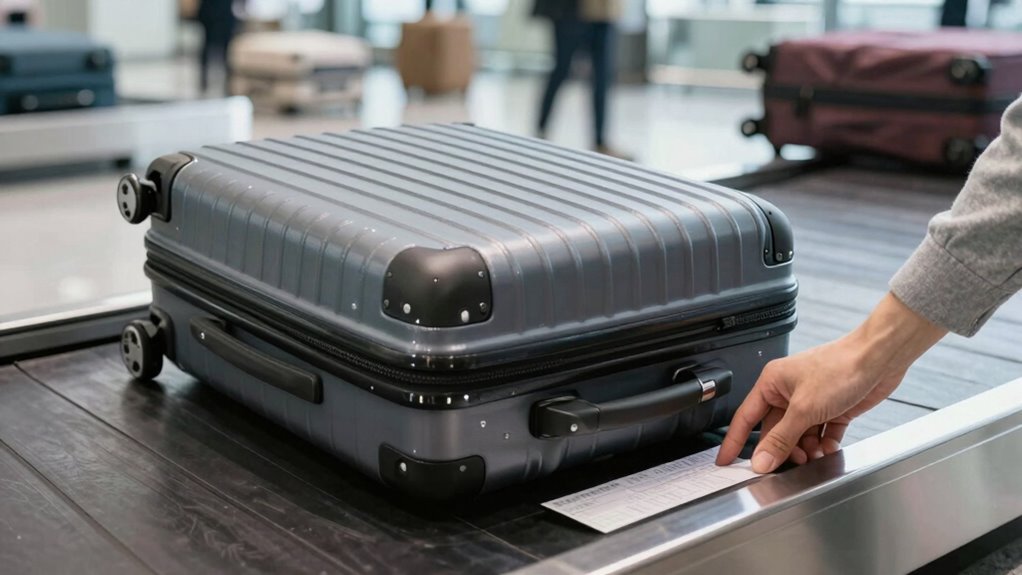
To avoid gate checks, make sure your carry-on fits within airline size limits, typically around 22 x 14 x 9 inches. Measure and weigh your bag before heading to the airport, and choose lightweight, durable luggage with external size guides. Pack efficiently by rolling clothes, using compression bags, and organizing essentials for quick access. Staying within these guidelines can help you breeze through boarding—keep these tips in mind if you want to learn more about smart packing strategies.
Key Takeaways
- Measure your luggage to ensure it stays within the standard 22 x 14 x 9-inch size limit.
- Use packing cubes and compression bags to maximize space and prevent overpacking.
- Pack versatile, lightweight clothing to reduce bulk and keep your bag within size and weight restrictions.
- Regularly check your luggage’s size and weight during packing to avoid surprises at the gate.
- Choose durable, expandable bags with external size indicators for quick compliance verification.
Why You Should Know Carry-On Size Limits
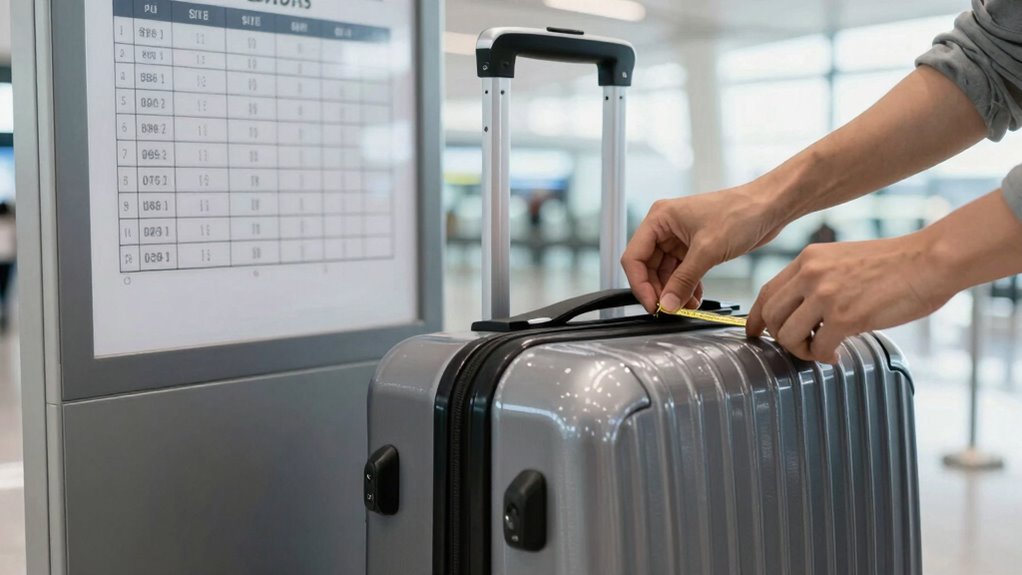
Knowing the carry-on size limits is essential because it helps you avoid unexpected fees, delays, and the hassle of checked baggage. When selecting your bag, consider luggage durability to ensure it withstands rough handling and lasts through your trip. Staying within size limits also helps you meet weight restrictions, preventing overweight baggage fees. If your luggage is too large or heavy, airlines may force you to check it at the gate, adding time and stress to your journey. By understanding these rules, you can choose a sturdy, lightweight carry-on that fits perfectly and complies with airline regulations. Additionally, knowing the dimensions and volume of your luggage can help you optimize packing and maximize space efficiency. This proactive approach, along with cookie management practices, keeps your travel smooth, saves money, and ensures your belongings remain secure throughout your trip. Being aware of airline policies and how they relate to performance parts like flywheels and engine upgrades can further help you avoid surprises and plan effectively. Properly understanding luggage restrictions can also contribute to a more enjoyable and hassle-free travel experience.
How to Find Your Airline’s Cabin Size Rules
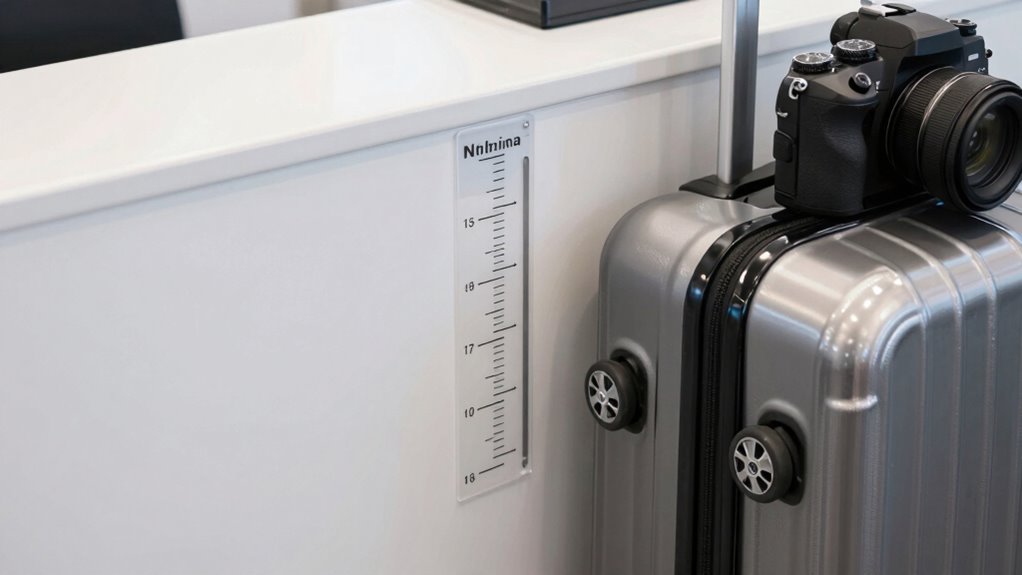
To find your airline’s cabin size rules, start by visiting the airline’s official website or app, where they typically list baggage policies under the “Travel Information” or “Baggage” sections. Look for specific dimensions allowed for carry-on luggage, as these vary between airlines. Some airlines specify maximum luggage weight, which can affect how much you pack without risking excess fees or delays at airport security. Checking these guidelines ahead of time helps you avoid surprises and gate checks. Many airlines also provide detailed diagrams or photos of acceptable carry-on sizes. Staying within the size limits ensures your bag easily fits in the overhead bin or under the seat, making airport security smoother and quicker. Being aware of carry-on size regulations can also help you organize your packing list efficiently and avoid last-minute surprises. Additionally, reviewing airport security procedures can help you prepare your belongings accordingly. It’s also helpful to familiarize yourself with traditional Indonesian decor masks if you plan to bring cultural artifacts, ensuring they meet airline restrictions. Researching latest airline updates can provide you with the most current policies and prevent last-minute issues before your trip. Always verify the latest rules before your trip to stay compliant.
How to Pack Efficiently Within Size Restrictions
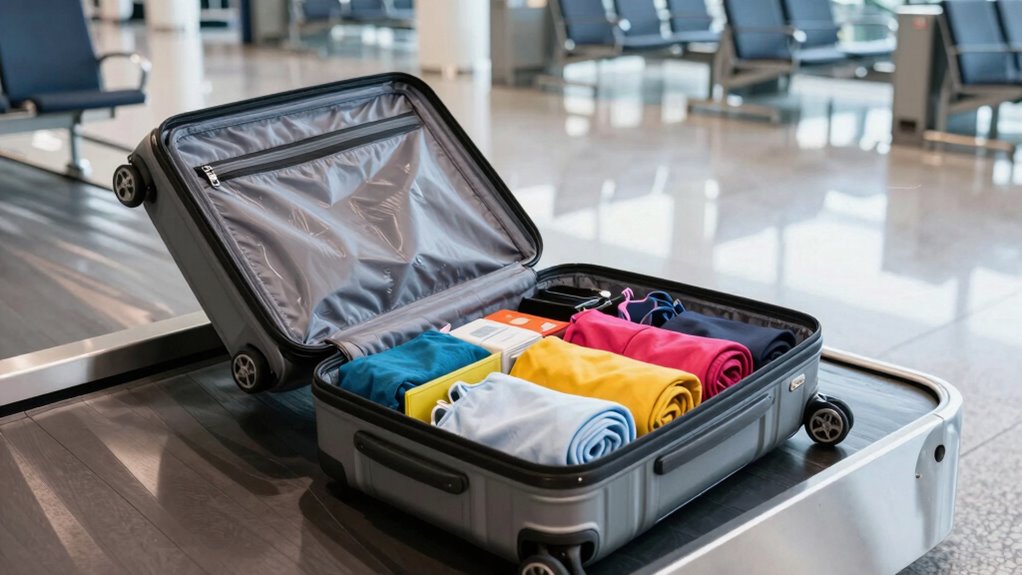
To pack efficiently within size restrictions, start by using compact packing techniques that save space. Focus on prioritizing essential items so you don’t overpack, and use containers to organize everything neatly. These strategies help you stay within your carry-on limits while keeping what you need easily accessible. For optimal equipment, consider professional-grade gear that combines portability with high performance. Additionally, selecting climate-specific clothing ensures you pack only what’s necessary for your destination’s weather, reducing bulk and weight. Implementing smart packing strategies that incorporate knowledge of air quality benefits can further maximize space and streamline your travel experience.
Use Compact Packing Techniques
Maximizing space within your carry-on requires smart packing strategies that make the most of every inch. Clothing compression is a key technique; roll your clothes tightly or use compression bags to reduce bulk and save space. When packing shoes, fill them with smaller items like socks or chargers to utilize every nook and cranny. Place bulky items at the bottom of your bag and layer lighter, softer clothing on top to prevent wrinkles. Keep your essentials layered and compact, avoiding unnecessary extras. Use packing cubes to organize and compress grouped items, making everything easier to fit. Additionally, understanding space optimization techniques can help you further enhance your packing efficiency. Employing compact packing methods allows you to maximize your limited space without sacrificing essentials. These compact packing techniques ensure you stay within size restrictions while maximizing your packing efficiency. With a little strategy, you can fit more into your carry-on without sacrificing essentials.
Prioritize Essential Items
Focusing on your essential items guarantees you stay within carry-on size limits without sacrificing what really matters. Start by selecting versatile clothing that can be mixed and matched, then use clothing compression techniques to save space. Prioritize lightweight, multipurpose travel accessories like a compact charger, universal adapter, or foldable water bottle. Avoid packing unnecessary extras that won’t get much use; instead, focus on items that serve multiple functions. Think carefully about what you’ll need daily and cut any non-essential clothing or accessories. By concentrating on these essentials, you’ll keep your bag within size restrictions while still being prepared. This strategic approach ensures you won’t have to check your bag at the gate and can travel comfortably and efficiently.
Maximize Space With Containers
Using containers effectively can dramatically increase the space in your carry-on. Modular containers help organize items efficiently, making the most of limited space. Vacuum seal bags are excellent for compressing clothes and bulkier items, saving valuable room. Opt for stackable containers to keep your belongings neat and accessible, minimizing wasted space. Additionally, electric bikes can be compactly stored using specialized transport cases, ensuring safe and efficient travel. Employing size restrictions awareness ensures your packing remains within airline guidelines, avoiding potential gate checks. Understanding space-saving techniques can further optimize your packing efficiency, making every inch count. Being mindful of weight limits can also prevent last-minute surprises at the gate, especially when combining container organization with weight management strategies.
Carry-On Size Comparison: Major Airlines’ Limits
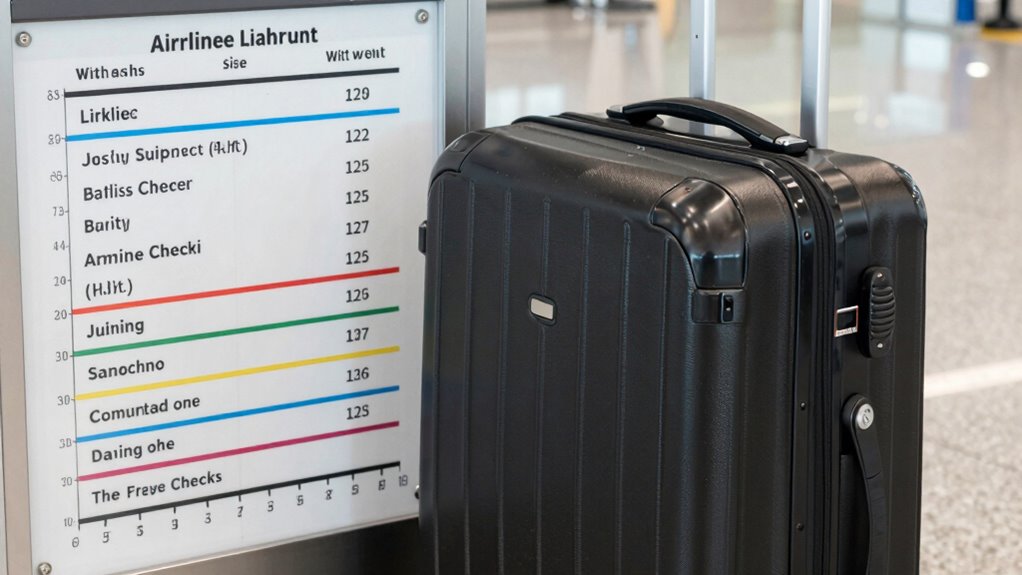
You’ll notice that most major airlines set similar size limits for carry-on bags, but there are some differences to watch out for. Some airlines allow slightly larger bags, while others have stricter restrictions to prevent overhead congestion. Knowing these variations helps you pack within the rules and avoid surprises at the gate. Being aware of recovery techniques like foam rolling can also help you stay comfortable during your travels. Additionally, understanding airline policies and their specific carry-on size restrictions can further streamline your boarding process.
Standard Size Limits
Major airlines typically set their carry-on size limits around 22 x 14 x 9 inches, including handles and wheels. These measurements are standard across many carriers, making it easier for you to pack within airline expectations. While size is vital, luggage weight is equally important, as airport regulations often specify maximum weight limits for carry-ons—usually between 15 to 22 pounds. Staying within both size and weight limits helps you avoid extra fees or gate checks. Be aware that each airline may have slight variations, but adhering to these standard limits ensures smoother boarding. To stay compliant, measure your luggage carefully before packing and weigh it to confirm it meets regulations, reducing surprises at the gate.
Variations Among Airlines
While many airlines follow the standard size limit of 22 x 14 x 9 inches for carry-ons, there are notable differences among carriers that can catch you off guard. Some airlines, like Southwest and Alaska, stick close to this standard, while others, such as Ryanair and EasyJet, enforce stricter limits or weight restrictions. These variations affect your packing strategy and may incur baggage fees if exceeded. Here’s a quick comparison:
| Airline | Maximum Dimensions | Baggage Fees |
|---|---|---|
| American | 22 x 14 x 9 inches | Fees vary by route |
| Delta | 22 x 14 x 9 inches | No fee if within limits |
| Ryanair | 20 x 16 x 8 inches | High fee for oversize |
| Lufthansa | 22 x 16 x 9 inches | Usually included |
| EasyJet | 21.7 x 15.7 x 7 inches | Charges for larger bags |
Knowing these airline policies helps you avoid surprises and extra baggage fees.
Common Packing Mistakes That Lead to Gate Checks
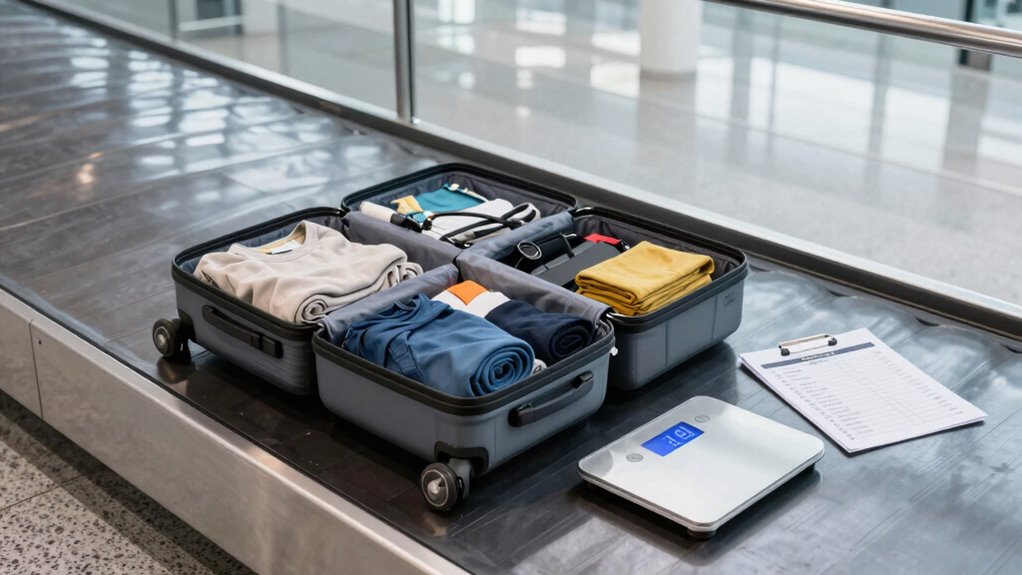
One common packing mistake that often leads to gate checks is exceeding the airline’s carry-on size limits. When your luggage is too bulky, it raises suspicion and can delay security screening. Overpacking also increases luggage weight, which might trigger additional fees or make it harder to lift your bag into overhead compartments. Remember, security screening officers quickly assess bags for compliance; if your luggage appears too heavy or oversized, they may require you to check it at the gate. To avoid this, pack only essentials and stay within the specified size limits. Keep your belongings organized and lightweight, making it easier to maneuver through security and ensuring your carry-on remains gate-friendly. Proper packing prevents delays and hassle at the gate.
Best Bags and Accessories for Staying Within Size Limits
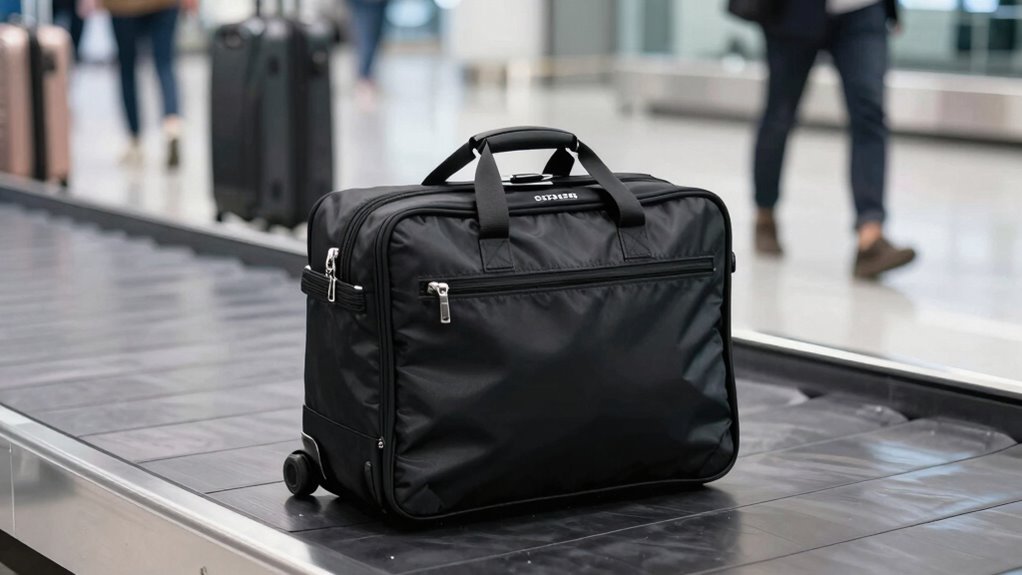
Choosing the right bag can make a significant difference in staying within carry-on size limits. Look for luggage with high durability, made from sturdy materials like polycarbonate or ballistic nylon, guaranteeing it withstands rough handling. Opt for compact, lightweight models with smooth-rolling wheels and a telescoping handle for easy maneuvering. Consider travel accessories like compression packing cubes or garment folders to maximize space and keep your belongings organized. These accessories help you efficiently pack within size constraints, reducing the chance of overpacking. Additionally, choose bags with external dimensions that meet airline requirements and have built-in size indicators for quick checks. Investing in durable luggage and smart accessories ensures your carry-on stays within limits while protecting your belongings throughout the journey.
What To Do If Your Carry-On Is Slightly Over the Limit?
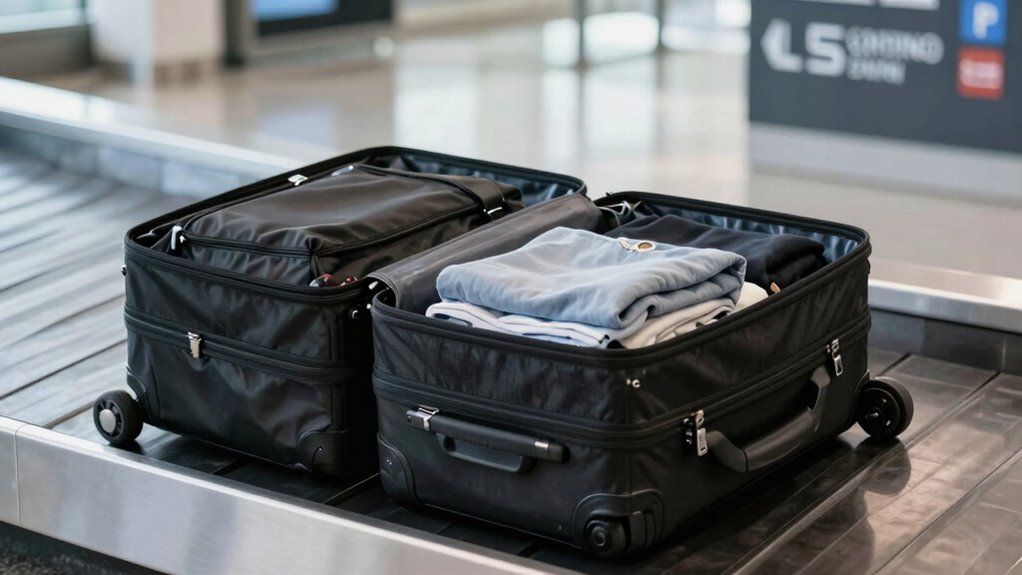
If your carry-on is just slightly over the size limit, don’t panic—there are simple ways to handle the situation. First, avoid overweight penalties by quickly repositioning items or using packing hacks like compressing clothing or rearranging contents. Flatten bulky items and move heavier items to your checked luggage if possible. If you’re close to the limit, consider shifting items from the exterior pockets into the main compartment to save space. Some airlines are lenient with slight oversize bags, so politely explaining your situation at the gate may help. If you’re consistently over the limit, invest in a bag with flexible or expandable features. Staying organized and aware of weight and size restrictions keeps your carry-on within limits and avoids costly penalties or gate checks.
Final Tips for Mastering Carry-On Packing
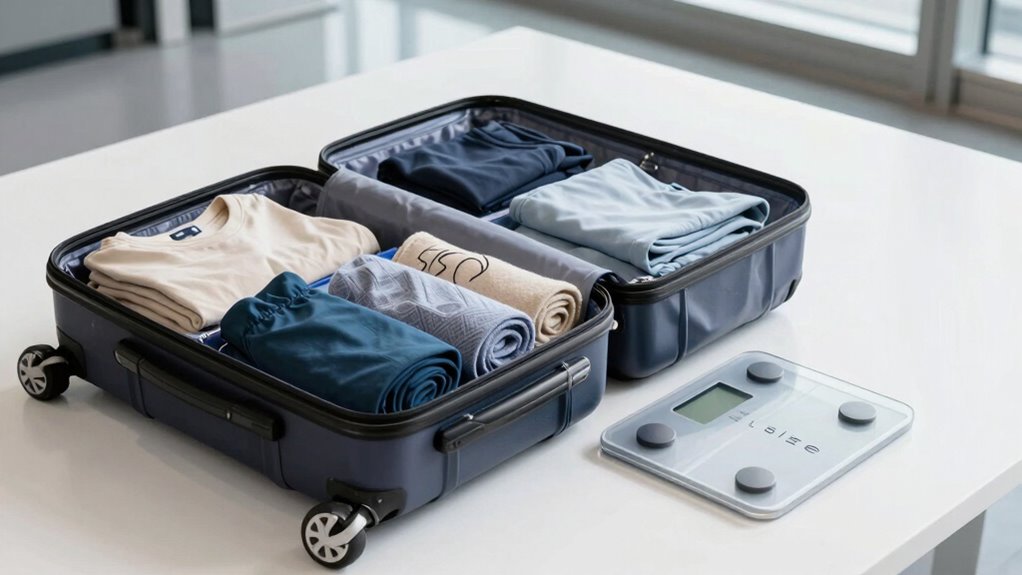
Mastering your carry-on packing starts with smart planning and efficient organization. To maximize space and avoid gate checks, focus on these packing hacks:
- Use travel accessories like compression bags to save room and keep things organized.
- Choose versatile clothing pieces that can mix and match, reducing the number of items needed.
- Pack essential items at the top or in external compartments for quick access, avoiding rummaging through your bag.
Frequently Asked Questions
Can I Bring a Personal Item Separate From My Carry-On?
Yes, you can bring a personal item separate from your carry-on. Personal item regulations typically allow a smaller bag like a purse, laptop bag, or backpack, which fits under the seat. While the carry-on must meet size restrictions to avoid gate checks, your personal item is considered separately. Make sure your personal item complies with airline rules for size and weight, so you can efficiently organize your belongings and avoid delays at the gate.
Are There Different Size Rules for International Versus Domestic Flights?
Yes, there are often different baggage policies for international versus domestic flights. International flights typically have stricter carry-on dimensions, usually around 22 x 14 x 9 inches, but it varies by airline. Always verify your airline’s carry-on dimensions and baggage policies before packing. You don’t want to risk gate checks or additional fees, so confirming these details helps ensure your carry-on fits within the allowed size for your flight.
What Materials Are Best for Maximizing Packing Space Within Size Limits?
You should use lightweight materials like nylon or polyester for your packing. Compression techniques, such as vacuum bags or packing cubes, help maximize space within size limits. Roll clothes instead of folding to save room and reduce wrinkles. Opt for multi-purpose items and minimal toiletries. These strategies make packing more efficient, ensuring you stay within carry-on size rules and avoid gate checks.
Do Size Restrictions Differ for Different Cabin Classes or Fare Types?
Think of your carry-on as a VIP ticket—some airline policies, like for premium cabins or frequent flyer tiers, offer more generous size limits. You’ll find airline policy variations that accommodate larger bags for elite travelers, giving you extra space. So, if you’re flying in a higher cabin class or have frequent flyer benefits, you might enjoy relaxed size restrictions, making packing easier and avoiding those dreaded gate checks.
How Early Should I Arrive to Ensure My Carry-On Meets Size Requirements?
You should arrive at least 2 hours before your flight to guarantee your carry-on meets size requirements. When you check in at the counters or go through security lines, you’ll have enough time to verify your bag’s size and make adjustments if needed. Arriving early helps you avoid last-minute stress, ensures smooth security screening, and gives you time to address any carry-on issues before boarding.
Conclusion
Mastering your carry-on size limits means balancing precision with flexibility. While strict adherence prevents gate checks, a touch of ingenuity—like clever packing tricks—offers freedom within constraints. It’s about knowing the rules, yet trusting your judgment to adapt. In this dance of size and space, your ability to navigate the fine line transforms travel from a hassle into a seamless experience. Embrace the challenge, and your journey will become as effortless as it is efficient.