Car-to-X communication lets your vehicle talk to others and the road infrastructure, creating a smart network that boosts safety and efficiency. Your car exchanges real-time info about traffic, hazards, and even nearby emergency vehicles, enhancing decision-making and coordination at intersections. This technology minimizes congestion and accident risks while supporting eco-friendly solutions through optimized traffic flow. Curious about how this can transform your driving experience? There’s plenty more to explore in the world of connected vehicles.
Key Takeaways
- Car-to-X communication enables vehicles to exchange information with each other and surrounding infrastructure, enhancing safety and driving efficiency.
- Vehicles can interact with traffic signals and signage, providing early warnings for hazards and improving intersection safety.
- This technology supports automated driving by allowing cars to coordinate movements at intersections, reducing congestion and accident risks.
- Real-time data sharing optimizes traffic light patterns and flow, leading to lower emissions and improved overall traffic system efficiency.
- Future advancements in Car-to-X communication will promote even more interconnected transportation, creating safer and more efficient driving environments.
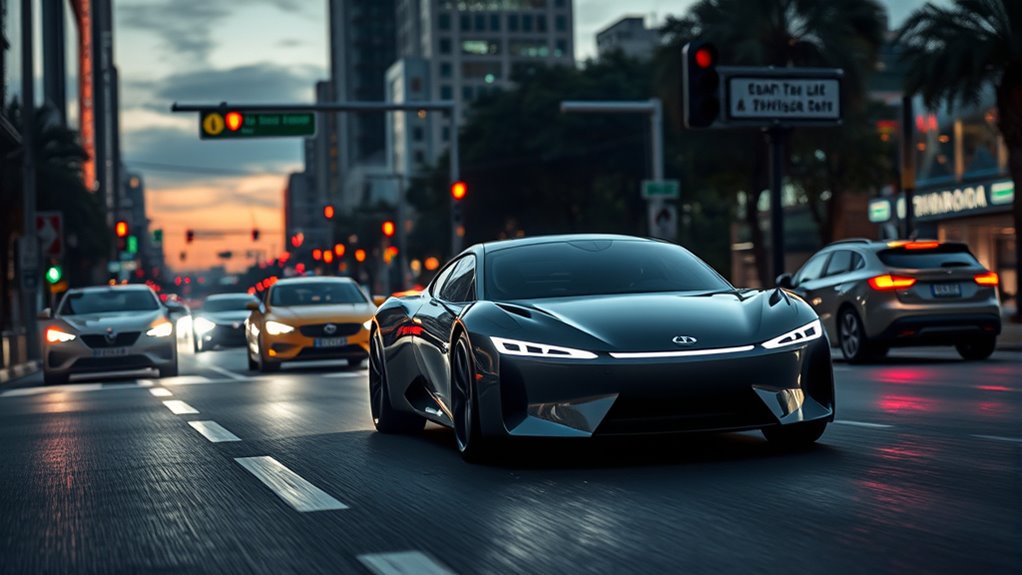
Have you ever wondered how cars can “talk” to each other and their surroundings? This incredible technology, known as Car-to-X communication, is changing the landscape of vehicle automation. It allows vehicles to exchange information with each other and the infrastructure around them, enhancing safety, efficiency, and overall driving experience. Imagine approaching an intersection where your car receives real-time data about traffic conditions, potential hazards, or even road construction ahead. This is the future of driving, and it’s already beginning to unfold.
Car-to-X communication is revolutionizing driving by enabling vehicles to share real-time information, enhancing safety and efficiency on the road.
With Car-to-X communication, your vehicle can interact with traffic signals, signage, and other vehicles. This ability markedly improves intersection safety. For instance, if a car runs a red light, your vehicle can receive a warning seconds before a potential collision. Likewise, if an emergency vehicle is approaching, your car can alert you to yield or change lanes, giving you a critical advantage in avoiding accidents. This seamless communication creates a network that enhances your awareness and decision-making on the road.
Moreover, vehicle automation greatly benefits from this technology. As cars become increasingly automated, the need for precise and timely information becomes paramount. When your car can communicate with other vehicles and the infrastructure, it can make smarter decisions. For example, if several vehicles are approaching an intersection simultaneously, their communication can help them coordinate their movements, reducing congestion and minimizing the risk of accidents. This real-time exchange of data allows automated systems to operate with greater efficiency and safety.
The impact of Car-to-X communication extends beyond just individual vehicles. As more cars become interconnected, the entire traffic system can optimize itself. Think about how traffic lights can adapt based on real-time traffic conditions. Instead of a fixed schedule, they could change to accommodate the flow of cars, reducing wait times and improving overall traffic efficiency. This not only enhances your driving experience but also contributes to lower emissions and fuel consumption, making the roads greener. Additionally, advancements in Kia tuning can further enhance vehicle performance in this new interconnected landscape.
Frequently Asked Questions
What Types of Vehicles Can Utilize Car-To-X Communication?
Autonomous vehicles and commercial trucks can both utilize car-to-X communication. This technology enables them to share real-time data with each other and surrounding infrastructure, enhancing safety and efficiency. You’ll find that these vehicles can communicate about traffic conditions, obstacles, and even route optimization. As a driver or operator, you’ll benefit from improved navigation and reduced accident risks, making your journeys smoother and more reliable with this advanced communication system at work.
How Does Car-To-X Impact Traffic Management Systems?
Car-to-X communication critically enhances traffic management systems by enabling real-time data exchange. You can see how this leads to traffic flow optimization, as vehicles share information about congestion and road conditions. This technology also plays an essential role in accident prevention, allowing cars to alert each other about potential hazards. By utilizing this system, you’ll experience smoother commutes and safer roads, ultimately improving overall driving conditions for everyone.
What Are the Privacy Concerns With Car-To-X Communication?
Privacy concerns with car-to-X communication mainly revolve around data privacy and hacking risks. When vehicles share information, there’s a chance that sensitive data could be intercepted or misused. You might worry about unauthorized access to your location and driving habits, which hackers could exploit. Ensuring robust security measures is essential to protect your personal information and maintain trust in these advanced systems. Without proper safeguards, the risks can outweigh the benefits.
How Is Car-To-X Communication Tested for Reliability?
Ever wonder if your car’s gossip about traffic is reliable? Well, they test it through simulation testing! Engineers create virtual environments where vehicles communicate, measuring reliability metrics like response time and accuracy. They simulate everything from rush hour chaos to unexpected road closures, ensuring your car won’t just chat, but actually deliver useful info. So next time your ride talks, know it’s passed the rigorous reliability tests—no more automotive tall tales!
Will Car-To-X Technology Be Mandatory in the Future?
Yes, car-to-X technology may become mandatory in the future as regulatory challenges are addressed. As governments push for safer roads and reduced accidents, they’re likely to implement standards that require this technology in new vehicles. However, industry adoption plays a critical role; manufacturers need to invest in compatible systems. If they can overcome these hurdles, you could see a future where car-to-X communication is a standard feature in all vehicles.
Conclusion
Car-to-X communication is revolutionizing how vehicles interact with each other and the road infrastructure, making our roads safer and smarter. Did you know that studies show this technology could reduce traffic accidents by up to 80%? That’s a staggering number that highlights the potential of connected cars. As we embrace this innovation, you can look forward to a future where your vehicle not only talks to you but also keeps you and others safe on the road.