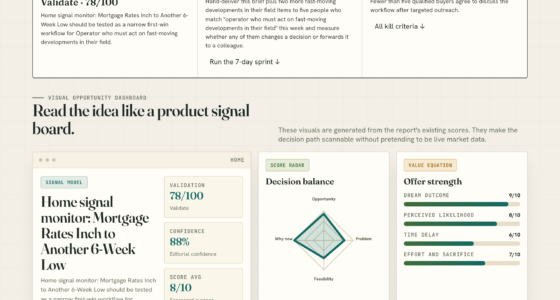

📊 Full opportunity report: Capital: The Lever Beneath the Levers on ThorstenMeyerAI.com — validation score, market gap, and execution plan.

Get business pricing on monitors, keyboards and dev gear
- Business-only prices and quantity discounts
- Tax-exempt purchasing
- Multiple users, one account, clear invoices
TL;DR
Major AI companies like SpaceX, Anthropic, and OpenAI are raising billions through public listings, revealing a circular funding cycle. This cycle concentrates capital among a few firms, creating risks for the broader economy.
Major AI companies including SpaceX with xAI, Anthropic, and OpenAI have recently listed on public markets, raising over $4 trillion in valuation. This marks a significant shift in how capital flows into the AI sector, revealing a concentrated and fragile funding cycle that underpins the industry’s rapid growth and associated risks.
On June 12, SpaceX, which now includes xAI, listed on the Nasdaq at a valuation near $1.77 trillion, briefly surpassing $2 trillion. The offering was heavily oversubscribed, with a significant share reserved for retail investors, indicating strong demand. Simultaneously, Anthropic confidentially filed for a valuation around $965 billion, and OpenAI is expected to seek a listing valued between $730 billion and $850 billion. These three companies collectively represent approximately $4 trillion in private value heading to public markets within 18 months.
Bank of America describes this as a transfer of risk from early investors to the public, with over $6.6 billion worth of stock sold by OpenAI staff before its listing. The cycle is characterized by a circular flow: tech giants like Microsoft, Amazon, and Google invest heavily in Nvidia, which supplies AI hardware, while these companies fund AI development through internal credits and investments. This creates a closed loop of demand and capital, making the system highly interconnected and vulnerable to disruptions.
Capital: The Lever Beneath the Levers
Every chokepoint costs money — so whoever can fund the buildout decides who builds at all. In 2026 the bill came due in public: a trillion-dollar IPO wave, financed by a circle of firms paying each other, now sold to everyone else.
The meta-chokepoint: it gates the other five, because you can’t build any of them without clearing the capital bar. A synchronized machine has no natural brake — no one can slow first — and the IPO wave moves the risk to the public as insiders take gains. The hedge is solvency that doesn’t depend on the music playing: sane burn, own what’s cheap, self-host where you can.
Why Capital Concentration Risks the Entire AI Ecosystem
This concentration of capital among a few dominant firms and the circular flow of investments create systemic vulnerabilities. The reliance on debt-financed infrastructure, coupled with a small paying customer base, makes the entire AI funding cycle susceptible to shocks. A slowdown in any node—such as Microsoft reducing its compute commitments—could cascade through the entire network, risking a broader economic impact. The current valuations and funding practices also risk mispricing capacity, leading to potential bubbles and economic fragility.
As an affiliate, we earn on qualifying purchases.
Recent Funding Trends and the Rise of Public Listings
Historically, AI funding was primarily private, but 2026 has seen a surge in public offerings from leading firms. SpaceX’s xAI, Anthropic, and OpenAI’s anticipated listings mark a shift in how early-stage risk is transferred to public markets. The valuations are unprecedented, with private valuations now reaching into the trillions, driven by aggressive investor appetite. This cycle is underpinned by a network of corporate investments, internal credits, and hardware supply chains that reinforce each other, creating a self-sustaining but fragile growth model.
Economists warn that this cycle’s reliance on debt and circular demand could lead to a bubble, especially given the limited number of paying consumers for AI products.
As an affiliate, we earn on qualifying purchases.
Unclear Risks and Potential Market Disruptions
It remains uncertain how long the current funding cycle can sustain itself before a correction occurs. The extent of the economic impact from a slowdown or correction in AI valuations is still unknown, as is the true profitability of these companies once public. Additionally, the actual demand for AI products from consumers remains limited, raising questions about the sustainability of current valuations.
As an affiliate, we earn on qualifying purchases.
Next Steps for Investors and Regulators in AI Funding
Expect increased scrutiny from regulators as the AI sector’s valuations and circular funding practices come under examination. Investors will likely monitor corporate commitments to infrastructure spending and demand signals more closely. The next major event will be the public listings of OpenAI and others, which will test the resilience of this funding cycle. Market reactions to potential slowdowns or policy changes could significantly influence the sector’s trajectory.
As an affiliate, we earn on qualifying purchases.
Key Questions
Why are AI companies listing on public markets now?
They seek to transfer early investor risk, raise capital for infrastructure and growth, and capitalize on high valuations driven by investor demand.
What risks does the current funding cycle pose to the broader economy?
The cycle’s reliance on debt, circular demand, and inflated valuations could lead to a bubble that, if burst, might impact financial markets and economic stability.
How does the circular investment flow work among big tech firms?
Companies like Microsoft, Amazon, and Google invest heavily in Nvidia hardware and AI development, often funding each other through internal credits and demand, creating a closed loop.
What signs indicate potential vulnerabilities in the AI funding system?
Reduced commitments from major players like Microsoft, slowing demand signals, and the high level of debt financing are key warning signs.
What could happen if the AI valuation bubble bursts?
A correction could trigger a cascade of losses across tech stocks, impact investor confidence, and slow AI infrastructure expansion.
Source: ThorstenMeyerAI.com
Halloween Picks
halloween
As an affiliate, we earn on qualifying purchases.