If you’re looking for the top electric compost bins in 2025, I recommend the 3L Compact Electric Composter for small spaces, the 4L Electric Kitchen Composter with auto-clean for convenience, and the 4L model with LED display for easy monitoring. These options are efficient, eco-friendly, and simple to operate, with features like odor control and quiet operation. Keep exploring, and I’ll show you how to choose the best one for your needs.
Key Takeaways
- Select models with quick processing times (3-4 hours) and multiple modes for flexible, efficient composting suited for busy kitchens.
- Prioritize units with activated carbon filters and sealed lids to effectively control odors and maintain kitchen freshness.
- Opt for compact, lightweight designs (around 3-4L capacity) that fit seamlessly into small kitchen spaces and are easy to clean.
- Consider models with auto-cleaning features and dishwasher-safe parts for minimal maintenance and hygiene.
- Evaluate energy-efficient options with warranties, ensuring eco-friendly operation and reliable support in 2025.
3L Compact Electric Composter for Kitchen
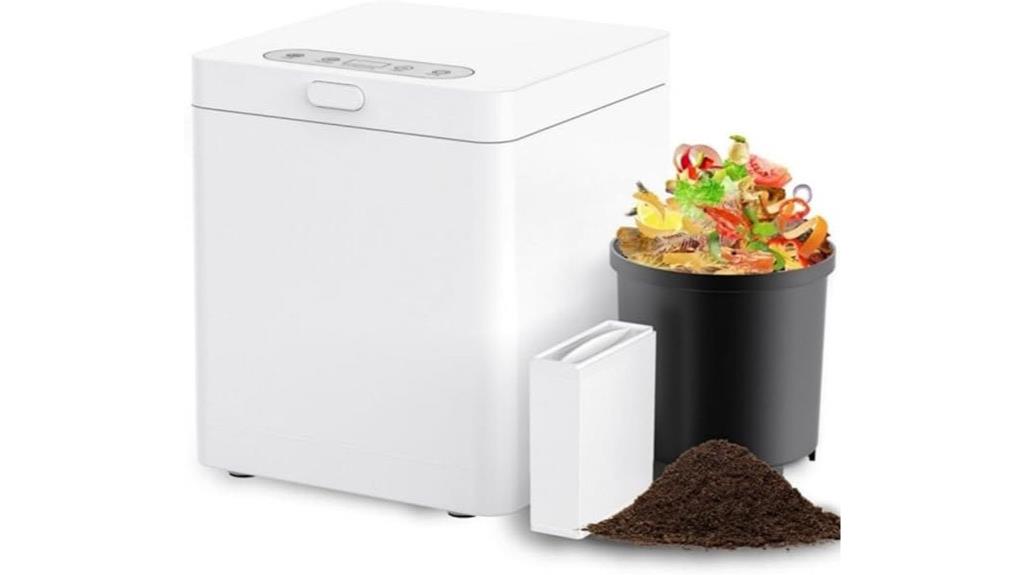
If you’re looking for a compact composting solution that fits seamlessly into small kitchens or pantries, the L Compact Electric Composter is an excellent choice. Its 3L capacity is perfect for daily food scraps, and its space-saving design easily fits into tight spaces. I love how it quickly converts waste into nutrient-rich compost, especially with two modes: a fast 4-hour process and a standard 6-hour cycle. It’s quiet, odor-controlled thanks to the activated carbon filter, and simple to operate with just one button. Plus, the auto-clean feature makes maintenance effortless, so I wake up to fresh, ready-to-use compost every morning.
Best For: individuals living in small kitchens or pantries seeking a compact, odor-controlled, and efficient way to compost daily food scraps effortlessly.
Pros:
- Space-saving compact design fits easily into small kitchen spaces
- Dual processing modes (quick 4-hour and standard 6-hour) for flexible composting needs
- Quiet operation with odor control via activated carbon filter and auto-clean feature
Cons:
- Limited 3L capacity may require frequent emptying for larger households
- Replacement filters need periodic maintenance to maintain odor control
- May not be suitable for heavy or large-scale composting needs
Electric Kitchen Composter 4L – Smart Countertop Food Waste Converter with Odorless, Auto-Clean, Low Noise, 2025 Model
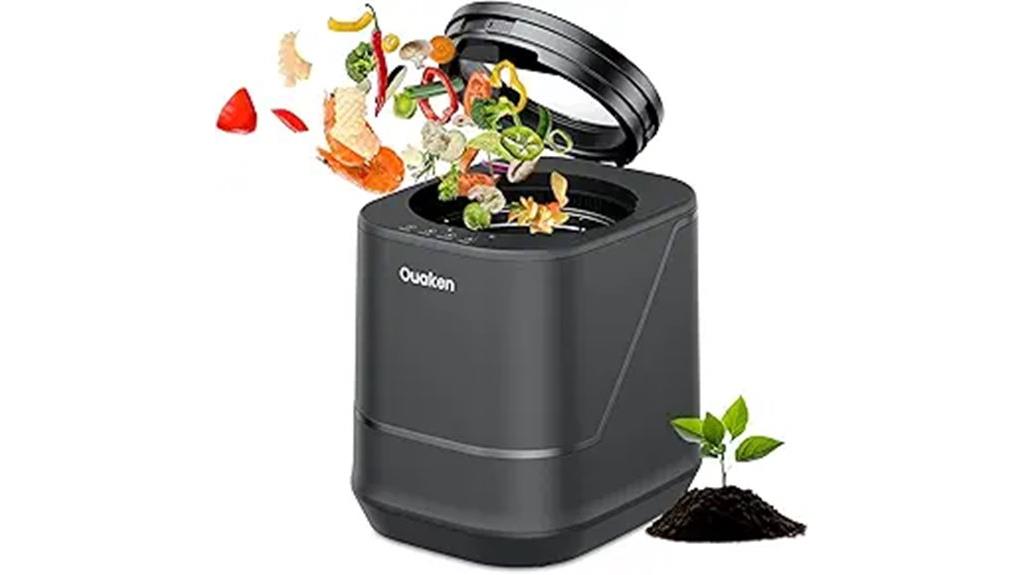
The Electric Kitchen Composter 4L is an ideal choice for busy households seeking a convenient, odorless way to manage food waste. Its sleek black aluminum finish and compact design fit easily on any countertop, making daily composting simple. With an easy-touch interface, transparent lid, and dishwasher-safe detachable bucket, maintenance is effortless. It quickly transforms scraps into nutrient-rich fertilizer in just three hours, using high-temperature drying, grinding, and cooling. Operating quietly below 40dba, it won’t disturb your household. The large carbon filter eliminates odors, while auto-cleaning modes ensure hassle-free operation. This model is perfect for eco-conscious families wanting efficiency and ease at home.
Best For: eco-conscious families and busy households seeking an efficient, odorless, and space-saving way to compost food waste at home.
Pros:
- Compact and sleek design fits seamlessly on modern kitchen countertops.
- Fast processing time of approximately 3 hours to turn scraps into fertilizer.
- Low noise operation below 40dba allows use at any time without disturbance.
Cons:
- Limited 4L capacity may require frequent emptying for larger families.
- Requires replacement of the carbon filter every 1000 hours, adding to maintenance.
- Auto-cleaning modes may not fully eliminate all types of food odors without proper filter maintenance.
4L Electric Kitchen Composter with Auto-Cleaning and LED Display

For those seeking a hassle-free way to manage kitchen waste, the 4L Electric Kitchen Composter with auto-cleaning and LED display offers an efficient solution. Its powerful six-blade system transforms food scraps into dry fertilizer in just 3-6 hours, reducing waste volume by 90%. Capable of composting pig bones, it features three modes and a one-click auto-cleaning function, with a handy LED reminder for remaining time. Made of stainless steel and equipped with activated carbon filters, it controls odors effortlessly. Its compact design fits well on countertops or outdoors, and with a rating of 4.7 stars, it’s praised for ease of use and efficiency.
Best For: Homeowners and busy individuals seeking an easy, odor-free, and efficient way to compost kitchen waste indoors or outdoors.
Pros:
- Rapid composting process (3-6 hours) with powerful six-blade system.
- Easy to clean with one-click auto-cleaning and dishwasher-safe parts.
- Odor control through activated carbon filters and hygienic design.
Cons:
- Limited 4L capacity may require frequent emptying for large households.
- Slightly heavy (13.06 kg) which may impact portability.
- Requires electricity and replacement filters for optimal odor management.
Factors to Consider When Choosing an Electric Compost Bin for Kitchen

When choosing an electric compost bin, I focus on capacity and size to guarantee it fits my kitchen space and waste volume. I also consider processing speed and odor control features to keep the process efficient and my kitchen smelling fresh. Finally, ease of cleaning and noise levels are important for maintaining convenience and comfort during use.
Capacity and Size
Choosing the right capacity and size for your electric compost bin is essential to match your household’s waste generation and available space. I recommend selecting a capacity that aligns with your daily food waste to avoid overflows and keep composting efficient. For small kitchens, compact models around 3L to 4L work well, fitting comfortably on counters without cluttering. Larger households producing more waste may need bigger bins to reduce frequent emptying. It’s also important to regard the overall dimensions—make sure the bin fits easily on your countertop or designated storage area. Balancing capacity with ease of use and space constraints ensures your composting process remains convenient and hassle-free, encouraging consistent waste processing without inconvenience.
Processing Speed Options
Processing speed options in electric compost bins can substantially influence how you incorporate them into your kitchen routine. Many models offer multiple modes, like quick cycles that turn waste in about 4 hours, and standard cycles taking roughly 6 hours. Faster processing lets you compost daily, providing fresh fertilizer each morning, which is ideal for frequent use. Slower modes tend to be more energy-efficient and quieter, making them suitable for overnight operation. Some bins even allow adjustable or programmable speeds, giving you control based on your waste volume and schedule. Choosing the right speed depends on your priorities—whether you want immediate results or prefer to save energy and minimize noise. Understanding these options helps you select a bin that best fits your lifestyle and composting needs.
Odor Control Features
Effective odor control is vital to keep your kitchen smelling fresh while composting. Look for compost bins with activated carbon filters, which neutralize unpleasant smells and can be replaced when needed for long-lasting freshness. Some models feature automatic odor-neutralizing systems that activate during operation, preventing any smell from escaping. Proper sealing lids and airtight containers are also important—they contain odors and prevent leaks into your kitchen. Regular maintenance is key; replacing filters on schedule ensures the system remains effective. Choosing a bin with these features means you won’t have to worry about lingering smells or unpleasant odors disrupting your space. Prioritizing odor control makes composting more convenient and enjoyable, encouraging consistent use without the worry of odor buildup.
Ease of Cleaning
When selecting an electric compost bin for your kitchen, ease of cleaning should be a top priority. Look for models with removable, dishwasher-safe parts like liners, buckets, or blades to make cleaning straightforward. Some bins feature auto-cleaning functions or modes that dissolve residues with minimal effort, saving you time. Choosing a splash-proof or sealed design helps contain food waste splashes, keeping messes to a minimum during cleaning. Easy-to-replace filters, such as activated carbon filters, maintain odor control without requiring frequent deep cleans. Additionally, an accessible design that allows quick disassembly and rinsing simplifies maintenance, making cleanup quick and hassle-free. Prioritizing these features ensures your composting system stays hygienic and convenient to maintain.
Noise Levels
Choosing an electric compost bin that operates quietly can make a significant difference in how seamlessly it fits into your daily routine. Most models operate below 40 decibels, ensuring they won’t disrupt conversations or household activities. If you have an open-plan kitchen or live in a shared space, low noise levels are especially important. Some bins even feature soundproofing or noise reduction technology, making them nearly silent during operation. These quiet models are perfect for overnight use, allowing you to compost waste without disturbing your sleep. Product specifications usually include noise level details, so you can compare options easily. Prioritizing quieter compost bins helps maintain a peaceful environment while still enjoying the benefits of eco-friendly waste management.
Compost Quality
The quality of compost produced by an electric bin hinges on its ability to efficiently break down food waste into nutrient-rich, dry material suitable for gardening. Proper moisture, airflow, and temperature control are vital for creating high-quality compost with ideal nutrient levels. Bins with multiple processing modes, like fermenting and drying, can enhance nutrient content and guarantee consistency. Speed matters, but it shouldn’t compromise thorough decomposition, as incomplete breakdown can cause odors and reduce compost quality. Additionally, odor control features, such as activated carbon filters, help maintain the integrity of the compost by preventing unpleasant smells from contaminating the final product. When choosing a bin, consider how well it manages these factors to guarantee your compost is nutritious, dry, and odor-free.
Energy Consumption
Electric compost bins vary in how much power they consume, which can impact your energy bills and overall efficiency. Most models use between 50 to 150 watts, depending on size and processing speed. Energy-efficient options often include low power modes that reduce electricity use during standby or idle times. Faster processing cycles, like quick composting, tend to consume more energy than standard modes. If you plan to run your bin continuously over several days, energy consumption will increase notably. To keep costs down, look for models with energy-efficient motors and smart power management features that optimize usage and minimize waste. Being mindful of these factors helps ensure you choose a compost bin that is both effective and economical, supporting your eco-friendly goals without breaking the bank.
Price and Warranty
When selecting an electric compost bin for your kitchen, it’s important to take into account both the price and the warranty to guarantee you’re getting good value and long-term peace of mind. Comparing the initial purchase cost with similar models helps you find a unit that offers the best features for your budget. Always check if the product comes with a warranty, typically one to three years, to protect against defects. Review what the warranty covers—parts, labor, or replacements—to ensure exhaustive protection. Higher-priced models often provide longer or more extensive warranties, giving you better security over time. Additionally, verify warranty support options, like accessible customer service and authorized service centers, so repairs are hassle-free if needed.
Frequently Asked Questions
How Energy-Efficient Are These Electric Compost Bins?
These electric compost bins are surprisingly energy-efficient, typically using just a small amount of power—around the same as a light bulb. I’ve found they consume minimal electricity while effectively speeding up composting. Plus, their eco-friendly design means they help reduce waste and lower your carbon footprint. Overall, I think they’re a smart, efficient choice that won’t considerably impact your energy bill, making them great for eco-conscious households.
Can They Handle Non-Food Waste Like Paper or Biodegradable Plastics?
Yes, many electric compost bins can handle non-food waste like paper and biodegradable plastics. I’ve found that they’re versatile enough to break down these materials efficiently, especially models with advanced shredding and heating features. Just make sure to check the manufacturer’s guidelines, as some bins are optimized for organic waste only. Overall, I love how convenient and eco-friendly these bins are for reducing household waste.
What Maintenance Is Required for Optimal Performance?
To keep my electric compost bin running smoothly, I regularly empty the bin and clean it with warm, soapy water to prevent odors and buildup. I also check the filters and sensors, replacing or cleaning them as needed. Occasionally, I add a bit of compost starter or enzyme solution to help break down waste faster. Proper maintenance guarantees my bin stays efficient, eco-friendly, and easy to use every day.
Are These Composters Suitable for Small Apartments or Tiny Kitchens?
Did you know over 50% of urban dwellers live in small apartments? These electric composters are perfect for tiny kitchens. They’re compact, odor-free, and easy to use, fitting seamlessly into limited spaces. I’ve found that many models are designed to sit discreetly on counters or under sinks, making eco-friendly composting accessible even in the tightest spaces. So yes, these composters are great for small apartments!
How Long Does the Composting Process Typically Take?
The composting process usually takes between a few hours to a couple of days with an electric bin. I’ve noticed that it’s pretty fast because these bins use heat and aeration to break down waste quickly. If you’re consistent with adding scraps and maintaining the unit, you’ll see compost ready in no time—often within 24 to 48 hours. It’s super convenient for busy kitchens!
Conclusion
Choosing the right electric compost bin can transform your kitchen waste into eco-friendly compost effortlessly. I believe that investing in a smart, odorless, and auto-cleaning model isn’t just convenient—it’s a step toward sustainability we all should take. After all, if composting became as simple as pressing a button, imagine how much waste we could divert from landfills. So, why not make your kitchen greener and smarter today?