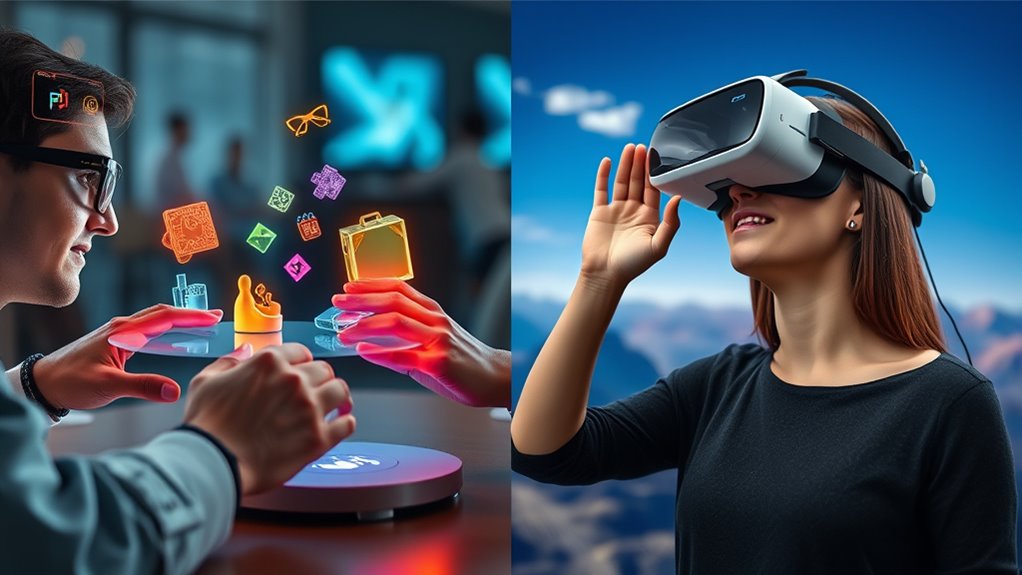

Augmented reality (AR) enhances your real-world experiences by overlaying digital elements onto your surroundings, letting you interact with both the real and virtual worlds simultaneously. In contrast, virtual reality (VR) immerses you in a fully digital environment, isolating you from your physical surroundings. While AR promotes social interaction and outdoor fun, VR focuses on skill development and engaging simulations. To understand how these technologies can impact your life, you might want to explore their diverse applications.
Key Takeaways
- Augmented Reality (AR) overlays digital information onto the real world, while Virtual Reality (VR) immerses users in a fully digital environment.
- AR enhances physical surroundings with interactive digital elements, whereas VR isolates users from their physical surroundings for immersive experiences.
- AR is ideal for social and outdoor activities, while VR is suited for skill development and training simulations.
- AR encourages real-world interaction and movement, while VR provides safe environments for practicing complex tasks without real-world consequences.
- Both technologies improve user engagement, but AR focuses on enhancing reality, while VR offers complete immersion.
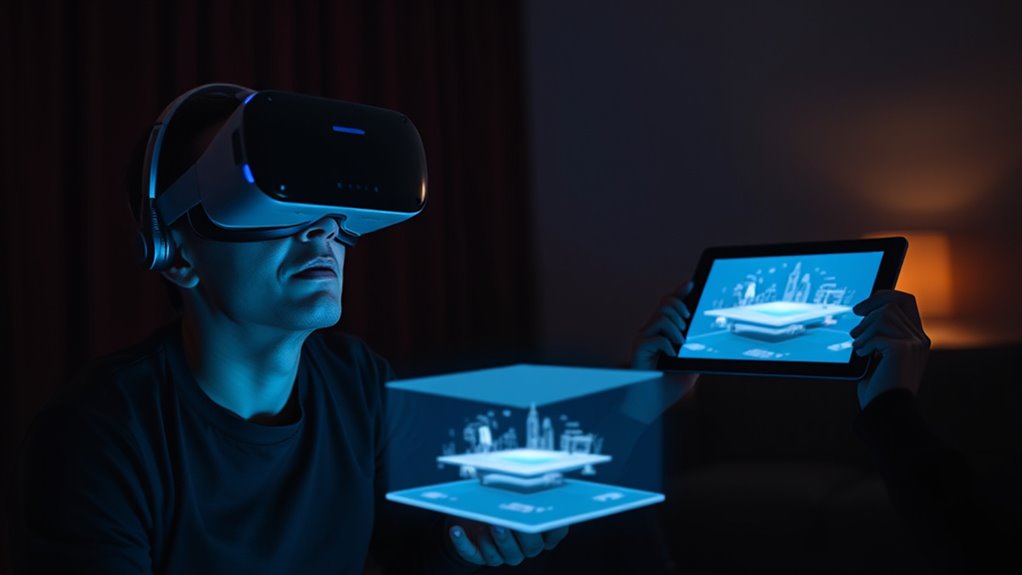
As you explore the world of immersive technologies, you’ll quickly notice the intriguing differences between augmented reality (AR) and virtual reality (VR). While both offer unique experiences, they cater to different needs and applications. AR overlays digital information onto the real world, enhancing your physical environment. On the other hand, VR immerses you in a completely digital universe, isolating you from the physical surroundings. Understanding these distinctions can help you decide which technology aligns with your interests or needs.
When it comes to entertainment, AR gaming is a vivid demonstration of how digital elements can blend seamlessly with the real world. Imagine playing a game like Pokémon GO, where characters pop up in your actual surroundings. You’re not just looking at a screen; you’re interacting with the game in your environment, enhancing your experience. This type of gaming encourages movement and social interaction, making it a fantastic choice for outdoor fun with friends. You can explore your neighborhood while capturing virtual creatures, creating a unique blend of reality and digital play.
Conversely, VR training takes a different approach, focusing on skill development and education. In a VR environment, you can practice complex tasks in a safe space, whether you’re learning to fly a plane or performing surgery. VR training allows you to repeat scenarios without real-world consequences, giving you the chance to hone your skills until you feel confident. This immersive experience can markedly enhance learning outcomes, as it engages multiple senses and creates realistic simulations. Additionally, just like the way cozy textiles add comfort to a farmhouse bedroom, the immersive nature of VR can provide an engaging learning atmosphere.
Both AR and VR have their strengths, depending on what you’re looking to achieve. If you’re after a social and interactive experience, AR gaming could be your go-to choice. However, if you want to develop skills or undergo specific training, VR could offer the immersive platform needed to practice effectively.
Frequently Asked Questions
Can AR and VR Be Used Together in Applications?
Yes, AR and VR can definitely be used together in applications. This combination creates mixed reality experiences, merging the real and virtual worlds. You can interact with digital elements overlaid on your environment while still being immersed in a virtual space. Sensory integration enhances this experience, engaging your sight, sound, and touch simultaneously. By leveraging both technologies, you’ll find innovative solutions in gaming, training, and even healthcare, making experiences more immersive and interactive.
What Industries Benefit Most From AR and VR Technologies?
You’ll find that industries like medical training and retail marketing benefit immensely from AR and VR technologies. In medical training, these tools let you practice surgeries in a safe, immersive environment, enhancing skill development. Meanwhile, in retail marketing, you can create engaging customer experiences, allowing shoppers to virtually try on products before purchasing. By harnessing these technologies, you’re not just improving efficiency but also enriching user experiences across various sectors.
ARe There Health Risks Associated With Using AR or VR?
Using AR or VR can come with health concerns, much like the warnings you’d hear about the sirens of ancient sailors. You might experience motion sickness, headaches, or eye strain, especially during extended use. It’s important to take breaks and listen to your body. While these technologies offer immersive experiences, being mindful of how they affect you can help mitigate any potential risks to your well-being. So, stay aware and enjoy responsibly!
How Do AR and VR Impact User Experience Differently?
AR enhances your real-world environment, adding digital elements that engage your senses without fully immersing you. You might feel a sense of presence as you interact with virtual objects superimposed on reality. In contrast, VR completely immerses you in a digital world, heightening emotional immersion and sensory engagement. You can experience intense feelings and scenarios that feel real, allowing for deeper connections and experiences that AR simply can’t replicate.
What ARe the Future Trends for AR and VR Technology?
You’ll see exciting trends in AR and VR technology, especially with mixed reality and spatial computing. These advancements will enhance immersive experiences, blending real and digital worlds seamlessly. Expect more applications in education, healthcare, and entertainment, making interactions more intuitive. As devices become more affordable and accessible, you’ll likely find AR and VR integrated into everyday life, revolutionizing how you work, play, and learn. The future looks promising and transformative!
Conclusion
In the world of tech, you might find yourself caught between augmented reality and virtual reality, each offering unique experiences that can transform how you see and interact with your surroundings. Whether you’re blending digital elements with the real world or stepping into entirely new domains, both technologies have something enthralling to offer. So, the next time you put on those VR goggles or grab your AR app, remember: it’s not just tech; it’s a glimpse into our future.