
📊 Full opportunity report: Anonymous daily check-ins for 12-step sponsors on IdeaNavigator AI — validation score, market gap, and execution plan.

Get monitors, keyboards and dev gear delivered free — and shop member deals
- Fast, free delivery on millions of items
- Access to Prime Big Deal Days deals on October 6–7
- Prime Video, Amazon Music and more included
TL;DR
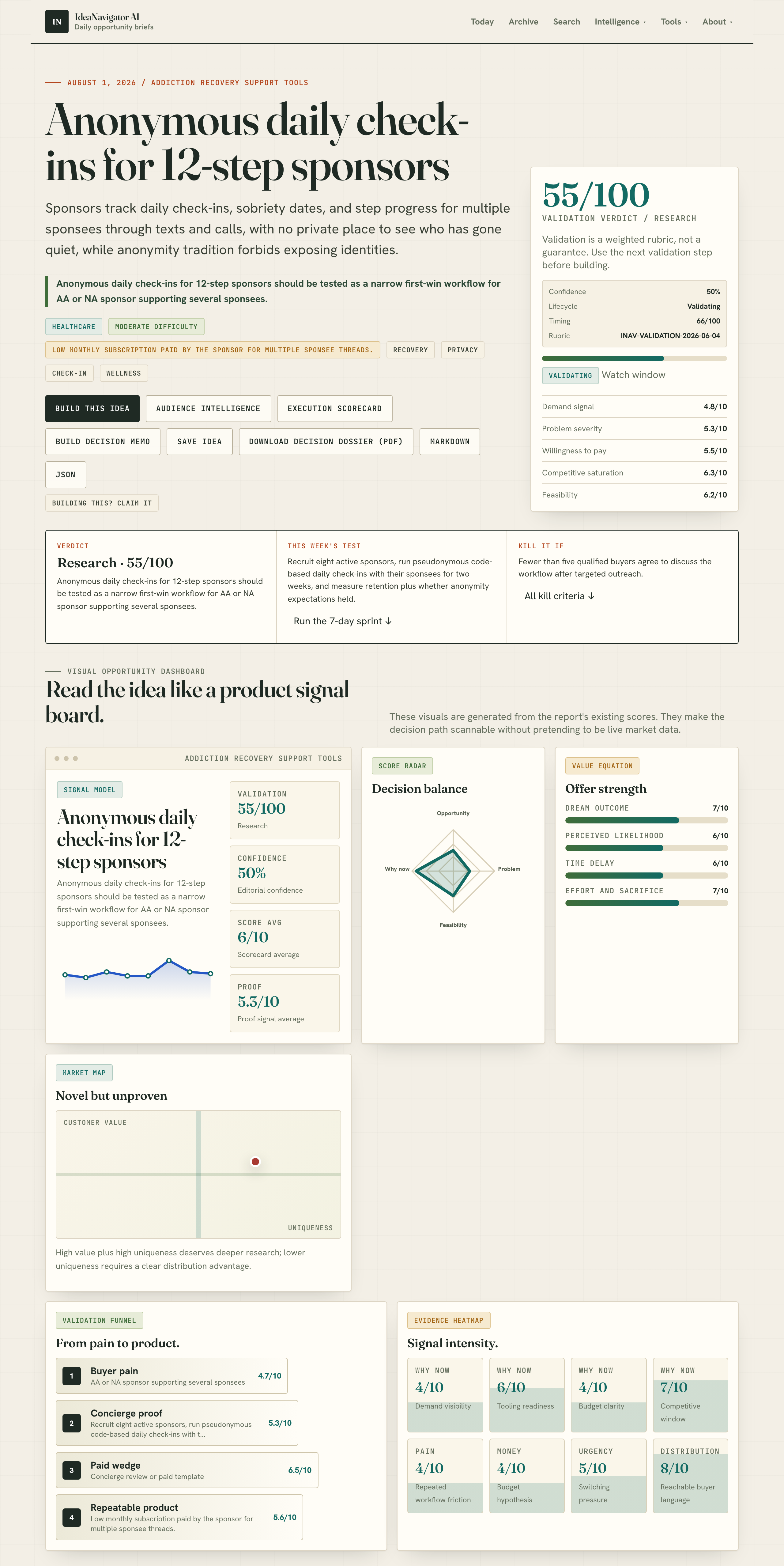
Researchers are testing a pseudonymous check-in platform for 12-step sponsors supporting multiple sponsees. The system aims to enhance accountability without compromising anonymity. The trial involves eight sponsors over two weeks.
Researchers are testing a pseudonymous check-in system for 12-step sponsors supporting multiple sponsees to improve accountability and tracking while maintaining strict anonymity. This development could address longstanding challenges in managing sobriety support, especially as digital communication shifts to mobile devices, where privacy concerns are heightened.
The proposed system involves a simple, code-based check-in platform where sponsors invite sponsees using one-time codes. Sponsees can then submit daily check-ins, indicated by a green or red status, along with optional notes, without revealing personal identities or storing phone numbers. The system is designed to be lightweight, privacy-preserving, and easy to deploy.
According to an anonymous researcher involved in the project, eight active sponsors are participating in the trial, which began recently and is planned to last two weeks. The goal is to measure user retention and verify whether the anonymity features effectively prevent leaks of real names or contact information, aligning with the traditions of twelve-step programs.
The platform is intended to be a low-cost subscription service, with sponsors paying a monthly fee for access to support multiple sponsees via these pseudonymous check-ins. This approach aims to fill a gap in existing recovery support tools, which often rely on mainstream messaging apps that may compromise privacy.
Potential Impact on Sobriety Support Practices
This development could significantly improve how sponsors manage multiple sponsees by providing a private, accountable, and easy-to-use digital tool. It addresses key concerns about maintaining anonymity while enabling better oversight of sobriety progress and engagement. If successful, the system could become a standard feature in digital recovery support, aligning with the traditions of twelve-step programs while leveraging modern technology.
As an affiliate, we earn on qualifying purchases.
Digital Shift in Addiction Recovery Support
As recovery communities increasingly adopt phone-based communication, concerns about privacy and confidentiality have grown. Existing messaging apps and habit trackers often reveal personal details, conflicting with the anonymity principles of AA and NA. Previous efforts to develop dedicated tools have faced challenges in balancing usability with privacy, leading to a demand for specialized solutions.
This trial responds to these needs by testing a minimal, code-based check-in system that emphasizes pseudonymity and simplicity. The concept builds on ongoing discussions within the recovery community about integrating technology without compromising core values.
“The goal is to create a lightweight, privacy-preserving check-in system that supports multiple sponsees without exposing identities.”
— an anonymous researcher
privacy-focused recovery support tool
As an affiliate, we earn on qualifying purchases.
As an affiliate, we earn on qualifying purchases.
Unconfirmed Aspects of System Effectiveness
It is not yet clear whether the pseudonymous system will achieve sustained engagement or if it will fully meet the privacy expectations of users. The trial is ongoing, and detailed user feedback or long-term data are not yet available. Additionally, the broader acceptance within the recovery community remains to be seen, as traditionalists may have reservations about digital solutions.
12-step sponsor management software
As an affiliate, we earn on qualifying purchases.
As an affiliate, we earn on qualifying purchases.
Next Steps in Validation and Adoption
Following the two-week trial, researchers plan to analyze retention rates and collect feedback from participating sponsors and sponsees. If results are positive, further development and broader testing will be pursued. The goal is to refine the platform and potentially introduce it as a commercial product, with the hope of integrating it into existing recovery support networks.
pseudonymous support platform for addiction recovery
As an affiliate, we earn on qualifying purchases.
As an affiliate, we earn on qualifying purchases.
Key Questions
How does the pseudonymous check-in system protect user privacy?
The system uses one-time codes for inviting sponsees, with check-ins limited to simple green or red statuses and optional notes. No personal names, phone numbers, or contact details are stored, preserving anonymity.
Will this system replace traditional in-person sponsor meetings?
No, the system is designed to complement existing support methods by providing a private digital check-in option. It aims to enhance accountability between meetings but does not replace face-to-face interactions.
What are the risks of using a digital check-in system for recovery support?
The main concerns include potential technical issues, user adoption challenges, and whether digital communication can fully substitute the accountability of in-person meetings. Privacy risks are minimized by design, but ongoing monitoring is necessary.
Could this platform be adopted by other recovery programs beyond AA and NA?
Yes, if successful, the platform’s privacy features and simplicity could make it adaptable to other mutual aid groups or support networks that prioritize anonymity.
Source: IdeaNavigator AI
Halloween Picks
halloween
As an affiliate, we earn on qualifying purchases.