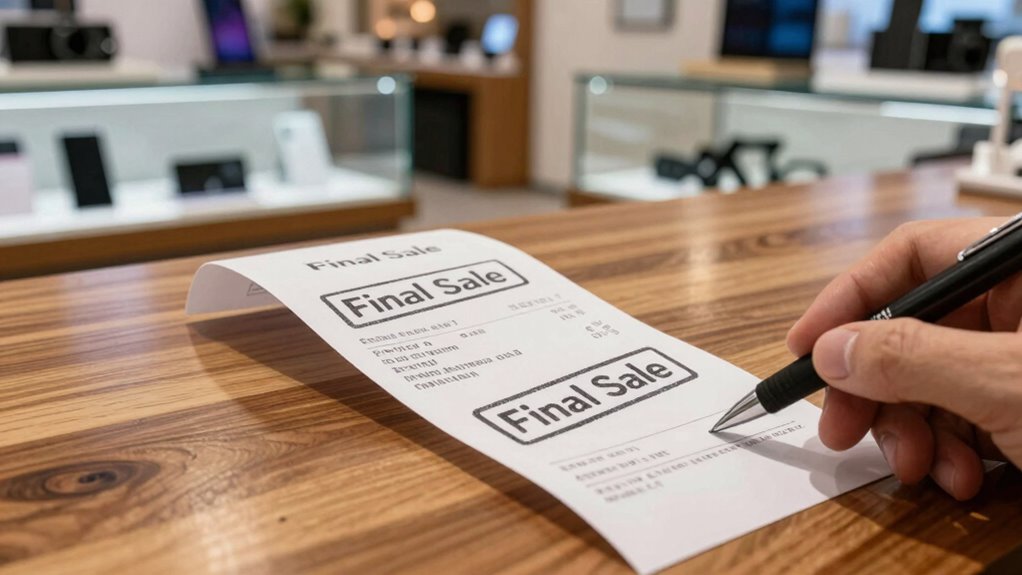

To avoid final sale traps on big purchases, always check the store’s return window and ask if store credit is available. Look for clear final sale tags or labels before buying, and don’t hesitate to ask questions like refund deadlines, return restrictions, or warranty details. Negotiation can also help, so clarify terms in writing before finalizing. Keep these tips in mind, and you’ll be better prepared to navigate policies—more strategies await to protect your investment.
Key Takeaways
- Always check the store’s return window and policy details before purchasing large items.
- Look for clear ‘Final Sale’ labels and understand their restrictions to avoid surprises.
- Ask about store credit options and whether returns or exchanges are accepted on big-ticket items.
- Negotiate warranties, price matching, and return terms; confirm agreements in writing.
- Be proactive by researching policies online and questioning staff to ensure flexibility on returns.
How to Avoid ‘Final Sale’ Traps When Making Big Purchases

When making a big purchase, it’s easy to overlook the fine print that labels items as ‘final sale,’ but doing so can leave you stuck with something you can’t return. To avoid this trap, always check the store’s return window before buying. If the store offers a limited return period, you might not have enough time to decide if the item works for you. Also, ask if store credit is available if returns are accepted. Store credit gives you flexibility to shop again later, even if you can’t get a full refund. Read the return policy carefully to understand any restrictions. Being proactive helps you avoid unexpected losses and ensures you get the most value from your big purchase. Understanding the importance of clear return policies can help you navigate online shopping experiences more effectively. Additionally, familiarizing yourself with return policy language can prevent misunderstandings during the return process. Recognizing the significance of affiliate disclosure ensures you are aware of potential commissions that may influence recommendations.
What Are Final Sale Policies and Why Do They Matter?
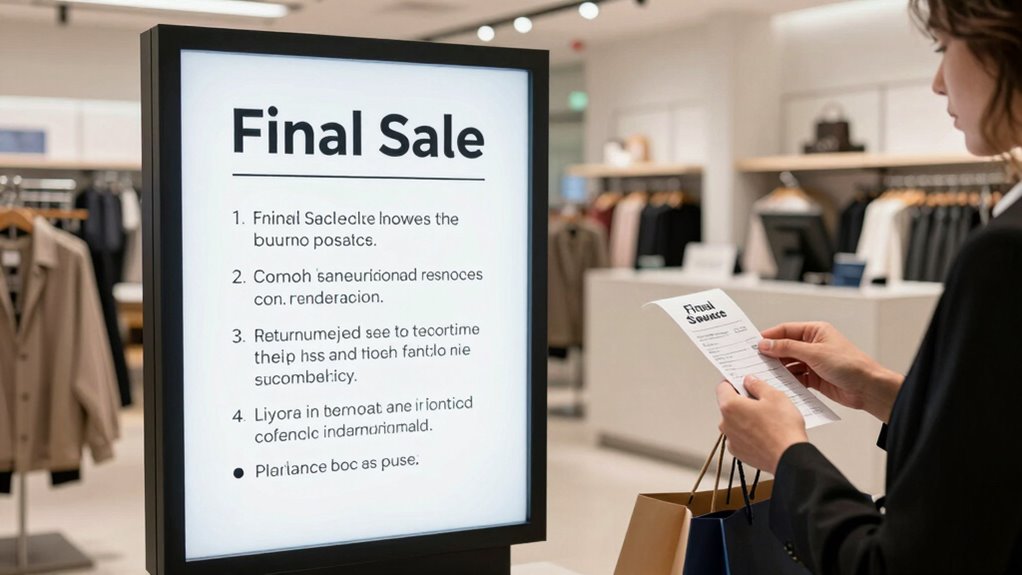
Have you ever purchased an item only to find out it’s marked as final sale? Final sale policies mean you can’t return or exchange the product, even if it’s defective or doesn’t fit. These policies matter because they limit your options, leaving you with only store credit if returns are accepted at all. Understanding the store’s refund deadlines is vital, as many final sale items have strict time limits for returns or store credit requests. Ignoring these rules can cost you money, especially on big purchases. Additionally, knowing how high contrast ratios influence image quality can help you make more informed decisions when selecting products. Always read the fine print before buying, so you know whether the item qualifies for a refund, store credit, or is truly final sale. Being informed helps you avoid surprises and make smarter shopping decisions. It’s also helpful to familiarize yourself with return policies to better understand your rights and options in various situations. Recognizing the pricing variations across different models can also help you avoid overpaying for features you don’t need. Furthermore, being aware of soulmate dynamics can assist you in making emotionally healthy choices when navigating relationship breakups or reconnections.
How to Spot ‘Final Sale’ Tags Before You Shop
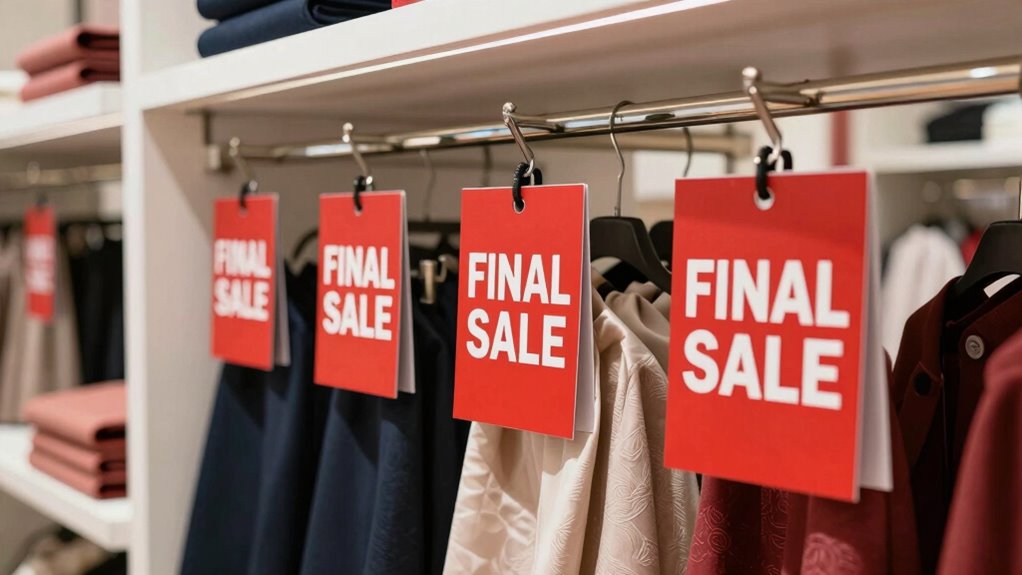
Before making a purchase, it is vital to look for clear ‘Final Sale’ tags or labels on the product or price tag. Developing tags awareness helps you recognize these indicators quickly, preventing surprises at checkout. Many stores use bold labels or stickers to signal final sale items, so pay close attention to the tags when browsing. Incorporate smart shopping strategies by inspecting tags early in your shopping process—this way, you avoid falling into traps later. Some retailers might hide ‘Final Sale’ notices in fine print or on the back of tags, so always scan the entire label carefully. Being vigilant about tags awareness ensures you’re fully informed before committing, helping you avoid purchasing items that are non-returnable or non-exchangeable. Additionally, understanding return policies can further protect you from unexpected restrictions after your purchase. Recognizing vetted products and policies enhances your confidence and safeguards your investments.
What Questions Should You Ask About Return and Exchange Policies?

Knowing whether the item is truly final sale is just the start; understanding the store’s return and exchange policies is equally important. Ask about the duration of the return window, as some stores only allow returns within a limited timeframe. Clarify whether the purchase includes warranty coverage for defects or damages. Find out if store credit options are available if refunds aren’t offered, and whether exchanges are permitted for different sizes or styles. Also, inquire if there are any restocking fees or restrictions on returning sale items. Be aware of consumer rights and how they apply to your purchase to ensure you’re fully informed. It’s also helpful to understand the store’s policies on damage or defect claims to protect your investment. Additionally, knowing the return process can help you navigate any issues smoothly. Being aware of return restrictions can prevent misunderstandings during the return or exchange. By asking these questions, you guarantee you’re aware of your options if the product doesn’t meet expectations, such as return policies for big purchases or high-value items, saving you from surprises and helping you make informed, confident purchases.
Negotiation Tips for Big-Ticket Items and Protecting Your Purchase
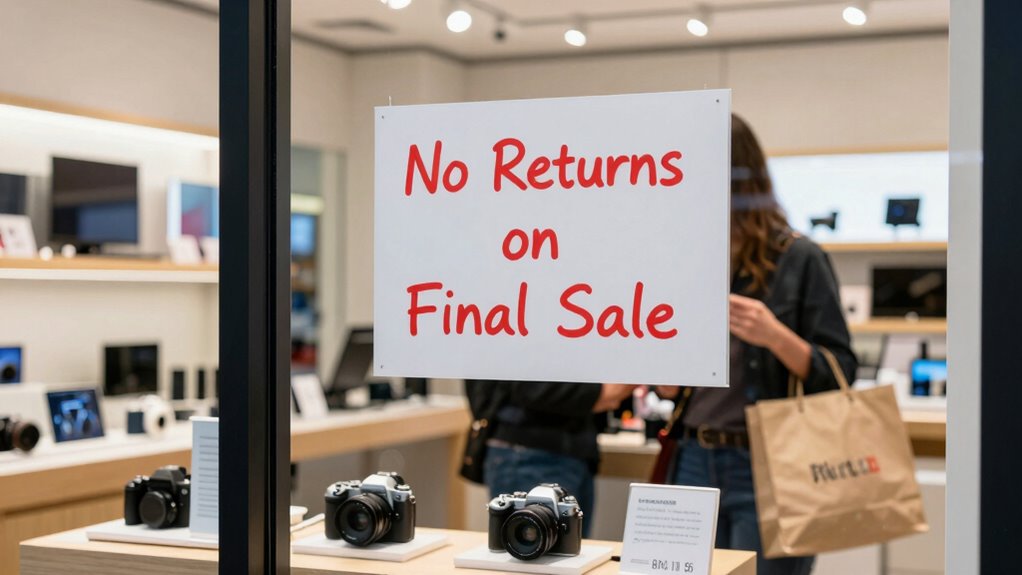
Negotiating for big-ticket items can save you a significant amount of money and help secure favorable terms. Start by asking if the retailer offers price matching; this can often lower the purchase price if you find a better deal elsewhere. Don’t be afraid to negotiate warranties too—extended warranties or service plans can add value and peace of mind. Be clear about your budget and what conditions matter most to you, such as return policies or free accessories. Stay polite but firm, and leverage competitors’ offers when possible. Remember, many stores are willing to negotiate on warranties or price matching to close the sale. Protect your purchase by confirming these negotiated terms in writing before completing the transaction.
Frequently Asked Questions
Can I Get a Store Credit Instead of a Refund on Final Sale Items?
You typically can’t get store credit instead of a refund on final sale items, as most stores specify no returns or exchanges for those. However, some retail locations may offer store credits as a return option, so it’s worth asking before you buy. Always review the store’s return policy carefully, especially on final sale items, to avoid surprises. If you want flexibility, consider shopping where return options are more lenient.
Are There Exceptions to Final Sale Policies for Damaged or Defective Products?
Yes, there are damage exemptions and defect exceptions to final sale policies. If your product arrives damaged or defective, many stores will make an exception and offer a return, exchange, or store credit. You should contact the retailer promptly, provide proof of the damage or defect, and explain the situation clearly. Keep in mind, policies vary, so always check the store’s specific rules about damage exemptions and defect exceptions.
How Do Online Return Policies Differ From In-Store Policies for Big Purchases?
Did you know 85% of online retailers offer flexible return policies? Online return policies often differ from in-store ones, especially for big purchases. You typically use virtual receipts, making returns more convenient, but you might face higher shipping costs. In-store, you can return items directly, avoiding shipping fees. Online, you need to check if free returns are available and understand the time limits, especially with large items.
What Legal Rights Do Consumers Have Regarding Final Sale Items?
Your consumer rights and legal protections vary depending on where you shop, but generally, final sale items are not eligible for returns or refunds. However, if an item is defective or not as described, you may still have rights to seek a remedy. Always check the store’s policies and local laws before purchasing, and remember that some jurisdictions require clear signage about final sale terms to protect your legal rights.
Can Loyalty Program Members Negotiate Better Return Terms?
Like a master negotiator, you can often leverage loyalty perks to negotiate better return terms. As a loyalty program member, you hold more sway than you might think, especially when you demonstrate your value to the retailer. Use negotiation strategies such as highlighting your loyalty status and consistent purchases. Many stores are willing to offer more flexible return policies to keep dedicated customers, so don’t be afraid to ask.
Conclusion
By understanding final sale policies and asking the right questions, you can steer clear of hidden pitfalls like quicksand. Always stay vigilant, read the fine print, and don’t be afraid to negotiate—your big purchase deserves a safety net. Remember, knowledge is your best shield in the shopping jungle, turning potential traps into opportunities. With these tips, you’re now equipped to navigate the retail maze confidently and make smarter, more secure decisions.