
TL;DR

Get business pricing on monitors, keyboards and dev gear
- Business-only prices and quantity discounts
- Tax-exempt purchasing
- Multiple users, one account, clear invoices
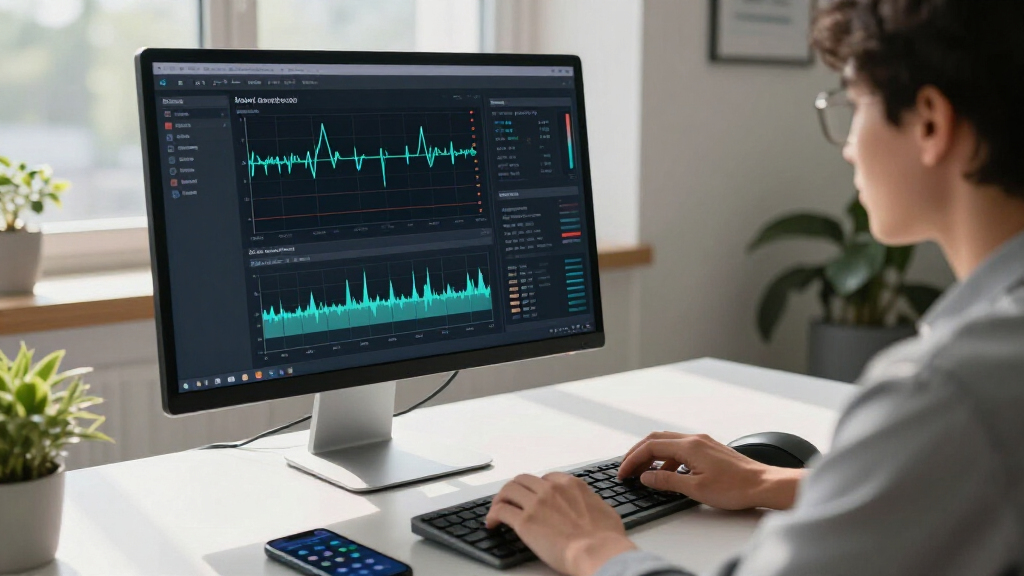
A new AI signal monitoring tool alerts operations teams when AI support like Claude Fable ceases, allowing early intervention. This development addresses the challenge of unnoticed AI support interruptions in small teams.
A new AI signal monitoring system has been introduced to alert operations teams when AI tools such as Claude Fable cease functioning, addressing a key gap in managing AI support continuity. This development is crucial for teams relying on AI assistance for daily operations, enabling faster detection and response to disruptions.
The AI signal monitor is designed specifically for operations leads deploying AI tools across small teams. It scans feeds from sources like Hacker News and filters updates related to AI capability and policy shifts that directly impact their work. When a critical AI tool, such as Claude Fable, stops providing assistance, the system generates an immediate, role-specific alert, allowing teams to act swiftly.
According to sources familiar with the initiative, the system is built to identify signals like ‘If Claude Fable stops helping you, you’ll never know,’ which are often scattered across news, forums, and filings. The goal is to turn these scattered signals into actionable briefs, reducing the risk of unnoticed support interruptions that could impair operational workflows.
The system is currently in testing with early adopters, with plans to expand its deployment. It aims to provide a role-filtered, same-day update that helps operations teams maintain continuity and make informed decisions quickly.
Impact of Early Detection on Small Team AI Operations
This development matters because it addresses a critical blind spot in AI support management. Small teams deploying AI tools often lack the means to detect sudden support failures promptly, risking operational delays or failures. An early warning system enhances resilience, enabling faster troubleshooting and minimizing downtime, which is vital as AI becomes more embedded in daily workflows.
By providing role-specific alerts, the system empowers operations leads to act decisively, reducing reliance on manual monitoring or waiting for periodic updates. This can lead to more stable AI deployments and better decision-making in fast-moving environments, ultimately improving productivity and reducing risk.
As an affiliate, we earn on qualifying purchases.
Growing Need for Real-Time AI Support Monitoring
As AI tools become integral to operational workflows, the challenge of managing their reliability intensifies. Currently, many teams discover AI support issues only after noticeable disruptions occur, often too late for swift remediation. The rapid pace of AI capability and policy shifts, highlighted by recent discussions on platforms like Hacker News, underscores the need for real-time, role-specific monitoring tools.
Historically, detecting AI support interruptions has depended on manual oversight or generic alerts that do not specify the impact on individual roles. The emergence of focused signal monitoring aims to fill this gap, providing timely, actionable insights tailored to small team operations.
This approach aligns with broader trends toward operational resilience in AI deployment, emphasizing the importance of early detection and quick response to maintain workflow continuity.
“Detecting when AI tools like Claude Fable stop assisting is critical for operational stability, yet current signals are scattered and hard to interpret.”
— an anonymous researcher
As an affiliate, we earn on qualifying purchases.
Unclear Aspects of System Deployment and Effectiveness
It is not yet clear how widely the signal monitor will be adopted, how effective it will be in diverse operational contexts, or how quickly teams will respond to alerts. The system is still in testing, and real-world performance data is limited at this stage.
AI support disruption detection device
As an affiliate, we earn on qualifying purchases.
As an affiliate, we earn on qualifying purchases.
Next Steps for Broader Adoption and Validation
The developers plan to expand testing to more teams and gather feedback on alert accuracy and impact. They aim to refine filtering algorithms and measure whether early detection leads to faster resolutions or decision changes. Full deployment is expected once validation confirms its effectiveness in varied operational environments.
As an affiliate, we earn on qualifying purchases.
Key Questions
How does the AI signal monitor detect support interruptions?
The system scans news feeds, forums, and filings for signals indicating AI capability or policy changes that impact specific tools like Claude Fable, then filters these to generate role-specific alerts.
Who is the target user for this monitoring system?
Operations leads deploying AI tools in small teams who need early, role-specific alerts to maintain workflow continuity.
Is this system available for general use now?
It is currently in testing with early adopters and not yet available for broad deployment. Further validation is planned.
What are the main benefits of early detection?
Early detection allows teams to address support disruptions before they cause operational delays, improving resilience and decision-making speed.
What challenges remain for the system’s effectiveness?
It remains uncertain how well the system performs across different environments and how quickly teams respond to alerts in practice.
Source: IdeaNavigator AI
Halloween Picks
halloween
As an affiliate, we earn on qualifying purchases.