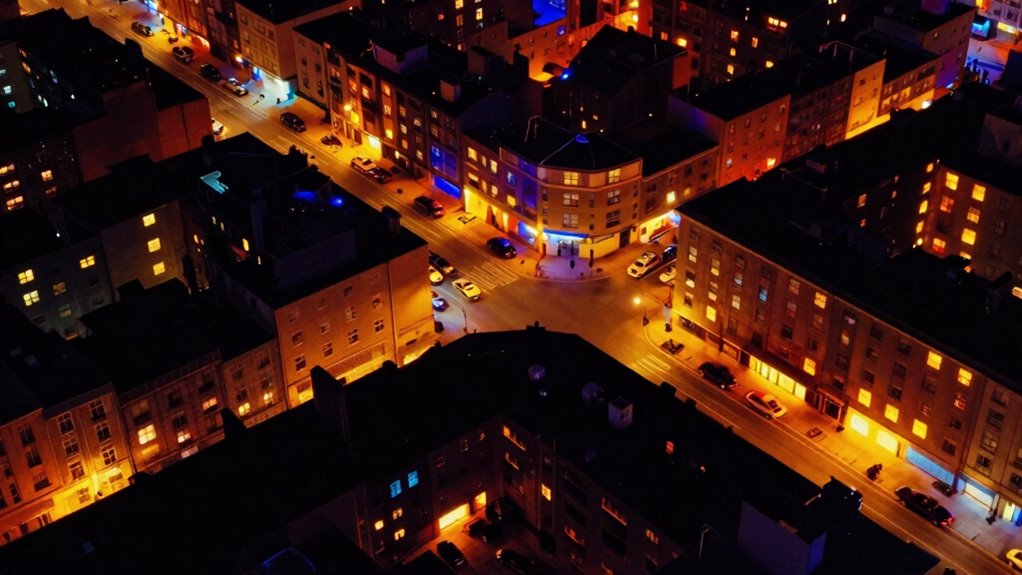

Thermal imaging cameras detect the infrared radiation emitted by objects based on their temperature. They use sensitive sensors to capture heat differences without contact, converting the infrared signals into electronic data. This data is processed by internal software, which maps temperature variations into colors for easier interpretation. These images, called thermograms, reveal heat patterns even in darkness, making thermal imaging useful across many fields. To learn more about how these cameras see heat, keep exploring!

Get business pricing on monitors, keyboards and dev gear
- Business-only prices and quantity discounts
- Tax-exempt purchasing
- Multiple users, one account, clear invoices
Key Takeaways
- Thermal cameras detect infrared radiation emitted by objects, translating heat differences into visual images called thermograms.
- They convert infrared radiation into electronic signals, which are processed to display temperature variations through color-coded visuals.
- Infrared radiation passes through the atmosphere with minimal interference, allowing thermal cameras to operate effectively in darkness or obscured conditions.
- Key components include sensitive sensors that detect heat and high-resolution pixels that produce detailed thermal images.
- Color palettes in thermal images represent temperature differences, with warmer areas shown in reds and cooler areas in blues or greens.
What Is Thermal Imaging and How Does It Work?
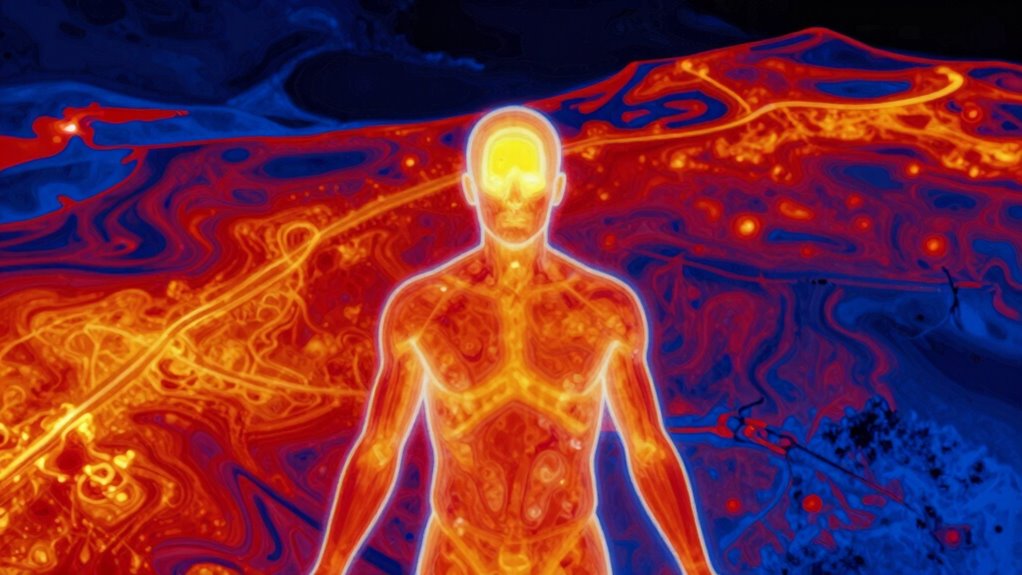
Have you ever wondered how thermal imaging cameras can detect heat even in complete darkness? These cameras work by capturing infrared radiation emitted from objects. The key to their effectiveness lies in thermal resolution, which determines how much detail the camera can distinguish in a heat image. Higher thermal resolution means sharper, more detailed thermal pictures. Lens specifications also play a crucial role, as the lens focuses infrared radiation onto the camera’s sensor. A quality lens with the right specifications can improve image clarity and range. When combined, thermal resolution and lens quality allow the camera to detect subtle temperature differences and produce precise thermal images, even in challenging conditions. This technology enables you to see heat signatures that are invisible to the naked eye, day or night. Additionally, advancements in sensor technology have further enhanced the thermal resolution of modern cameras, making them more effective for various applications. Understanding sensor technology is essential to appreciating how these cameras deliver such detailed and accurate thermal images.
How Do Thermal Cameras Detect Infrared Radiation?
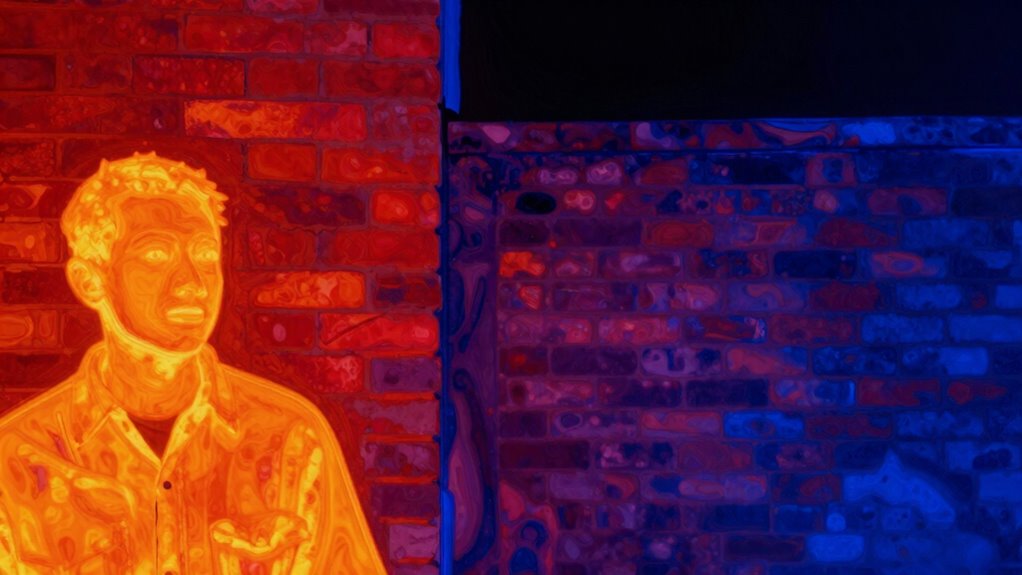
Thermal cameras detect infrared radiation by capturing the heat energy naturally emitted by objects. When an object radiates heat, it produces infrared radiation, which is outside the visible spectrum. Your thermal camera’s sensor uses infrared detection to pick up this radiation, converting it into an electronic signal. This signal represents the heat signature of the object, allowing the camera to create a visual representation of temperature differences. The more heat an object emits, the stronger its infrared signal. Because infrared radiation passes through the atmosphere with minimal interference, thermal cameras can detect heat signatures even in complete darkness or obscured conditions. This ability makes infrared detection essential for applications like surveillance, firefighting, and building inspections. Additionally, the integration of smart home technology enables these cameras to be used in residential security systems, enhancing safety and monitoring capabilities. Understanding the radiation emission process helps users appreciate how these devices operate effectively regardless of lighting or visibility conditions. Moreover, the minimal atmospheric interference with infrared radiation ensures reliable performance across various environments. The sensitivity of thermal sensors is crucial for detecting even subtle temperature differences in complex scenarios.
A comprehensive understanding of these principles helps users better interpret thermal images and their implications in real-world situations.
Key Components of a Thermal Camera
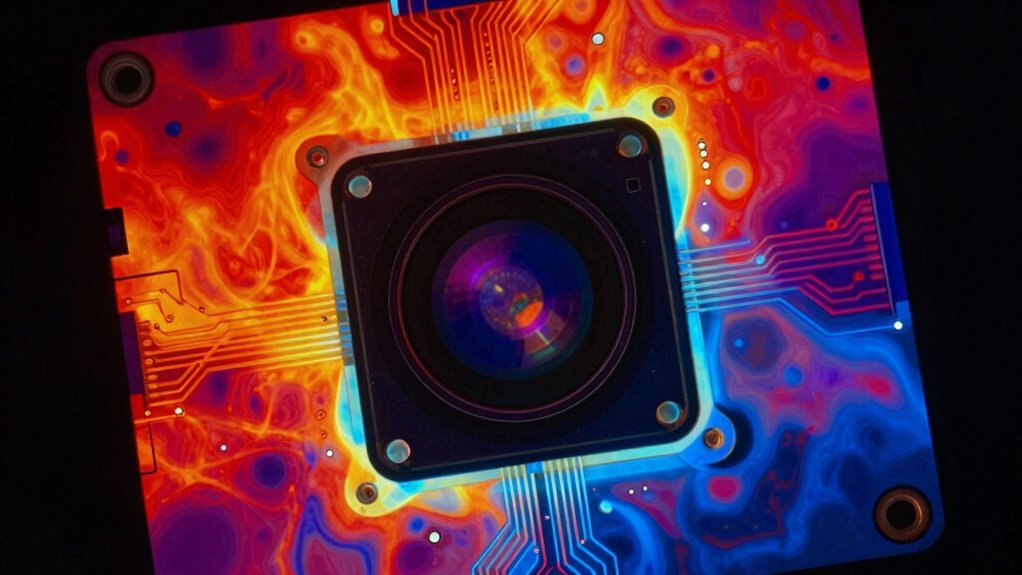
Your thermal camera’s sensor technology is the heart of its ability to detect infrared radiation, translating heat into electrical signals. The display and interface then present this data in a clear, usable format for you. Understanding these key components helps you better grasp how thermal imaging works. Additionally, knowledge of infrared radiation detection enhances your overall understanding of how thermal cameras operate. Recognizing the sensor sensitivity is crucial for interpreting the accuracy and detail of thermal images you see. Being aware of thermal resolution also plays a significant role in determining the clarity and usefulness of the images produced. Furthermore, the calibration process ensures that the thermal camera provides accurate and consistent readings over time.
Sensor Technologies Explained
Sensor technology is at the heart of every thermal camera, converting infrared radiation into images you can interpret. Your camera’s sensor determines how well it detects heat differences—its sensor sensitivity. Higher sensitivity captures subtle temperature variations, revealing more detail. Pixel resolution also plays a crucial role, affecting how sharp and detailed your images appear. A better resolution means clearer visuals, making it easier to identify heat sources. Consider this emotional connection:
| Sensitivity | Resolution | Impact |
|---|---|---|
| High | Low | Misses details, less accurate |
| High | High | Captures subtle heat, vivid images |
| Low | High | Overlooks minor temperature changes |
| Low | Low | Blurry, less useful visuals |
| Balanced | Balanced | Optimal clarity and detail |
Understanding sensor sensitivity can help you choose a thermal camera that best suits your specific detection needs. Additionally, advancements in sensor technology continue to improve the accuracy and reliability of thermal imaging devices. Recent developments in sensor materials also contribute to increased durability and performance in various environmental conditions. Moreover, innovations in sensor calibration ensure consistent and precise heat detection over time.
Display and Interface
Have you ever wondered how you interpret the heat images on a thermal camera? The display and interface are vital for this. Your thermal camera’s display shows the heat data collected by the sensor, often with color palettes representing different temperatures. Proper display calibration guarantees the colors accurately reflect temperature variations, making analysis easier. Additionally, understanding sensor calibration ensures the thermal camera provides reliable and precise heat readings. Interface customization allows you to tailor the controls and layout to suit your needs, whether adjusting color schemes or setting measurement parameters. These features help you quickly interpret thermal images and make informed decisions. A user-friendly interface combined with well-calibrated display settings enhances your ability to detect issues or monitor heat patterns efficiently. Moreover, thermal image interpretation is supported by features that help differentiate subtle temperature differences, improving diagnostic accuracy. Ensuring image resolution is sufficient for your specific needs can further improve detection capabilities. Clear and consistent visual cues in the display help users quickly identify critical heat signatures. Ultimately, an intuitive display and customizable interface improve your overall thermal imaging experience, especially when you understand how heat signatures are represented visually.
How Do Thermal Cameras Convert Heat Into Images?
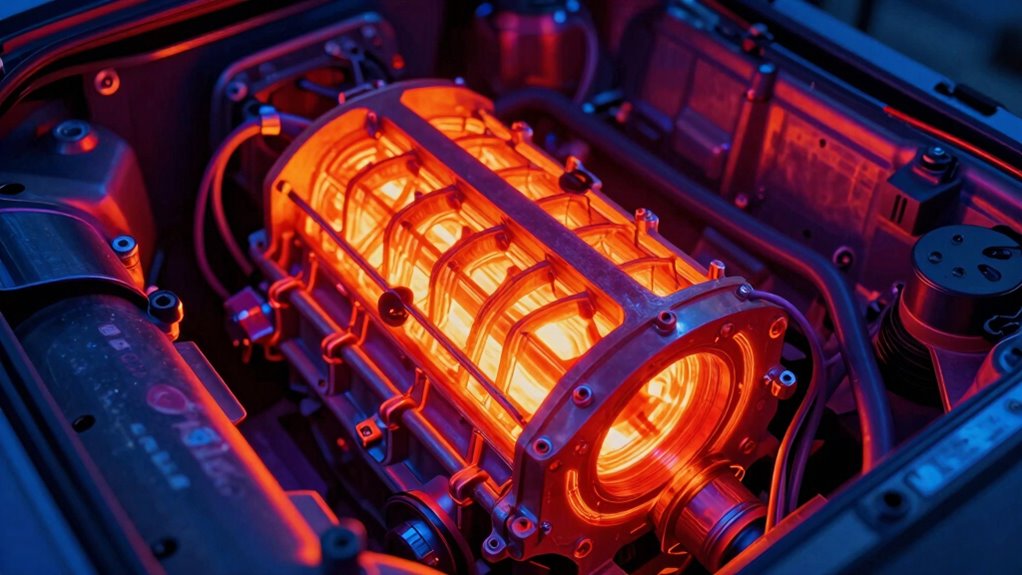
You might wonder how thermal cameras turn heat into images you can see. They detect temperature differences using specialized sensors, which capture infrared radiation emitted by objects. This data is then converted into a visual format, creating the thermal image you observe. Additionally, understanding thermal imaging fundamentals helps explain how these cameras effectively visualize heat signatures. Recognizing the importance of infrared radiation in this process reveals how thermal cameras can detect even subtle differences in heat, especially when combined with principles from Indigenous Wellness Essentials that emphasize harmony with natural energies.
Heat Detection Process
Thermal cameras detect heat by capturing infrared radiation emitted by objects, which is invisible to the naked eye. The camera’s sensors are highly sensitive to this radiation, thanks to their thermal sensitivity, allowing you to detect even slight temperature differences. To guarantee accurate readings, you often need calibration techniques that adjust the camera’s sensors for environmental conditions, such as ambient temperature or humidity. Proper calibration helps your thermal camera distinguish genuine heat variations from noise or interference. The sensors convert the infrared radiation into electrical signals, which are then processed to produce a visual image. This process allows you to see temperature differences in real-time, making thermal imaging a powerful tool for identifying heat leaks, electrical issues, or overheating components.
Image Conversion Method
When a thermal camera detects heat, it converts the infrared radiation emitted by objects into electrical signals. These signals represent the heat signature of each object within the infrared spectrum. The camera’s sensor captures variations in infrared energy, translating differences in temperature into digital data. This data is processed by the camera’s internal software, which assigns specific colors or shades to different heat levels. The result is a visual image that displays temperature variations as a thermal map. Cooler areas appear darker, while hotter regions are brighter or in warmer colors. This image conversion method allows you to see heat patterns clearly, making it easy to identify hot spots or temperature anomalies. It’s a precise way of turning invisible heat into a visible, informative image.
What Do Color Palettes Show in Thermal Images?
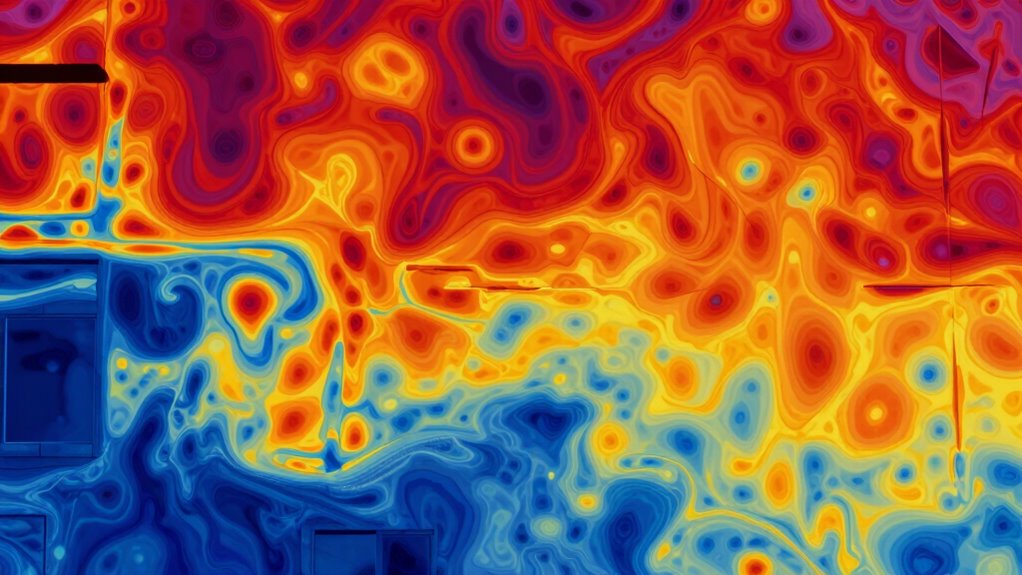
Color palettes in thermal images serve as visual maps that represent temperature variations across a surface. These palettes use different colors to indicate specific heat levels, making it easier to interpret thermal data quickly. In heat mapping, warmer areas are often shown in colors like red, orange, or yellow, signaling higher temperatures. Cooler regions typically appear in shades of blue, purple, or green. By understanding these color cues, you can identify hotspots, cold spots, or areas of concern without needing detailed numerical data. The choice of color palette can influence how easily you interpret the image, highlighting temperature differences and patterns. Overall, color palettes are essential tools that translate complex thermal information into an intuitive visual format.
Common Uses and Applications of Thermal Imaging
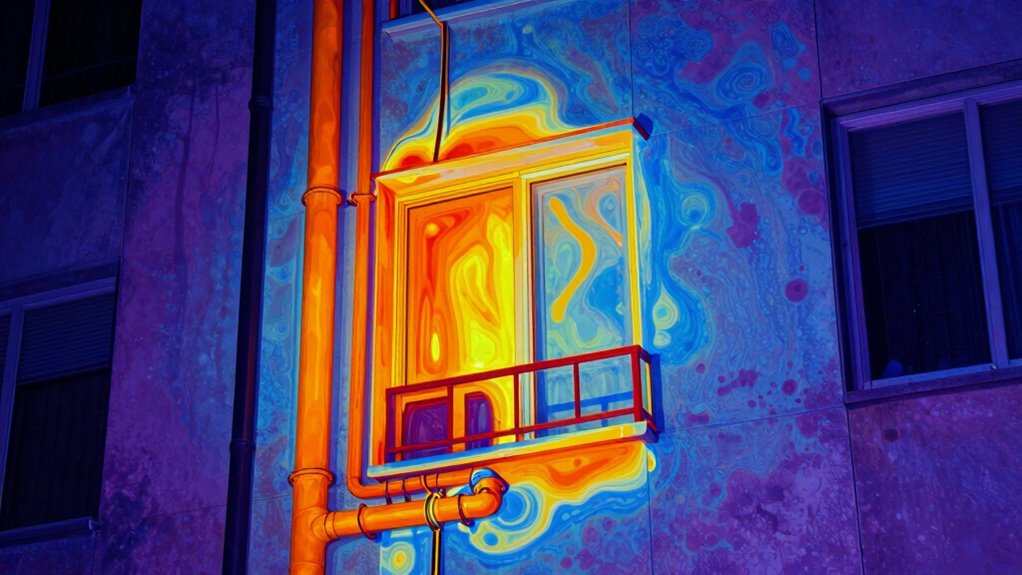
Thermal imaging has become a valuable tool across numerous fields due to its ability to visualize heat differences quickly and accurately. You’ll find it used in thermal safety, helping identify hotspots in electrical systems or buildings, preventing fires or failures. It’s also essential in wildlife observation, allowing you to spot animals at night or in dense foliage without disturbance.
| Application | Description |
|---|---|
| Thermal Safety | Detects heat leaks, electrical faults, or fire risks. |
| Wildlife Observation | Tracks animals in low light or challenging environments. |
| Application | Description |
| Thermal Safety | Detects heat anomalies for safety measures. |
| Wildlife Observation | Enables silent, non-intrusive animal tracking. |
Benefits of Thermal Imaging Over Regular Cameras
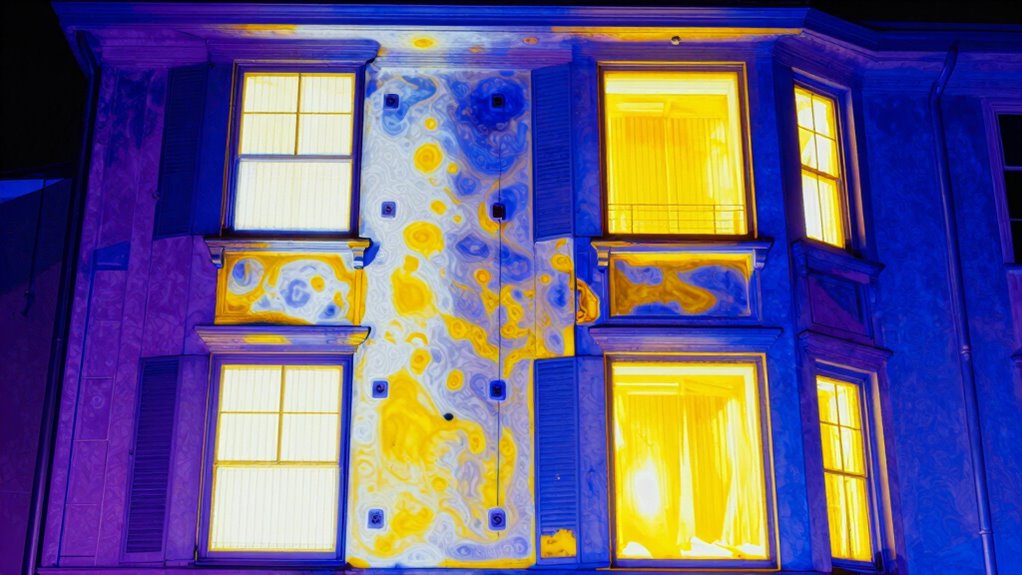
Have you ever wondered why thermal imaging often outperforms regular cameras in specific situations? The key is its ability to detect heat differences directly, offering superior thermal efficiency. Unlike regular cameras that rely on visible light, thermal imaging reveals temperature variations instantly, which helps identify issues like heat leaks or electrical faults quickly. This capability also promotes energy conservation by pinpointing areas where insulation or equipment needs improvement, reducing unnecessary energy use. Thermal cameras work effectively in low-light or obscured conditions, providing clear insights where regular cameras fall short. Overall, thermal imaging gives you a more accurate, efficient tool for detecting heat-related problems, saving you time, reducing costs, and supporting better energy management.
Limitations and Challenges in Thermal Imaging Accuracy
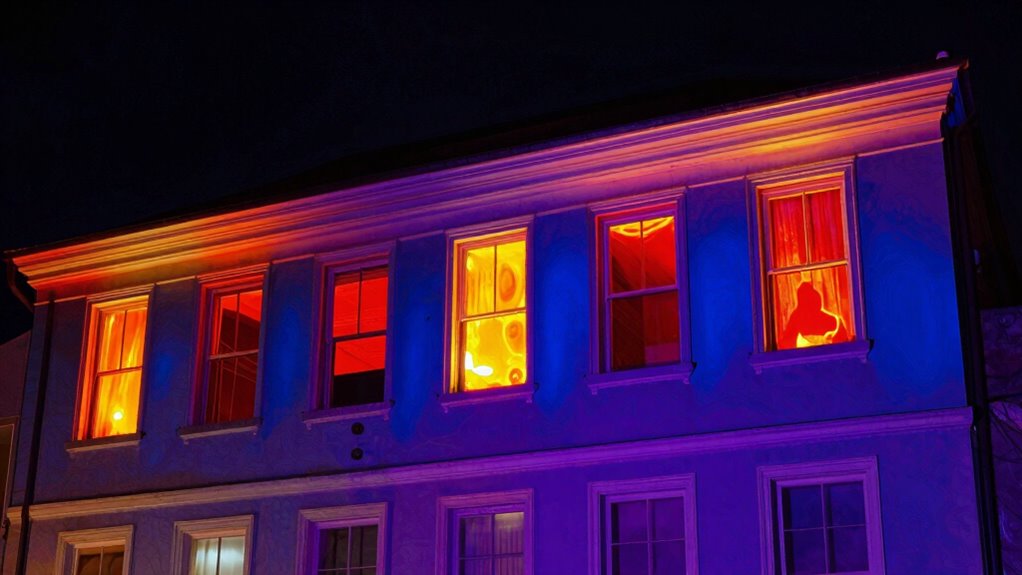
While thermal imaging offers many advantages, it also faces several limitations that can impact measurement accuracy. Calibration challenges are a primary concern, as thermal cameras need precise calibration to produce reliable temperature readings. If calibration drifts or isn’t properly maintained, measurements can become inaccurate. Environmental interference also plays a significant role, with factors like dust, smoke, humidity, and reflections affecting the camera’s ability to detect true heat signatures. Rapid temperature changes or extreme conditions can further distort readings. Additionally, the quality of the camera’s sensor influences accuracy; lower-quality sensors may struggle with detail and consistency. Understanding these limitations helps you interpret thermal images more effectively and highlights the importance of proper calibration and environmental control during measurements.
How to Choose the Right Thermal Camera for Your Needs

Choosing the right thermal camera depends on your specific needs and application. Consider the sensor calibration quality, which guarantees accurate temperature readings, especially for precise measurements. Image resolution is also vital; higher resolution captures more detailed thermal images, making it easier to identify issues. To help you decide, compare features below:
| Feature | Importance | Tips |
|---|---|---|
| Sensor Calibration | Guarantees measurement accuracy | Opt for cameras with factory calibration |
| Image Resolution | Affects image detail and clarity | Higher resolution is better for detailed analysis |
| Price & Durability | Budget and environment considerations | Balance cost with build quality and features |
Choose a camera that balances calibration, resolution, and your budget for optimal results.
Future Trends in Thermal Imaging Technology
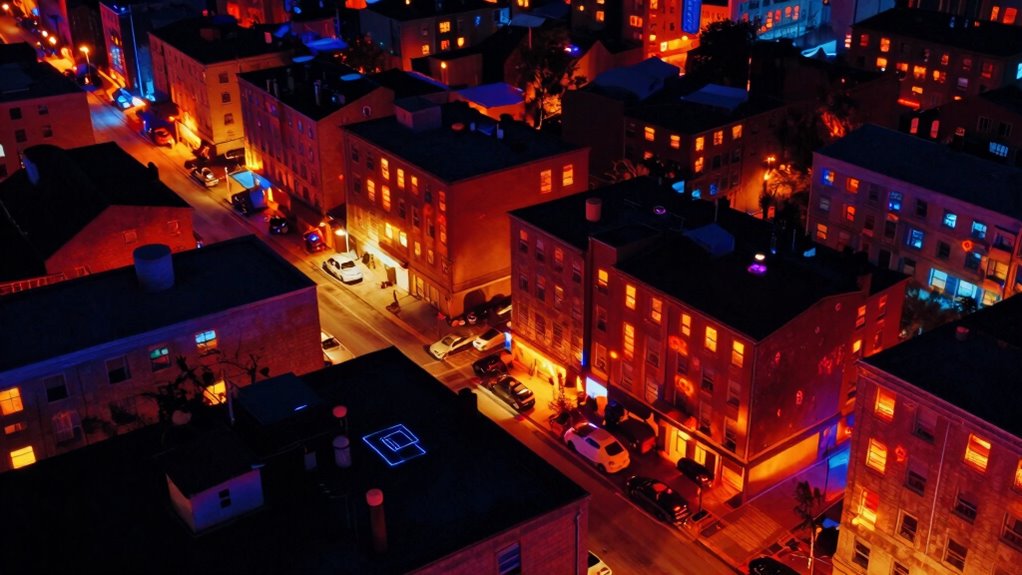
Advancements in thermal imaging technology are rapidly transforming how industries diagnose and prevent problems. Future trends focus on enhancing image resolution, making thermal cameras more precise and reliable. As these devices become more sophisticated, thermal camera maintenance will become easier with automated self-checks and diagnostics. Infrared sensor calibration will also improve, ensuring consistent accuracy over time. Expect integration with AI and machine learning, enabling real-time data analysis and predictive maintenance. Smaller, more affordable cameras will expand applications in sectors like healthcare, automotive, and home inspection. Additionally, wireless connectivity will streamline data sharing and remote monitoring. These innovations will help you get more accurate, efficient thermal readings, ultimately making heat detection faster, more reliable, and accessible across various industries.
Frequently Asked Questions
Can Thermal Cameras Detect Through Walls or Obstacles?
You can’t rely on thermal cameras to see through walls or obstacles because of wall penetration limits. Walls and other obstacles cause interference, blocking heat signals from passing through. While thermal imaging is great for detecting surface temperatures, it doesn’t penetrate solid objects, so you won’t be able to see heat behind walls or dense obstructions. For detecting heat through barriers, specialized equipment like radar or sonar is needed instead.
How Does Ambient Temperature Affect Thermal Imaging Accuracy?
Imagine the thermal landscape around you shifting like a muted sunrise; ambient temperature influences your thermal camera’s accuracy by affecting thermal sensitivity. When the surroundings are hot, the camera struggles to distinguish subtle heat differences, making images less precise. Conversely, cooler environments enhance thermal sensitivity, revealing clearer heat signatures. To get reliable results, you need to account for these temperature changes, understanding how ambient conditions can blur or sharpen your thermal view.
Are There Privacy Concerns With Using Thermal Imaging Devices?
You should be aware that thermal imaging devices can raise privacy concerns because they might lead to privacy invasion or surveillance risks. When you use these cameras, there’s a chance they could capture sensitive heat signatures without consent, potentially infringing on someone’s privacy. It’s essential to use thermal imaging responsibly, respecting privacy laws and ensuring you’re not unknowingly invading others’ personal space or monitoring areas where people expect privacy.
What Maintenance Is Required for Thermal Camera Calibration?
Think of your thermal camera as a finely tuned instrument that needs regular tune-ups. You should perform calibration frequently to counteract sensor drift, which can skew your readings over time. Regular calibration guarantees your device stays accurate, much like sharpening a blade before use. Keep an eye on calibration schedules, and if your readings seem off, recalibrate promptly. Proper maintenance keeps your thermal camera reliable and precise.
How Do Thermal Cameras Perform in Extremely Cold or Hot Environments?
In extremely cold or hot environments, thermal cameras may face environmental limitations that affect their performance. You might notice reduced accuracy or calibration challenges due to temperature extremes impacting the sensor’s stability. To maintain ideal operation, you should regularly calibrate the camera and consider using models designed for harsh conditions. Proper insulation and protective housings can also help mitigate environmental effects, ensuring reliable thermal imaging despite challenging temperatures.
Conclusion
Just like Icarus relied on the sun’s warmth, understanding thermal imaging lets you harness heat’s story. With technology advancing rapidly, you can now see beyond the visible, uncovering secrets hidden in heat. Whether for safety, maintenance, or innovation, embracing thermal cameras puts you in control of a world unseen. Remember, as with any tool, mastery comes with knowledge—so step into the future and let heat reveal what’s beneath the surface.
Fall Picks
fall essentials
As an affiliate, we earn on qualifying purchases.