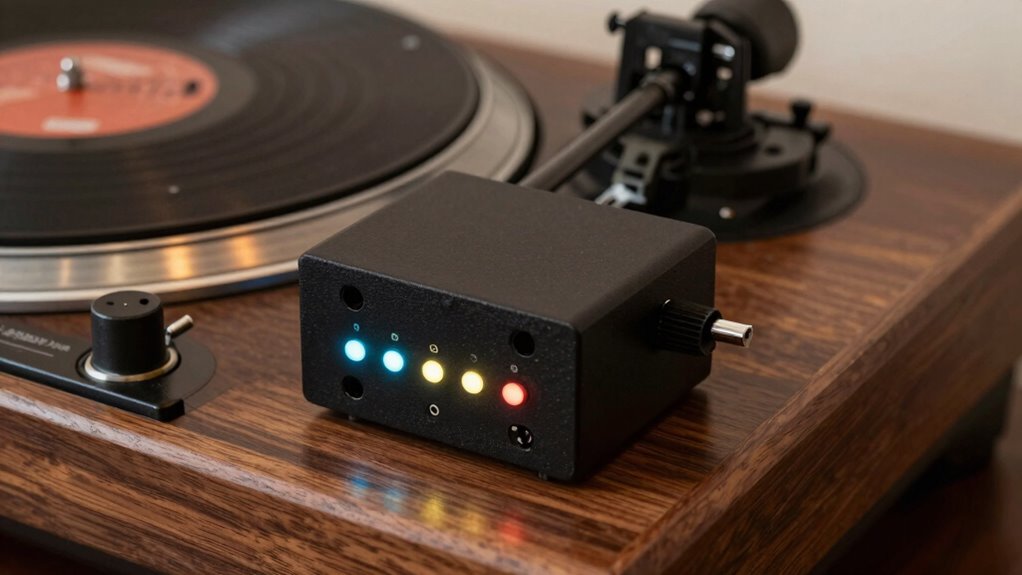

If your turntable sounds quiet, it’s likely because the signal isn’t being boosted properly. A phono preamp amplifies the tiny electrical signals from your cartridge to line level, making your music louder and clearer. Without a good preamp, your records can sound muffled or faint. Understanding how a preamp works helps you troubleshoot issues and improve sound quality. Keep exploring to discover how selecting the right preamp can transform your listening experience.
Key Takeaways
- The phono preamp boosts the low-level signal from your cartridge to line level for clear sound.
- If the preamp is faulty or incompatible, it can result in faint or quiet turntable sound.
- Poor grounding or loose connections can diminish audio volume and introduce noise.
- Dirty stylus or record debris reduces output, making your turntable sound quieter.
- Upgrading or replacing an aging or underperforming preamp can restore optimal volume and sound quality.
Top picks for "phono preamp explain"
As an affiliate, we earn on qualifying purchases.
Why Is My Vinyl So Quiet? Common Causes and Fixes
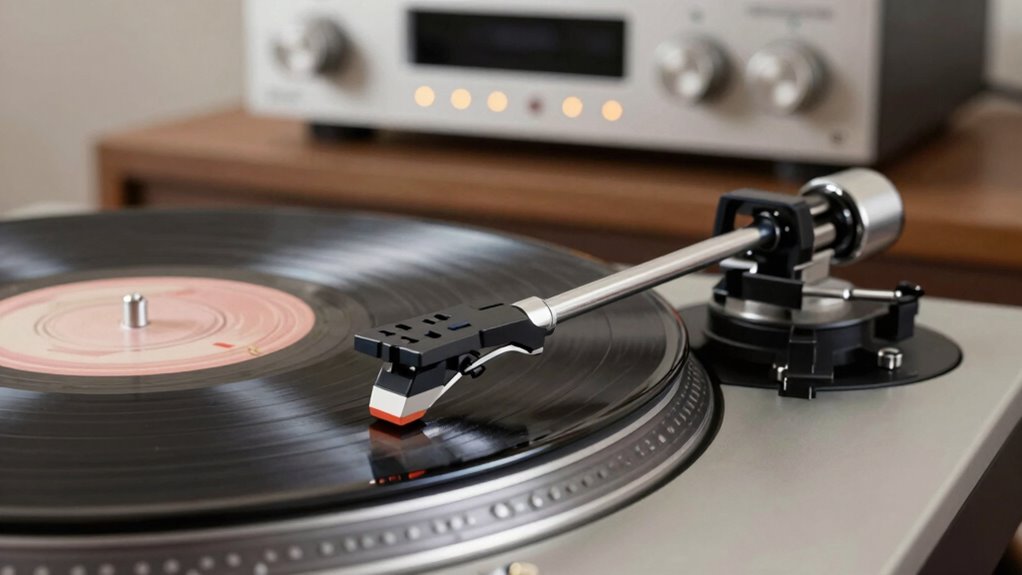
Have you noticed that your vinyl records sound surprisingly quiet? This often happens because of record noise or cartridge issues. If your turntable isn’t producing enough volume, check the cartridge connection first—loose wires or misalignment can reduce output. Also, inspect the stylus for dirt or wear, as a damaged or dirty stylus can cause weak sound and increased record noise. Poor grounding can also lead to hum or faint audio, so ensure your turntable is properly grounded. Sometimes, the problem lies in the cartridge itself; a faulty or incompatible cartridge can markedly impact volume. Address these issues by cleaning or replacing components as needed. Proper free floating design of your turntable can also influence sound quality by reducing vibrations and noise. Additionally, vibration damping techniques can help minimize unwanted noise and improve overall sound clarity. Ensuring your cartridge is correctly aligned can significantly enhance audio output and reduce noise. Regularly checking internal wiring and connections can prevent unexpected sound issues and maintain optimal performance. Proper grounding and cable connections are also vital to prevent hum and signal loss. Fixing cartridge problems and reducing record noise will help you enjoy clearer, louder sound from your vinyl collection.
What Does a Phono Preamp Do, and Why Is It Important?
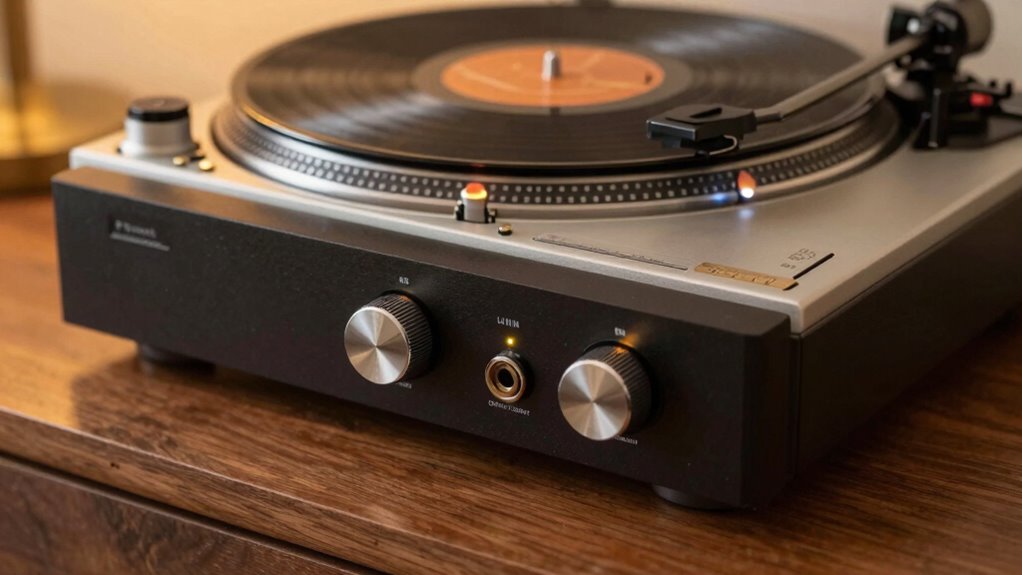
Ever wondered how your turntable’s audio transforms into the rich sound you hear through your speakers? That’s where a phono preamp comes in. It boosts the tiny, low-level signal from your cartridge to line level, making it audible and clear. Without it, your music sounds faint or distorted. A good preamp also helps prevent issues like ground loop hum, which can cause unwanted noise. Proper cartridge alignment is essential because it ensures your stylus tracks the record accurately, reducing distortion and preserving sound quality. The preamp’s role isn’t just about volume; it shapes the sound and minimizes interference. Without a proper phono preamp, your turntable’s output isn’t optimized, and your listening experience suffers.
How Does a Phono Preamp Amplify Your Turntable’s Signal?
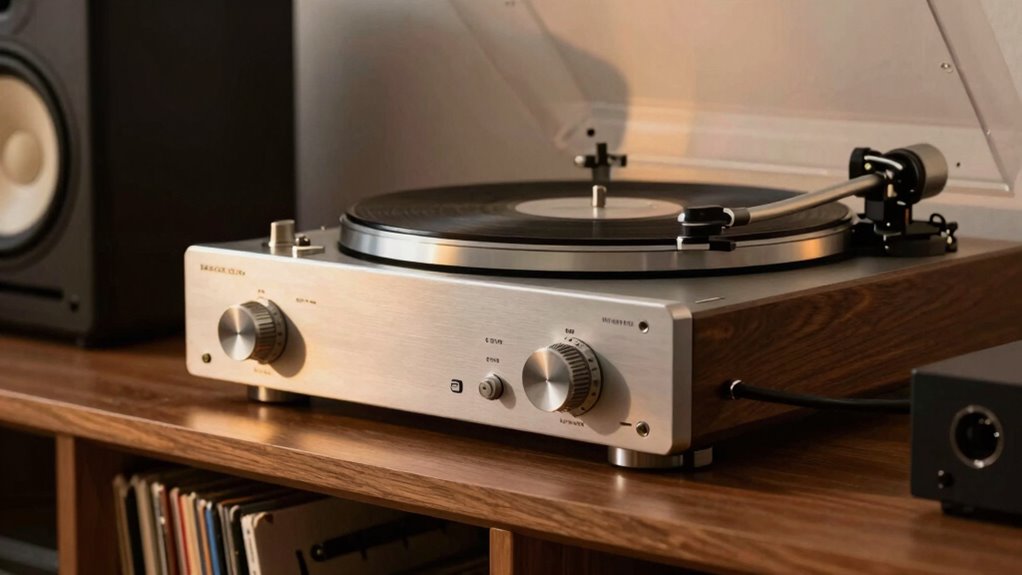
A phono preamp boosts the tiny electrical signal generated by your turntable’s cartridge to a level that your amplifier or speakers can recognize and reproduce clearly. It achieves this through multiple gain stages that increase the signal strength without adding noise. These stages carefully amplify the low-level audio signal while maintaining signal clarity, preventing distortion or muddiness. The preamp applies the RIAA equalization curve, restoring the original frequency balance. Proper gain ensures your music sounds dynamic and detailed, avoiding a quiet or thin sound. By increasing the signal to line level, the preamp ensures your turntable’s audio blends seamlessly with other sources. Additionally, the vinyl revival has increased demand for high-quality preamps to preserve the nostalgic listening experience. Recognizing the importance of precise equalization is essential for achieving optimal sound quality. Overall, it’s the key component that transforms a weak, delicate signal into a rich, full sound ready for playback.
Troubleshooting: Why Your Records Might Lack Clarity or Sound Muffled
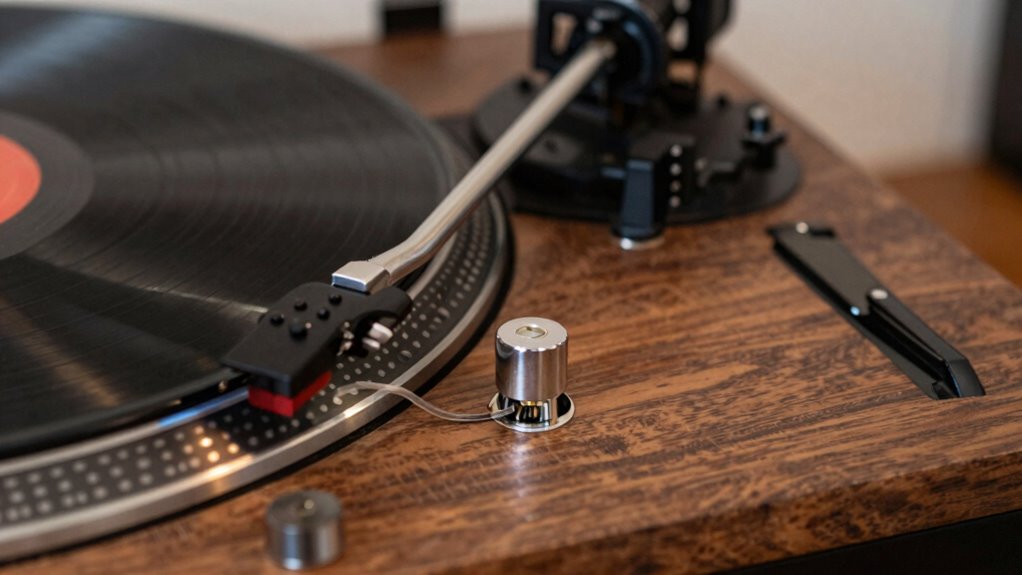
If your records sound muffled or lack clarity, several issues might be causing the problem. First, check for record groove damage, which can distort sound quality. Even small scratches or debris can dampen audio fidelity. Next, verify your stylus is properly aligned; misalignment can lead to muffled sound and uneven wear. Additionally, dirt or dust buildup on the stylus or record surface can absorb vibrations, muffling audio. Regular cleaning of your stylus and records using appropriate car care tools can help maintain sound quality. Using specialized record cleaning supplies designed for audio equipment can further enhance audio clarity and prevent buildup. Incorporating shipwreck preservation techniques into your maintenance routine can also help protect delicate stylus and record surfaces from damage. Moreover, ensuring proper grounding and shielding of your audio setup can reduce interference and improve sound clarity. Lastly, confirm that your cartridge is securely mounted and functioning correctly—loose connections or worn components diminish clarity. Addressing these issues involves inspecting for physical damage, realigning the stylus, cleaning records and stylus regularly, and making sure all connections are tight. Regularly monitoring and maintaining your equipment, including using appropriate measurement tools, can help ensure optimal performance. These steps can considerably improve your listening experience and restore clarity to your records.
Built-In vs External Phono Preamps: Which Should You Choose?
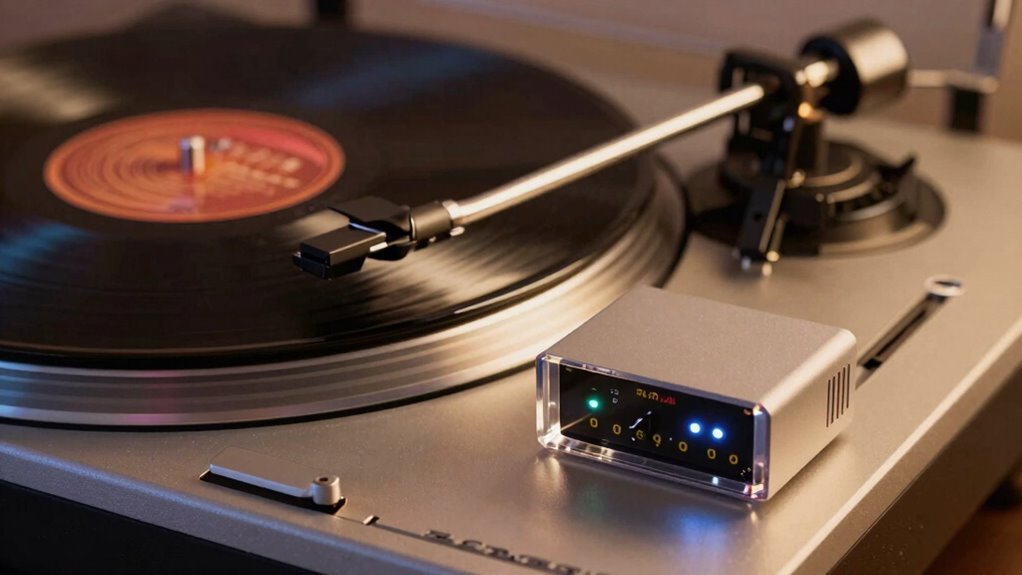
Choosing between a built-in and external phono preamp depends on your audio setup and listening priorities. Built-in preamps are convenient and space-saving, but they may compromise signal quality if they’re of lower quality or not properly calibrated. External preamps generally offer better sound clarity and allow you to select models tailored to your equipment, which helps improve overall signal quality. They can also provide greater customization to match your specific listening preferences. Additionally, some external preamps include features like noise reduction that can further enhance audio fidelity. However, they can introduce compatibility issues if they don’t match your turntable or amplifier’s inputs. If your system is simple or space is limited, a built-in preamp might suffice. But for audiophiles seeking superior sound, an external preamp usually provides better control and higher fidelity. Consider your setup’s compatibility and your desire for the best possible audio when making your choice. Additionally, understanding audio signal quality can help you make informed decisions about upgrading or choosing components.
How to Pick the Right Phono Preamp for Your Setup

Selecting the right phono preamp for your setup involves evaluating your equipment’s compatibility and your listening preferences. First, consider tone matching—ensure the preamp complements your cartridge and amplifier for ideal sound quality. Next, assess your budget considerations; quality doesn’t always mean expensive, but investing in a reliable unit pays off. Look into features like gain settings and loading options that match your turntable and cartridge specifications. Also, think about future upgrades—will this preamp serve you long-term? Finally, check for versatility, such as adjustable settings or compatibility with different cartridge types, to maximize your listening experience. Being aware of audio signal quality helps you choose a preamp that preserves your vinyl’s full richness. By focusing on tone matching and budget considerations, you’ll find a preamp that elevates your vinyl playback without overspending.
When Should You Upgrade or Replace Your Phono Preamplifier?
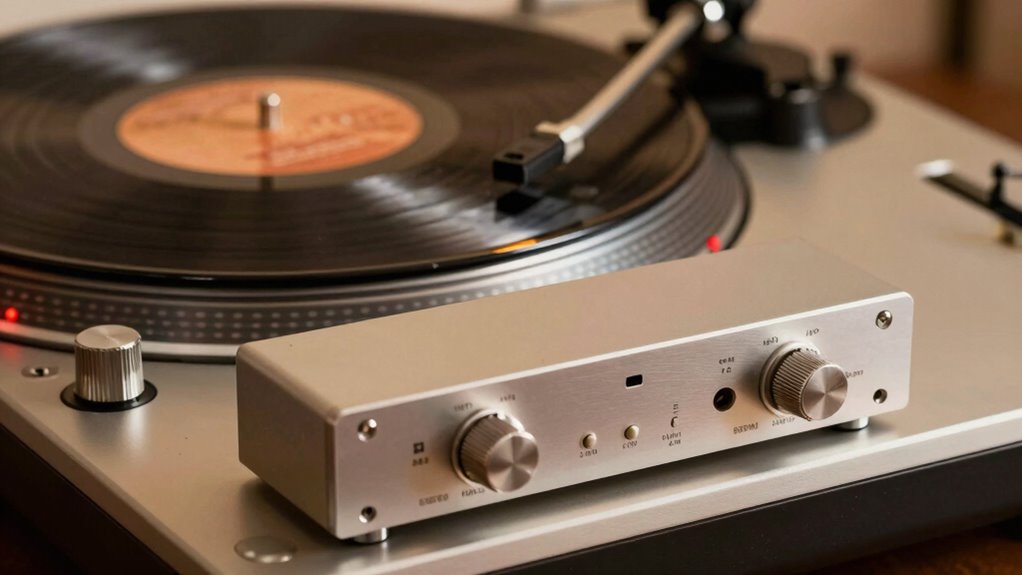
Your phono preamp should be upgraded or replaced when it no longer delivers the sound quality or features you need. Regular phono preamp maintenance helps identify issues early, but if you notice persistent noise, distortion, or weak output, it’s time for an upgrade. Consider upgrade timing if your current preamp can’t handle newer cartridges or lacks essential features like adjustable gain or rumble filters. As your system evolves, your preamp should keep pace to optimize sound. If you’ve had your preamp for years and it’s showing signs of wear or outdated technology, replacing it ensures better performance. Trust your ears; when the sound quality declines despite maintenance, it’s a clear sign that a new preamp can restore clarity and detail. Detecting passive voice can also help improve your writing clarity and effectiveness.
Do You Need a Preamp or a Mixer? Deciding What’s Best for Your System
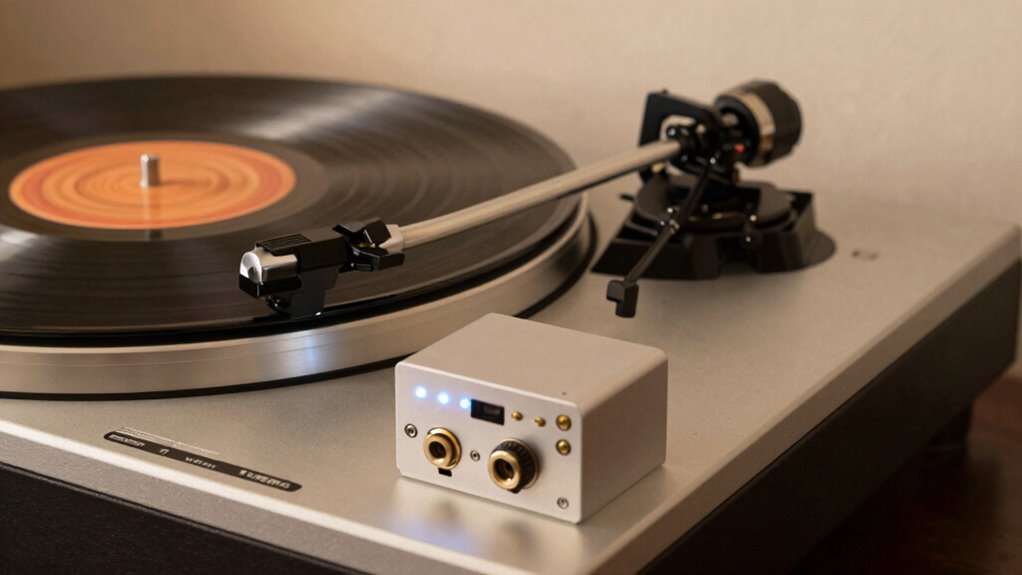
When considering whether to upgrade or replace your phono preamp, it’s also important to determine if you need a dedicated preamp or a mixer for your audio setup. If your goal is high-quality sound with minimal fuss, a dedicated preamp or audio interface might be the best choice. Sound mixers, on the other hand, are ideal if you want to combine multiple sources or control levels easily. Additionally, understanding the importance of proper gear care and eco-friendly disposal can help you maintain your equipment responsibly over time. Proper contrast ratio and color accuracy are also essential in ensuring your audio-visual setup delivers optimal performance and visual clarity. Consider these factors: – Your system’s complexity and number of audio sources – The need for precise level adjustments – Whether you want to streamline connections with audio interfaces – If you prefer versatility for live or studio environments. Recognizing the fundamental differences between these devices can help you make an informed decision that enhances your listening experience. Choosing between a preamp and a sound mixer depends on your specific needs, but understanding these differences helps ensure you get the best sound for your turntable. Being aware of audio signal quality can further guide your choice to optimize your setup. Additionally, paying attention to proper gear maintenance can extend the lifespan of your equipment and ensure consistent performance over time.
Frequently Asked Questions
Can I Use a Regular Amplifier Instead of a Dedicated Phono Preamp?
Yes, you can use a regular amplifier instead of a dedicated phono preamp, but you need to verify cartridge compatibility. Most standard amplifiers lack the necessary RIAA equalization for turntables, so the sound may be distorted or too quiet. If your amplifier has a dedicated phono input, you’re good to go. Otherwise, consider amplifier alternatives with a built-in preamp or add an external phono preamp to guarantee proper sound quality.
How Does Cartridge Type Affect My Turntable’s Volume and Sound Quality?
While cartridge type influences your turntable’s sound, it also affects volume and quality through cartridge compatibility and signal strength. Moving from a high-output cartridge to a low-output one can cause quieter playback, requiring a more sensitive preamp. The cartridge’s design impacts how well your system reproduces sound, so choosing the right type guarantees ideal volume and clarity. Don’t overlook this detail; it’s key to achieving the best listening experience.
What Is the Impact of Cable Quality on Vinyl Playback Volume?
Higher quality cables with better shielding improve your vinyl playback volume by reducing interference and noise, ensuring a clearer sound signal. Good connection quality between your turntable and preamp is vital; loose or poor connections can decrease volume and affect sound fidelity. Investing in well-shielded, high-quality cables helps maintain consistent volume levels, enhances overall sound clarity, and delivers a richer listening experience by minimizing external interference that can diminish audio output.
Are There Specific Settings to Optimize My Preamp for Different Records?
You can optimize your preamp by adjusting the gain settings based on the record groove dynamics and stylus pressure. For records with louder grooves, lower gain helps prevent distortion, while quieter records may need higher gain. Keep an eye on your stylus pressure to avoid excessive wear, which impacts sound quality. Experiment with these settings to find the perfect balance, ensuring clear, balanced playback across all your vinyl collection.
How Does a Preamp Affect the Overall Fidelity of My Vinyl Listening Experience?
A preamp enhances your vinyl listening by boosting the low-level signal from your turntable, ensuring better audio clarity and signal integrity. It helps you hear more detail, depth, and warmth in your records, making your listening experience richer. Without a good preamp, your sound might be thin or noisy. So, investing in a quality preamp directly improves how accurately and vividly you enjoy your vinyl collection.
Conclusion
Think of your turntable and preamp like a team of musicians. If one instrument’s too quiet, the whole song suffers. When your vinyl sounds dull or muffled, it’s like missing a key note. Upgrading your preamp is like tuning that instrument — suddenly, everything’s clearer and more vibrant. Don’t let your records be background noise; with the right preamp, you’ll hear every detail as if the band’s playing just for you.