

For beginners, the simple rule is that thicker SUPs (around 4.5 to 6 inches) offer better stability and confidence on the water. Thicker boards distribute your weight more evenly and provide a larger surface area, making balancing easier. Keep in mind that water conditions and boat width also matter. If you want to master your skills and choose the best board, there’s more to discover.

Get business pricing on monitors, keyboards and dev gear
- Business-only prices and quantity discounts
- Tax-exempt purchasing
- Multiple users, one account, clear invoices
Key Takeaways
- Thicker SUP boards (4.5-6 inches) generally provide more stability for beginners.
- Increased thickness distributes weight evenly, reducing wobbling and boosting confidence.
- Balance thickness with water conditions; thicker boards are better for waves and currents.
- Inflatable SUPs with greater thickness are more forgiving and easier to learn on.
- Avoid overly thin boards, as they compromise stability and safety for beginners.
inflatable SUP board 4.5 inch thickness
As an affiliate, we earn on qualifying purchases.
As an affiliate, we earn on qualifying purchases.
How Does SUP Thickness Affect Your Balance and Confidence?

Since thicker SUP boards distribute your weight more evenly, they considerably improve your balance on the water. This stability helps you feel more confident, especially if you’re new to paddling. A thicker board provides a larger surface area, making it easier to stay upright and steady. The paddle material also plays a role; lighter paddles can enhance your control and reduce fatigue, further boosting confidence. Keep in mind, thicker boards may require more storage space, so think about how you’ll transport and store your board at home. Additionally, understanding SUP thickness and stability can help you select the right board for your skill level and needs. Properly selecting SUP thickness based on your activity type and skill level can significantly improve your overall paddling experience, especially when you consider factors like board stability and control to match your comfort level. For beginners, choosing the right board construction materials can also impact durability and weight, enhancing your confidence on the water.
beginner stability SUP paddleboard
As an affiliate, we earn on qualifying purchases.
As an affiliate, we earn on qualifying purchases.
The One Rule to Pick the Right SUP Thickness for Beginners
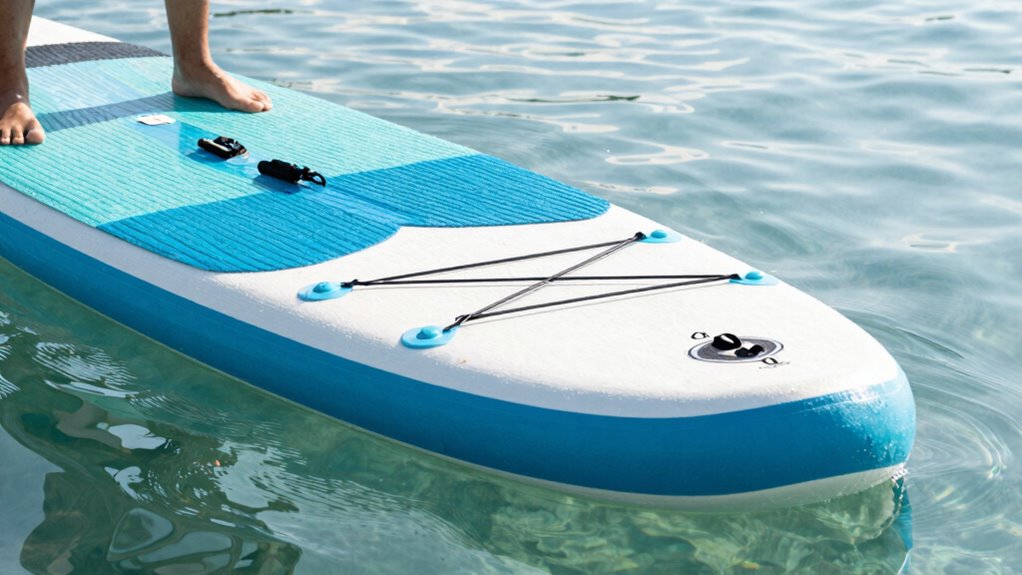
Your body thickness plays a key role in choosing the right SUP thickness because it directly affects your balance and confidence. If you’re taller or heavier, a thicker board can provide the stability you need to feel secure on the water. Keep this in mind to select a board that supports your body type and makes your paddling experience enjoyable. Incorporating smart technology into your equipment can also help monitor your stability and progress as a beginner. Additionally, understanding piercing care and hygiene can help ensure your gear remains in optimal condition, enhancing both safety and performance during your paddling sessions. Considering equipment customization based on your body measurements can further improve your overall paddling experience. Utilizing net worth growth hacks can also inspire you to invest in high-quality gear that boosts your confidence and stability on the water. Finally, familiarizing yourself with aviation regulations can help develop discipline and safety awareness that translate well into water sports safety practices.
Body Thickness Matters
Choosing the right SUP thickness is vital for beginners because it directly affects stability and ease of use. The body thickness of your SUP, often linked to its material and design, plays an important role. Thicker boards tend to be more stable, making balancing easier and reducing the risk of falling. When considering SUP material, look for options like inflatable PVC or solid foam, which influence overall thickness and durability. Additionally, thicker boards usually require more space for SUP storage, so plan accordingly. A thicker SUP provides better floatation and confidence on the water. Moreover, body thickness can impact the overall performance, especially for beginners learning to paddle efficiently. Finding the right balance ensures you enjoy your time on the water while building your skills comfortably. Proper SUP thickness selection is also essential for ensuring safety and performance, especially for beginners. Understanding the energetic alignment with your SUP can further enhance your confidence and enjoyment on the water.
Balance and Confidence
How do you find the perfect SUP thickness to maintain balance and boost confidence? The key is choosing a board that offers ideal balance improvement without feeling unstable. Thicker SUPs naturally provide more stability, making it easier for beginners to stay upright and confident on the water. When your board feels steady under your feet, your confidence building accelerates, encouraging you to try new moves and explore further. A good rule of thumb is to select a thickness that supports your weight comfortably while offering enough stability to prevent wobbling. This balance between thickness and stability helps you develop a solid foundation, making paddleboarding more enjoyable and less intimidating. Understanding SUP stability factors can help you make more informed choices for your skill level and conditions. Additionally, considering board construction and materials can influence overall stability and durability, ensuring a better experience. Recognizing the impact of board shape can further refine your selection process. Ultimately, the right SUP thickness enhances your balance and fosters confidence on every ride.
As an affiliate, we earn on qualifying purchases.
What Factors Like Width and Material Influence SUP Stability?

The width and material of a stand-up paddleboard (SUP) play crucial roles in its stability on the water. A wider board offers more surface area, making it easier to balance, especially for beginners. When choosing between inflatable vs rigid SUPs, consider that rigid boards tend to be more stable due to their solid structure, but inflatables are more forgiving and easier to transport. Material also impacts stability; rigid boards often use durable foam and fiberglass, while inflatables rely on sturdy, layered PVC. Grocery savings strategies can help you allocate resources toward higher-quality equipment if desired. Deck padding adds grip and comfort, helping you maintain balance. The combination of width, material, and deck padding determines how steady you feel on the water, so select options that match your skill level and intended use for the best stability. Additionally, understanding SUP construction techniques can help you choose a board that offers optimal stability and durability for your needs. Remember that proper SUP storage and maintenance also contribute to the longevity and consistent performance of your board.
inflatable paddleboard with high stability
As an affiliate, we earn on qualifying purchases.
As an affiliate, we earn on qualifying purchases.
What Thickness Works Best for Calm Lakes vs. Coastal Waters?

For calm lakes, a moderate SUP thickness provides enough stability without sacrificing maneuverability. In contrast, coastal waters benefit from a thicker board that offers extra stability against waves and currents. Understanding these differences helps you choose the right thickness for a safer, more enjoyable experience. Additionally, considering top creative and gaming gear for pro users can enhance your overall outdoor or indoor SUP setup, ensuring optimal performance and durability. Selecting the appropriate SUP materials can further improve board performance and longevity in various water conditions.
Calm Lakes: Optimal Thickness
Calm lakes typically require a different thickness of SUP material than coastal waters to guarantee ideal stability and safety. For calm lakes, a slightly thinner board, around 4.5 to 6 inches thick, often works best, as it maintains good hydrodynamic properties without adding unnecessary weight. Thinner boards can improve maneuverability and make paddling easier, especially for beginners. Paddle design also plays a role; wider, more stable paddles complement thinner boards, enhancing balance on calm waters. Since lakes are usually less turbulent, you don’t need the extra buoyancy that thicker boards provide. This suitable thickness strikes a balance between stability and ease of use, helping you enjoy a safe, comfortable experience without sacrificing performance.
Coastal Waters: Enhanced Stability
While calmer coastal waters demand more stability, choosing the right SUP thickness is essential to guarantee safety and performance. Thicker boards generally provide enhanced stability, aligning with hydrodynamic principles that improve balance in variable conditions. For coastal waters, a slightly thicker SUP—around 4.5 to 6 inches—helps you stay steady against small waves and currents. This stability allows you to focus on refining your paddle technique without worrying about instability. Remember, a thicker board offers more buoyancy, but it shouldn’t be so heavy that it hampers maneuverability. Understanding hydrodynamic principles helps you select the ideal thickness, ensuring your paddle strokes are efficient and controlled. By choosing the right SUP thickness, you’ll navigate coastal waters confidently and safely.
Tips to Find a Beginner-Friendly SUP Based on Thickness
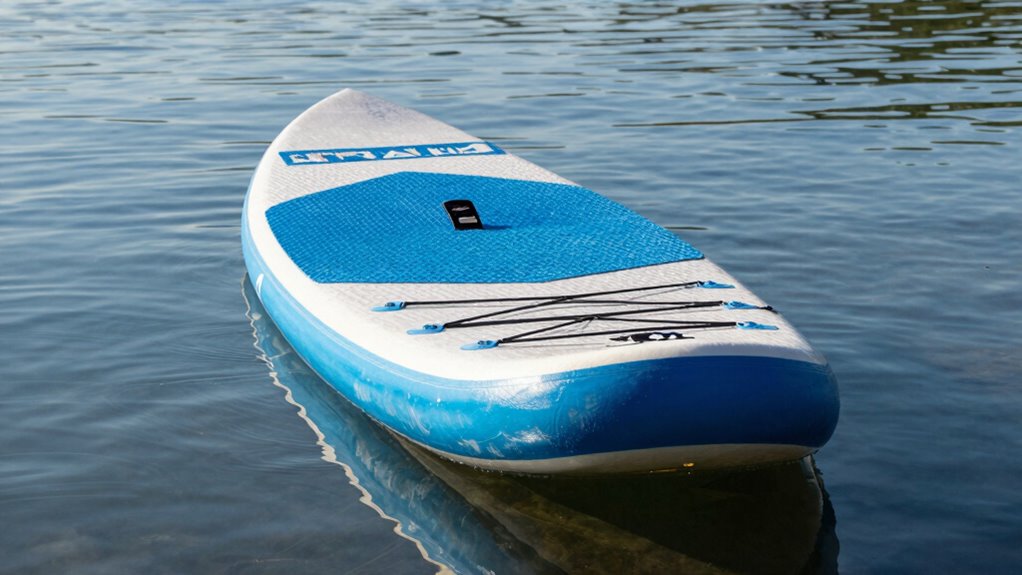
How can you choose a beginner-friendly SUP based on thickness? Start by considering whether you want an inflatable vs solid paddleboard. Inflatable boards are generally more forgiving and easier to store, making them ideal for beginners. Solid boards tend to be stiffer and more stable but are less portable. For a beginner vs advanced rider, a thicker SUP—around 4.5 to 6 inches—offers better stability and balance, especially when you’re still developing your skills. Thicker boards distribute your weight more evenly and are less likely to wobble. If you’re just starting out, prioritize a slightly thicker inflatable SUP, which combines ease of use with added stability. This way, you’ll build confidence before moving on to more advanced or thinner boards.
Common Mistakes to Avoid When Choosing SUP Thickness

Choosing the wrong SUP thickness can undermine your confidence and safety on the water. A common mistake is ignoring deck padding, which affects comfort and grip, especially on thicker boards. Another error is choosing a color option just for looks without considering visibility and safety. Be cautious of selecting a board that’s too thick, making it harder to balance, or too thin, risking instability.
| Mistake | Impact |
|---|---|
| Overlooking deck padding | Reduced comfort and grip |
| Ignoring color options | Safety and visibility concerns |
| Choosing incorrect thickness | Stability and ease of paddling |
| Neglecting board weight | Portability and handling challenges |
Frequently Asked Questions
How Does SUP Thickness Impact Overall Paddleboard Durability?
Thicker SUPs generally boost durability because they offer better material rigidity, making them less prone to dings and punctures. You’ll find that increased thickness often means higher cost considerations, but it’s a worthwhile investment if you plan to use your paddleboard frequently or in rough waters. Overall, greater thickness enhances the board’s lifespan, giving you more confidence and stability during your paddling adventures.
Can Thicker SUPS Be More Difficult to Transport or Store?
Thicker SUPs can be a bit of a handful when it comes to transportation and storage challenges. They’re often bulkier and heavier, making them harder to carry or fit into tight spaces. You might find that they require more planning, like securing a larger roof rack or finding extra storage room. Just remember, with a little extra effort, you’ll be paddling smoothly — it’s worth it for the added stability!
Is There an Ideal Thickness for Different Weight Ranges?
For different weight ranges, the ideal SUP thickness depends on material flexibility and your aesthetic preferences. If you weigh less, a thinner board offers better maneuverability and easier storage, while heavier users benefit from thicker, more stable boards. Consider your style and comfort, choosing a thickness that balances stability and flexibility. Ultimately, selecting the right thickness enhances your paddling experience, ensuring you stay comfortable and confident on the water.
How Does SUP Thickness Influence Maneuverability and Turning?
Imagine you’re steering a ship through choppy waters. Thinner SUPs, like a sleek vessel, offer more deck flexibility, making turns sharper and easier. Thicker boards, akin to a sturdy barge, tend to be less maneuverable but more stable. Thinner SUPs also resist water more effectively, reducing weight and enhancing control. So, your choice in thickness directly impacts your agility and how smoothly you can navigate turns.
Are There Specific Thickness Recommendations for Different Skill Levels?
For different skill levels, choosing the right SUP thickness is key. Beginners benefit from a thicker board, around 4.5 to 6 inches, which offers more stability through board customization and material selection. As you improve, you might opt for thinner boards, around 4 inches, for better maneuverability. Your choice depends on your skill, water conditions, and personal preferences, ensuring you get the most out of your paddleboarding experience.
Conclusion
Choosing the right SUP thickness can boost your confidence and keep you stable on the water. Remember, thicker boards generally offer more stability, especially for beginners. Did you know that 60% of new paddleboarders find their balance faster with a slightly thicker board? Keep in mind your water conditions and skill level. Stick to the simple rule, avoid common mistakes, and you’ll enjoy your paddling adventures even more!
Fall Picks
fall essentials
As an affiliate, we earn on qualifying purchases.