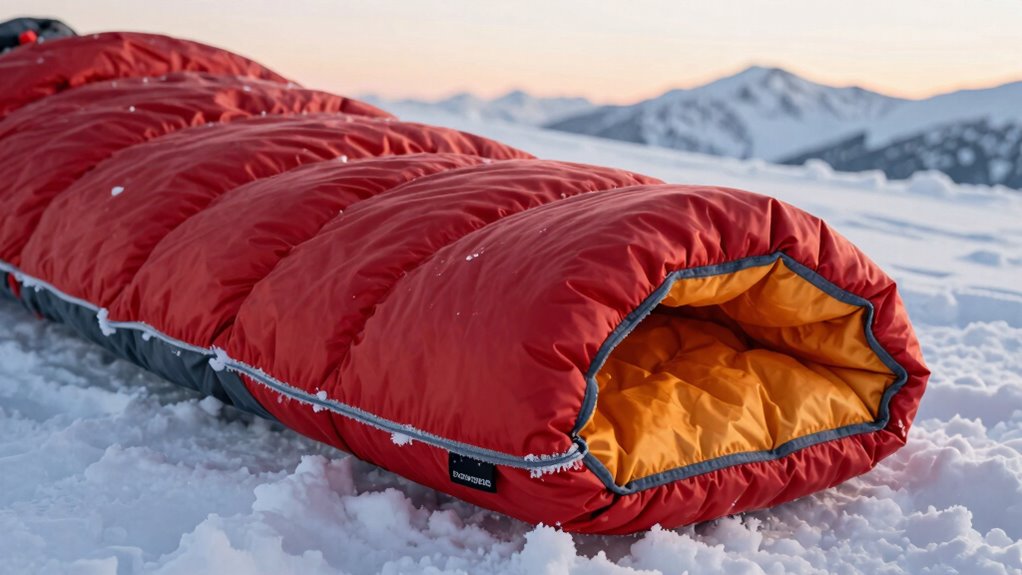
Your sleeping bag’s temperature rating helps you estimate how warm it will keep you, but don’t rely on it alone. Ratings show comfort, limit, or extreme temperatures, and aren’t exact for everyone or every situation. Factors like insulation type, fit, and layering also influence warmth. To avoid freezing, choose a bag rated lower than the coldest temperatures you expect. If you keep exploring, you’ll learn how to choose the right one for your trip.
Key Takeaways
- Sleeping bag labels provide general guidelines, not exact temperatures; always consider personal factors and environmental conditions.
- Understand the difference between comfort, limit, and extreme ratings to select a suitable sleeping bag.
- Use layering and appropriate clothing to supplement the bag’s insulation and prevent freezing.
- Choose insulation type (down or synthetic) based on weather conditions and moisture exposure for better warmth.
- Proper fit, insulation maintenance, and the use of sleeping pads are crucial to avoid cold risks despite labeled ratings.
Top picks for "sleep temperature rating"
Open Amazon search results for this keyword.
As an affiliate, we earn on qualifying purchases.
What Do Sleeping Bag Temperature Ratings Really Mean?
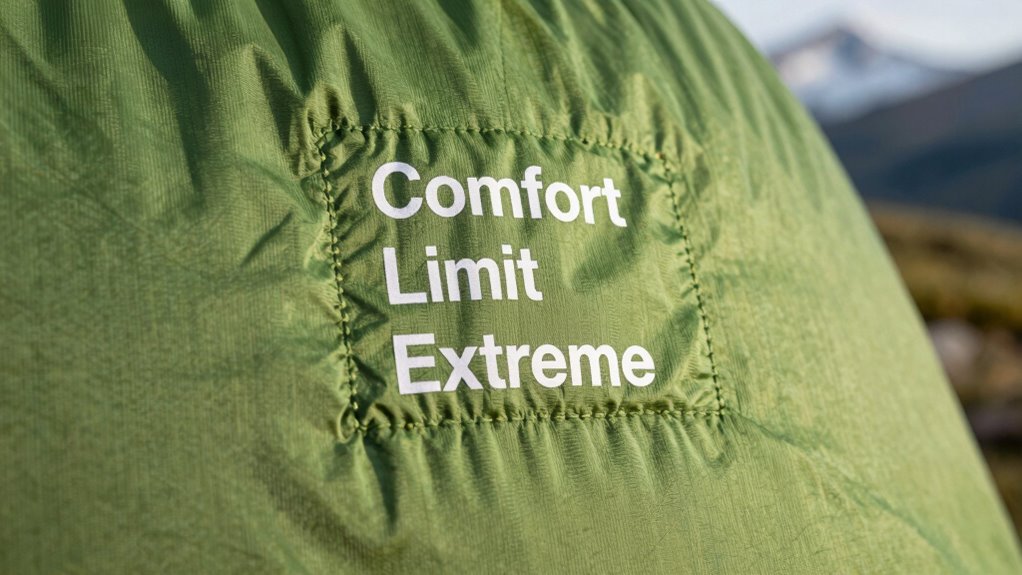
Understanding what sleeping bag temperature ratings actually indicate can be confusing, but it’s essential for choosing the right gear. These ratings are based on insulation materials that trap body heat and protect you from temperature extremes. Different insulation types, like down or synthetic, have varying efficiencies, affecting how well a bag performs in cold conditions. The ratings typically list three temperatures: comfort, limit, and extreme. The comfort temperature is what you can expect to sleep comfortably at, while the limit is the lowest temperature where you might still sleep but could be at risk of feeling cold. Extreme ratings indicate the absolute lowest temperature where the bag offers some protection, but not warmth. Knowing these ratings helps you pick a sleeping bag suited to your environment and safety needs. Additionally, understanding body body heat retention and the impact of materials used in sleeping bags can further help in selecting appropriate gear for different conditions.
Common Misconceptions About Sleeping Bag Temperature Labels
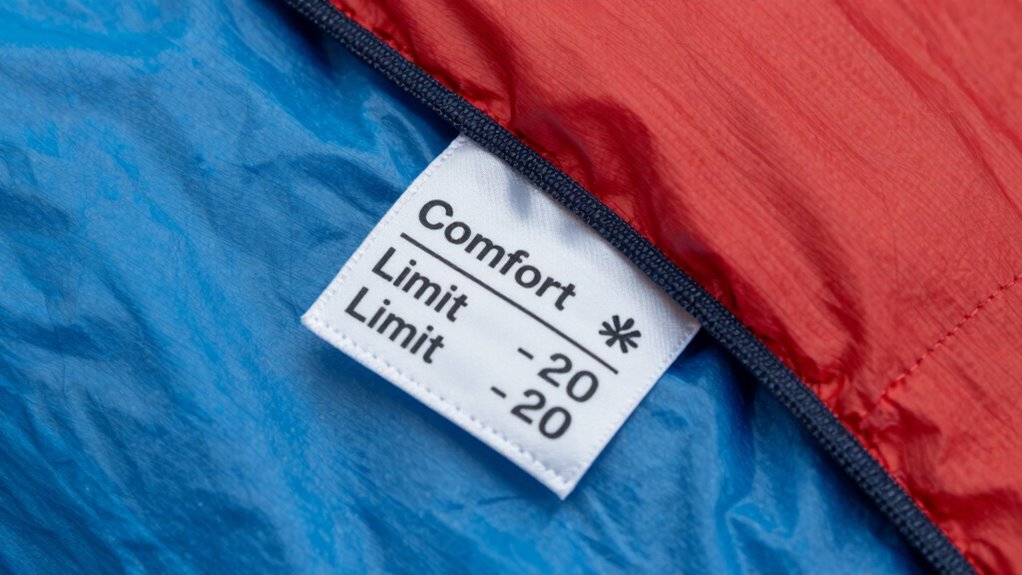
Many people assume that a sleeping bag’s temperature ratings are exact and universally applicable, but in reality, these labels often lead to misconceptions. Sleeping bag myths circulate, causing confusion about how ratings translate to real-world conditions. You might think a bag rated for 20°F will keep you warm in all environments, but factors like insulation type, personal metabolism, and sleep habits play a big role. Temperature label confusion can lead you to underestimate or overestimate a bag’s warmth, risking discomfort or cold nights. The ratings are based on standardized tests, not your unique situation. Don’t rely solely on the label. Instead, understand these ratings as general guidelines, and consider other factors like layering and weather conditions for a more accurate assessment. Additionally, understanding insulation types can help you select a sleeping bag better suited to your needs, especially when considering thermal efficiency and how it impacts comfort in different environments. Recognizing the influence of environmental factors can further refine your choice to ensure warmth and safety during your adventures. For example, knowing how insulation type affects heat retention can make a significant difference in colder conditions. It’s also beneficial to account for personal factors such as sleeping habits and activity level, which influence how warm you feel during the night.
How to Choose the Right Sleeping Bag Temperature Rating for Your Trip
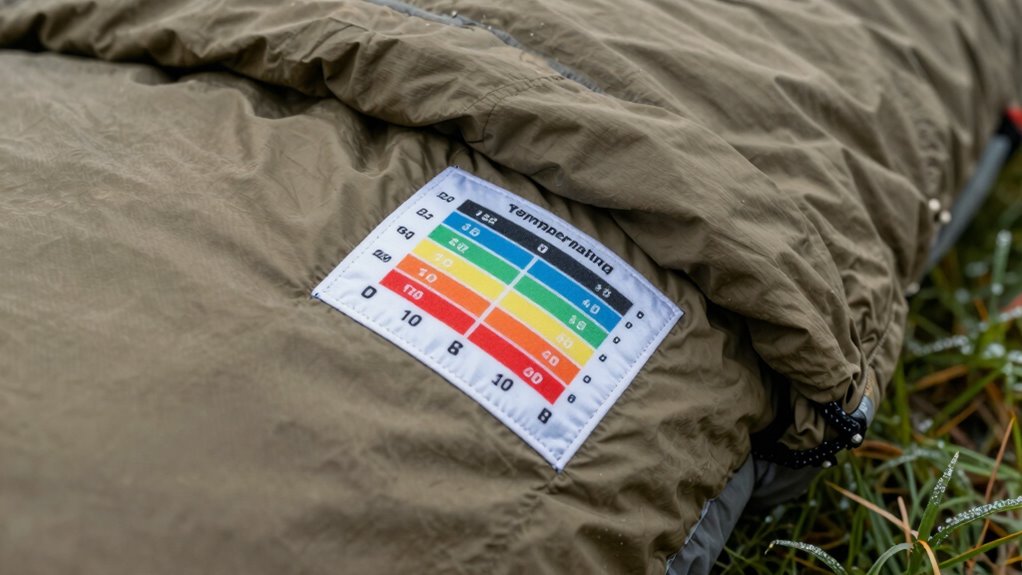
Choosing the right sleeping bag temperature rating starts with evaluating your specific trip conditions and personal comfort. Consider the expected weather, season, and nighttime temperatures. Think about layering strategies—adding or removing clothing layers can help you stay warm without over-insulating. Pay attention to sleeping bag materials; down offers lightweight warmth, while synthetic fabrics dry faster and perform better in damp conditions. If you’re camping in colder environments, opt for a bag with a lower temperature rating, but don’t forget that layering can boost your warmth without needing a super-rated bag. Understanding sleeping bag ratings can help you make more informed choices for your trip. Additionally, understanding smart thermostat protocols can help you maintain a comfortable indoor environment when not camping, ensuring your home stays cozy and energy-efficient. Having accurate measurement tools can also assist in assessing weather conditions and ensuring your gear performs as expected. Incorporating temperature regulation methods, such as cold or hot therapy techniques, can further optimize your comfort before and during your trip. To make the most of your gear, it’s also helpful to familiarize yourself with sleeping bag insulation types, which influence how well the bag retains heat. Conversely, for milder trips, a higher-rated bag reduces weight and bulk. Matching your sleeping bag’s rating with your trip conditions and layering options ensures you stay comfortable and safe throughout your adventure.
How to Read and Compare Sleeping Bag Temperature Ratings
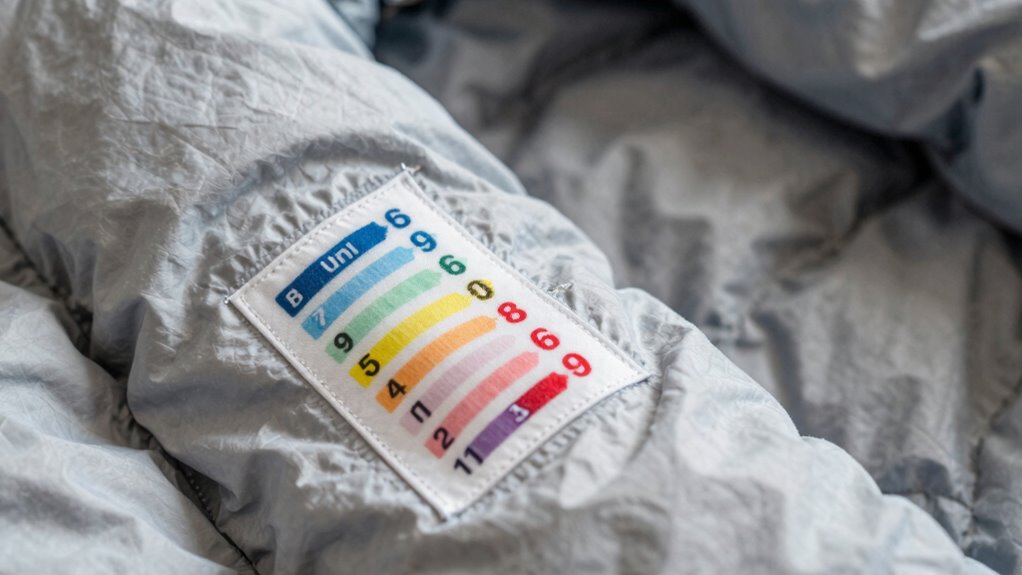
Reading sleeping bag temperature ratings can seem confusing at first, but once you know how to interpret the labels, comparing options becomes straightforward. The rating typically indicates the comfort or limit temperature, reflecting how well the sleeping bag insulation keeps you warm. Comfort ratings show the temperature at which most people feel cozy, while lower ratings like the limit or extreme indicate the minimum temperatures where sleep remains possible or survival is at risk. When comparing bags, look at these ratings to match your intended conditions. Remember that insulation type impacts warmth—down insulates more efficiently than synthetic. KTM electric dirt bikes are known for their high performance and efficiency, which can also be reflected in the quality of their insulation and gear used in outdoor settings. Always consider your own temperature comfort preferences and the expected weather to select a sleeping bag with appropriate ratings, ensuring a warm, restful night outdoors. Understanding car protection accessories can help you keep your gear in top condition during outdoor adventures. Additionally, pay attention to sleeping bag construction features, such as baffles and draft collars, which can further influence warmth and comfort in cold conditions.
Other Factors That Influence Your Sleeping Bag’s Warmth and Effectiveness

While understanding a sleeping bag’s temperature ratings helps you pick the right model, several other factors can influence how warm and effective it actually is during your trip. The inner layer plays a vital role—materials like fleece or brushed nylon can add comfort and trap heat better. Insulation material also matters; down offers superior warmth-to-weight ratio, but synthetic insulates perform better in damp conditions. The fit impacts warmth as well—if your bag is too loose, heat escapes, but a snug fit retains more body heat. Additionally, your sleeping pad provides insulation from cold ground, and wearing appropriate layers inside the bag can boost warmth. Material choice can also significantly affect insulation performance and durability. Proper water damage and drying techniques are essential for maintaining the insulation’s effectiveness, especially after exposure to moisture, ensuring your sleeping bag stays warm in the outdoors. Being aware of insulation maintenance practices can prolong the life of your sleeping bag and preserve its insulating properties. Regularly inspecting and cleaning your sleeping bag can help prevent deterioration of materials and maintain optimal warmth. Considering these factors guarantees your sleeping bag keeps you warm, no matter what ratings suggest.
Frequently Asked Questions
Are Sleeping Bag Temperature Ratings Standardized Across Brands?
No, sleeping bag temperature ratings aren’t fully standardized across brands. You’ll notice some brand consistency in how ratings are labeled, but rating variability can still occur due to differences in insulation materials and testing methods. This means you shouldn’t rely solely on the label. Instead, check reviews and consider how each brand tests their bags to make certain you pick the right temperature for your needs.
How Accurate Are Temperature Ratings in Real-World Conditions?
You might find that temperature ratings offer a helpful starting point, but temperature variability can influence your user experience. In real-world conditions, ratings aren’t always perfectly accurate, especially if your pack’s insulation and weather change unexpectedly. It’s wise to add a layer or choose a slightly warmer bag for safety, rather than relying solely on the label. This way, you stay warm and comfortable, no matter what the environment throws your way.
Can You Use a Sleeping Bag Rated for Lower Temperatures in Warmer Weather?
You can use a sleeping bag rated for lower temperatures in warmer weather, but it may compromise insulation effectiveness and comfort. Since the bag’s seasonal appropriateness isn’t suited for warmer conditions, you’ll likely overheat and feel restricted. Always choose a bag designed for the current climate to guarantee ideal comfort and performance. Using a colder-rated bag in warm weather isn’t recommended unless you want to risk overheating and reduced sleep quality.
Do Sleeping Bag Materials Affect the Temperature Rating?
Sleeping bag fabrics and insulation types markedly shape the temperature rating. Lightweight, breathable fabrics like nylon or polyester prevent overheating, while thicker, insulated fabrics keep you warm in colder conditions. Insulation types, such as down or synthetic fill, also influence warmth—down offers lightweight, high warmth, whereas synthetic is more moisture-resistant. So, the materials directly impact how warm or cool your sleeping bag feels, making material choice essential for your comfort.
How Do Sleeping Bag Ratings Account for Individual Body Differences?
Your sleeping bag ratings don’t fully account for personal comfort or insulation variability. They provide a general guideline, but how warm you feel depends on factors like your body type, clothing, and sleeping habits. To stay warm, consider testing your bag in similar conditions beforehand and adjusting your gear accordingly. Remember, individual differences mean you might need a slightly warmer bag than the rating suggests for a comfortable night’s sleep.
Conclusion
Understanding sleeping bag temperature ratings is like having a map in a dark forest—you’ll avoid getting lost or freezing. By knowing what each label truly means and considering other factors, you can pick the right bag for your trip. Don’t let confusing labels leave you shivering in the cold; instead, use this knowledge as your warm blanket of confidence. With the right info, your outdoor adventures can be as cozy as a fireside night.