
E-bike range estimates often overstate what you’ll actually experience because testing conditions are ideal, not your daily ride. Factors like terrain, rider weight, weather, and riding style all reduce how far you can go on a single charge. Additionally, battery health and external conditions play a big role. As you go through the practical tips, you’ll discover how to better predict and extend your e-bike’s real-world distance.
Key Takeaways
- Advertised ranges are tested under ideal conditions, unlike real-world riding which involves hills, wind, and rider load.
- External factors such as terrain, weather, and riding style significantly reduce actual e-bike range compared to promotional numbers.
- Battery capacity diminishes over time and with frequent partial charges, lowering real-world mileage.
- Motor efficiency and external conditions cause energy consumption to vary, making consistent range estimates difficult.
- Proper maintenance and realistic expectations help riders better understand and plan for actual e-bike distances.
As an affiliate, we earn on qualifying purchases.
Why Does My E‑Bike Run Out of Power Faster Than Expected?
Ever wonder why your e-bike’s battery seems to drain faster than expected? The answer often lies in the battery’s lifespan and how many charging cycles it has gone through. Every time you charge your battery, it completes a charging cycle, which gradually reduces its capacity. After many cycles, the battery’s ability to hold a full charge diminishes, causing it to drain more quickly during rides. Additionally, factors like extreme temperatures, frequent partial charges, and riding habits can accelerate this decline. Proper battery maintenance can help prolong its lifespan and maintain optimal performance. Regularly monitoring your battery’s charge cycles and adopting proper charging habits can greatly extend its overall lifespan and ensure consistent power output. To get the most out of your e-bike, keep track of charging cycles and avoid overcharging or exposing the battery to harsh conditions. This helps extend its overall lifespan and maintains peak power. Being aware of battery aging signs can also help you decide when it might be time for a replacement to avoid unexpected power loss. Also, understanding the impact of temperature on battery health can prevent premature degradation and ensure reliable performance. Moreover, being mindful of riding conditions can further help in preserving battery health over time.
e-bike range extender accessories
As an affiliate, we earn on qualifying purchases.
As an affiliate, we earn on qualifying purchases.
How Do E‑Bike Batteries Determine How Far I Can Ride?
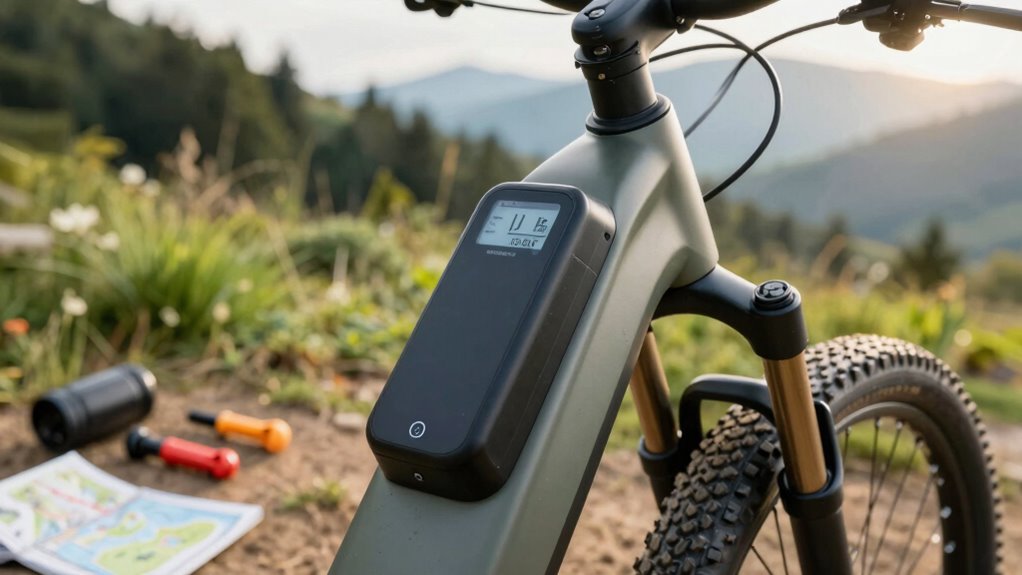
The distance you can ride on a single charge depends primarily on the capacity of your e-bike’s battery and how efficiently you ride. Your battery capacity, measured in watt-hours (Wh), directly impacts how much energy is stored for your ride. Your riding style also matters: aggressive acceleration, high speeds, and frequent stops drain power faster. To maximize range, consider these factors:
- Battery capacity: Higher capacity batteries provide more energy, extending your ride.
- Riding style: Smooth, steady pedaling conserves energy better than aggressive riding.
- Terrain: Flat surfaces use less power than hilly routes.
- Assist level: Lower assist levels reduce battery consumption, increasing range.
- Battery efficiency can vary based on the quality of the motor and the overall system design, influencing how effectively energy is used during your ride. Additionally, understanding the battery’s efficiency can help you better estimate how far your e-bike can go on a full charge. Factors such as temperature effects also play a role in battery performance and range. Proper battery maintenance can further optimize your e-bike’s range and longevity.
As an affiliate, we earn on qualifying purchases.
Why Do Advertised E‑Bike Range Numbers Usually Overestimate Reality?
You might notice that the range numbers on e-bike ads often seem too good to be true. That’s because testing conditions are usually much different from real-world riding, which can affect battery performance. As a result, the advertised numbers tend to be overly optimistic compared to what you’ll actually experience. Additionally, factors like microplastics in dust can contribute to battery degradation over time, further impacting range. Understanding battery chemistry and its effects can help explain why actual performance often falls short of expectations. Variations in temperature and riding style also play significant roles in real-world range outcomes. Moreover, ongoing battery maintenance can influence longevity and performance, affecting how far your e-bike can go. Recognizing battery aging helps riders set realistic expectations and plan for longer rides.
Testing Conditions Differ Greatly
One major reason advertised e-bike range numbers often fall short of real-world performance is that testing conditions vary widely from typical riding scenarios. Manufacturers often test under ideal conditions, which don’t reflect everyday use. Factors like battery chemistry influence how efficiently energy is used; some chemistries perform better in controlled settings. Additionally, motor efficiency can decrease in real-world environments, reducing range. External factors also play a role:
- Terrain — hills and rough surfaces drain more power.
- Rider weight — heavier loads require more energy.
- Weather — wind, temperature, and rain impact performance.
- Riding style — aggressive acceleration and high speeds consume more battery.
These variables cause actual range to differ considerably from advertised numbers, making real-world estimates more conservative.
Real-World Riding Varies
Manufacturers often test e-bike range under controlled conditions that don’t match real-world riding. In everyday use, factors like hills, wind, and stop-and-go situations cause your actual range to vary. As you ride, your battery lifespan gradually declines, reducing overall capacity and making range estimates less reliable over time. Additionally, motor efficiency drops when you frequently accelerate or ride at higher speeds, demanding more power from the battery. These variables mean you rarely get the same miles advertised on the label. Instead, your actual range depends on your riding style, terrain, and environmental conditions. Understanding this helps you set realistic expectations and plan your trips more accurately, rather than relying solely on manufacturer claims that often assume ideal conditions. Battery health also plays a crucial role in determining overall range and performance over time.
Advertised Numbers Are Optimistic
Advertised e-bike range numbers are often overly optimistic because they’re typically tested under ideal, controlled conditions that don’t reflect real-world riding. Manufacturers usually run tests on flat terrain, with minimal accessories and a fully charged battery, maximizing motor efficiency and battery lifespan. In everyday use, factors like hilly terrain, wind resistance, and frequent stops reduce your actual range. Additionally, as your battery ages, its lifespan diminishes, further lowering your range. To get a more realistic estimate, consider these points:
- Real-world riding involves variable terrain, decreasing motor efficiency.
- Battery health declines over time, impacting achievable miles.
- Rider weight and accessories consume more energy.
- Weather conditions, like cold temperatures, further reduce range.
As an affiliate, we earn on qualifying purchases.
What Factors Affect How Far You Can Actually Go?
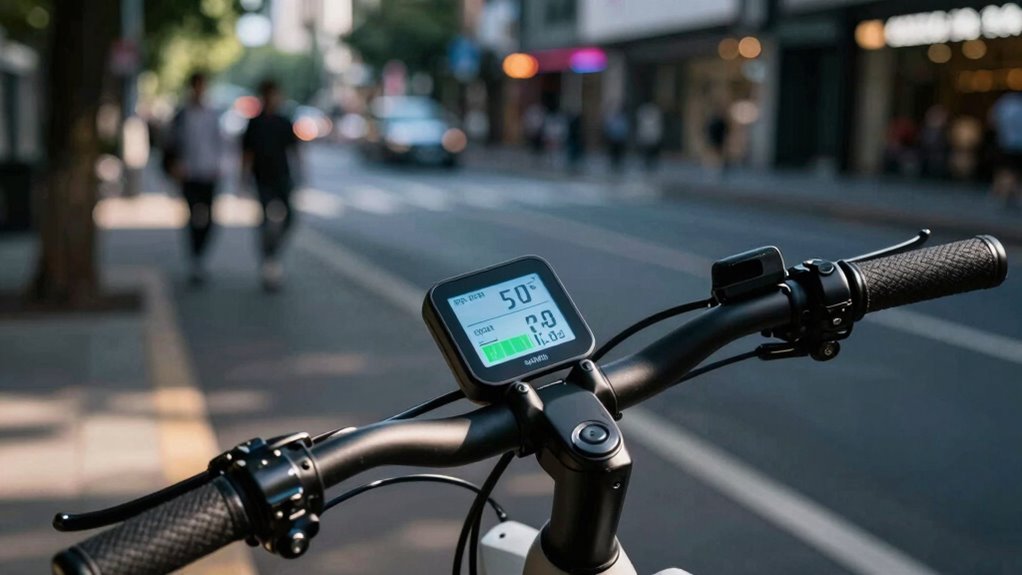
Several factors influence how far your e-bike can actually go on a single charge. One key element is battery lifespan; over time, batteries lose capacity, reducing range. Another vital factor is motor efficiency—how effectively your motor converts electrical energy into propulsion. If your motor isn’t running efficiently, you’ll deplete your battery faster, limiting your distance. Rider weight, terrain, and riding style also play significant roles. Heavier loads or hilly routes demand more energy, decreasing range. Additionally, using high assist levels or riding at high speeds consumes more power. Proper maintenance, such as keeping the battery charged correctly and ensuring the motor operates smoothly, can help maximize your e-bike’s range. Regularly checking your battery health can also prevent unexpected reductions in range. Motor performance directly impacts how much energy your e-bike uses, influencing overall range. Being aware of power consumption factors can help you optimize your riding to extend your e-bike’s distance on a single charge. For example, reducing unnecessary weight or avoiding aggressive acceleration can significantly improve your range estimation. Understanding these factors, including battery management, helps you better predict how far you’ll ride on a single charge.
How Can I Estimate My Real-World E‑Bike Range?
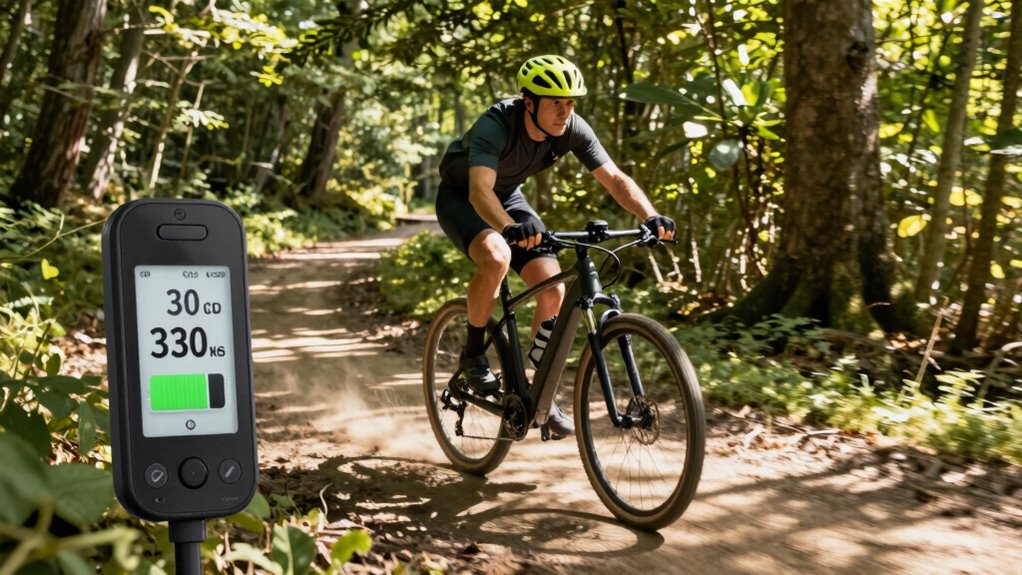
To estimate your real-world e-bike range, you need to take into account factors like terrain, rider weight, and assistance level. Adjusting for conditions such as wind or hills can help you get a more accurate idea of how far you’ll go. Practical tips, like tracking your rides and noting variables, make it easier to predict your actual biking distances. Understanding the economic impact of e-bike usage can also inform your planning and expectations. Additionally, considering the durability and design of your e-bike components can influence how efficiently it performs under different conditions.
Factors Impacting Range
Estimating your real-world e-bike range requires considering various factors that can influence performance beyond the manufacturer’s claims. Your battery lifespan affects how well the battery delivers power over time, potentially reducing range as it ages. Motor efficiency determines how effectively your e-bike converts electrical energy into motion, impacting distance traveled per charge. External conditions like terrain and rider behavior also play a role. To get a realistic estimate, consider these factors:
- Battery age and health
- Motor efficiency and maintenance
- Rider weight and riding style
- Terrain and environmental conditions
Being mindful of these elements helps you adjust expectations and optimize your e-bike’s performance for everyday use.
Adjusting for Conditions
Adjusting for real-world conditions is key to accurately estimating how far your e-bike can go on a single charge. Factors like terrain impact and battery degradation can considerably reduce your expected range. Uphill climbs, rough or uneven surfaces, and headwinds demand more power, shrinking your mileage. Also, as your battery ages, its capacity diminishes, further lowering range. To better estimate your actual riding distance, consider these influences. Here’s a quick comparison:
| Condition | Effect on Range | How to Adjust |
|---|---|---|
| Flat terrain | Minimal impact | Base estimate |
| Hilly terrain | 20-40% reduction | Reduce range estimate |
| Wind resistance | 10-25% decrease | Add buffer for wind |
| Battery age | 10-30% less capacity | Expect lower range |
| Heavy load | 15-20% reduction | Adjust expectations |
Being mindful of these factors helps you plan better and avoid surprises on your ride.
Practical Estimation Tips
Accurately estimating your e-bike’s real-world range involves more than just checking the battery capacity; it requires considering current riding conditions and making thoughtful adjustments. To improve your estimates, focus on these factors:
- Monitor your riding habits—smooth acceleration and steady speeds conserve battery.
- Maintain your battery properly through regular battery maintenance, like keeping it charged between 20-80% and avoiding extreme temperatures.
- Consider terrain and weather; hills and wind can considerably reduce range.
- Track your actual rides to create personal benchmarks, helping you predict future performance more accurately.
Tips to Get the Most Distance Out of Your E‑Bike Charge
To maximize your e-bike’s range, you should start by riding smoothly and avoiding sudden accelerations or braking. Consistent riding styles conserve battery and reduce energy waste. Proper battery maintenance, like keeping it charged between 20% and 80%, also extends range. Additionally, use eco modes when possible to reduce power consumption. Here’s a quick guide:
| Riding Tip | Effect |
|---|---|
| Ride smoothly | Saves energy, prolongs battery |
| Avoid rapid acceleration | Maintains battery life |
| Use eco mode | Reduces power drain |
| Keep tires properly inflated | Improves efficiency |
| Regular battery care | Extends overall lifespan |
Following these tips helps you get the most out of each charge, ensuring longer rides and better performance.
Frequently Asked Questions
How Accurate Are E-Bike Range Estimates From Manufacturers?
Manufacturer testing and proper battery calibration considerably impact e-bike range estimates. While these estimates can be somewhat accurate, they often overstate real-world mileage because tests are done under ideal conditions. You should expect less range in everyday riding, especially with variables like terrain, rider weight, and assist level. Keep in mind, maintaining good battery calibration and understanding manufacturer testing methods help you get a more realistic idea of your e-bike’s actual range.
Does Rider Weight Affect E-Bike Range Significantly?
Rider weight does affect e-bike range considerably; studies show that every 10% increase in weight can reduce your range by up to 15%. Heavier riders exert more pressure, leading to faster battery degradation over time. If you’re less fit, you might also ride more cautiously, but your weight directly impacts how far you can go on a single charge. Keep this in mind to plan your rides better.
Can Different Terrains Impact My E-Bike’s Actual Distance?
Different terrains definitely impact your e-bike’s actual distance. Uphill or rough terrains require more power, reducing your range, while smooth, flat surfaces let you go further. Your riding style also plays a big role—aggressive acceleration or frequent stops use more battery. So, if you switch from pavement to trail riding, expect your e-bike’s distance to change. Adjust your riding style accordingly to maximize your mileage on various terrains.
How Does Weather Influence E-Bike Battery Performance?
Weather effects can notably influence your e-bike’s battery performance. Cold temperatures slow down chemical reactions inside the battery, reducing its capacity and range. Hot weather accelerates battery degradation over time, decreasing its lifespan and efficiency. To maximize your e-bike’s range, avoid extreme temperatures when possible, store your battery properly, and keep it charged. Being mindful of weather conditions helps you maintain ideal battery health and enjoy longer rides.
Is It Better to Charge the Battery Fully or Partially?
You should aim to keep your battery’s calibration in check by avoiding frequent partial charges. Fully charging your e-bike battery helps maintain accurate range estimates and prolongs its lifespan. While partial charges are convenient, they can lead to inaccurate battery readings over time. To optimize performance, develop consistent charging habits, ideally charging to 100% when needed and avoiding deep discharges. This approach keeps your battery healthy and guarantees reliable range estimates.
Conclusion
Remember, your e-bike’s range is a journey through shifting landscapes—sunlit hills and shadowed valleys. While the advertised miles are like distant stars, your real ride depends on the road beneath your wheels. Embrace the twists and turns, adjusting your effort like choosing different paths. With mindful riding, you’ll navigate your route smoothly, turning each charge into a new horizon. Trust your experience to guide you beyond the horizon of the numbers.