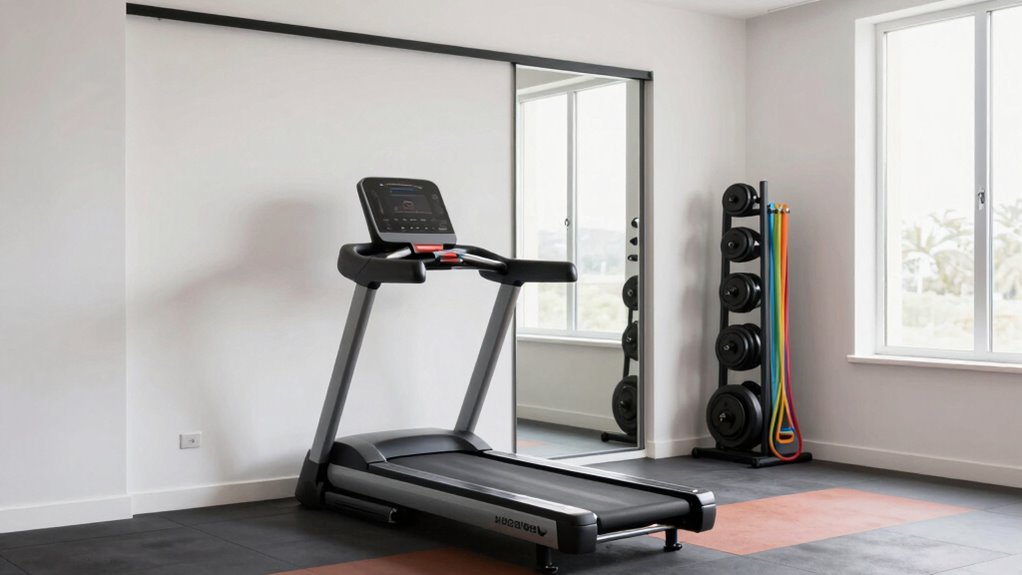

To prevent wasted space in your home gym, start by measuring your area carefully and designating specific zones for cardio, strength, and stretching. Arrange equipment logically, keeping frequently used items within reach and along the perimeter to maximize floor space. Add smart vertical storage, mirrors to create a sense of openness, and clear pathways for safety. Making these adjustments guarantees a functional, inviting setup—keep exploring for more tips to perfect your gym layout.
Key Takeaways
- Measure and designate specific zones for cardio, strength, and stretching to organize space effectively.
- Arrange equipment along the perimeter and keep frequently used items within easy reach to optimize flow.
- Use vertical storage solutions and multi-functional furniture to maximize space and reduce clutter.
- Create clear pathways at least 3 feet wide to ensure safety and easy movement around the gym.
- Incorporate mirrors and strategic lighting to enhance space perception and improve workout environment.
Use This Simple Layout Trick to Maximize Your Home Gym Space
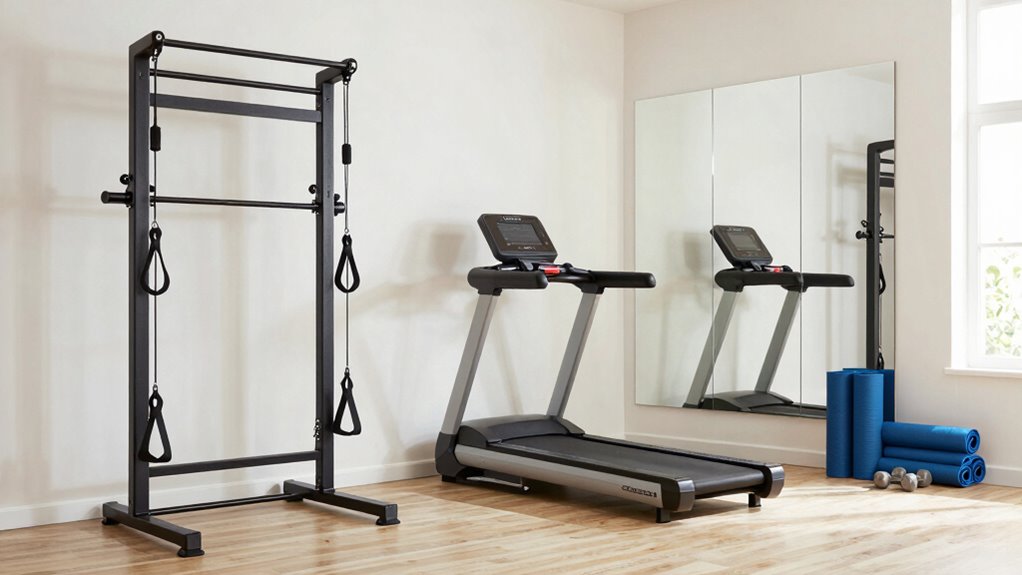
Maximizing your home gym space is easier than you might think with a simple layout trick: designate specific zones for different activities. Start by creating a dedicated area with exercise mats for floor exercises, stretching, or yoga. Keeping these mats in one spot prevents clutter and makes it clear where your workout begins. Next, allocate space for equipment like weights or cardio machines, ensuring enough room to move safely. Incorporate workout timers nearby so you can track your routines without distraction. This setup helps you stay organized and motivated, preventing equipment from spreading across the room. Additionally, natural light can enhance your workout environment, making it more inviting and energizing. Using spatial awareness to define zones will help you maximize your available area and prevent overcrowding. Incorporating ergonomic principles can further improve comfort and reduce fatigue during your routines. Being mindful of storage solutions also ensures your space remains tidy and accessible, supporting consistent workouts. Remember that creating a clear layout can also boost motivation by making your workouts more enjoyable and efficient.
Measure Your Space and Define Your Workout Zones

To effectively define your workout zones, start by measuring your available space. Accurate measuring techniques are essential to create zone mapping that maximizes efficiency. Here’s how to do it:
- Measure the length and width of each area where you plan to work out, noting dimensions precisely. Incorporating sound science can help you understand how to optimize your environment for focus and relaxation during workouts.
- Identify clear boundaries for each zone, considering ceiling height and obstructions. Paying attention to environmental factors can enhance your workout experience by reducing distractions.
- Use these measurements to sketch a simple layout, marking designated zones for cardio, strength, and stretching. Employing spatial awareness principles can further improve the arrangement and flow of your gym space.
- Utilize audience segmentation to tailor your gym zones according to different workout needs and preferences. Precise zone mapping ensures you make the most of your space without clutter or wasted areas.
This process helps you visualize your space and allocate areas wisely. By focusing on zone mapping, you prevent wasted space and ensure your gym setup is both functional and comfortable. Proper measurement lays the foundation for a seamless, effective home gym design.
Arrange Equipment for Better Flow and Efficiency

Arranging your equipment thoughtfully can substantially improve the flow and functionality of your home gym. Start by creating clear exercise zones tailored to different activities, like cardio, strength training, and stretching. Place frequently used equipment, such as your treadmill or dumbbells, within easy reach of your main workout area to minimize unnecessary movement. Keep larger machines along the perimeter to maximize space and prevent clutter. Make certain there’s enough room between equipment pieces for safe and comfortable movement. Group related items together to streamline transitions between exercises. Proper equipment placement encourages better workout flow, reduces downtime, and minimizes the risk of accidents. Incorporating smart storage solutions can further optimize space and organization. Additionally, considering equipment maintenance ensures your gear remains in good condition and safe for use. To enhance safety and efficiency, regularly reassess your layout and adjust the arrangement as your fitness needs evolve. Remember, a logical layout not only saves space but also motivates you to stick with your fitness routine.
Add Smart Storage to Keep Your Gym Tidy

To keep your home gym organized, consider smart storage solutions that maximize space and reduce clutter. You can utilize vertical storage to free up floor area, incorporate multi-functional furniture for added convenience, and use clear containers to easily identify your gear. These strategies help create a tidy, efficient workout environment. Additionally, integrating smart home safety features like sensor-activated lighting or climate controls can enhance your workout space’s comfort and security. Incorporating electric power solutions such as bike generators can also provide a sustainable energy source for powering small devices or lighting in your gym. Implementing space-saving furniture can further optimize your available area and maintain a clutter-free environment, especially when combined with innovative wall art that adds both style and functionality to your space. Considering ergonomic design principles can also improve overall comfort and usability of your home gym.
Maximize Vertical Storage Space
Maximizing vertical storage space is one of the smartest ways to keep your home gym organized and clutter-free. By leveraging height, you free up valuable floor space and create a more efficient workout area. Consider these top options:
- Use vertical stacking for weights and equipment, stacking items safely to prevent clutter. This approach ensures that heavy items are stored securely and reduces the risk of accidents.
- Install ceiling harnesses to hang larger gear like punching bags or mats, freeing up floor space. These harnesses can be adjusted easily to accommodate different equipment sizes.
- Mount shelves high on walls for smaller accessories, keeping them accessible yet out of the way. Wall-mounted shelving also helps to designate specific zones for different types of gear.
- Incorporate adjustable wall-mounted racks to adapt to different equipment sizes and maximize flexibility space optimization. Additionally, implementing modular storage solutions allows you to customize your setup as your workout needs evolve, ensuring your gym remains organized over time. Incorporating vertical storage techniques can further enhance your space efficiency and keep your gym clutter-free. Using smart storage options can also help in maintaining a clean and functional environment, especially as your equipment collection grows. These strategies keep your gym tidy and maximize every inch of available space. Vertical stacking prevents overcrowding of weights, ceiling harnesses make use of overhead space, and wall-mounted shelves keep your essentials within reach but off the floor.
Use Multi-Functional Furniture
Incorporating multi-functional furniture into your home gym transforms the space into a versatile and organized area. Convertible furniture, like fold-away benches or beds, allows you to maximize space without sacrificing functionality. Modular storage units are perfect for keeping equipment tidy and accessible; you can customize them to fit your needs. For example, a storage ottoman can double as seating and hold small weights or accessories, while wall-mounted fold-down desks provide a workspace when needed. These pieces help reduce clutter, making the gym safer and more inviting. By choosing furniture that serves multiple purposes, you free up valuable floor space and create a seamless environment for workouts and relaxation alike. Smart furniture choices keep your gym tidy and efficient, encouraging regular use. Space-saving strategies are essential for optimizing your workout area efficiently.
Implement Clear Container Systems
Implementing clear container systems is essential for maintaining an organized home gym. Storage bins help you see exactly what’s inside at a glance, saving time and reducing clutter. To maximize efficiency, consider these tips:
- Use labeled storage bins to categorize items like resistance bands, weights, or mats.
- Invest in stackable containers to save space and keep frequently used equipment easily accessible.
- Implement a consistent label system for quick identification, ensuring everything has its place and stays tidy.
Clear containers make it easy to find what you need without rummaging, while labels keep your gym neat and organized. This smart storage approach prevents wasted space and helps you keep your workout area clean and functional.
Use Mirrors and Visual Cues to Make Your Space Feel Larger

Mirrors and visual cues can dramatically transform your home gym, making the space feel larger and more inviting. Proper mirror placement is key; position mirrors opposite windows or in open areas to reflect light and create the illusion of depth. Large mirrors work best for expanding the sense of space, while strategically placing smaller ones can highlight specific workout zones. Visual illusions, like using light colors on walls or arranging equipment to avoid clutter, also help open up the area. Avoid placing mirrors directly in front of equipment that might obstruct your view or cause distractions. By combining thoughtful mirror placement with clever visual cues, you enhance the perception of space, making your gym feel more open and comfortable without sacrificing functionality.
Create Clear Pathways for Safety and Comfort

Keeping your pathways clear helps prevent accidents and makes your workouts safer. Make sure equipment is positioned to avoid obstructions and tripping hazards. When your space is organized, you’ll move comfortably and focus better on your exercises.
Clear Pathways Minimize Hazards
Creating clear pathways in your home gym is essential for safety and comfort. When your space is cluttered, safety hazards increase, and movement becomes difficult. To minimize risks, focus on these key points:
- Keep walkways at least 3 feet wide to avoid tripping hazards.
- Regularly declutter by removing unused equipment or boxes.
- Store smaller items in designated bins to reduce clutter and prevent accidents.
Proper Equipment Placement Ensures Safety
To guarantee safety and maintain a comfortable workout environment, placing equipment thoughtfully is essential. Proper equipment placement supports equipment safety and enhances overall workout zone design. Start by positioning heavier or bulkier items against walls, leaving enough space around each piece for safe use and easy access. Keep pathways clear of obstructions to prevent trips or falls, ensuring you can move freely between stations. Consider the flow of your workout, arranging equipment in a logical sequence that minimizes unnecessary movement. By designing your workout zone with safety in mind, you reduce hazards and create an inviting space for exercise. Thoughtful placement not only promotes safety but also maximizes space efficiency, making your home gym a functional and enjoyable environment.
Keep Fine-Tuning Your Layout for the Best Workout Experience
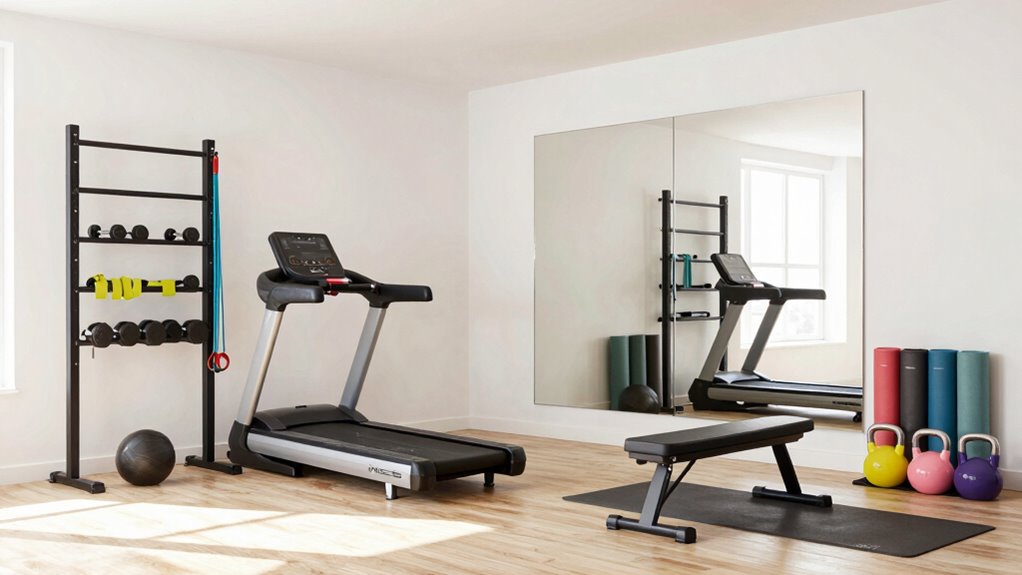
Fine-tuning your gym layout is essential for maximizing your workout efficiency and comfort. Regular adjustments can improve flow and motivation. To optimize your space, consider these key tips:
Optimizing your gym layout boosts efficiency and comfort through regular adjustments and thoughtful space planning.
- Experiment with decorative accents to create an inviting atmosphere that keeps you motivated.
- Adjust lighting options to ensure proper visibility without glare, enhancing focus and safety.
- Reassess equipment placement periodically, making sure your workout zone remains unobstructed and functional.
Frequently Asked Questions
How Do I Choose the Best Flooring for My Home Gym?
You should choose flooring that’s durable and safe, like exercise mats or anti-slip flooring. Exercise mats provide cushioning and are easy to move or replace, perfect for high-impact workouts. Anti-slip flooring guarantees stability and safety during your routines. Consider your workout type and space, then pick a material that offers traction, comfort, and durability, maximizing your home gym’s efficiency while preventing accidents.
What Safety Precautions Should I Consider When Designing My Gym Layout?
Design your gym like a well-lit stage, ensuring safety is front and center. Keep emergency exits clear, like a bright beacon guiding you out. Check electrical safety by avoiding overloaded outlets and securing cords away from traffic. Place equipment thoughtfully, leaving enough space for movement. Regularly inspect for hazards, and install smoke detectors. These precautions keep you safe, so you can focus on your workout without worry or risk.
How Can I Incorporate Technology Into My Home Gym Design?
You can incorporate technology into your home gym by investing in smart equipment that tracks your progress and adjusts settings automatically. Add virtual training options like interactive classes or VR workouts to keep things engaging. Make sure your space has reliable Wi-Fi and enough outlets for your devices. This setup helps you stay motivated, monitor your performance, and enjoy a more personalized, tech-savvy workout experience right at home.
What Are Budget-Friendly Ways to Optimize Small Gym Spaces?
To optimize your small gym space on a budget, use space-saving furniture like foldable mats and wall-mounted racks. Get creative with DIY storage solutions, such as repurposing containers or installing hooks for small equipment. These strategies help you maximize space without spending much, keeping your workout area organized and functional. By combining affordable furniture and DIY ideas, you can create a practical and efficient gym environment without breaking the bank.
How Often Should I Reassess and Update My Home Gym Layout?
You should reassess your gym layout every few months to keep it fresh and functional. Imagine your space as a dynamic canvas; adjust gym equipment placement and storage solutions as your workout needs evolve. Regular updates prevent clutter and optimize flow, making workouts more efficient. Keep an eye on how you use the space, and don’t hesitate to tweak your setup to stay motivated and maximize your small gym’s potential.
Conclusion
Remember, a well-designed home gym isn’t just about fitting equipment; it’s about making space work for you. By optimizing your layout, you create a safer, more inviting environment that motivates you to stay consistent. As the saying goes, “A place for everything, and everything in its place.” Keep fine-tuning your setup, and you’ll turn your workout space into a sanctuary of progress and well-being.