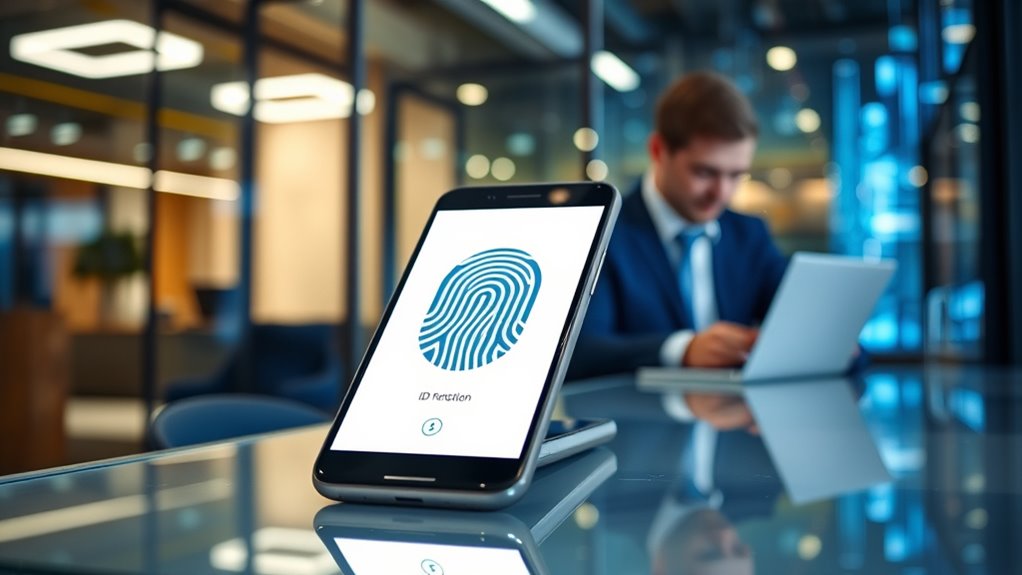

Your digital identity in finance is verified online through secure methods like biometric verification and two-factor authentication. These techniques use your unique physical traits—like fingerprints or facial recognition—and combine them with something you know, such as a password or a code sent to your device. This layered security helps protect you from fraud and unauthorized access, ensuring safe transactions. There’s much more to explore about how these innovations keep your finances secure.
Key Takeaways
- Digital identity verification in finance enhances security against fraud during online transactions, ensuring safe access to accounts and services.
- Biometric verification methods, like fingerprints and facial recognition, provide a higher level of security than traditional passwords.
- Two-factor authentication (2FA) combines knowledge (passwords) and possession (verification codes) to strengthen online identity verification.
- Continuous updates to security practices and technologies are essential to combat evolving digital threats and protect sensitive financial information.
- Streamlining accounts and minimizing stored personal data reduces the risk of identity theft and enhances overall digital identity security.
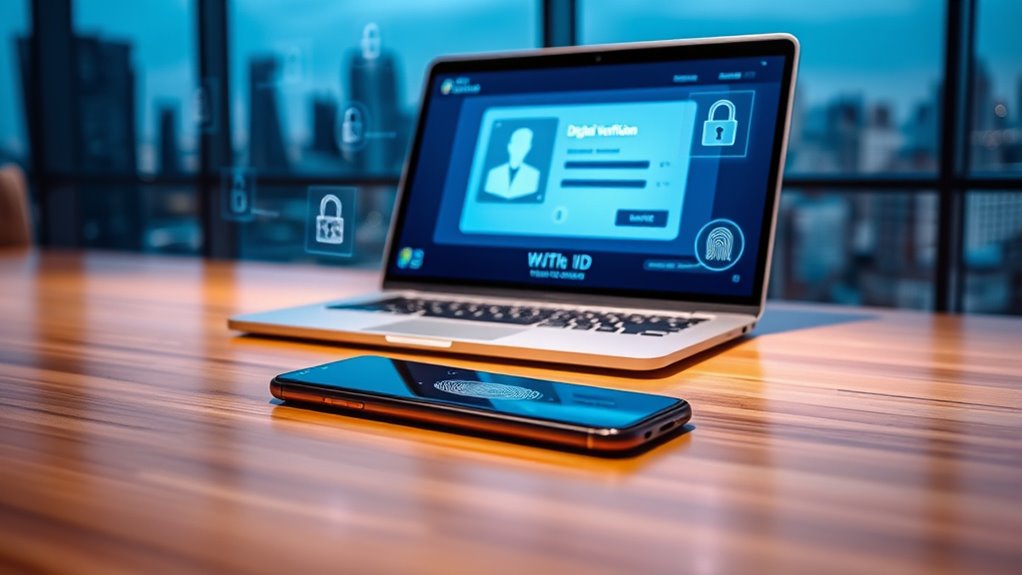
How do you navigate the complex world of finance without a secure digital identity? In today’s digital age, having a reliable identity for online transactions is essential. You need to guarantee that you’re protected against fraud while maintaining access to your accounts and services. One way to achieve this is through biometric verification, which offers a level of security that traditional passwords simply can’t match.
Biometric verification uses your unique physical traits—like your fingerprint, face, or voice—as a means of identification. When you engage in online transactions, this technology allows you to authenticate your identity easily and securely. Rather than struggling to remember complex passwords or worrying about them being hacked, you can rely on something you always have: your own body. This method minimizes the risk of identity theft, giving you peace of mind as you navigate your financial activities.
Biometric verification leverages your unique physical traits for secure online identification, reducing identity theft risks and enhancing your financial peace of mind.
Online authentication has evolved considerably, and it plays an essential role in securing your digital identity. You might have encountered two-factor authentication (2FA) while logging into your bank account or investment platform. This process often combines something you know (like a password) with something you have (like a verification code sent to your phone). By incorporating biometric verification into this mix, you create an even more robust security framework. For instance, imagine logging in with your fingerprint and then confirming your identity with a code sent to your smartphone. It’s a hassle-free way to guarantee that you’re the only one accessing your sensitive financial information.
Using biometric verification and other online authentication methods not only protects your identity but also streamlines your financial transactions. You can execute trades, transfer funds, and manage your investments with confidence, knowing that your identity is verified securely. As fraudsters become more sophisticated, relying solely on traditional methods of authentication won’t suffice anymore. You have to adapt to the shifting landscape of digital security. Additionally, mindful decluttering of your digital accounts and subscriptions can help minimize the risk of identity theft by reducing the number of places your information is stored.
Frequently Asked Questions
What Happens if My Digital ID Is Stolen?
If your digital ID’s stolen, you risk identity theft, which can lead to significant financial loss and damage to your credit. You should act quickly by reporting the theft to relevant authorities and monitoring your accounts for suspicious activity. Implementing fraud prevention measures, like enabling two-factor authentication and updating passwords, can help protect your information. Stay vigilant and consider placing a fraud alert on your credit report to safeguard against future issues.
Can I Use Multiple Digital Identities for Finance?
Yes, you can use multiple digital identities for finance, but it can lead to identity fragmentation, making account management tricky. You might think using different IDs offers more security, but it complicates tracking your finances. Instead of juggling multiple accounts, consider streamlining your digital presence. This way, you’ll have better oversight of your financial activities while maintaining security. Simplifying your digital identities helps you stay organized and reduces the risk of errors.
How Is My Privacy Protected During Online Verification?
Your privacy’s protected during online verification through biometric authentication and data encryption. When you use biometric methods, like fingerprints or facial recognition, your sensitive data’s stored securely, minimizing the risk of unauthorized access. Data encryption further safeguards your information by converting it into unreadable code, ensuring that only authorized parties can access it. These technologies work together to keep your identity safe while you engage in online financial transactions.
Are Digital IDS Accepted Globally in Finance?
Oh sure, digital IDs are like the trendy new shoes everyone’s raving about, but not all countries are on board. While some nations embrace global standards, others cling to paper like it’s a security blanket. Cross-border acceptance varies wildly—one moment you’re zooming through transactions, the next you’re stuck in a bureaucratic maze. So, yeah, it’s a mixed bag, and you’ll need to check each country’s rules before strutting your digital identity.
What Technologies Are Used for Digital ID Verification?
For digital ID verification, you’ll encounter technologies like biometric authentication and blockchain verification. Biometric authentication uses your unique physical traits, like fingerprints or facial recognition, to confirm your identity securely. Meanwhile, blockchain verification leverages decentralized ledger technology to guarantee data integrity and authenticity, making it difficult for fraudsters to tamper with your information. Together, these technologies provide a robust and secure way to manage digital identities in various financial transactions.
Conclusion
As you navigate the world of finance, remember that your digital identity isn’t just a string of numbers; it’s your virtual fingerprint. While the verification process may feel like a maze at times, it’s all part of safeguarding your financial well-being. Embrace these measures as a protective cloak, ensuring that your identity remains yours alone. So, as you venture online, trust that each step taken is a stride toward a more secure financial future.