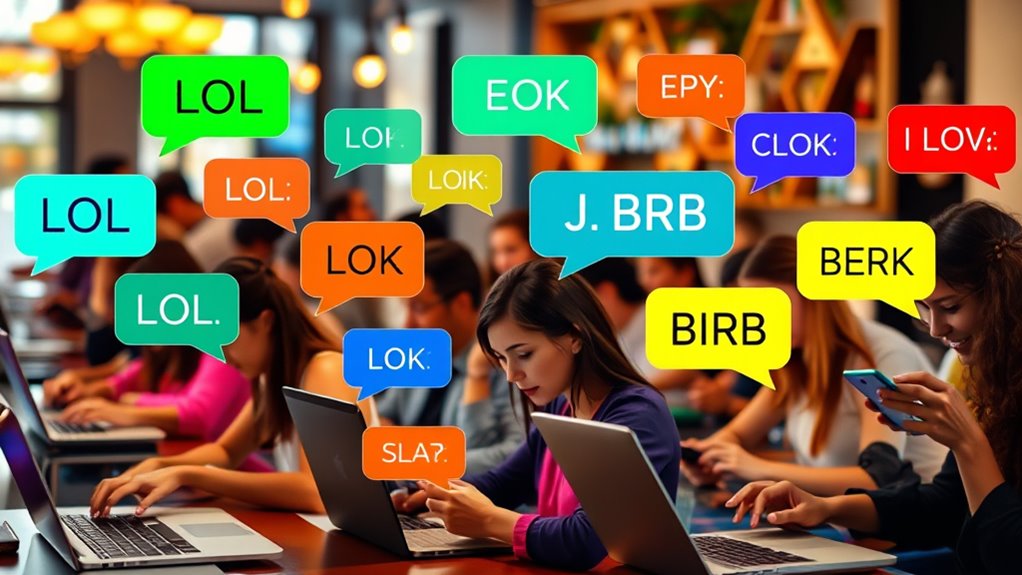

Internet slang started with simple abbreviations like “LOL,” making digital communication quicker and more efficient. As technology advanced, especially with smartphones, new acronyms emerged, enhancing emotional expression and connection. This evolving language reflects the diverse cultures within various online spaces. While it enriches casual interactions, it can complicate clarity in formal communication. There’s so much more to uncover about how these expressions continue to change and shape our digital conversations today.
Key Takeaways
- Internet slang originated with simple abbreviations like “LOL” to facilitate quick communication in chat rooms and messaging platforms.
- Technological advancements, particularly smartphones, increased the need for concise language, leading to the creation of numerous new acronyms.
- Internet slang enhances emotional expression and fosters connections in informal exchanges, though it can hinder clarity in formal communication.
- Variations in slang reflect different cultures and communities across social media and forums, constantly evolving with new generations.
- The evolution of internet slang signifies adaptive communication and highlights language’s ability to remain relevant in the digital age.
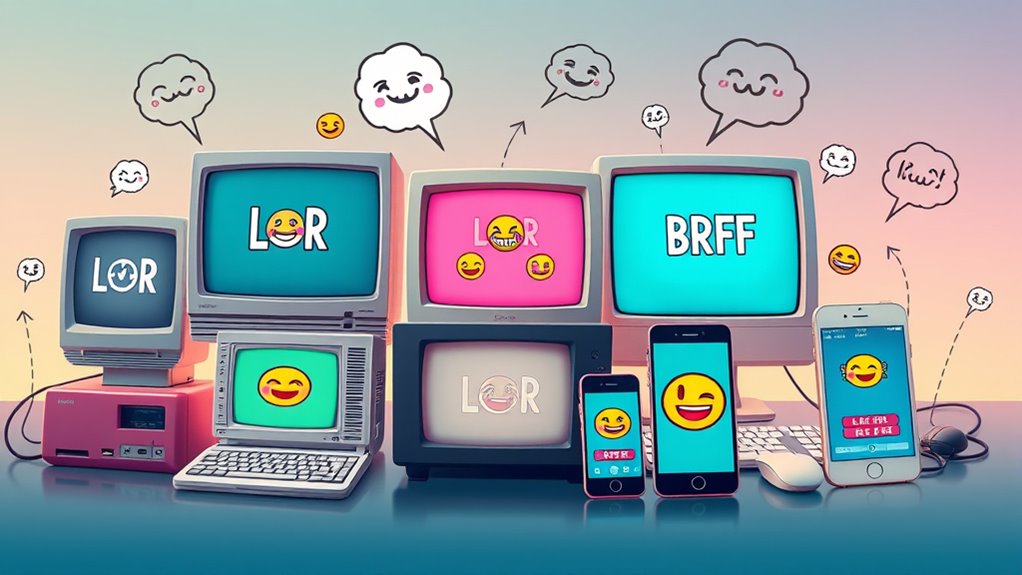
Have you ever wondered how internet slang evolved into the rich tapestry of language we use today? If you think about it, the evolution of texting language has been nothing short of fascinating. It all started with simple abbreviations, like “LOL” for laughing out loud, which quickly became staples in our digital conversations. These early forms of shorthand emerged out of necessity—people wanted to convey their thoughts quickly, especially in the fast-paced world of chat rooms and instant messaging. As technology advanced and smartphones became ubiquitous, the need for brevity gave rise to an explosion of new acronyms and terms.
You might’ve noticed how these changes have impacted your communication skills. Using internet slang often means you’re adapting to your audience and context. You’re likely more comfortable throwing in emojis or using phrases like “brb” (be right back) when texting your friends. This adaptability can enhance your ability to express emotions and make connections, though it may also lead to misunderstandings if someone isn’t familiar with the latest lingo. The challenge lies in striking a balance between casual and formal communication, especially in professional settings where clarity is key.
Adapting to internet slang enhances emotional expression but requires balancing casual and formal communication, especially in professional contexts.
The impact of internet slang on communication skills is profound. On one hand, it’s made language more dynamic and fun. You can convey complex feelings in just a few characters, which can be incredibly liberating. On the other hand, relying too heavily on slang can sometimes hinder your ability to articulate thoughts clearly. You may find that when you step into a more formal conversation, switching back to traditional language can feel awkward or forced if you’ve been using slang all day.
As you engage with different platforms—whether it’s social media, texting, or forums—you’ll likely notice variations in slang that reflect the culture of each digital space. The beauty of this evolution lies in its constant change. New generations bring fresh expressions, keeping the language alive and relevant. So, as you navigate through these ever-shifting linguistic landscapes, think about how you can use this evolution of texting language to your advantage. Integrating elements of mindful communication can further enhance your interactions and understanding.
In the end, internet slang isn’t just a passing trend; it’s a tribute to how our communication adapts to the times. Embracing this evolution can enrich your interactions, making them more relatable while still challenging you to maintain clarity. So, the next time you send a quick text, remember the history behind those letters and symbols, and how they’ve shaped the way you communicate today.
Top picks for "history internet slang"
Open Amazon search results for this keyword.
As an affiliate, we earn on qualifying purchases.
Frequently Asked Questions
What Are Some Popular Internet Slang Terms Today?
Today, you’ll notice popular internet slang terms like “FOMO” (fear of missing out) and “Bae” (before anyone else). Emoji usage has skyrocketed, adding emotion to your texts, while abbreviation trends keep evolving. Terms like “SMH” (shaking my head) and “TBH” (to be honest) are common in conversations. These expressions help you communicate quickly and effectively, making your online interactions more engaging and relatable. Keep an eye out for the latest slang as it develops!
How Do Different Cultures Influence Internet Slang?
Different cultures spice up internet slang like a chef with a secret ingredient. You’ll notice how language borrowing creates unique cultural expressions. For instance, a Japanese phrase might pop up in a meme, making you feel fancy and global. It’s like a digital potluck where everyone brings their own flavor. So, next time you text “lit,” remember it’s not just English—it’s a worldwide remix of creativity! Isn’t that something?
Can Internet Slang Affect Formal Communication Skills?
Yes, internet slang can affect your formal communication skills. When you frequently use casual expressions, it might blur the lines of clarity in formal language. You might find yourself using abbreviations or informal phrases in professional settings, which can confuse your audience. To maintain effective communication, it’s essential to switch between slang and formal language appropriately, ensuring that your message remains clear and professional in different contexts.
Are There Any Negative Impacts of Using Internet Slang?
Using internet slang can lead to some ironic twists in your communication. While it promotes digital literacy and reflects language evolution, it might also dilute your formal skills. You’re likely to find yourself slipping into casual language during serious discussions, which can confuse your audience. Plus, reliance on acronyms can hinder clarity, making your writing seem unprofessional or immature. Balancing slang with proper language is essential for effective communication in diverse contexts.
How Can I Keep up With Evolving Internet Slang?
To keep up with evolving internet slang, immerse yourself in online communities like social media, forums, and gaming chats. Pay attention to how others use language, and don’t hesitate to ask for explanations when you encounter new terms. Engaging with diverse content helps you adapt your language skills and understand slang evolution. Remember, language adaptation is key—stay curious, and you’ll always be in the loop with the latest trends.
Conclusion
In the ever-evolving world of internet slang, you’ve seen how a simple “lol” has transformed into a vast lexicon reflecting our digital lives. Just like a river flows and changes, so does our language, adapting to new trends and technologies. Embracing these acronyms and expressions helps you connect with others in this fast-paced online landscape. So, remember, “words are the winged things of thought”—keep soaring with the latest slang to stay in the conversation!