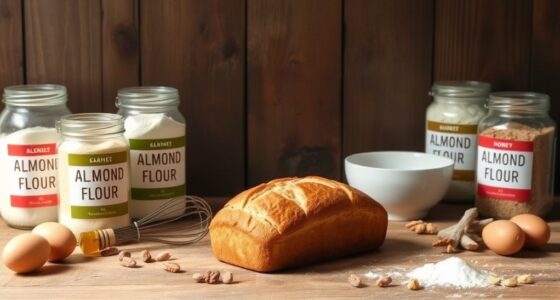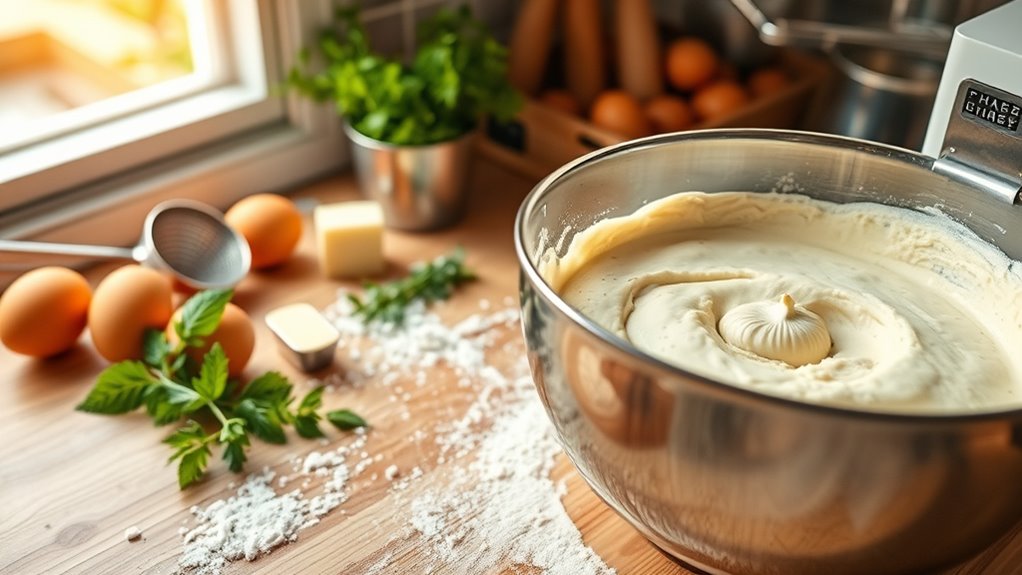

To bake perfect cakes and breads, you’ve got to understand the science behind it. Accurate ingredient measurements are crucial; substitutes can change texture and rise. Always check your oven’s temperature with a thermometer to guarantee even baking. Mixing techniques matter too—make sure to cream butter and sugar properly without over-mixing. Don’t forget fresh leavening agents for maximum rise. Finally, let your baked goods cool properly to maintain their structure. Stick around to discover more baking secrets!

Get business pricing on monitors, keyboards and dev gear
- Business-only prices and quantity discounts
- Tax-exempt purchasing
- Multiple users, one account, clear invoices
Key Takeaways
- Use precise ingredient measurements to ensure consistent rise and texture in cakes and breads.
- Always check oven temperature with an oven thermometer for accurate baking conditions.
- Properly cream butter and sugar to incorporate air for better cake rise and texture.
- Verify the freshness of leavening agents to maintain their effectiveness in creating lift.
- Allow baked goods to cool completely before removing from pans to prevent collapse.
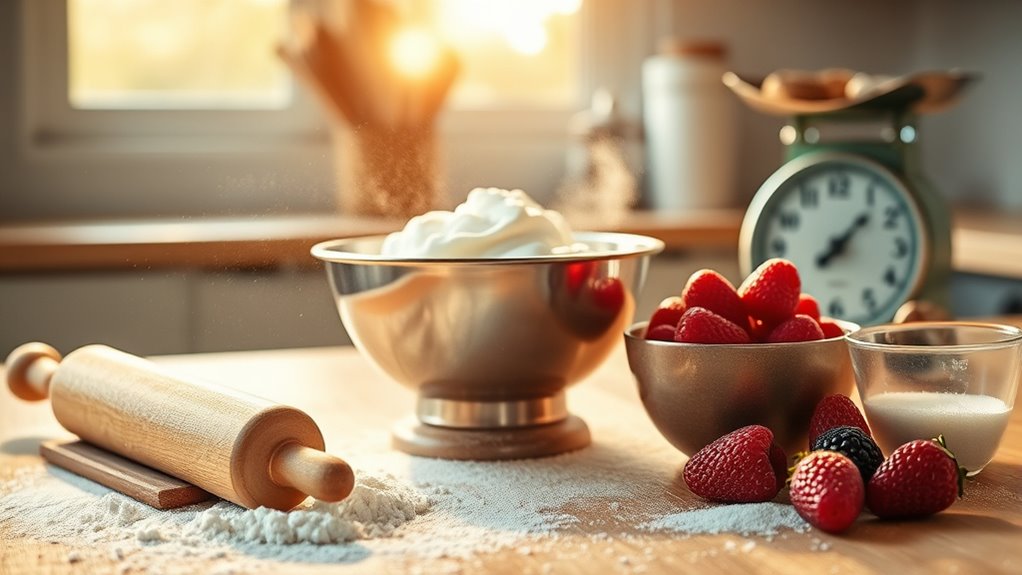
Have you ever wondered why your cakes rise perfectly one day and fall flat the next? It’s a frustrating mystery, but understanding the science behind baking can help you achieve that consistent rise every time. One key factor is the accuracy of your ingredients and their proportions. When you swap one ingredient for another—a common practice known as ingredient substitution—you might inadvertently alter the chemical reactions that make your cake rise. For example, if you decide to replace all-purpose flour with whole wheat flour, you’re changing the gluten structure and moisture content. This can lead to denser cakes that don’t rise as well.
Another essential aspect to consider is oven calibration. Your oven might not be heating to the temperature you set, which can considerably affect how your cake bakes. An oven that runs too hot can cause the outside of your cake to cook quickly while the inside remains gooey. Conversely, if your oven runs cool, your cake might take longer to bake, possibly affecting its rise. Investing in an oven thermometer can help you verify that the temperature you see on the dial matches the actual temperature inside.
Oven calibration is crucial; a miscalibrated oven can ruin your cake’s rise and texture.
Let’s also talk about the importance of mixing. When you cream butter and sugar together, you’re incorporating air into the batter, which helps with the rise. If you skip this step or don’t do it long enough, your cake could turn out dense. Similarly, over-mixing can deflate your batter, leading to a flat cake. It’s all about balance.
Baking powder and baking soda are your friends when it comes to leavening. Make sure they’re fresh, as old leavening agents lose their potency. A simple test for baking soda is to mix it with vinegar; if it fizzes, it’s still good. For baking powder, mix it with water to see if it bubbles. Additionally, essential oils can be used in baking to enhance flavors, offering a unique twist to your traditional recipes.
Lastly, don’t forget about the importance of letting your cake cool properly. If you attempt to remove it from the pan too soon, it may collapse. Patience is a virtue in baking.
digital oven thermometer for baking
As an affiliate, we earn on qualifying purchases.
As an affiliate, we earn on qualifying purchases.
Frequently Asked Questions
How Do I Fix a Cake That’s Too Dense?
To fix a cake that’s too dense, start by adjusting your ingredients. You might’ve used too much flour or not enough leavening agent, like baking powder. Try reducing the flour slightly or adding more eggs for better structure. Additionally, make sure your ingredients are at room temperature for a smoother batter. Incorporating air while mixing can also improve the cake texture. Remember, light and fluffy is the goal!
Can I Substitute Baking Powder for Baking Soda?
You’re standing at the crossroads of culinary creativity, and yes, you can substitute baking powder for baking soda, but it’s not a one-to-one swap. Baking powder is a complete leavening agent, while baking soda needs an acid to activate. If you choose to make this ingredient substitution, use about three times the amount of baking powder to achieve the desired rise. Just remember, the flavor and texture might dance to a different tune!
What Is the Best Way to Store Baked Goods?
To store baked goods effectively, use airtight storage containers. This method guarantees flavor preservation and keeps your treats fresh longer. For items like cookies or brownies, you can layer them with parchment paper to prevent sticking. If you’re storing cakes, consider wrapping them tightly in plastic wrap before placing them in a container. For longer storage, freezing is an option—just remember to thaw them properly for the best taste!
How Do I Prevent My Bread From Becoming Stale?
To prevent your bread from becoming stale, you’ve gotta store it properly. Wrapping it tightly in plastic wrap or aluminum foil helps maintain bread freshness. While some might think leaving it out is fine, that actually speeds up staling. For longer storage, freeze your bread; this locks in moisture and flavor. Just remember to slice it before freezing for easy access. Enjoy your fresh bread every time!
Can I Freeze Cakes and Breads Successfully?
Yes, you can freeze cakes and breads successfully! To do this, use proper freezing techniques. First, cool your baked goods completely, then wrap them tightly in plastic wrap or aluminum foil. Place them in airtight storage containers to prevent freezer burn. Label and date the containers for easy access. When you’re ready to enjoy, let them thaw in the fridge or at room temperature for the best texture and flavor.
As an affiliate, we earn on qualifying purchases.
Conclusion
As you step away from the oven, remember that baking is like crafting a delicate symphony, where each ingredient plays its part in harmony. Just as a well-tuned instrument creates beautiful music, your careful measurements and techniques will yield a perfect cake or loaf of bread. Embrace the magic of the process, and let your creations rise like the sun, bringing warmth and joy to those who gather around your table. Happy baking!
fresh baking powder and baking soda
As an affiliate, we earn on qualifying purchases.
As an affiliate, we earn on qualifying purchases.
silicone cooling racks for baked goods
As an affiliate, we earn on qualifying purchases.
As an affiliate, we earn on qualifying purchases.
Halloween Picks
halloween
As an affiliate, we earn on qualifying purchases.