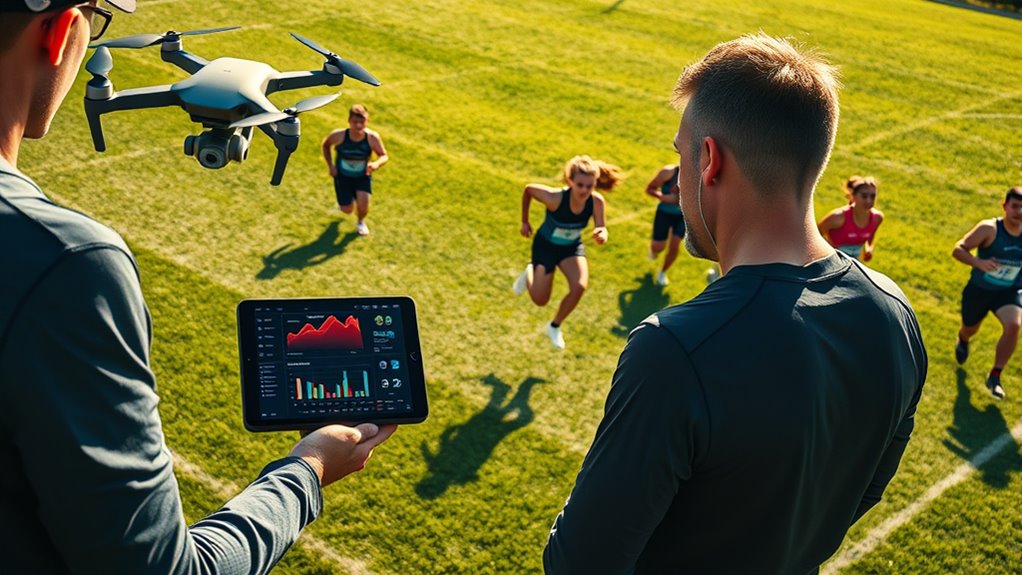

Technology’s changing sports training by enhancing how you track and improve your performance. Wearables like fitness trackers provide real-time stats, helping you make personalized adjustments. Virtual coaching means that you can access expert training programs anytime and anywhere, while biomechanical analysis pinpoints areas for improvement. This data-driven approach fosters better results and keeps you motivated. Want to discover more about these innovative training methods and how they can elevate your game?
Key Takeaways
- Wearable devices provide real-time performance data, allowing athletes to make personalized adjustments for optimal training results.
- Virtual coaching platforms enable tailored training programs and direct feedback through video calls, enhancing accessibility and motivation.
- Biomechanical analysis utilizes motion capture technology to refine athletic techniques, improving efficiency and reducing injury risk.
- Data-driven training fosters engagement by setting actionable goals and encouraging continuous improvement based on performance metrics.
- The integration of technology in sports training empowers athletes to control their development, making elite training more accessible and effective.

In today’s fast-paced world, technology is revolutionizing sports training like never before. You’re probably aware that wearing smart devices, like fitness trackers and heart rate monitors, has become the norm for athletes at all levels. These wearables provide real-time data on your performance, allowing you to tailor your training sessions to optimize results. Imagine having a coach who’s always by your side, tracking your every move and offering insights into how to improve. With virtual coaching, you can access expert guidance from anywhere, breaking geographical barriers and making elite training accessible to everyone.
Technology is transforming sports training, providing real-time insights and virtual coaching that makes elite training accessible to all.
Virtual coaching platforms offer personalized programs designed for your specific needs. You can interact with coaches through video calls, share your training data, and receive instant feedback on your performance. This means you don’t have to be in the same physical location as your coach to benefit from their expertise. The flexibility of virtual coaching allows you to fit your training into your busy schedule, making it easier to remain committed and motivated.
Bringing in another layer of sophistication, biomechanical analysis plays a crucial role in enhancing athletic performance. By using advanced motion capture technology, you can gain deep insights into your movement patterns. This analysis helps identify strengths and weaknesses in your technique, allowing you to make precise adjustments. For instance, if you’re a runner, understanding your stride mechanics can prevent injuries and improve your efficiency on the track. You’ll learn how to optimize your form, which can lead to better times and greater overall performance.
Integrating these technologies into your training routine isn’t just about data collection; it’s about effective application. By interpreting the data from your wearables and biomechanical analysis, you can set actionable goals and monitor your progress. This iterative process keeps you engaged and encourages continuous improvement. You’ll find that with each session, you’re not just training harder; you’re training smarter.
Incorporating technology into your training regimen empowers you to take control of your athletic journey. Whether you’re striving for personal bests or aiming for competitive success, leveraging virtual coaching and biomechanical analysis can give you the edge you need. As you adapt to these innovations, you’ll discover that the future of sports training is brighter than ever, making it easier than ever to reach your potential. Furthermore, the use of expert voice actors in instructional videos can significantly enhance your learning experience and retention of techniques.

Playermaker 2.0 Smart Football Tracker, Wearable AI Sensor & FIFA Certified
- Trusted by Soccer Academies: Reliable performance across skill levels
- Precise Movement Tracking: Gyroscope and accelerometer at 1000Hz
- In-Depth Game Analysis: Provides comprehensive performance insights
As an affiliate, we earn on qualifying purchases.
As an affiliate, we earn on qualifying purchases.
Frequently Asked Questions
How Much Do Sports Wearables Typically Cost?
Sports wearables typically range from $50 to over $300, depending on features and brand. When you’re considering a cost comparison, keep in mind that higher-priced models often offer improved wearable accuracy and additional functionalities. For example, advanced heart rate monitors or GPS trackers may come at a premium but provide valuable data for performance tracking. Ultimately, it’s about finding the right balance between cost and the technology you need for your training.
What Sports Are Most Impacted by Technology?
You’d think every sport is now powered by technology, and you’re not far off! Sports like football, basketball, and track & field are most impacted, using cutting-edge tools for injury prevention and boosting athlete motivation. Coaches analyze data like it’s gold, tailoring training programs to keep athletes at their peak. Wearables track performance in real time, turning you into a data-driven superstar, while virtual coaching helps you release your potential like never before!
Are There Privacy Concerns With Sports Analytics?
Yes, there are privacy concerns with sports analytics. When you track athletes’ performance data, data security becomes essential. If personal information gets leaked, it can lead to ethical implications, affecting not just athletes’ careers but also their personal lives. You should be aware of how teams use this data and guarantee they prioritize your privacy, maintaining transparency about data collection and usage. Being informed can help you advocate for better protections.
How Can Amateur Athletes Benefit From Sports Technology?
As an amateur athlete, you’re standing at the starting line of opportunity. Sports technology can elevate your game through virtual coaching, offering personalized guidance anytime, anywhere. You’ll receive instant feedback on your performance, helping you refine your techniques. Plus, using injury prevention tools, you can analyze your movements to avoid common pitfalls. Embrace these innovations, and watch your athletic potential soar like a hawk gliding on the wind!
What Is the Future of Technology in Sports Training?
The future of technology in sports training looks exciting! You’ll likely see AI coaching becoming more personalized, adapting to your unique needs and improving your performance. Virtual reality will also play a huge role, allowing you to practice in immersive environments that mimic real-life scenarios. These advancements will not only enhance your skills but also make training more engaging and effective, helping you reach your athletic goals faster than ever before.

Development of Technique & Tactical Skill: A practical guide for coaches, parents & athletes
As an affiliate, we earn on qualifying purchases.
As an affiliate, we earn on qualifying purchases.
Conclusion
As you can see, technology is revolutionizing sports training in ways we never imagined. With the rise of wearables and advanced analytics, athletes can now track their performance and recovery like never before. In fact, studies show that athletes using performance analytics improve their training efficiency by up to 30%. Embracing these innovations not only enhances your game but also keeps you ahead of the competition. The future of sports training is here, and it’s time to take advantage of it!

Wearables for Movement Analysis in Healthcare
As an affiliate, we earn on qualifying purchases.
As an affiliate, we earn on qualifying purchases.

Garmin HRM 600, Premium Heart Rate Monitor, M-XL
- Real-time Heart Rate Data: Provides accurate HR and HRV data
- Comfortable Washable Strap: Available in XS–S and M–XL sizes
- Running Dynamics Analysis: Tracks stride length, vertical oscillation, and ground contact
As an affiliate, we earn on qualifying purchases.
As an affiliate, we earn on qualifying purchases.