
Static code analysis tools can help teams find defects and security risks before code runs, but the right choice depends on whether you need practical guidance, deeper methods, or a security-centered approach. My best overall pick is Static Analysis Engineering, which focuses on detecting defects before production. Secure Programming with Static Analysis stands out for secure development, while The Cobra Static Code Analyzer: User Guide is the more focused choice for readers seeking guidance on a specific analyzer. The main tradeoff is breadth versus hands-on focus: broad technical coverage can build understanding, while narrower guides may be easier to apply to a specific workflow. Read on for the full comparison and help matching each title to your needs.

Get business pricing on monitors, keyboards and dev gear
- Business-only prices and quantity discounts
- Tax-exempt purchasing
- Multiple users, one account, clear invoices
Key Takeaways
- Static Analysis Engineering ranks first because its defect-prevention focus addresses the central reason many teams adopt static analysis: finding problems before production.
- Secure Programming with Static Analysis is the clearest specialist pick for security-minded readers, while it is less suited to buyers seeking a broad overview of analysis methods.
- The Cobra Static Code Analyzer: User Guide is a narrow, tool-specific option; its focus can help readers seeking Cobra guidance but limits its value as a general buying resource.
- Several titles address methods or concepts rather than a single tool, including Static Program Analysis Techniques and Program Analysis and Optimization in Static Compilers.
- The lineup includes older and audience-specific works, so edition date, language, and intended reader should influence a purchase as much as subject coverage.
| Static Analysis Engineering: Detecting Software Defects Before They Reach Production |  | Best for Defect-Prevention Strategy | Format: Book | Subject: Static analysis engineering | Focus: Detecting software defects before production | VIEW LATEST PRICE | See Our Full Breakdown |
| Static Code Analysis for Security: Comparison of Software Packages |  | Best for Security-Tool Comparison | Format: Book | Subject: Static code analysis | Focus: Software security | VIEW LATEST PRICE | See Our Full Breakdown |
| Program Analysis and Optimization in Static Compilers: Flow Analysis, Symbolic Execution, and Performance Diagnostics |  | Best for Compiler-Analysis Depth | Format: Book | Subject: Program analysis and optimization | Context: Static compilers | VIEW LATEST PRICE | See Our Full Breakdown |
| Vergleich von Fagan-Inspektionen und werkzeuggestützter statischer Codeanalyse (German Edition) |  | Best for German-Language Process Comparison | Format: Book | Language: German | Edition: German Edition | VIEW LATEST PRICE | See Our Full Breakdown |
| Open Source Static Code Analysis Tool: A Complete Guide (2020 Edition) | 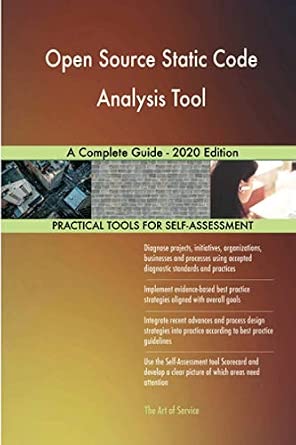 | Best for Open-Source Tool Orientation | Format: Book | Subject: Static code analysis | Tool focus: Open-source tools | VIEW LATEST PRICE | See Our Full Breakdown |
| Static Program Analysis Techniques: Ensuring High-Quality Code |  | Best for Core Static-Analysis Concepts | Format: Book | Subject: Static program analysis | Stated goal: Improving code quality | VIEW LATEST PRICE | See Our Full Breakdown |
| Secure Programming with Static Analysis: Getting Software Security Right with Static Analysis | 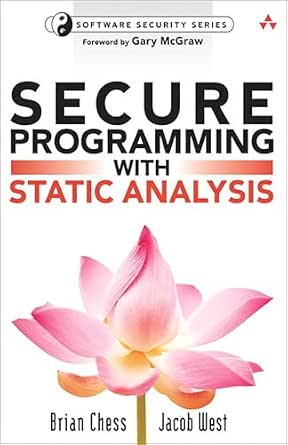 | Best for Security-Focused Learning | Format: Book | Subject: Secure programming with static analysis | Stated goal: Getting software security right | VIEW LATEST PRICE | See Our Full Breakdown |
| The Cobra Static Code Analyzer: User Guide |  | Best for Cobra-Specific Reference | Format: User guide | Named tool: Cobra Static Code Analyzer | Subject: Using the Cobra analyzer | VIEW LATEST PRICE | See Our Full Breakdown |
| Auditing Source Code: Automated Testing, Static Analysis, and Vulnerability Patching for Linux Software |  | Best for Linux Audit Workflows | Format: Book | Subject: Source-code auditing | Analysis method: Static analysis | VIEW LATEST PRICE | See Our Full Breakdown |
| Code Review Intelligence: Change Risk, Static Signals, Review Suggestions, and Defect Prevention | 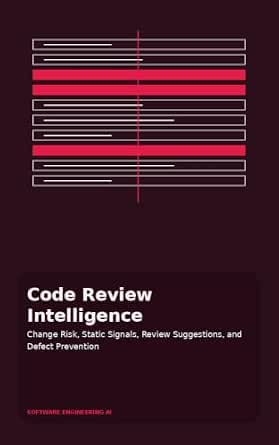 | Best for Static Signals in Code Review | Format: Not specified | Subject: Code review intelligence | Static-analysis angle: Static signals | VIEW LATEST PRICE | See Our Full Breakdown |
| The Operational Excellence Library: Mastering Code Analysis Tools |  | Best for Process-Oriented Readers | Title: The Operational Excellence Library: Mastering Code Analysis Tools | Series: The Operational Excellence Library | Subject indicated by title: Code analysis tools | VIEW LATEST PRICE | See Our Full Breakdown |
| Mastering Static Code Analysis |  | Best for a Direct Static-Analysis Focus | Title: Mastering Static Code Analysis | Subject indicated by title: Static code analysis | Format: Book | VIEW LATEST PRICE | See Our Full Breakdown |
| static code analysis tool | Format | Subject | Programming languages |
|---|---|---|---|
| Static Analysis Engineering: D | Book | Static analysis engineering | Not specified |
| Static Code Analysis for Secur | Book | Static code analysis | Not specified |
| Program Analysis and Optimizat | Book | Program analysis and optimization | — |
| Vergleich von Fagan-Inspektion | Book | Fagan inspections and static code analysis | — |
| Open Source Static Code Analys | Book | Static code analysis | Not specified |
| Static Program Analysis Techni | Book | Static program analysis | Not specified |
| Secure Programming with Static | Book | Secure programming with static analysis | Not specified |
| The Cobra Static Code Analyzer | User guide | Using the Cobra analyzer | — |
| Auditing Source Code: Automate | Book | Source-code auditing | — |
| Code Review Intelligence: Chan | Not specified | Code review intelligence | Not specified |
| The Operational Excellence Lib | Book | — | — |
| Mastering Static Code Analysis | Book | — | — |
More Details on Our Top Picks
Static Analysis Engineering: Detecting Software Defects Before They Reach Production
Static Analysis Engineering is the most directly aligned choice here for readers who want to frame static analysis around catching defects before release. Its title points to an engineering-focused treatment of prevention, rather than a narrow comparison of security packages like Static Code Analysis for Security: Comparison of Software Packages. That makes it a plausible starting point for teams evaluating how analysis fits into a broader development process. The limit is the sparse product information: the available description does not identify languages, tools, examples, or technical depth. By contrast, Program Analysis and Optimization in Static Compilers names specific topics such as symbolic execution and flow analysis. I would choose this book for its defect-prevention focus, but not as a substitute for tool documentation or a verified, hands-on implementation guide.
Pros:- Centers its subject on detecting defects before production
- Frames static analysis as an engineering practice rather than a single tool
- Its broad title may suit readers seeking an introduction to defect-prevention goals
Cons:- The available description does not identify tools, programming languages, or supported workflows
- No technical depth, examples, or publication details are provided
- Less specifically scoped than the security-package comparison or compiler-analysis title
Best for: Engineering leads and developers seeking a conceptual resource focused on finding defects before production, rather than a guide to one named analyzer.
Not ideal for: Buyers who need confirmed language coverage, step-by-step tool setup, current package comparisons, or detailed examples; none are specified in the available product information.
- Format:Book
- Subject:Static analysis engineering
- Focus:Detecting software defects before production
- Product type:Educational publication
- Programming languages:Not specified
- Tools covered:Not specified
Our verdict“Choose this for a defect-prevention-centered introduction, but look elsewhere if you need confirmed tool coverage or practical setup instructions.”
Static Code Analysis for Security: Comparison of Software Packages
For readers whose main question is which kinds of static-analysis packages address security, Static Code Analysis for Security: Comparison of Software Packages has the clearest stated purpose in this group. Its comparison angle separates it from Static Analysis Engineering, which is framed around defect prevention, and from the compiler-focused Program Analysis and Optimization in Static Compilers. That narrower security lens can help buyers organize a tool evaluation around security needs instead of general code quality. The tradeoff is that the supplied description gives no package names, comparison criteria, languages, or indication of how current the material is. I would treat it as a potentially useful orientation for security-tool selection, not as a dependable source for present-day purchasing or deployment decisions without checking its contents and date.
Pros:- Explicitly focuses on static analysis for software security
- Comparison framing may help readers distinguish package-selection criteria
- More security-specific in scope than the defect-prevention-focused Static Analysis Engineering
Cons:- No software packages or evaluation criteria are identified in the supplied description
- The available data does not establish how current the comparison is
- No language support, deployment guidance, or implementation examples are specified
Best for: Security engineers or technical leads who want a security-centered framework for comparing static-analysis software packages.
Not ideal for: Teams seeking a verified current shortlist, named language support, vulnerability coverage, or practical integration instructions; those details are not supplied.
- Format:Book
- Subject:Static code analysis
- Focus:Software security
- Approach:Comparison of software packages
- Specific packages:Not specified
- Programming languages:Not specified
Our verdict“Pick this if you want a security-focused comparison framework, but verify the package details before using it to choose a current tool.”
Program Analysis and Optimization in Static Compilers: Flow Analysis, Symbolic Execution, and Performance Diagnostics
Program Analysis and Optimization in Static Compilers is the most technically specific title in this batch: its stated subjects include flow analysis, symbolic execution, and performance diagnostics. That makes it a better fit for readers interested in how analysis works inside compiler-oriented workflows than Static Code Analysis for Security, whose emphasis is package comparison, or Static Analysis Engineering, whose title centers on pre-production defects. The named topics suggest a more analytical and specialized route into static analysis, with potential value for compiler and tooling practitioners. The tradeoff is scope: the description does not promise security-tool selection, beginner instruction, or coverage of particular languages and compilers. Since no examples or level are specified, I would not assume it serves as a hands-on manual.
Pros:- Names concrete analysis topics: flow analysis and symbolic execution
- Includes performance diagnostics in its stated scope
- Offers a more technical focus than the broader defect-prevention title
Cons:- The supplied description does not identify example languages, compilers, or tools
- No audience level or hands-on exercises are specified
- Its compiler and optimization emphasis may not match buyers focused on security-package selection
Best for: Compiler engineers, program-analysis students, and tooling developers seeking material on flow analysis, symbolic execution, and performance diagnostics.
Not ideal for: Developers who primarily need a beginner-friendly overview, security-package recommendations, or confirmed instructions for a specific compiler or language.
- Format:Book
- Subject:Program analysis and optimization
- Context:Static compilers
- Analysis topic:Flow analysis
- Analysis topic:Symbolic execution
- Diagnostics topic:Performance diagnostics
Our verdict“Choose this for a compiler-oriented study of analysis techniques, not for a general-purpose guide to selecting security scanners.”
Vergleich von Fagan-Inspektionen und werkzeuggestützter statischer Codeanalyse (German Edition)
This German-language work has a distinct role: it compares Fagan inspections with tool-supported static code analysis, putting human review and automated checking side by side. That makes it more useful for process discussions than Static Code Analysis for Security, which is framed around software packages, and less focused on technical methods than Program Analysis and Optimization in Static Compilers. Readers weighing manual inspection against automation may find the topic relevant when deciding how analysis should fit into a review process. The main constraint is the limited product information: no methodology, findings, length, or intended audience is described. I would choose it only if German is suitable and the comparison itself is the goal; it is not presented as a tool-selection manual or an implementation guide.
Pros:- Directly contrasts manual Fagan inspections with tool-supported static analysis
- Provides a process-oriented angle absent from the security-package comparison title
- German-language edition suits readers who prefer technical material in German
Cons:- The supplied information gives no findings, methodology, or detailed contents
- Does not identify specific analysis tools or implementation guidance
- German-only language may limit access for readers seeking English material
Best for: German-reading software quality professionals, students, or engineering managers comparing manual Fagan inspections with automated static analysis.
Not ideal for: Readers who need English-language material, named analyzer recommendations, practical setup steps, or confirmed research methods and findings.
- Format:Book
- Language:German
- Edition:German Edition
- Subject:Fagan inspections and static code analysis
- Comparison:Manual inspection versus tool-supported analysis
- Specific tools:Not specified
Our verdict“Select this if you read German and want to compare inspection processes with automated analysis, rather than learn a particular tool.”
Open Source Static Code Analysis Tool: A Complete Guide (2020 Edition)
Open Source Static Code Analysis Tool: A Complete Guide is the clearest match for readers specifically interested in open-source analysis tools. Its 2020 edition distinguishes it from Static Code Analysis for Security, which focuses on comparing security packages without stating an open-source scope, and from Static Analysis Engineering, which is framed around defect prevention rather than tool categories. That focus may help readers beginning to survey open-source options. The date is also a limitation: the supplied information does not name tools, supported languages, or whether the material has been updated, so I would not rely on it alone for a current tool decision. Despite “Complete Guide” in the title, the available description does not establish its coverage or depth. Treat it as a possible orientation resource and verify specifics independently.
Pros:- Explicitly targets open-source static code analysis tools
- The guide format may suit readers starting a tool survey
- Its scope differs from the compiler-theory and manual-inspection titles
Cons:- The 2020 edition may not reflect current tool capabilities or maintenance status
- No specific tools, languages, or workflows are named in the supplied description
- The available data does not confirm the breadth implied by “Complete Guide”
Best for: Developers or technical leads beginning to explore open-source static-analysis tools and comfortable checking tool details against current documentation.
Not ideal for: Buyers who need up-to-date package comparisons, verified language support, or detailed configuration and integration instructions.
- Format:Book
- Subject:Static code analysis
- Tool focus:Open-source tools
- Edition:2020
- Specific tools:Not specified
- Programming languages:Not specified
Our verdict“Choose this for an initial look at open-source analysis tools, but use current project documentation before making a tooling decision.”
Static Program Analysis Techniques: Ensuring High-Quality Code
Static Program Analysis Techniques is the broadest conceptual pick in this group: its stated focus is using program analysis techniques to improve code quality. That makes it a fit for readers who want to understand the reasoning behind static analysis, rather than a guide to a named analyzer or a narrowly security-focused workflow. Compared with Secure Programming with Static Analysis, the title suggests a wider quality focus, while the latter is more explicitly about software security. The limitation is the sparse product information: no language coverage, examples, tool integrations, or level of detail is supplied, so I can’t judge how hands-on it is. I’d choose it for a general introduction to analysis methods, but not as a substitute for tool documentation or a verified implementation guide.
Pros:- Explicitly connects static program analysis with code quality
- Broad subject framing suits readers exploring analysis techniques
- May complement more security-specific reading
- The title makes its intended subject clear
Cons:- No language, tool, or platform coverage is specified
- The product data does not establish how practical or detailed the material is
Best for: Developers or students seeking a general introduction to static program analysis as a code-quality practice.
Not ideal for: Readers who need confirmed language-specific examples, tool setup instructions, or a security-only curriculum; those details are not provided.
- Format:Book
- Subject:Static program analysis
- Stated goal:Improving code quality
- Tool focus:No specific analyzer identified
- Programming languages:Not specified
- Platform:Not specified
Our verdict“Choose this for a broad, code-quality-oriented introduction, but look elsewhere for verified tool instructions or language-specific guidance.”
Secure Programming with Static Analysis: Getting Software Security Right with Static Analysis
Secure Programming with Static Analysis is the clearest choice here for readers whose main reason to study analyzers is finding security defects. Its title ties static analysis directly to secure programming, giving it a narrower and more purposeful angle than Static Program Analysis Techniques: Ensuring High-Quality Code, which is framed around code quality more broadly. That distinction helps buyers choose based on their goal: security practices here, general analysis concepts in the other book. The available product data does not identify languages, tools, or specific exercises, so I would not assume it serves as a current configuration manual. Its security emphasis is its strength, but also a limitation for readers who want coverage centered on performance, maintainability, or analyzer deployment across a team.
Pros:- Directly centers secure programming and static analysis
- Provides a more security-specific angle than general code-quality titles
- The stated goal links analysis to practical security outcomes
- Useful as a focused companion to broader analysis material
Cons:- Language and analyzer coverage are not identified in the supplied data
- The description does not confirm hands-on examples or tool configuration guidance
- Its security emphasis may leave general defect and performance analysis less central
Best for: Developers, security practitioners, and students focused on using static analysis to improve software security.
Not ideal for: Readers seeking a general survey of code-quality analysis, specific analyzer instructions, or confirmed language coverage.
- Format:Book
- Subject:Secure programming with static analysis
- Stated goal:Getting software security right
- Tool focus:Static analysis; no specific analyzer identified
- Programming languages:Not specified
- Platform:Not specified
Our verdict“Pick this when security is the primary reason you want to learn static analysis, not when you need a general-purpose tool manual.”
The Cobra Static Code Analyzer: User Guide
The Cobra Static Code Analyzer: User Guide is the only title in this batch explicitly tied to a named analyzer, which gives it a distinct role beside books about general methods or security practice. If a reader already needs documentation for Cobra, a tool-specific guide could be more directly useful than Static Program Analysis Techniques: Ensuring High-Quality Code, whose scope is broader. But the supplied description confirms only that this is a user guide; it says nothing about Cobra’s supported languages, checks, installation, or workflow. I would treat it as a possible reference for Cobra users, not as evidence that Cobra suits a particular project. Buyers looking for a tool-neutral introduction or a comparison of analyzers should choose a broader resource instead.
Pros:- Names a specific static code analyzer
- A user-guide format suggests a tool-reference purpose
- More directly tool-specific than general analysis books
- Could serve Cobra users better than broad conceptual material
Cons:- No supported languages or platforms are provided
- No details confirm what features or workflows the guide covers
- Not suited to tool-neutral comparison based on the supplied information
Best for: Developers who have selected Cobra and want a guide specifically associated with that static code analyzer.
Not ideal for: Teams comparing analyzers or readers who need confirmed language support, setup steps, rule coverage, or general analysis instruction.
- Format:User guide
- Named tool:Cobra Static Code Analyzer
- Subject:Using the Cobra analyzer
- Guide type:Tool-specific reference
- Supported languages:Not specified
- Platform:Not specified
Our verdict“Consider this only if Cobra is already your chosen analyzer and you can confirm the guide covers the tasks you need.”
Auditing Source Code: Automated Testing, Static Analysis, and Vulnerability Patching for Linux Software
Auditing Source Code connects static analysis to a wider Linux software auditing process, pairing it with automated testing and vulnerability patching. That makes it a better fit for readers interested in the work surrounding findings—not just how analysis concepts are described. Compared with Secure Programming with Static Analysis, its stated scope reaches beyond security-oriented analysis to include testing and patching, while its Linux focus is more specific than the broad code-quality framing of Static Program Analysis Techniques. This breadth comes with a tradeoff: static analysis is one part of a multi-method audit, so readers seeking a focused analyzer guide may find the scope less direct. The supplied data does not name tools, distributions, or languages, limiting how precisely I can match it to a Linux environment.
Pros:- Pairs static analysis with automated testing
- Includes vulnerability patching as part of the stated audit scope
- Specifically focuses on Linux software
- Links analysis findings to secure coding and remediation
Cons:- Static analysis shares space with testing and patching rather than standing alone
- No analyzer, Linux distribution, or programming language is identified
Best for: Linux developers and security auditors who want to connect static analysis with testing and vulnerability remediation.
Not ideal for: Readers who need documentation for a particular analyzer, confirmed language support, or a book devoted exclusively to static-analysis methods.
- Format:Book
- Subject:Source-code auditing
- Analysis method:Static analysis
- Additional methods:Automated testing and vulnerability patching
- Software focus:Linux software
- Stated practice focus:Secure coding
- ASIN:B0GSFZYCF6
Our verdict“Choose this for a Linux-focused audit perspective that connects static analysis to testing and fixes, rather than for tool-specific instructions.”
Code Review Intelligence: Change Risk, Static Signals, Review Suggestions, and Defect Prevention
Code Review Intelligence places static signals inside a code-review and defect-prevention workflow, rather than presenting static analysis as a standalone subject. That makes it distinct from The Cobra Static Code Analyzer: User Guide: Cobra’s title points to reference material for one named tool, while this title suggests broader attention to change risk and review suggestions. It may suit teams interested in using analysis signals to focus human review, but the supplied description does not say which signals, models, languages, or integrations are covered. I would not read the title as proof of a particular automated-review product or feature set. Compared with the Linux auditing book, this is more review-process-oriented and less explicitly about testing or vulnerability patching.
Pros:- Connects static signals with code-review decisions
- Includes change risk and review suggestions in its stated scope
- Emphasizes defect prevention rather than analysis findings alone
- Offers a process-oriented contrast to tool-specific guides
Cons:- No specific analyzer, signal types, or integrations are identified
- The available information does not establish language coverage or practical examples
- Static analysis appears as one element of a broader review-intelligence topic
Best for: Engineering leads and reviewers looking for material on combining static signals with change-risk assessment and defect prevention.
Not ideal for: Buyers who need a documented analyzer, confirmed integrations, language support, or a step-by-step static-analysis implementation guide.
- Format:Not specified
- Subject:Code review intelligence
- Static-analysis angle:Static signals
- Stated topics:Change risk, review suggestions, and defect prevention
- Named analyzer:None specified
- Programming languages:Not specified
Our verdict“Choose this for a code-review-centered view of static signals, but verify its actual methods and integrations before relying on it as a tooling guide.”
The Operational Excellence Library: Mastering Code Analysis Tools
The Operational Excellence Library: Mastering Code Analysis Tools is the more process-oriented choice in this pair, based on its title and series framing. It may suit readers looking to place code analysis within broader operational practice, while Mastering Static Code Analysis makes a more direct promise about static analysis itself. The available product information provides no summary, author, or technical details, so I can’t verify its coverage of analyzers, rule configuration, CI integration, or particular programming languages. That uncertainty matters for buyers seeking practical setup instructions rather than a general treatment. Compared with titles such as Static Analysis Engineering: Detecting Software Defects Before They Reach Production, its positioning sounds broader, but the listing alone does not establish how much implementation guidance it contains.
Pros:- The title explicitly covers code analysis tools.
- The Operational Excellence Library framing may appeal to readers interested in organizational practice.
- Could serve as a broad companion to more narrowly focused static-analysis titles.
Cons:- No description is provided to confirm topics, depth, or practical exercises.
- The title does not establish whether static analysis is the book’s main focus.
- No author, publication, or technical specifications are supplied.
Best for: Engineering managers or process-focused developers seeking a book whose title connects code analysis with operational excellence, and who can confirm its contents before buying.
Not ideal for: Readers who need verified analyzer walkthroughs, language-specific guidance, or security-focused static analysis; no such coverage is specified in the available product details.
- Title:The Operational Excellence Library: Mastering Code Analysis Tools
- Series:The Operational Excellence Library
- Subject indicated by title:Code analysis tools
- Format:Book
- ASIN:1038847478
- Description availability:No additional product details provided
Our verdict“Choose this title only if its operational-excellence framing fits your needs and you can verify that the book covers the specific static-analysis practices you want.”
Mastering Static Code Analysis
Mastering Static Code Analysis has the clearest subject match for readers who want a book explicitly centered on static analysis. That makes it a more direct starting point than The Operational Excellence Library: Mastering Code Analysis Tools, whose title suggests a wider operational frame. Still, the listing supplies no description, so the title cannot confirm whether the book explains rule selection, false-positive handling, security checks, or integration into a development pipeline. Readers looking for a specific emphasis may prefer a clearly scoped title such as Static Code Analysis for Security: Comparison of Software Packages for tool comparisons, or Secure Programming with Static Analysis: Getting Software Security Right with Static Analysis for a security-led angle. This pick’s strength is its focus as stated; its limitation is the lack of detail about the actual content.
Pros:- The title directly identifies static code analysis as its subject.
- Its narrow stated focus is easier to match to a static-analysis learning goal than a broader operational title.
- May pair well with more specialized security or tool-comparison books.
Cons:- No description confirms the topics or practical depth.
- The listing does not identify supported languages, tools, or development workflows.
- No author, format details beyond book, or publication information are supplied.
Best for: Developers or software engineering students who want a book explicitly titled around static code analysis and can check the contents for the languages and workflows they need.
Not ideal for: Teams seeking confirmed tool comparisons, security-specific instruction, or implementation examples; the available listing does not specify any of those contents.
- Title:Mastering Static Code Analysis
- Subject indicated by title:Static code analysis
- Format:Book
- ASIN:1038875951
- Description availability:No additional product details provided
- Listed technical details:ASIN only
Our verdict“Pick this over the broader operationally framed book when static analysis is your main subject, but verify the contents before relying on it for specific tools or workflows.”

How We Picked
I ranked these titles by how directly they help a buyer understand or apply static code analysis: practical relevance, clarity of scope, usefulness for defect prevention or security, and the level of technical background they appear to assume. Titles centered on actionable workflows and common engineering goals rank ahead of narrower guides or more specialized theory when they serve a wider range of readers.
I also weighed fit rather than treating every book as a direct substitute for software. Several entries are guides, textbooks, or analysis-focused references, not necessarily current product comparisons or installable tools. That distinction affects the ranking: a focused manual can be the right choice for a specific analyzer, but it cannot replace a broad introduction. I considered edition signals, language, and audience as limitations, and readers should confirm current tool support and publication details before choosing.
| static code analysis tool | Format |
|---|---|
| Static Analysis Engineering: D | Book |
| Static Code Analysis for Secur | Book |
| Program Analysis and Optimizat | Book |
| Vergleich von Fagan-Inspektion | Book |
| Open Source Static Code Analys | Book |
| Static Program Analysis Techni | Book |
| Secure Programming with Static | Book |
| The Cobra Static Code Analyzer | User guide |
| Auditing Source Code: Automate | Book |
| Code Review Intelligence: Chan | Not specified |
| The Operational Excellence Lib | Book |
| Mastering Static Code Analysis | Book |
Factors to Consider When Choosing Static Code Analysis Tools
These titles cover different layers of the static-analysis decision: learning principles, improving secure coding, or working with a particular tool. Before choosing, match the resource to the decision you need to make and the knowledge your team already has.
Decide Whether You Need a Tool or Guidance About Tools
A book about static analysis is not the same thing as an analyzer you can add to a build. First decide whether you need software to scan code, a guide to selecting software, or instruction on the methods behind analysis. Confusing those needs can lead to a useful reference that does not solve the immediate workflow problem. If the goal is to evaluate vendors, look for current information on supported languages, integrations, and licensing rather than relying on general theory. If the goal is to train a team, method-focused material may remain useful even as product interfaces change. Treat claims about a named tool as time-sensitive and check current documentation before adopting it.
Match Technical Depth to the Team’s Experience
Static analysis ranges from straightforward rule checks to techniques that require familiarity with program behavior and compiler concepts. A team new to the subject may benefit more from practical defect examples and clear explanations than from advanced material on symbolic execution or flow analysis. Experienced developers, on the other hand, may find an introductory overview too shallow to guide configuration or interpretation. A common mistake is choosing the most technical title because it sounds authoritative, then leaving it unread. Consider who will use the material and whether they need conceptual grounding, implementation guidance, or advanced methods. If readers vary in skill, choose an accessible starting point and add specialist references for the people configuring the system.
Prioritize the Problems You Actually Want to Catch
Different analysis programs target different outcomes: security flaws, reliability defects, maintainability issues, or performance concerns. A tool or guide centered on secure programming may not provide equal depth on compiler optimization, and a defect-focused resource may not cover threat modeling. Before selecting a resource, list the failures your team most wants to prevent and identify which ones are addressable through static checks. Avoid buying based on a broad promise to improve code quality without checking whether the coverage matches your risks. Teams handling sensitive data should prioritize security workflows and remediation practices. Teams working on performance-critical systems may need material that explains analysis and optimization rather than general coding rules.
Check Language, Edition, and Tool Currency
Static analysis principles can outlast individual products, but setup instructions, supported languages, and integrations change. A dated edition may still explain core concepts while offering little help with a current CI pipeline. Language also affects how directly a resource serves its intended audience; a German-language title may be a poor fit for readers who need English instruction. Check publication details and the scope of any named tool before relying on a guide for implementation. A common misstep is treating an older tool guide as evidence that the tool remains maintained or compatible. Use foundational material for durable ideas and current vendor or project documentation for live configuration decisions.
Plan for Alert Triage and Developer Adoption
Finding issues is only useful if a team can sort, assign, and resolve them without overwhelming developers. A tool that reports many findings may create more noise than value when rules are poorly matched to the codebase. Look for guidance that helps teams interpret findings, suppress known false positives responsibly, and set policies for new versus existing issues. Do not assume that turning on every available rule is the safest starting point; a staged rollout can make adoption less disruptive. Consider who owns rule configuration and how findings will appear in code review or continuous integration. The best fit supports a repeatable feedback process, not just a scan.
Compare Total Effort, Not Just Feature Lists
The workload around a static analyzer includes configuration, updates, exception review, developer training, and ongoing rule maintenance. A tool with broad language coverage may still demand substantial tuning, while a focused solution can be easier to govern but leave gaps across a varied codebase. Before committing, estimate who will maintain the rules and how the team will handle findings across repositories. A pilot on representative code can reveal integration friction and alert quality more clearly than a feature checklist. For smaller teams, a manageable baseline may beat an ambitious setup that no one has time to maintain. For larger organizations, centralized policy and reporting may justify greater setup effort.
Frequently Asked Questions
Are these titles actual static code analysis tools I can install?
No. The listed products are books and guides about static analysis, programming methods, security, and specific tooling; they are not a set of installable analyzers. If you need software for a repository, use these titles for learning or orientation, then compare current tools by language support, integration, rule coverage, and maintenance. A book can explain how to evaluate findings, but it cannot scan your codebase. Check current product documentation before making a deployment decision.
Which title should I start with if my team is new to static analysis?
Static Analysis Engineering is the strongest starting point in this roundup for readers focused on preventing defects before release. It gives the subject a practical engineering frame rather than centering only on specialist theory or one named analyzer. If your first concern is secure coding, Secure Programming with Static Analysis is a better targeted starting point. The right choice depends on whether your team needs a broad quality foundation or security-specific guidance. Pair either book with current documentation for the tool you plan to use.
Which resource is the better fit for a security-focused team?
Secure Programming with Static Analysis is the most directly aligned title for readers focused on applying analysis to software security. Static Code Analysis for Security: Comparison of Software Packages may also interest buyers looking for a comparison-oriented security perspective, though buyers should verify how current its package coverage is. A security team should look beyond a book title and check whether its chosen analyzer covers the languages, frameworks, and vulnerability classes in its codebase. Static findings also need a remediation process and validation; analysis alone does not establish that an application is secure. Use these resources to shape evaluation questions, then confirm tool capabilities with current sources.
Should I choose a tool-specific guide or a general analysis book?
Choose a tool-specific guide when your team has already selected that analyzer and needs help understanding its use. The Cobra Static Code Analyzer: User Guide is the narrowest fit here, so it may be more useful for Cobra readers than for someone comparing several products. A general text is a better match when you are still learning concepts or want methods that apply across tools. The tradeoff is specificity: a manual can be direct but limited, while a broad book may not answer detailed setup questions. Check that a tool-specific guide matches the version and environment you intend to use.
How can I tell whether an older static-analysis guide is still useful?
Separate durable principles from details that depend on a current product release. Concepts such as code inspection, defect detection, and analysis techniques may retain value, while interface steps, supported languages, and integration instructions can become dated. This matters for entries that identify an edition or focus on a particular analyzer. Compare the guide’s publication information with the tool’s current documentation and release history. If your immediate task is configuring a live pipeline, prioritize up-to-date references; if you are studying fundamentals, an older text may still serve as background.
Conclusion
For the broadest engineering-focused starting point, I recommend Static Analysis Engineering as best overall. For a practical-value pick among the listed books, Open Source Static Code Analysis Tool: A Complete Guide is the most appealing option for readers exploring open-source analysis, though its 2020 edition means current tool details need checking. Beginners should start with the defect-prevention focus of Static Analysis Engineering; security teams should choose Secure Programming with Static Analysis. For a specific analyzer, the Cobra guide is the specialist choice, while readers seeking advanced methods can turn to Program Analysis and Optimization in Static Compilers or Static Program Analysis Techniques. These are learning resources rather than installable tools, so use them to narrow your needs and verify any software decision against current documentation.