
TL;DR

Get business pricing on monitors, keyboards and dev gear
- Business-only prices and quantity discounts
- Tax-exempt purchasing
- Multiple users, one account, clear invoices
Google DeepMind introduced Genie 4 on October 27, describing a real-time model that generates interactive scenes with sound and accepts live text instructions. The company has not published benchmark results, says worlds may drift after a few minutes, and has limited access to trusted testers. Broader availability and API pricing have no announced dates.
Google DeepMind announced Genie 4 on October 27, describing it as a real-time world model that generates interactive scenes with video, sound and live text-directed changes. The system is available only to trusted testers for now, and DeepMind says scenes can drift over time and support only a few minutes of continuous interaction.
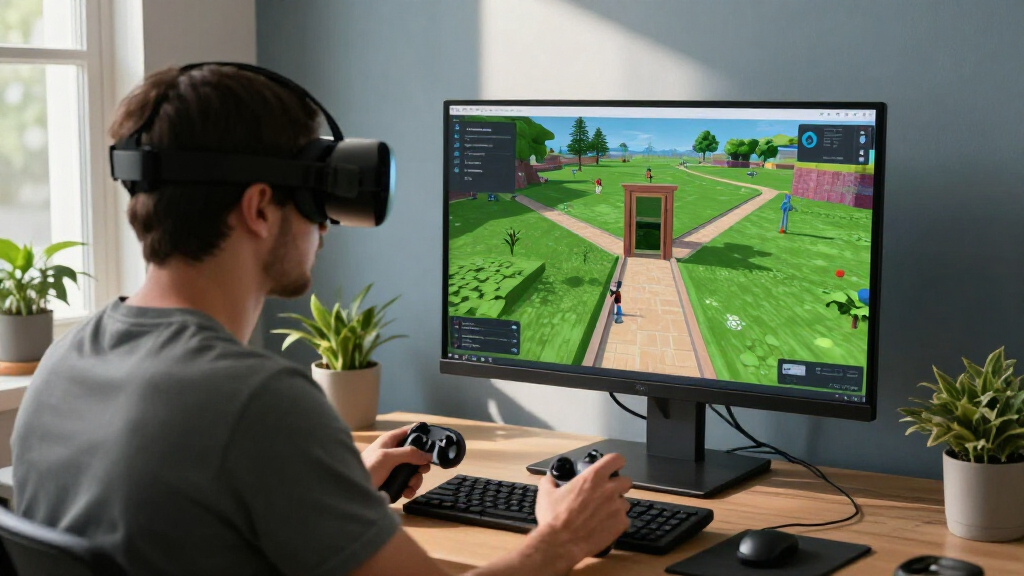
DeepMind says users can steer generated scenes with keyboard and mouse controls, then change elements by typing instructions such as altering the weather or adding an object. The company describes Genie 4 as generating each next moment in response to the scene and user input, rather than rendering a world from a stored 3D map. That description comes from Google; the announcement provides no benchmark figures for image quality, consistency or responsiveness.
The company also says Genie 4 generates audio alongside visuals, including ambient sounds, music and character dialogue. DeepMind presents this as a first for its own real-time world models. TechCrunch reported that another system, Runway’s GWM Worlds 2, also generates audio. DeepMind’s demos are company-selected examples, so they do not establish how the model performs across broader or independent testing.
DeepMind describes Gemini 3.8 Flash as an agent that can break goals into steps and monitor scenes as they change. Its robotics demonstration showed a simulation of Apptronik’s Apollo humanoid playing checkers; according to the source material, no physical robot took part. DeepMind says film previsualization and game prototyping are among the uses testers have reported. Those are early feedback and demonstrations, not evidence of commercial results.
Genie 4’s Walkable Worlds: What Works, What Doesn’t, and Who Gets Access
Google DeepMind describes a real-time model for interactive scenes with generated video and sound, steered by live text instructions. The promise is clear; public evidence, reliability details and access terms remain limited.
“Details and objects can shift or drift over time.”Google DeepMind · disclosed limitation
A testbed for interactive media
Users move through generated scenes and can change them as they run. DeepMind says each next moment responds to the scene and user input rather than a stored 3D map.
Move, then revise
Keyboard and mouse controls let users explore. Text prompts can request changes such as shifting the weather or adding an object.
Audio alongside visuals
DeepMind says outputs can include ambient sounds, music and character dialogue. It calls this a first for its own real-time world models.
Creative work in trial
Testers have reported film previsualization and game prototyping. These are early feedback, not evidence of production results.
DeepMind’s examples are company-selected. They show what the team chose to demonstrate, not how Genie 4 performs across independent or broad testing.
From short clips to live worlds
DeepMind’s announcement places Genie 4 in a progression toward longer, real-time interaction, richer visuals and sound.
Genie
Introduced in February; generated simple 2D worlds from video training data.
Genie 2
Announced in December; created 3D environments from one image and maintained them for up to a minute, per DeepMind.
Genie 3
Introduced as DeepMind’s first real-time world model. Source material says 720p, 24 fps, with scenes consistent for a few minutes.
Genie 4
Emphasizes richer visuals, generated audio and instructions entered while a scene is running.
Performance beyond the demos
No benchmark figures for quality, consistency or responsiveness are provided in the source material. Several practical questions remain open.
| Area | What is described | What remains unknown |
|---|---|---|
| Scene stability | ~ Details and objects may drift; interaction lasts a few minutes. | How often drift occurs and under what conditions. |
| Duration | ~ DeepMind says “a few minutes.” | Exact duration; media reports of about two minutes are not DeepMind’s stated figure. |
| Prompt response | ✓ Live text-directed changes are described. | Reliability across different instructions and scenes. |
| Quality & speed | ? No benchmark results in the source material. | Image quality, consistency and latency in ordinary use. |
| Robotics | ~ Apollo checkers shown in simulation. | No physical robot participated; real-world training benefits are unestablished. |
DeepMind also describes Gemini 3.8 Flash as an agent that can break goals into steps and monitor changing scenes. The Apollo demonstration was simulated; it does not show a physical robot being trained or improved.
Who can use it—and what to watch
Genie 4 is in testing with trusted users. Broader routes have been described as coming soon, without confirmed dates or pricing.
Trusted testers
Access is currently restricted. The source material gives no count of participating testers.
Project Genie
Broader access is described as coming soon for Google AI Ultra subscribers. The source identifies the plan at $200 per month, but gives no Genie 4 launch date.
Gemini API
Early API partners are mentioned. No API price or confirmed rollout schedule is provided.
Potential, not proof
Previsualization and game prototyping come from tester feedback. Agent and robot scenes are research demonstrations, not measured commercial outcomes.
SynthID watermarking
DeepMind says generated video and audio carry an invisible SynthID watermark. The source material does not explain detection or how reliably it survives editing and reposting.
What readers should know
The next useful milestones are independent testing, clearer access terms and evidence of how long scenes remain coherent in ordinary use.
What is Genie 4?
A world model that DeepMind says generates interactive scenes with visuals and audio as users move and issue instructions.
Can the public use it now?
No public release is specified. Access is currently limited to trusted testers; Project Genie and Gemini API access are described as coming soon.
What limitations are disclosed?
DeepMind says details and objects can drift over time and describes continuous interaction as lasting a few minutes. Independent performance figures are not provided.
Does it train real robots?
The cited Apollo checkers demonstration took place in simulation. The source says no physical robot was involved.
When will Project Genie or API access arrive?
DeepMind says these routes are coming soon, but no release date, API price or confirmed rollout schedule is given.
Has Genie 4 been adopted by Waymo?
The source material says Waymo uses the predecessor Genie 3 in its driving simulator. That does not establish adoption of Genie 4.
A Testbed for Interactive Media
Genie 4 points toward a different way to make and explore digital scenes: users can describe a setting, move through it and alter it while it runs. If the system proves reliable, that could help creative teams sketch scenes or game concepts without first building a conventional environment. For now, the practical evidence is limited to DeepMind’s selected demos and feedback from testers.
The model also has research relevance. DeepMind’s demonstration links generated worlds with an AI agent and a simulated robot task, while the company says Gemini can guide actions through a scene. These experiments may help researchers study how systems respond to changing environments. They do not show that Genie 4 can train real robots safely or improve their performance; that remains a separate question from what a simulation can depict.
For viewers, realistic moving images paired with generated sound may make synthetic footage more convincing. DeepMind says Genie 4 video and audio outputs carry an invisible SynthID watermark. The source material does not specify how the watermark is detected or how reliably it survives editing and reposting.
Products Worth Considering

Bose QuietComfort Wireless Bluetooth Headphones with Active Noise Cancellation, Mic, USB‑C Charging, Deep Bass, 24‑Hour Battery – White Smok

Logitech MX Keys S Wireless Keyboard, Graphite

Sony WH-1000XM6 Wireless Noise-Canceling Over-Ear Headphones, Blue, Bundle
As an affiliate, we earn on qualifying purchases.
From Short Clips to Live Worlds
DeepMind’s earlier Genie models mark the development described in its announcement. The first Genie, introduced in February 2024, generated simple 2D worlds from video training data. Genie 2, announced in December 2024, created 3D environments from a single image and maintained them for up to a minute, according to the company’s earlier account.
In August 2025, DeepMind introduced Genie 3 as its first real-time world model. The source material says it ran at 720p and 24 frames per second, with scenes consistent for a few minutes. Genie 4’s announcement builds on that progression by emphasizing richer visuals, sound generation and instructions entered while a scene is running.
Use cases vary in maturity. DeepMind cites tester feedback for film planning and game prototypes, and presents robot training as a research demonstration. The source material also says Waymo uses the predecessor, Genie 3, in its driving simulator. That example concerns Genie 3; it does not establish that Waymo has adopted Genie 4.
““details and objects can shift or drift over time””
— Google DeepMind
Performance Beyond the Demos
DeepMind has not published benchmark numbers in the source material, and independent evaluations are not described. TechCrunch and Bloomberg, as cited by heise, reported scenes lasting about two minutes; that duration is not in DeepMind’s own wording, which says a few minutes. The exact duration and the conditions under which scenes remain stable are still unclear.
It is also unknown how often objects, people or layouts drift during typical use, how well live instructions work across different prompts, and what quality or latency users can expect. The source material does not give a date for general access, an API price, or details of how many testers are participating. Claims about possible creative and robotics applications have not yet been backed by results showing production use or measurable benefits.
Access and Testing Details
DeepMind says Genie 4 is being tested by trusted users. The company has listed broader availability as coming soon through Project Genie for Google AI Ultra subscribers and through early Gemini API partners. The source material identifies the Ultra plan as costing $200 a month, but does not give a launch date for Genie 4 access, an API price or a confirmed rollout schedule.
The next useful milestones will be independent testing, clearer access terms and evidence about how long scenes stay coherent under ordinary use. Until those details emerge, Genie 4’s capabilities are best understood as vendor-described features and early demonstrations, with reliability and availability still developing.
Key Questions
What is Genie 4?
Genie 4 is a world model that DeepMind says generates interactive scenes as users move and issue instructions. The company says it creates visuals and audio in real time.
Can the public use Genie 4 now?
No public release is specified in the source material. DeepMind says access is currently limited to trusted testers, with Project Genie and Gemini API access described as coming soon.
What limitations has DeepMind disclosed?
DeepMind says details and objects can shift or drift over time and describes continuous interaction as lasting a few minutes. Independent performance figures are not provided in the source material.
Does Genie 4 train real robots?
The cited robotics example is a simulation involving Apptronik’s Apollo humanoid playing checkers; the source says no physical robot was involved. It does not establish that Genie 4 has trained a real robot.
When will Genie 4 reach Project Genie or the Gemini API?
DeepMind has said those routes are coming soon, but the source material gives no release date or API price.
Source: Thorsten Meyer AI