
TL;DR

Get business pricing on monitors, keyboards and dev gear
- Business-only prices and quantity discounts
- Tax-exempt purchasing
- Multiple users, one account, clear invoices
California has joined a growing number of states passing laws to make small plug-in solar systems easier to use. The portable panels can supply some household electricity without a rooftop installation, but local rules, product safety and actual savings vary.
California has passed a law easing rules for plug-in solar, adding to a growing state-level effort to let residents generate some household electricity with small panels connected to an outlet. The systems can offer an entry point for renters and homeowners unable to install rooftop solar, though local restrictions and safety questions remain.
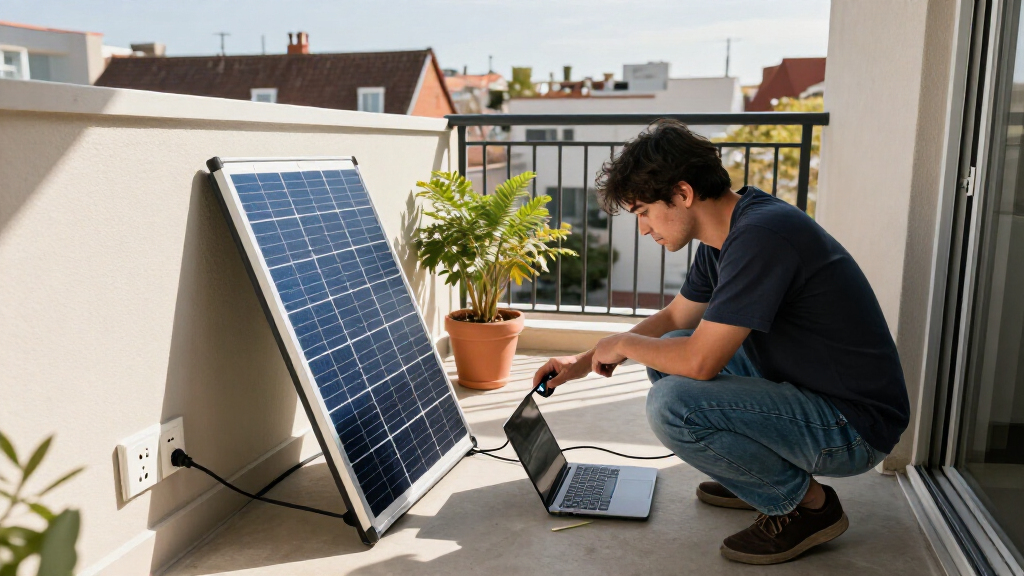
Plug-in solar, also called balcony solar, generally uses one to three panels connected to an inverter and a household outlet. Rather than routing power through a home’s breaker panel as rooftop solar does, the setup feeds electricity into the home’s circuits, where it can serve devices drawing power. Utah Clean Energy’s Jennifer Eden estimates these systems typically supply 10 to 30 percent of an average home’s electricity use.
The report says Utah legalized the systems in spring 2025, followed by Colorado, Connecticut, Maine, Maryland, New Hampshire, New Jersey, Vermont, Virginia and California. New York lawmakers approved a bill awaiting the governor’s signature, and legislators in nearly two dozen other states had introduced similar proposals. The laws generally set limits that keep systems to a small number of panels.
Examples in the report show both potential savings and practical complications. Colorado resident Nick Danz paid under $300 for a one-panel unit and estimated he had saved more than $300 on electricity bills since August. He also experienced circuit-breaker trips that stopped after he changed inverters. In Utah, Andrew Leon and Victoria Mauro’s panels faced a separate hurdle: a city zoning employee told them the placement in front of their home was prohibited, and the couple was working with the zoning board.
A Lower-Cost Route Into Solar
Conventional rooftop solar can require substantial upfront spending, a suitable roof and permission from a landlord or property owner. Small plug-in systems offer a less expensive, portable alternative for some households, including renters, while producing electricity close to where it is used. They do not replace a full home solar installation, but may offset some electricity purchased from a utility.
The potential effect depends on a household’s sunlight, electricity rates, installation location and how much power is consumed while the panels are generating. Joshua Pearce, an electrical engineer at Western University, estimated in a 2017 journal article that broad adoption could save residents $13 billion a year in electricity costs. The report says Pearce believes the potential figure is higher now because electricity rates have risen; it does not provide an updated calculation.
State laws may reduce one barrier, but they do not guarantee that every resident can install a system. The Utah homeowners’ zoning dispute illustrates how city rules can still affect placement. Renters may also need to account for lease conditions and building policies, issues that can vary by property.
As an affiliate, we earn on qualifying purchases.
From European Use to U.S. Laws
Plug-in solar has a longer track record in parts of Europe. The report says more than one million units have been installed in Germany in recent years and that Swedish furniture retailer IKEA sells plug-in kits there. That adoption has helped bring attention to the technology in the United States, where legislation is developing state by state.
The systems work differently from rooftop installations. Rooftop panels are wired into a home’s electrical panel, and excess electricity can flow back to the utility. A plug-in unit is designed to supply power within the residence. Its small inverter converts the panels’ output so it can be used by household circuits. Products and rules differ, so the European experience does not by itself establish how every U.S. system or installation will perform.
““There’s now an entry point into solar that doesn’t cost tens of thousands of dollars and can be used by people who don’t own their home.””
— Jennifer Eden, Utah Clean Energy
As an affiliate, we earn on qualifying purchases.
Safety and Local Rules Persist
Passing a state law does not settle every question about installation or use. Local zoning and building restrictions may still apply, as the Utah homeowners’ experience shows. The report does not detail how California’s law will interact with local ordinances, rental agreements or building policies.
Some utilities have raised concerns that a system could send electricity onto power lines and endanger workers. Pearce says U.S.-sold microinverters cannot do that. The report also cites safety standards established by UL Solutions earlier in the year, with one manufacturer certified at the time of reporting. These details do not establish that every product on the market is certified or that every installation is safe.
A British government test of products available in the United Kingdom found no direct electrical hazard, according to the report, though some products had minor issues, including delayed circuit-breaker response under stress. The report does not provide comparable U.S. test results across products. Actual household savings also depend on location, system output, electricity prices and usage, so individual estimates should not be treated as typical outcomes.
small solar inverter for wall outlet
As an affiliate, we earn on qualifying purchases.
As an affiliate, we earn on qualifying purchases.
State Rules and Product Tests Ahead
The next developments will be how California implements its new law and whether other state proposals advance. New York’s bill was awaiting the governor’s signature in the report, while legislators in nearly two dozen additional states had introduced bills. The source does not give a timetable for those decisions.
For consumers, practical access will depend on the rules where they live, the equipment available and whether a building allows the panels to be placed in a sunny location. Product certification and further safety testing may also help clarify which systems meet established standards. Until those details are clearer, buyers should check applicable local requirements and product documentation rather than assume that state approval alone settles the matter.
As an affiliate, we earn on qualifying purchases.
Key Questions
What are plug-in solar panels?
They are small solar systems, usually with one to three panels, that use an inverter and connect to a household outlet to supply some of a home’s electricity.
Can plug-in solar power an entire home?
These systems are intended to contribute only part of a home’s electricity use. Utah Clean Energy’s Jennifer Eden estimates a typical contribution of 10 to 30 percent, though output depends on the setup and conditions.
Are plug-in solar systems legal everywhere in the United States?
No. The report describes laws in ten states, including California, and proposals elsewhere. Local rules may still restrict placement, even in a state that has approved the technology.
How much money can a household save?
Savings vary with sunlight, electricity rates, system output and household usage. One Colorado resident reported paying under $300 for a one-panel unit and estimated savings of more than $300 since August, but that is an individual account, not a typical result.
Are the systems proven safe?
The report says UL Solutions set standards and had certified one manufacturer at the time of reporting. It also cites testing in Britain that found no direct electrical hazard in the products examined, while identifying minor issues in some. Those findings do not certify every product or resolve every installation concern.
Source: hn
Columbus Day / Indigenous Peoples' Day Picks
long weekend sales
As an affiliate, we earn on qualifying purchases.