

Choosing test management software starts with a practical question: do you need a working platform, or guidance for selecting and managing one? From the six listed options, Productive Software Test Management is my best overall pick as the most directly focused resource, while Manage Software Testing is a useful alternative for readers seeking broader management guidance. The SAP practitioner’s guide stands apart for teams working in SAP environments, and the ISTQB-focused title suits certification study more than software procurement. The main tradeoff is between hands-on tool needs and learning material that helps shape a testing process. Read on for the full breakdown and a guide to matching these resources to your needs.

Get business pricing on monitors, keyboards and dev gear
- Business-only prices and quantity discounts
- Tax-exempt purchasing
- Multiple users, one account, clear invoices
Key Takeaways
- Productive Software Test Management ranks first because its subject is the closest match to buyers searching for test management guidance, though the title alone does not establish that it is a software platform.
- Manage Software Testing is another broadly relevant resource, but buyers seeking a deployable tool should verify its format and capabilities before treating it as software.
- The SAP guide has the clearest specialist audience: teams responsible for quality engineering across SAP systems, not general-purpose test management buyers.
- The ISTQB and CTAL-TM titles are primarily study-oriented references; certification alignment can support learning, but it does not replace workflow and integration requirements.
- Visual Studio Team System 2008 is the most visibly dated option, making version compatibility and current support key checks before relying on it.
| Productive Software Test Management |  | Best for Foundational Test-Management Reading | Product type: Book | Title: Productive Software Test Management | ASIN: 0471883115 | VIEW LATEST PRICE | See Our Full Breakdown |
| Software Testing: Advanced Test Management Guide for ISTQB Certification | 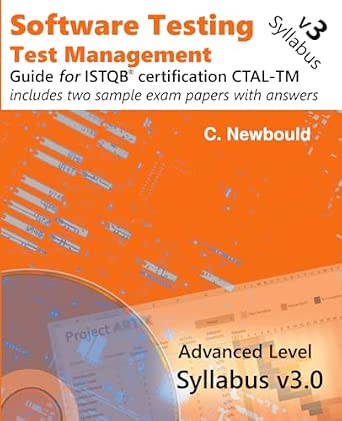 | Best for Advanced ISTQB Exam Preparation | Title: Software Testing: Advanced Test Management Guide for ISTQB Certification | ASIN: 095360568X | Product type: Book or study guide; exact type not specified | VIEW LATEST PRICE | See Our Full Breakdown |
| Software Testing and Test Management in SAP: A Practitioner’s Guide to Quality Engineering Across the SAP Landscape |  | Best for SAP Testing Programs | Title: Software Testing and Test Management in SAP: A Practitioner’s Guide to Quality Engineering Across the SAP Landscape | ASIN: B0HJWX1STV | Subject: Software testing and test management in SAP | VIEW LATEST PRICE | See Our Full Breakdown |
| Manage Software Testing |  | Best for Readers Seeking a Plain-Language Topic Match | Title: Manage Software Testing | ASIN: B00OD4VQMA | Product type: Not specified | VIEW LATEST PRICE | See Our Full Breakdown |
| Software Testing with Visual Studio Team System 2008 |  | Best for Legacy Visual Studio Team System Contexts | Title: Software Testing with Visual Studio Team System 2008 | ASIN: 184719558X | Product type: Book | VIEW LATEST PRICE | See Our Full Breakdown |
| Software Testing and Test Management Training: CTAL-TM 3.0 Syllabus (German Edition) |  | Best for German-Language CTAL-TM 3.0 Study | Language: German | Topic: Software testing and test management | Syllabus: CTAL-TM 3.0 | VIEW LATEST PRICE | See Our Full Breakdown |
| test management software | Title | ASIN | Subject | Format |
|---|---|---|---|---|
| Productive Software Test Manag | Productive Software Test Management | 0471883115 | Software test management | Not specified |
| Software Testing: Advanced Tes | Software Testing: Advanced Test Management Guide for ISTQB Certification | 095360568X | Software testing and advanced test management | Not specified |
| Software Testing and Test Mana | Software Testing and Test Management in SAP: A Practitioner’s Guide to Quality Engineering Across the SAP Landscape | B0HJWX1STV | Software testing and test management in SAP | Not specified |
| Manage Software Testing | Manage Software Testing | B00OD4VQMA | Software testing management, based on title | Not specified |
| Software Testing with Visual S | Software Testing with Visual Studio Team System 2008 | 184719558X | Software testing | Not specified |
| Software Testing and Test Mana | — | — | — | — |
More Details on Our Top Picks
Productive Software Test Management
Productive Software Test Management is the broadest fit here for readers seeking a book specifically about managing software testing. Its title puts the management discipline at the center, unlike Software Testing with Visual Studio Team System 2008, which is tied to a named, older tool, or the SAP-focused practitioner guide. That makes this a reasonable starting point for readers who want a general subject focus rather than a platform-specific one. The limitation is the sparse listing: it provides no contents, edition, author, or format details, so I can’t judge its depth or currency from the available data. Treat it as a subject-specific reading option, not a substitute for evaluating dedicated test-management software or confirming the book’s fit for your team.
Pros:- The title directly centers software test management
- Less tied to a named platform than the Visual Studio Team System 2008 book
- May suit readers seeking a general subject-focused introduction
Cons:- No contents, edition, author, or format details are supplied
- The listing does not establish whether its guidance applies to current test-management tools
- A book offers learning material rather than software for managing live test work
Best for: Readers seeking a general book on software test management before comparing dedicated tools or shaping team processes
Not ideal for: Buyers who need verified coverage of a particular platform, certification syllabus, or current software product; the available listing supplies no such detail
- Product type:Book
- Title:Productive Software Test Management
- ASIN:0471883115
- Subject:Software test management
- Format:Not specified
- Edition:Not specified
Our verdict“Choose this as a general test-management reading candidate, but verify its contents before relying on it for a specific workflow or tool decision.”
Software Testing: Advanced Test Management Guide for ISTQB Certification
Software Testing: Advanced Test Management Guide for ISTQB Certification is the clearest choice in this group for readers whose goal is advanced test-management study tied to ISTQB certification. That focus sets it apart from Productive Software Test Management, which has a broader management-oriented title, and Manage Software Testing, whose listing provides no further description. Certification alignment may help a candidate focus study around a defined professional objective, but the available data does not identify a syllabus version, edition, contents, or format. I would not treat the title alone as proof that it matches a current exam. It is also a study resource, not a working test-management application, so teams seeking case tracking, reporting, or workflow execution should compare software products instead.
Pros:- Explicitly targets advanced test management
- Names ISTQB certification as its study context
- More certification-focused than the general title of Productive Software Test Management
Cons:- No edition, syllabus version, format, or contents are supplied
- The listing does not confirm alignment with a particular exam version
- Provides study material rather than operational test-management software
Best for: Experienced testers preparing for advanced ISTQB test-management certification who want a focused study resource
Not ideal for: Teams choosing an application to plan, execute, and report tests, or candidates who need verified alignment with a specific current syllabus
- Title:Software Testing: Advanced Test Management Guide for ISTQB Certification
- ASIN:095360568X
- Product type:Book or study guide; exact type not specified
- Subject:Software testing and advanced test management
- Certification focus:ISTQB
- Format:Not specified
Our verdict“Pick this for advanced ISTQB-focused study only after checking that its edition matches your intended certification syllabus.”
Software Testing and Test Management in SAP: A Practitioner’s Guide to Quality Engineering Across the SAP Landscape
Software Testing and Test Management in SAP has the most defined specialist audience in this set: practitioners handling testing and quality engineering across an SAP landscape. That domain focus gives it a clearer use case than Manage Software Testing, whose listing offers only a title, and distinguishes it from Productive Software Test Management’s general subject framing. For a team working in SAP environments, the title suggests a closer match to its context than a general management guide. However, no contents, format, edition, or specific SAP products are identified in the supplied data. I can’t infer which systems or methods it covers. It is a practitioner-oriented reading option, not test-management software itself, so buyers seeking a platform for executing and tracking tests need a separate product evaluation.
Pros:- Explicitly focuses on software testing in SAP
- Connects test management with quality engineering in its title
- Has a more specific audience than general guides such as Productive Software Test Management
Cons:- No detailed contents or covered SAP products are provided
- Format and edition are not specified
- A practitioner guide does not itself provide test-management software
Best for: SAP quality-engineering practitioners and test leads looking for reading focused on testing across SAP environments
Not ideal for: Teams outside SAP, or buyers seeking a software platform with confirmed integrations, test execution, and reporting features
- Title:Software Testing and Test Management in SAP: A Practitioner’s Guide to Quality Engineering Across the SAP Landscape
- ASIN:B0HJWX1STV
- Subject:Software testing and test management in SAP
- Focus:Quality engineering across the SAP landscape
- Intended orientation:Practitioner’s guide
- Format:Not specified
Our verdict“Choose this for SAP-centered testing guidance, but confirm the covered SAP landscape and format before purchase.”
Manage Software Testing
Manage Software Testing makes its subject easy to recognize, but the listing gives no description beyond the title. That makes it a less informed choice than Software Testing: Advanced Test Management Guide for ISTQB Certification, which at least identifies a certification aim, or the SAP practitioner guide, which signals a specialist context. The broad wording may appeal to readers looking for material on overseeing testing without committing to a named platform or exam. Still, the title alone cannot establish whether the book covers planning, teams, tools, or governance, and there is no format or edition information to check. I’d treat it as a candidate for further research, not a dependable recommendation for a defined management need. Like the other books here, it is not a test-management application.
Pros:- The title plainly signals a software-testing management subject
- Does not name a single platform or certification as its focus
- May be worth comparing for readers seeking broad management material
Cons:- No description, contents, author, edition, or format are provided
- The title does not reveal its intended reader or level of detail
- Cannot be evaluated as a software product for test planning or execution
Best for: Readers researching general software-testing management material who can verify the book’s contents before choosing
Not ideal for: Buyers who need confirmed coverage of certification, SAP workflows, a specific tool, or software for managing test cases
- Title:Manage Software Testing
- ASIN:B00OD4VQMA
- Product type:Not specified
- Subject:Software testing management, based on title
- Description:Not provided
- Format:Not specified
Our verdict“Consider this only if you can verify its contents and need general reading rather than test-management software.”
Software Testing with Visual Studio Team System 2008
Software Testing with Visual Studio Team System 2008 is the most tool-specific title in this group, making it a plausible reference for readers dealing with that named development and testing environment. This focus sharply separates it from general management books such as Productive Software Test Management and Manage Software Testing. The specificity can be useful when a team needs historical or legacy-system context, but it also narrows the audience: the 2008 platform reference may limit its usefulness for teams using newer tools. The listing provides no contents, edition, or format details, so the depth of its test-management coverage is unknown. I would choose it for a legacy-platform need, not as a general guide to selecting present-day test-management software.
Pros:- Names a specific testing environment, giving the book a clear niche
- May provide relevant context for teams maintaining Visual Studio Team System 2008 workflows
- More tool-focused than the broad management titles in this roundup
Cons:- The 2008 platform focus limits relevance for many current tool evaluations
- No contents, edition, or format details are supplied
- The listing does not establish how much test-management coverage it contains
Best for: Developers, testers, and maintainers working with legacy Visual Studio Team System 2008 workflows
Not ideal for: Teams selecting modern test-management software or readers who need platform-neutral management guidance
- Title:Software Testing with Visual Studio Team System 2008
- ASIN:184719558X
- Product type:Book
- Subject:Software testing
- Named platform:Visual Studio Team System 2008
- Format:Not specified
Our verdict“Choose this for a legacy Visual Studio Team System 2008 context, not as a general guide to current test-management tools.”
Software Testing and Test Management Training: CTAL-TM 3.0 Syllabus (German Edition)
This is German-language training material for readers focused on the CTAL-TM 3.0 syllabus, rather than a software platform for managing test cases, assignments, or results. That makes it a specialist study choice in a roundup otherwise centered on test-management books, including Productive Software Test Management and Manage Software Testing. Its syllabus alignment gives certification candidates a defined study focus, while its subject matter also relates to testers and test managers seeking structured learning. The tradeoff is limited product information: the supplied details do not describe its format, depth, exercises, or coverage beyond the syllabus alignment. Choose it for targeted German-language certification preparation; skip it if you need practical software tools, a clearly documented course format, or broader guidance not tied to this syllabus.
Pros:- Aligned with the CTAL-TM 3.0 syllabus for focused certification study.
- Written in German for learners who prefer technical study material in that language.
- Addresses topics relevant to both software testers and test managers.
Cons:- The available product information does not specify format, length, or learning materials.
- Syllabus-focused scope may be less useful to readers seeking broad, practice-led management guidance.
Best for: German-speaking software testers and test managers preparing for CTAL-TM 3.0 who want study material aligned with that syllabus.
Not ideal for: Teams seeking test-management software to organize cases and execution, or readers who need a specified format, exercise list, or detailed coverage outline.
- Language:German
- Topic:Software testing and test management
- Syllabus:CTAL-TM 3.0
- Material type:Training material
- Intended audience:Software testers and test managers
- Product format details:Not provided
Our verdict“Choose this for German-language CTAL-TM 3.0 study, not as a software tool or a fully documented practical handbook.”

How We Picked
I ranked these six options by how directly their stated subject fits a reader’s test management needs, how clearly their titles signal an intended audience, and whether they address practical workflows, a specialist environment, or certification study. I also weighed the age and likely relevance of the material: a guide tied to Visual Studio Team System 2008 needs a much stronger compatibility check than a resource with no dated platform in its title.
This list has an important limitation: the supplied options are books and training resources, not clearly identified software platforms. I therefore rank them as resources for understanding or managing testing, rather than claiming they provide test execution, traceability, reporting, integrations, or other product capabilities. The broadest and most directly relevant titles lead; specialized and certification-focused works follow, with the legacy Visual Studio title lower because its age can limit present-day usefulness.
| test management software | Product type | Title | Subject |
|---|---|---|---|
| Productive Software Test Manag | Book | Productive Software Test Management | Software test management |
| Software Testing: Advanced Tes | Book or study guide; exact type not specified | Software Testing: Advanced Test Management Guide for ISTQB Certification | Software testing and advanced test management |
| Software Testing and Test Mana | — | Software Testing and Test Management in SAP: A Practitioner’s Guide to Quality Engineering Across the SAP Landscape | Software testing and test management in SAP |
| Manage Software Testing | Not specified | Manage Software Testing | Software testing management, based on title |
| Software Testing with Visual S | Book | Software Testing with Visual Studio Team System 2008 | Software testing |
| Software Testing and Test Mana | — | — | — |
Factors to Consider When Choosing Test Management Software
Before choosing from this list, separate the need for a software product from the need for a book, syllabus, or training resource. The distinction affects what you should evaluate, what evidence to request, and whether a title can solve your team’s immediate workflow problem.
Confirm You Need a Platform, Not a Reference
A test management platform stores test cases, organizes runs, records results, and connects defects or requirements; a guide explains methods and concepts. Confusing the two can leave a team with useful reading but no shared workspace for its testing activity. Before choosing, list the actions your team needs to perform inside a tool, such as assigning tests, tracking execution, or reporting coverage. Then check whether the item under consideration is software, a book, or course material. If you need a working system now, treat these six titles as supporting resources rather than substitutes for a platform evaluation.
Map the Workflow Before Comparing Features
Teams often start with feature checklists and miss the workflow that makes those features useful. Sketch how a test moves from a requirement to a case, an execution result, a defect, and a release decision. Decide who owns each step and whether manual, automated, or mixed testing needs to appear in the same reporting view. A tool with many functions may add overhead if your team only needs lightweight coordination, while a simple setup can fall short when audit trails or cross-team traceability matter. Use the workflow map to judge fit instead of treating feature count as a proxy for quality.
Check Integration Needs Early
Test management rarely operates alone: teams may need links to issue tracking, source control, CI pipelines, or requirements systems. A missing connection can lead to duplicate updates and reports that drift away from the work they are meant to describe. Identify the systems your team already depends on and ask whether integration is native, supported through an API, or handled by a separate connector. For SAP-focused testing, evaluate the application landscape and release process rather than assuming a general-purpose guide or platform covers those needs. Confirm how integrations behave during a trial or technical review, not just whether a logo appears on a compatibility page.
Settle Governance and Reporting Requirements
Reporting needs depend on who must act on the information: testers need execution detail, while leads and auditors may need coverage, approvals, and history. Write down the decisions each report must support before comparing dashboards. Regulated or high-assurance work may require controlled changes and a traceable record of who did what; a small team may care more about quick status visibility. Avoid paying for governance features that your process will not use, but do not assume a basic spreadsheet-like workflow will meet formal evidence requirements. Training materials can help define a process, yet they cannot confirm that a particular platform records the evidence your organization requires.
Evaluate Adoption and Maintenance Costs
A tool can fit the technical workflow and still fail if maintaining test cases takes more effort than the team can spare. Estimate who will curate cases, remove obsolete coverage, and keep links to requirements and defects current. Ask whether occasional contributors can complete their tasks without extensive onboarding, especially if developers and product staff share the system. Pilot a representative project and include routine maintenance tasks, not only the initial setup. For learning resources, check the edition, publication context, language, and alignment with current practices; certification content is most useful when it matches a learner’s current exam path.
Match the Spend to Risk and Scale
Paying for a more capable system makes sense when it reduces costly coordination problems, supports several teams, or meets firm traceability demands. A smaller group with a stable process may get more value from a simple platform plus focused training than from a complex suite. Consider the cost of migration and ongoing administration alongside licensing, since moving test assets later can be disruptive. Do not use a book or syllabus as a stand-in for software simply because it is less involved to obtain; they solve different problems. Start with the smallest setup that satisfies your workflow and governance needs, then expand only when a specific constraint appears.
Frequently Asked Questions
Are any of these six options actual test management software?
Based on the supplied titles, these options appear to be books, guides, or training material rather than clearly identified software platforms. They may help you learn test management practices, but there is no stated evidence here that they provide a workspace for storing cases or tracking runs. If your team needs an operational tool, verify the format and publisher information before making a selection. You will likely need a separate platform shortlist based on workflow, integrations, and governance requirements.
Which option should I start with if I need a tool for my team?
Start by defining the tasks your team needs the tool to support, then look for a software product that meets those needs. Among these six, Productive Software Test Management is the closest title match, but the title does not confirm that it is a deployable application. Treat it as a potentially relevant resource until you verify its format. For a real platform decision, compare a small set of products using a representative workflow and your required integrations.
Is the Visual Studio Team System 2008 title still useful?
It may offer historical or legacy-platform context, especially if your organization still supports an environment tied to that product. Its 2008 designation makes it a poor default choice for guidance on current tool capabilities or modern workflows. Check whether the material addresses the exact version and task you need before relying on it. For a current implementation decision, pair any legacy reference with up-to-date documentation and a review of present-day platform support.
Should I choose an ISTQB or CTAL-TM resource instead of a practical guide?
Choose certification material when your immediate goal is exam preparation or structured learning, not when you need a shared system for managing active tests. The ISTQB-focused title and the CTAL-TM syllabus signal a learning path, while a practical guide may offer broader process context. Check the certification version and language against the learner’s needs; the CTAL-TM option is identified as a German edition. These resources can complement a tool rollout, but they do not replace platform selection or team-specific workflow design.
When does the SAP practitioner’s guide make more sense than a general test management resource?
It is the stronger fit when your testing work centers on SAP applications and quality engineering across that landscape. A general resource may be more suitable for teams managing varied products or looking for foundational test management concepts. SAP teams should still confirm that the guidance matches their systems, release practices, and current responsibilities. The guide is a specialist reference, not proof that a particular test management platform supports SAP workflows or integrations.
Conclusion
For the best overall resource, I’d start with Productive Software Test Management because its stated focus most directly matches the query, while verifying that it is guidance rather than a software product. Best value for broad learning goes to Manage Software Testing for readers who want general management context; I can’t assign a monetary value without pricing or format details. There is no clearly identified premium software option in this lineup, so buyers seeking enterprise capabilities should compare actual platforms separately. For beginners, the broad, direct titles are a more natural starting point than certification-specific or legacy material. Choose the SAP guide for SAP quality work, the ISTQB or CTAL-TM titles for certification study, and the Visual Studio Team System 2008 book only when its dated platform context is relevant to your environment.
Halloween Picks
halloween
As an affiliate, we earn on qualifying purchases.