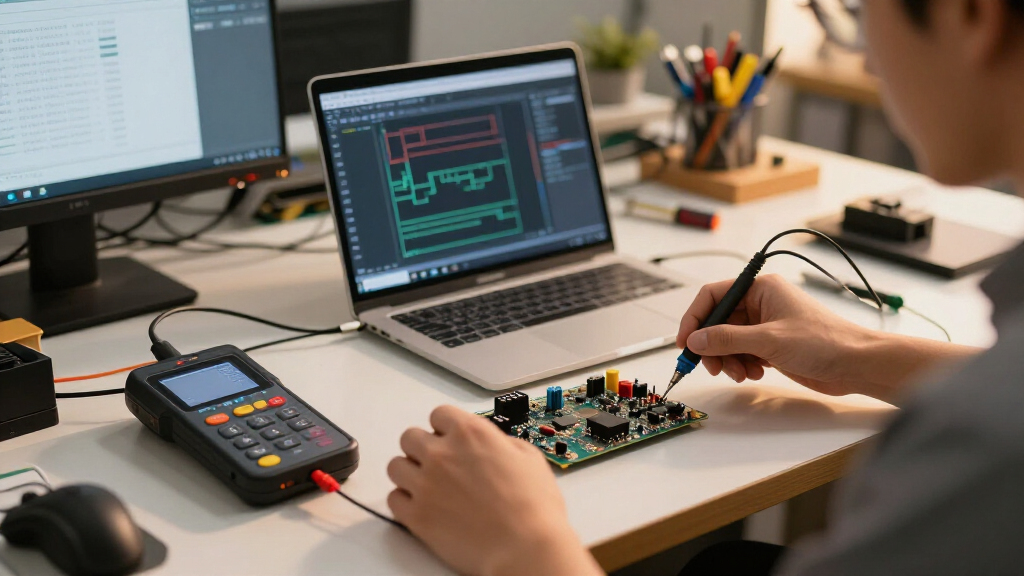

When it comes to debugging digital signals and communication protocols, a reliable USB logic analyzer is essential. The DSLogic Plus stands out as the best overall pick for its high channel count and versatile decoding options. For those seeking a budget-friendly yet capable option, the HiLetgo 8-Channel USB Logic Analyzer offers solid performance at a lower price point. Meanwhile, the DL16 Plus USB Logic Analyzer is ideal for professionals needing high sample rates and advanced features. Buyers often face tradeoffs between channel count, sampling speed, software support, and price. Continue reading for a detailed breakdown to find the perfect match for your debugging needs.

Get monitors, keyboards and dev gear delivered free — and shop member deals
- Fast, free delivery on millions of items
- Access to Prime Big Deal Days deals on October 6–7
- Prime Video, Amazon Music and more included
Key Takeaways
- High channel count and fast sampling rates are key for complex debugging but come with higher costs.
- Ease of use and software support can significantly reduce setup time for beginners and intermediate users.
- Test hook accessories enhance versatility, especially for embedded debugging in tight spaces.
- Premium models offer advanced decoding and higher speeds, but affordable options still cover basic debugging tasks effectively.
- Compatibility with both Windows and Mac can influence your choice depending on your existing setup.
| 8-Channel USB Logic Analyzer, 24 MHz |  | Best Overall for Versatile Protocol Analysis | Channels: 8 digital channels | Maximum sampling rate: 24 MHz per channel | Supported sampling rates: 24, 16, 12, 8, 4, 2, 1, 0.5, 0.25, 0.2, 0.1, 0.05, 0.025 MHz | VIEW LATEST PRICE | See Our Full Breakdown |
| LA104 100MSa/s USB Logic Analyzer with Touch Screen |  | Best for Portable, Field-Ready Debugging | Sample Rate: 100 MSa/s | Channels: 4 | Input Impedance: 1 MΩ | VIEW LATEST PRICE | See Our Full Breakdown |
| Xicoolee 8-Channel Mini USB Logic Analyzer (CY7C68013A) |  | Best for Multi-Platform Compatibility and Protocol Diversity | Channels: 8 | Max Sampling Rate: 24 MHz | Interface: USB Type-C | VIEW LATEST PRICE | See Our Full Breakdown |
| USB Logic Analyzer 24MHz 8-Channel with UART, I2C, SPI Support and Test Hook Clip Set |  | Best for Complete Debugging Kits and Ease of Use | Channels: 8 | Max Sampling Rate: 24Msps | Input Voltage Range: 0-5V | VIEW LATEST PRICE | See Our Full Breakdown |
| DSLogic Plus 16-Channel USB Logic Analyzer | 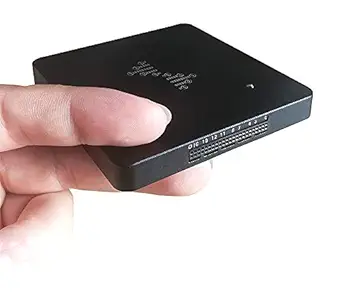 | Best for High-Speed and Deep Protocol Analysis | Channels: 16 | Maximum sampling rate: 400 MHz | Onboard memory: 256 Mbits SDRAM | VIEW LATEST PRICE | See Our Full Breakdown |
| HiLetgo 8-Channel USB Logic Analyzer, 24 MHz |  | Best Budget-Friendly 8-Channel Analyzer for Basic Debugging | Channels: 8 | Maximum sampling rate: 24 MHz | Supported protocols: UART, IIC, SPI | VIEW LATEST PRICE | See Our Full Breakdown |
| LONELY BINARY 8-Channel 24 MHz USB Logic Analyzer Kit |  | Best Starter Kit with Accessories for Flexible Debugging | Channels: 8 | Maximum sampling rate: 24 MHz | Supported protocols: I2C, SPI, UART | VIEW LATEST PRICE | See Our Full Breakdown |
| DSLogic Plus 16-Channel USB Logic Analyzer |  | Best Multi-Channel Analyzer with Deep Protocol Support | Channels: 16 | Maximum sampling rate: 400 MHz | Maximum sample depth: 16G | VIEW LATEST PRICE | See Our Full Breakdown |
| DL16 Plus USB Logic Analyzer with 500MHz Max Sample Rate |  | Best Cross-Platform High-Speed Analyzer with Protocol Decoding | Channels: 16 | Max Sample Rate: 500 MHz | Supported protocols: 120+ | VIEW LATEST PRICE | See Our Full Breakdown |
| innomaker LA1010 16-Channel USB Logic Analyzer, 100 MHz |  | Best Portable 16-Channel Analyzer for Versatile Protocol Support | Channels: 16 | Sampling rate: 100 MHz | Supported protocols: 30+ | VIEW LATEST PRICE | See Our Full Breakdown |
| 8-Channel USB Logic Analyzer (24MHz) with UART, IIC, SPI Support and Accessories | 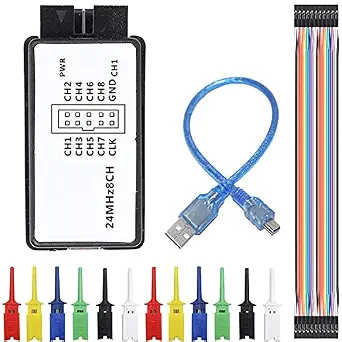 | Best for Entry-Level Debugging and Protocol Automation | Channels: 8 | Max Sampling Rate: 24 MHz | Voltage Range: 0V to 5.5V | VIEW LATEST PRICE | See Our Full Breakdown |
| hiBCTR 8-Channel 24 MHz USB Logic Analyzer |  | Best for Versatile Logic Level Support and Open-Source Integration | Channels: 8 | Maximum Sampling Rate: 24 MHz | Selectable Rates: 24, 16, 12, 8, 4, 2, 1 MHz | VIEW LATEST PRICE | See Our Full Breakdown |
| USB Logic Analyzer Device with 12 Test Hook Clips and 8-Channel UART IIC SPI Debugging for Arduino FPGA |  | Best for Multiprotocol Debugging with Visual Aids | Channels: 8 | Frequency: 24MHz | Number of Test Hooks: 12 | VIEW LATEST PRICE | See Our Full Breakdown |
| BINGOX 16-Channel USB Logic Analyzer with 400MHz Sampling Rate and USB-C Interface |  | Best for High-Speed Digital Signal Capture and Embedded Development | Channels: 16 | Max Sampling Rate: 400MHz (Buffer Mode, 4 channels) | Memory: 256Mbit | VIEW LATEST PRICE | See Our Full Breakdown |
| LA1010 USB Logic Analyzer, 16 Channels, 100MHz Sampling Rate, PC & Mac Compatible |  | Best for Portable and Multi-Platform Debugging | Channels: 16 | Sampling Rate: 100MHz | Max. Sampling Depth: 10G | VIEW LATEST PRICE | See Our Full Breakdown |
| USB logic analyzers for debugging | Channels | Supported Protocols |
|---|---|---|
| 8-Channel USB Logic Analyzer | 8 digital channels | — |
| LA104 100MSa/s USB Logic Analy | 4 | — |
| Xicoolee 8-Channel Mini USB Lo | 8 | — |
| USB Logic Analyzer 24MHz 8-Cha | 8 | UART, I2C, SPI |
| DSLogic Plus 16-Channel USB Lo | 16 | — |
| HiLetgo 8-Channel USB Logic An | 8 | UART, IIC, SPI |
| LONELY BINARY 8-Channel 24 MHz | 8 | I2C, SPI, UART |
| DSLogic Plus 16-Channel USB Lo | 16 | Nearly 100 |
| DL16 Plus USB Logic Analyzer w | 16 | 120+ |
| innomaker LA1010 16-Channel US | 16 | 30+ |
| 8-Channel USB Logic Analyzer | 8 | UART, SPI, IIC |
| hiBCTR 8-Channel 24 MHz USB Lo | 8 | — |
| USB Logic Analyzer Device with | 8 | UART, SPI, IIC, 1-Wire |
| BINGOX 16-Channel USB Logic An | 16 | — |
| LA1010 USB Logic Analyzer | 16 | — |
More Details on Our Top Picks
8-Channel USB Logic Analyzer, 24 MHz
This 8-channel analyzer excels in balancing ease of use with protocol support, making it ideal for those who need reliable, multi-protocol debugging without high-speed complexity. Compared with the DSLogic Plus, it offers a lower maximum sampling rate but remains suitable for most hobbyist and moderate development tasks. Its compatibility with Saleae Logic and PulseView ensures flexibility, yet the fixed voltage threshold of 1.5 V could limit accuracy in some circuits. The device’s support for UART, I²C, and SPI, combined with straightforward software integration, makes it a strong all-round choice for general debugging.
Pros:- Supports up to 24 MHz sampling rate per channel, suitable for most protocol decoding
- Compatible with popular software like Saleae Logic and PulseView for easy analysis
- Automatically decodes common protocols including UART, I²C, and SPI
Cons:- Voltage threshold fixed at 1.5 V, limiting measurement flexibility
- Voltage range limited to 0–5.5 V, which may restrict use with certain circuits
Best for: Intermediate developers working on multi-protocol projects who want reliable, plug-and-play debugging tools.
Not ideal for: High-speed digital signal analysis or professional PCB debugging where higher sampling rates are required.
- Channels:8 digital channels
- Maximum sampling rate:24 MHz per channel
- Supported sampling rates:24, 16, 12, 8, 4, 2, 1, 0.5, 0.25, 0.2, 0.1, 0.05, 0.025 MHz
- Voltage range:0–5.5 V
- Voltage threshold:1.5 V
- Software compatibility:Saleae Logic Analyzer software, PulseView
Our verdict“This analyzer is an excellent choice for users seeking a balanced, multi-protocol debugging solution with broad software support.”
LA104 100MSa/s USB Logic Analyzer with Touch Screen
The LA104 distinguishes itself through its portable design, featuring a built-in touch screen and battery, making it ideal for troubleshooting on the go. Its 100 MSa/s sampling rate surpasses many similar devices like the 8-channel options, providing high-speed data capture suited for more demanding digital debugging. The integrated display simplifies operation without a PC, but its limited internal storage of 8MB means data must be offloaded frequently, which can slow workflows. While its protocol support for SPI, I²C, and UART is comprehensive, the low market presence indicated by its ranking suggests it may lack widespread software updates or community support.
Pros:- Portable with a built-in 2.8-inch touch screen for standalone operation
- High sampling rate of 100 MSa/s supports detailed digital analysis
- Supports multiple protocols including SPI, I2C, and UART
Cons:- Limited internal storage (8MB) could constrain long sessions
- Low market ranking may reflect limited software updates or community support
Best for: Field engineers or hobbyists who need a portable, self-contained logic analyzer for quick, on-site diagnostics.
Not ideal for: Heavy data logging or complex debugging environments requiring extensive onboard storage or high-speed captures beyond 100 MSa/s.
- Sample Rate:100 MSa/s
- Channels:4
- Input Impedance:1 MΩ
- Screen:2.8-inch LCD (320×240)
- Battery:3.7V 500mAh
- Protocols:SPI, I2C, UART
Our verdict“Ideal for portable, quick diagnostics where mobility and ease of use outweigh extensive data storage needs.”
Xicoolee 8-Channel Mini USB Logic Analyzer (CY7C68013A)
The Xicoolee analyzer stands out thanks to its support across Windows, Linux, and Mac, making it suitable for diverse development environments. Its open-source PulseView software enables interpretation of over 100 protocols, a significant advantage for projects requiring broad protocol coverage. The device’s hardware includes TVS diodes and self-recoverable fuses, boosting reliability in noisy environments. However, with a maximum sampling rate of only 24 MHz, it may fall short for high-speed digital signals, especially compared to the DSLogic Plus or DSLogic Plus 16-Channel models. The need to install and configure open-source software might also pose a barrier for less experienced users.
Pros:- Supports Windows, Linux, and Mac platforms for maximum flexibility
- Open-source PulseView software with support for over 100 protocols
- Robust hardware protection with TVS diodes and self-recoverable fuses
Cons:- Maximum sampling rate limited to 24 MHz, limiting high-frequency signal analysis
- Requires setup and familiarity with open-source software for full utility
Best for: Developers needing cross-platform support and extensive protocol decoding in a compact form.
Not ideal for: High-speed digital debugging or applications requiring sampling beyond 24 MHz.
- Channels:8
- Max Sampling Rate:24 MHz
- Interface:USB Type-C
- Supported OS:Windows, Linux, Mac
- Protection:TVS diodes, self-recoverable fuses
- Protocols:Over 100 supported via PulseView
Our verdict“Best suited for multi-platform projects that value broad protocol support over high-speed sampling.”
USB Logic Analyzer 24MHz 8-Channel with UART, I2C, SPI Support and Test Hook Clip Set
This kit offers a straightforward approach to digital debugging, with 8 channels supporting up to 24 MHz sampling. Its inclusion of 12 test hook clips and a USB cable makes it ready for immediate use in MCU projects, especially for hobbyists and students. Compatibility with Windows and Linux ensures broad usability, but the pulse width measurement accuracy of ±42ns at 24 MHz means it’s less suited for high-precision timing analysis. External software installation could pose challenges depending on the user’s OS environment, and it lacks advanced features like protocol decoding beyond basic support.
Pros:- Includes 12 test hook clips and cables for immediate setup
- Supports common protocols like UART, I²C, and SPI
- High sampling rate of 24 MSps enables detailed signal capture
Cons:- Pulse width measurement accuracy is limited to ±42ns at maximum speed
- Requires software installation which may vary in complexity depending on OS
Best for: Hobbyists or students looking for an all-in-one debugging kit with reliable basic features.
Not ideal for: Professional or high-speed digital debugging that demands higher accuracy or advanced protocol decoding.
- Channels:8
- Max Sampling Rate:24Msps
- Input Voltage Range:0-5V
- Input Low Level:< 0.8V
- Input High Level:> 1.4V
- Supported Protocols:UART, I2C, SPI
Our verdict“Perfect for beginners or educational purposes needing a complete, ready-to-use debugging package.”
DSLogic Plus 16-Channel USB Logic Analyzer
The DSLogic Plus offers a substantial upgrade with 16 channels and a maximum sampling rate of 400 MHz on a subset of channels, making it suitable for advanced digital debugging and high-speed signal analysis. Its onboard 256 Mbits memory supports streaming capture of over 16 gigasamples, ideal for intensive data collection. While its USB 2.0 interface is more limited than USB-C options, the device’s extensive protocol decoding options in DSView software make it a favorite for professional developers. However, the varying maximum sampling rate depending on active channels means that users must plan their captures carefully to maximize speed.
Pros:- Supports streaming at up to 100 MHz on 3 channels and buffered at 400 MHz on 4 channels
- Large onboard memory enables extensive data capture sessions
- Wide compatibility with DSView software across Windows, macOS, and Linux
Cons:- Maximum sampling rate reduces as more channels are active, requiring coordination
- USB 2.0 interface limits data transfer speeds compared to newer standards
Best for: Professionals requiring high-speed, multi-channel digital debugging with advanced protocol decoding capabilities.
Not ideal for: Casual hobbyists or projects that don’t need high-speed sampling or large onboard memory.
- Channels:16
- Maximum sampling rate:400 MHz
- Onboard memory:256 Mbits SDRAM
- Streaming sample depth:Up to 16G samples
- Interface:USB 2.0 Type-C
- Software:DSView
Our verdict“This analyzer is best for professionals who need high-speed, multi-channel data capture with robust protocol decoding and large memory capacity.”
HiLetgo 8-Channel USB Logic Analyzer, 24 MHz
This analyzer offers a straightforward solution for capturing 8 digital signals at up to 24 MHz, making it ideal for simple debugging tasks. Compared with the DSLogic Plus, it’s less powerful in sampling speed and protocol decoding but benefits from a compact, lightweight form and included cables. Its support for UART, IIC, and SPI makes it versatile for common embedded projects. However, its limitations in working with 1.8 V systems and lower overall sampling rates restrict its use in more advanced scenarios. This pick makes the most sense for hobbyists or developers needing a low-cost, easy-to-use tool for basic signal analysis without complex features.
Pros:- Provides 8-channel signal capture at up to 24 MHz
- Supports UART, IIC, and SPI debugging protocols
- Includes USB and Dupont cables for immediate use
Cons:- Limited support for 1.8 V systems, restricting some modern device testing
- Maximum sampling rate may be inadequate for high-speed signals
Best for: Hobbyists or beginners who need an affordable, simple device for basic digital signal debugging.
Not ideal for: Advanced developers working on high-speed, multi-protocol projects requiring extensive data analysis or high-voltage compatibility.
- Channels:8
- Maximum sampling rate:24 MHz
- Supported protocols:UART, IIC, SPI
- Input voltage range:-0.5 V to 5.25 V
- Connectivity:USB Type A
- Included accessories:USB cable, Dupont cable
Our verdict“A practical choice for entry-level hobbyists needing basic digital debugging at an affordable price.”
LONELY BINARY 8-Channel 24 MHz USB Logic Analyzer Kit
This kit stands out for its comprehensive accessory package, including breakout boards, test clips, jumper wires, and multiple USB cables, making it ideal for newcomers. While its maximum sampling rate of 24 MHz aligns with the HiLetgo model, its added flexibility with adapters and support for Windows, macOS, and Linux enhances usability across platforms. The included accessories facilitate quick setup in various testing environments, but the software reliance and somewhat modest sampling speed mean it’s suited primarily for educational or light debugging tasks. This analyzer makes the most sense for users who value a complete starter package over raw speed or advanced features.
Pros:- Includes a wide range of accessories for flexible testing
- Supports multiple operating systems including Linux
- Analyzes up to 8 digital signals at 24 MHz
Cons:- Dependent on compatible software for waveform viewing
- Limited maximum sampling rate for high-speed signals
Best for: Students, educators, or developers seeking a versatile, ready-to-use debugging kit with extensive accessories.
Not ideal for: Professional engineers needing high-speed data capture or complex protocol decoding in high-volume environments.
- Channels:8
- Maximum sampling rate:24 MHz
- Supported protocols:I2C, SPI, UART
- Supported OS:Windows, macOS, Linux
- Included accessories:Breakout board, test clips, jumper wires, cables
- Connection:USB
Our verdict“Ideal for educational use or hobbyists who want a comprehensive package for basic digital signal analysis.”
DSLogic Plus 16-Channel USB Logic Analyzer
The DSLogic Plus offers a significant upgrade with 16 channels and support for sampling rates up to 400 MHz in buffer mode, making it suitable for more demanding debugging tasks. Its real-time streaming mode with 16G sample depth and nearly 100 protocol decoders provide extensive insight into complex signals, outperforming the other 8-channel options for high-speed, multi-protocol analysis. Still, the USB 2.0 interface can limit data transfer speeds when working with large datasets, and its size and complexity might overwhelm newcomers. This device makes the most sense for professionals or advanced hobbyists who need high speed and protocol versatility in a single tool.
Pros:- 16 channels with buffer and streaming modes
- Supports up to 400 MHz sampling rate in buffer mode
- Nearly 100 protocol decoders and open-source support
Cons:- USB 2.0 interface limits data transfer speed for large datasets
- Complex setup may be daunting for beginners
Best for: Professional developers or advanced hobbyists working on complex, high-speed embedded systems requiring extensive protocol decoding.
Not ideal for: Casual users or those with budget constraints who only need basic signal capture at lower speeds.
- Channels:16
- Maximum sampling rate:400 MHz
- Maximum sample depth:16G
- Supported protocols:Nearly 100
- Connectivity:USB 2.0
- Supported OS:Windows, macOS, Linux
Our verdict“A powerful, versatile analyzer suited to complex debugging scenarios with high-speed signals and multiple protocols.”
DL16 Plus USB Logic Analyzer with 500MHz Max Sample Rate
The DL16 Plus distinguishes itself with a 500MHz maximum sample rate across 16 channels, supporting over 120 protocols. Its all-metal CNC shell ensures durability and good heat dissipation, ideal for extended, intensive debugging sessions. The hardware RLE compression and stream mode support enable long-duration captures, while its compatibility with Windows, Ubuntu, and Mac broadens its appeal. The main tradeoff involves its USB 2.0 interface, which can bottleneck data transfer during large or high-speed captures, and the complexity of setting up custom protocols. This unit is best suited for professionals needing robust, cross-platform performance in high-speed environments.
Pros:- High maximum sample rate of 500 MHz across 16 channels
- Supports over 120 protocols with open decoding libraries
- Durable all-metal CNC shell for extended use
Cons:- USB 2.0 interface may limit data transfer speeds during large captures
- Setup complexity for custom protocol decoding
Best for: Industrial developers and engineers requiring a durable, high-speed, multi-protocol analysis tool with cross-platform support.
Not ideal for: Casual hobbyists or users primarily working with low-speed signals or simple protocols.
- Channels:16
- Max Sample Rate:500 MHz
- Supported protocols:120+
- Shell material:All metal CNC
- Supported OS:Windows, Ubuntu, Mac
- Interface:USB 2.0
Our verdict“A robust, high-speed analysis tool for professionals who need durability and extensive protocol support across multiple platforms.”
innomaker LA1010 16-Channel USB Logic Analyzer, 100 MHz
The innomaker LA1010 provides 16 channels at a solid 100 MHz sampling rate, combined with support for over 30 protocols, making it a flexible choice for varied debugging needs. Its portable design and low power consumption suit field work and mobile setups, while compatibility with Windows, macOS, and Linux ensures versatility. However, it relies on PC software for waveform display, which adds an extra step and dependency. While it doesn’t reach the high speeds of the DL16 Plus, its balance of portability, protocol support, and cross-platform compatibility makes it well-suited for on-the-go testing and multi-protocol environments.
Pros:- Captures 16 signals simultaneously at 100 MHz
- Supports over 30 communication protocols
- Portable, low power consumption design
Cons:- Requires a PC and software for waveform viewing
- Lower maximum sampling rate compared to high-end models
Best for: Engineers and technicians needing a portable, multi-protocol analyzer for field debugging and versatile applications.
Not ideal for: High-speed signal analysis or projects requiring deep protocol decoding beyond 30 supported protocols.
- Channels:16
- Sampling rate:100 MHz
- Supported protocols:30+
- Interface:USB 2.0
- Supported OS:Windows, macOS, Linux
- Power consumption:0.5 watts
Our verdict“A practical, portable solution for multi-protocol debugging on the go, suitable for field technicians and versatile projects.”
8-Channel USB Logic Analyzer (24MHz) with UART, IIC, SPI Support and Accessories
This 8-channel analyzer stands out for its seamless compatibility with Saleae Logic Analyzer software, making it accessible for those already familiar with that ecosystem. Its maximum sampling rate of 24MHz allows for reliable capture of typical microcontroller and FPGA signals, especially when combined with automatic protocol analysis for UART, SPI, and IIC, which reduces the manual decoding effort. Compared with more advanced units like the BINGOX 16-Channel USB Logic Analyzer, this device is less suitable for high-frequency or complex debugging, but it excels in straightforward projects. The included cables and clips make it ready for immediate use, but the fixed voltage threshold (1.5V) might limit flexibility in varied logic levels. Overall, this analyzer suits hobbyists and beginners needing dependable protocol analysis without high-end features.
Pros:- Compatible with popular Saleae software for intuitive analysis
- Supports automatic decoding of UART, SPI, and IIC protocols
- Includes versatile cables and test clips for quick setup
- Decent sampling rate of 24MHz for typical microcontroller signals
Cons:- Fixed voltage threshold of 1.5V limits flexibility for different logic levels
- Basic build quality may not withstand heavy or professional use
Best for: Hobbyists or students starting with digital protocol debugging and familiar with Saleae software.
Not ideal for: Professionals working on high-speed or high-voltage digital signals, due to its fixed threshold and basic build quality.
- Channels:8
- Max Sampling Rate:24 MHz
- Voltage Range:0V to 5.5V
- Supported Protocols:UART, SPI, IIC
- Software Compatibility:Saleae Logic
- Included Accessories:Mini USB Cable, Dupont Cables, Test Hook Clips
Our verdict“This analyzer works well for newcomers and hobbyists focused on basic protocol debugging within common voltage ranges.”
hiBCTR 8-Channel 24 MHz USB Logic Analyzer
The hiBCTR 8-channel analyzer is designed for users needing flexible logic level compatibility, supporting 5V, 3.3V, 2.5V, and 2.0V systems, making it more adaptable than the fixed-threshold options like the BINGOX. Its maximum sampling rate of 24MHz is suitable for microcontrollers and FPGA debugging, but unlike the BINGOX model, it offers multiple selectable sampling rates, allowing users to fine-tune performance based on project needs. Compatibility with Sigrok PulseView makes it appealing for open-source enthusiasts, though it’s not recommended for 1.8V systems or high-speed applications beyond 24MHz. The input impedance and pulse-width measurement accuracy are solid for hobbyist and educational projects. This device is especially fitting for those who value open-source tools and flexible voltage support.
Pros:- Supports multiple logic voltage levels for diverse applications
- Selectable sampling rates for tailored data capture
- Compatible with Sigrok PulseView for open-source analysis
- Supports common digital protocols like UART, I2C, and SPI
Cons:- Limited to 24MHz maximum sampling rate, not suitable for high-speed signals
- Not recommended for 1.8V logic systems
Best for: Electronics hobbyists and students needing flexible voltage thresholds and open-source software compatibility.
Not ideal for: High-speed professional development environments requiring faster sampling rates or specialized high-voltage measurements.
- Channels:8
- Maximum Sampling Rate:24 MHz
- Selectable Rates:24, 16, 12, 8, 4, 2, 1 MHz
- Supported Logic Levels:5V, 3.3V, 2.5V, 2.0V
- Input Voltage Range:-0.5 V to 5.25 V
- Software Compatibility:Sigrok PulseView
Our verdict“Ideal for users who need flexible logic levels and open-source software, but not suited for high-speed or high-voltage demanding projects.”
USB Logic Analyzer Device with 12 Test Hook Clips and 8-Channel UART IIC SPI Debugging for Arduino FPGA
This USB logic analyzer kit provides 8 channels at 24MHz alongside 12 colorful test hooks, making it particularly suitable for projects where visual identification and multi-protocol support are key. Its compatibility with open-source tools like sigrok allows for flexible analysis, similar to the hiBCTR but with a focus on comprehensive tutorials and troubleshooting support. While the inclusion of multiple test clips aids in quick setup, the device’s 24MHz speed limits its use in high-frequency or high-speed signals. Technical knowledge is recommended to get the most out of its features, especially when decoding complex signals. This model suits developers who prioritize protocol versatility and user support in educational or hobbyist environments.
Pros:- Supports multiple protocols including UART, SPI, IIC, and 1-Wire
- Includes colorful test hooks for easy signal identification
- Compatible with open-source analysis software and provides tutorials
- Supports multiple communication protocols for debugging diverse systems
Cons:- Limited to 24MHz sampling rate, not suitable for very high-speed signals
- Requires some technical skill for effective operation
Best for: Electronics students and hobbyists seeking a multi-protocol analyzer with detailed tutorials and visual test clips.
Not ideal for: High-speed embedded systems or industrial debugging where faster data capture is required.
- Channels:8
- Frequency:24MHz
- Number of Test Hooks:12
- Supported Protocols:UART, SPI, IIC, 1-Wire
- Included Accessories:Colorful test hook clips
Our verdict“A versatile choice for educational and multi-protocol debugging, with visual aids for easier troubleshooting but limited high-speed capacity.”
BINGOX 16-Channel USB Logic Analyzer with 400MHz Sampling Rate and USB-C Interface
The BINGOX 16-channel analyzer is distinguished by its impressive 400MHz maximum sampling rate, making it suitable for capturing fast pulses and high-frequency digital signals, unlike the lower-speed options discussed earlier. Its large onboard memory of 256Mbit supports extended data capture sessions, ideal for complex FPGA and embedded system debugging. The USB-C interface ensures broad compatibility, and the 16 channels provide ample scope for detailed multi-signal analysis. However, the high sampling rate decreases as channels increase—down to around 100MHz at full capacity, which may impact some high-speed applications. Its relatively low input impedance (250KΩ) could influence measurements in high-impedance circuits. This device is best suited for professionals needing rapid, detailed digital analysis across multiple signals.
Pros:- Impressive 400MHz sampling rate for high-speed digital capture
- 16 channels for complex multi-signal analysis
- Large 256Mbit onboard memory for extended recordings
- Supports multi-protocol decoding across Windows, macOS, and Linux
Cons:- Sampling rate reduces significantly with more active channels
- Relatively low input impedance may affect high-impedance circuits
Best for: Embedded developers and FPGA engineers requiring high-speed, multi-channel digital signal analysis.
Not ideal for: Hobbyists or those working on low-speed projects, due to its complexity and high performance level.
- Channels:16
- Max Sampling Rate:400MHz (Buffer Mode, 4 channels)
- Memory:256Mbit
- Interface:USB Type-C
- Supported OS:Windows, macOS, Linux
- Input Voltage:-30V to +30V
Our verdict“This analyzer excels in high-speed, multi-channel digital debugging, especially for professional embedded and FPGA development, but may be overkill for simple projects.”
LA1010 USB Logic Analyzer, 16 Channels, 100MHz Sampling Rate, PC & Mac Compatible
The LA1010 provides a balanced approach with 16 channels at a solid 100MHz sampling rate, making it suitable for detailed waveform analysis of microcontroller and FPGA signals. Its compatibility across Windows, Mac, and Linux enhances its portability, ideal for field debugging or mobile lab setups. Compared with the high-end BINGOX, its lower maximum sampling rate limits the capture of very fast signals, but it compensates with a compact form factor and user-friendly features. Its support for protocol decoding, including UART, I2C, and SPI, makes it versatile for various debugging tasks. However, setup complexity and limited sampling depth can be drawbacks for less experienced users. This analyzer fits well for engineers needing reliable multi-platform support and good signal resolution in portable environments.
Pros:- Supports multiple protocols for comprehensive debugging
- Compatible with Windows, Mac OS, and Linux for portability
- High sampling rate of 100MHz for detailed waveform capture
- Compact and durable design for field use
Cons:- Setup may be complex for beginners
- Limited sampling depth can restrict long-duration captures
Best for: Engineers and developers working across multiple platforms who need a portable, high-resolution digital signal analyzer.
Not ideal for: High-speed or high-frequency projects requiring sampling above 100MHz or extensive waveform depth.
- Channels:16
- Sampling Rate:100MHz
- Max. Sampling Depth:10G
- Interface:USB 2.0
- Supported OS:Windows, Mac, Linux
- Dimensions:3.74 x 2.17 x 0.71 inches
Our verdict“A reliable, multi-platform portable analyzer for users needing solid resolution across diverse systems, but not for ultra-high-speed signals.”
How We Picked
Products were evaluated based on their channel count, maximum sampling rate, software decoding capabilities, build quality, and ease of use. We prioritized devices that balance performance with value, considering the needs of both hobbyists and professionals. The ranking reflects a combination of technical specifications, usability, and versatility, ensuring that each pick serves a distinct user profile—from beginners to advanced engineers. Devices with broader protocol support, robust software, and reliable build quality scored higher, while those with limited features or compatibility issues ranked lower.Factors to Consider When Choosing USB Logic Analyzers For Debugging
Choosing the right USB logic analyzer involves weighing several factors that affect your debugging experience. Understanding your specific requirements—such as number of channels, signal speed, and protocol support—helps narrow down options. It’s also important to consider software usability, hardware build quality, and how accessories like test hooks can improve your workflow. Carefully evaluating these aspects prevents overspending on features you don’t need or missing out on capabilities that could save time during troubleshooting.Channel Count and Sampling Rate
Higher channel counts allow simultaneous monitoring of multiple signals, which is crucial for complex embedded systems. However, more channels often mean increased cost and potentially larger device size. Sampling rate determines how accurately the analyzer captures fast signals; for most debugging tasks involving UART, I2C, or SPI, a rate of 24-100 MHz is sufficient. For high-speed protocols like USB 3.0 or fast FPGA signals, look for analyzers offering hundreds of MHz or even GHz speeds, but be prepared for a higher price.
Software Compatibility and Ease of Use
The usability of the accompanying software can make or break your experience. Intuitive interfaces with clear decoding options help reduce setup time and make troubleshooting more straightforward. Compatibility with both Windows and Mac broadens your options, especially if your workflow involves multiple platforms. Be cautious of software that is difficult to learn or lacks active support, as this can hinder productivity. Also, check for features like protocol decoding, trigger options, and exporting capabilities to enhance your debugging process.
Protocol Support and Decoding Features
Most USB logic analyzers support common protocols like UART, I2C, and SPI, but the depth of decoding features varies. Advanced analyzers can decode multiple protocols simultaneously, which is valuable when debugging complex systems. Check whether the device supports custom protocols or offers user-defined decoders, especially for specialized applications. This capability reduces the need for additional hardware or software, streamlining your debugging workflow.
Build Quality and Accessories
Durability matters, especially if you’ll transport your analyzer frequently. Look for devices with solid connectors, sturdy enclosures, and well-made cables. Accessories like test hook clips and probes enhance versatility when connecting to embedded or hard-to-reach signals. Some models include test clips as standard, adding value. Investing in a device with quality build and useful accessories can prevent frustration and ensure long-term reliability.
Price versus Features
While budget models may suffice for simple projects, investing in a higher-end device pays off for complex debugging or professional environments. Balance the need for speed, channel count, and protocol support against your budget constraints. Sometimes, paying more upfront results in better software support, faster speeds, and more reliable hardware, reducing time and effort spent troubleshooting. Carefully consider which features are essential for your work and which are nice extras.
Frequently Asked Questions
Can a USB logic analyzer be used for real-time debugging?
Yes, many USB logic analyzers support real-time data capture, allowing you to monitor signals live as they occur. The effectiveness depends on the sampling speed and buffer capacity; higher speeds and larger memory buffers enable more accurate real-time analysis. This feature is especially useful when troubleshooting intermittent issues or timing-related bugs. Always check if the device’s software supports live decoding and visualization to maximize this capability.
Is a higher sampling rate always better for debugging?
Not necessarily. A higher sampling rate improves the accuracy of capturing fast signals, which is crucial for high-speed protocols like USB 3.0 or FPGA signals. However, for simpler protocols like UART or I2C, a moderate rate (around 24-100 MHz) usually suffices. Higher speeds also mean larger data files and more demanding hardware requirements. Select a sampling rate that matches the speed of your signals to avoid unnecessary expense and data overload.
Do I need protocol decoding support for basic debugging tasks?
For most basic debugging tasks involving UART, I2C, or SPI, protocol decoding support is highly beneficial but not always essential. It simplifies troubleshooting by translating raw signals into human-readable data, saving you time. However, if your work involves only simple digital signals or custom protocols, you might prefer analyzers with customizable decoding options or minimal software complexity. Evaluate whether decoding features align with your specific debugging needs.
How important are accessories like test hooks and probes?
Accessories such as test hooks and probes significantly enhance usability, especially when connecting to embedded devices or tight spaces. They reduce the risk of damaging delicate pins and make signal access more straightforward. If your work involves frequent hardware connections or complex setups, investing in a device with comprehensive accessory options can streamline your workflow and improve signal quality. Consider these extras as part of your overall tool investment.
Is software support critical for choosing a USB logic analyzer?
Absolutely. Reliable, user-friendly software is key for effective debugging. Good software should support multiple protocols, offer trigger and filtering options, and allow exporting data for analysis. Compatibility with your operating system and ongoing software updates also matter; outdated or limited software can hinder troubleshooting. Prioritize analyzers with well-supported software to ensure smooth operation and ongoing reliability.
Conclusion
For most users seeking an all-around reliable device, the DSLogic Plus offers a balanced combination of features, speed, and software support, making it the best overall choice. Budget-conscious hobbyists and students will find the HiLetgo 8-Channel USB Logic Analyzer provides excellent value without sacrificing essential features. Professionals requiring high-speed data capture and advanced decoding should consider the DL16 Plus USB Logic Analyzer, a top-tier option for demanding debugging tasks. Beginners or those focused on simple protocols might opt for models with straightforward interfaces and enough channels to get started without overspending. By aligning your specific needs with these recommendations, you can select a USB logic analyzer that streamlines your debugging process effectively.
Fall Picks
fall essentials
As an affiliate, we earn on qualifying purchases.