
📊 Full opportunity report: Keep A Running Record Of Your TRT Symptoms And Lab Results on IdeaNavigator AI — validation score, market gap, and execution plan.

Get business pricing on monitors, keyboards and dev gear
- Business-only prices and quantity discounts
- Tax-exempt purchasing
- Multiple users, one account, clear invoices
TL;DR
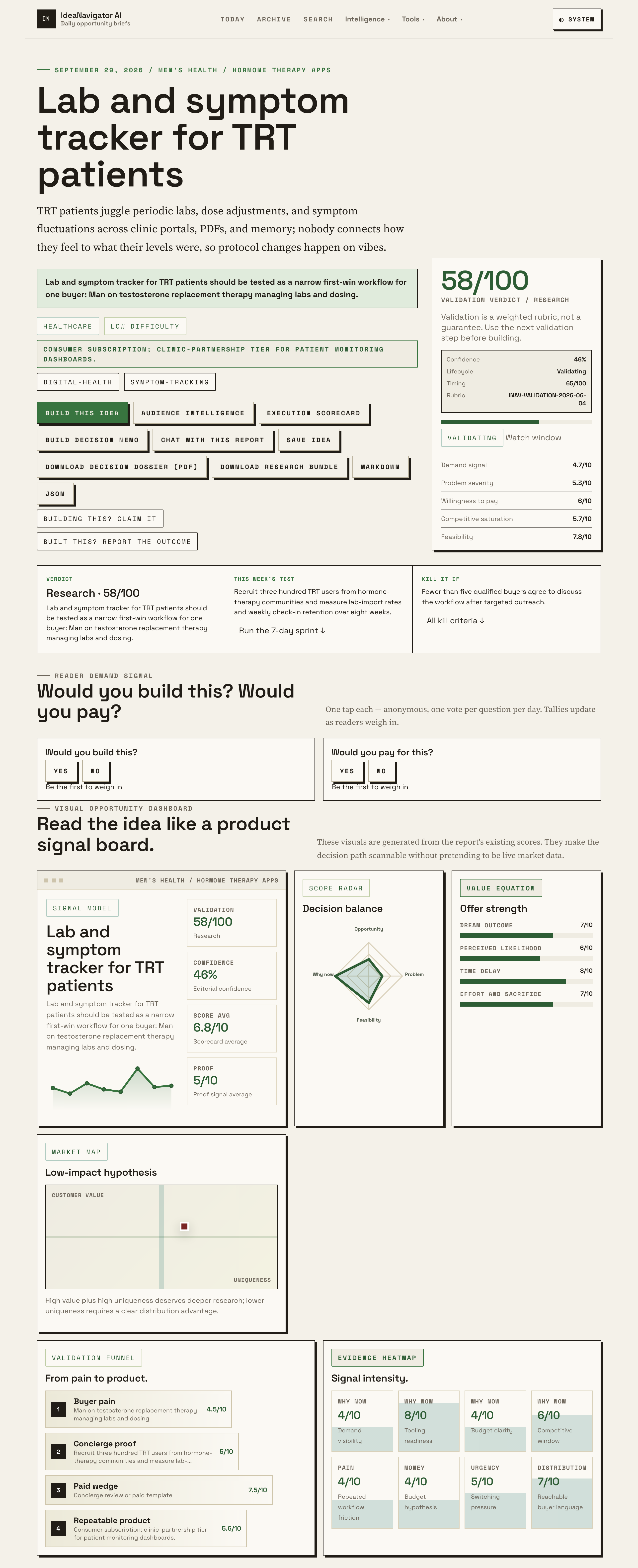
IdeaNavigator AI has outlined a proposed app for men on testosterone replacement therapy to connect lab results, dose changes and daily symptom check-ins. The concept includes an eight-week test with 300 users, but no launch, clinical validation or test results are reported.
IdeaNavigator AI has outlined a proposed tracking app for men receiving testosterone replacement therapy (TRT), designed to bring lab results, dose changes and symptom check-ins into one record. The proposal sets out an eight-week test with 300 TRT users; it does not report that the app has been built, launched or clinically evaluated.
The proposed minimum product would let users import lab reports as PDFs, chart hormone-panel results over time and record daily symptoms. It would also connect those records to changes in dosing, produce trend summaries for clinic visits and flag results that move outside user-specific target ranges. The proposal does not specify which lab markers would be supported or how target ranges would be selected.
The concept is aimed at an individual user: a man on TRT who is managing lab testing and dosing. Its proposed business model combines a consumer subscription with a possible clinic tier offering patient-monitoring dashboards. No prices, clinic partners or commitments from healthcare providers are identified.
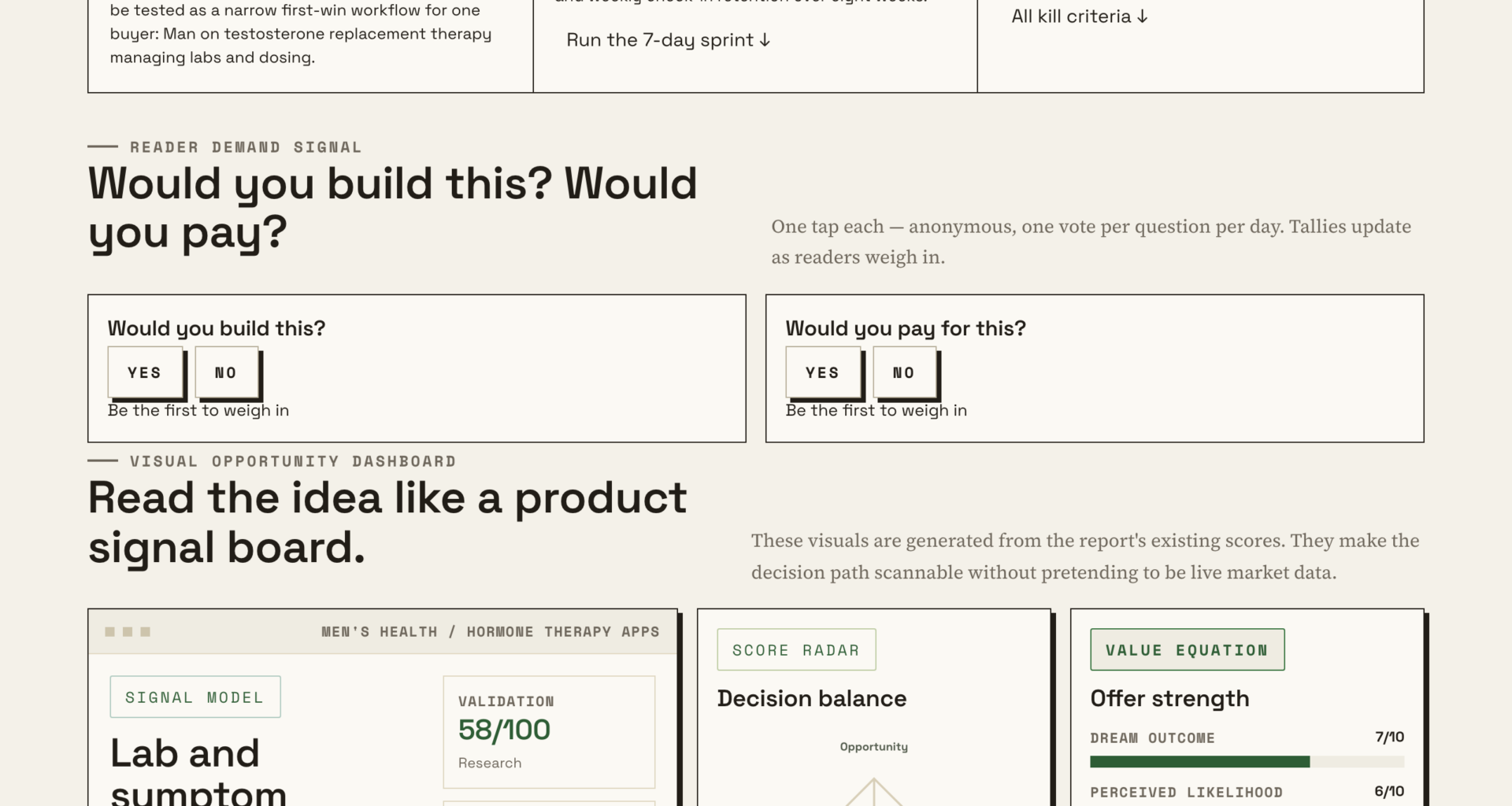
For validation, IdeaNavigator AI proposes recruiting 300 TRT users from hormone-therapy communities and tracking lab-import rates and weekly check-in retention over eight weeks. Those are proposed measures of product use, not reported findings. The plan gives no recruitment dates, results, or evidence that participants have been enrolled.
Connecting TRT Records to Symptoms
The concept addresses a record-keeping problem described in the proposal: people may have lab results, dose changes and symptom notes spread across clinic portals, PDFs and memory. Bringing those records together could give a patient and clinician a clearer view of how measurements and reported symptoms change over time.
That connection could make discussions at clinic visits more organized, but the proposed charts and summaries would not by themselves show that a dose change caused a symptom change. Lab values and symptoms can vary for many reasons, and the proposal does not describe a method for accounting for those factors. Any flags or trend summaries would need to be treated as prompts for discussion, not as a diagnosis or dosing instruction.
The proposed clinic dashboard could also affect how providers review patient information between appointments. Whether clinics would adopt it, how it would fit their existing systems and who would be responsible for interpreting alerts are unanswered questions. At present, the significance is a product idea and a test plan, rather than a demonstrated change in TRT care.
A Proposed Response to Fragmented Records
IdeaNavigator AI frames the opportunity around people who manage TRT across periodic blood tests, possible dose adjustments and day-to-day changes in how they feel. It says care can be fragmented across providers and digital records. The material provides no prescription, clinic or market-size statistics to quantify how widespread that problem is.
The suggested workflow is deliberately focused on one group and one task: organizing a TRT patient’s labs and dosing history alongside symptom check-ins. The proposal says increased TRT prescribing and telehealth clinics make this a timely opportunity, but it supplies no underlying figures or comparison period for that claim. It also does not name a developer, clinic or existing product involved in the idea.
Product and Evidence Still Pending
No completed app, clinical study or user-test result is described. The 300-person recruitment target and eight-week measurement period remain a plan, and it is unclear whether the test will proceed. No findings are available on whether users would regularly import lab reports or keep up weekly symptom check-ins.
Several product and care details are also unspecified: how PDFs would be read and checked for errors, which hormone markers the app would track, who would set target ranges, and what would happen when a result is flagged. The proposal does not explain how user data would be protected, whether clinicians would review alerts, or how the app would avoid being mistaken for medical advice. Its suggested subscription and clinic-partnership models have no stated prices or confirmed partners.
Testing the Proposed Workflow
The next stated step is to recruit 300 TRT users and observe lab-import rates and weekly check-in retention over eight weeks. If carried out, those measures could show whether users engage with the proposed workflow. The plan does not set a threshold for success or say what decision would follow the test.
Any further assessment would need to establish whether the records and summaries are accurate and useful in clinical visits, and how the product handles personal health information. IdeaNavigator AI has not provided a timeline for development, recruitment or clinic partnerships.
Key Questions
Has the TRT tracking app launched?
No launch is reported. The proposal describes a minimum product and a way to test it, but does not say that an app is available.
What would the proposed app track?
It would combine imported lab reports, dose changes and daily symptom check-ins, then chart results and prepare summaries for clinic visits.
What does the eight-week test involve?
The proposed test would recruit 300 TRT users and measure lab-import rates and weekly check-in retention. No recruitment or results are reported.
Would the app recommend TRT doses?
The proposal mentions tracking dose changes and flagging values outside target ranges, but it does not describe dose recommendations. It does not establish that app-generated trends could guide treatment.
Source: IdeaNavigator AI
Fall Picks
fall essentials
As an affiliate, we earn on qualifying purchases.