
The best portable monitor for developers is the InnoView 15.6-Inch Dual Portable Monitor, because coding on the road is really a screen real estate problem, and a dual-panel setup gives you a full multi-monitor workspace that folds into your bag. If desk-space savings matters more than raw panel count, the Dell Pro 14 Plus P1425 stands out for its premium build and a single-cable USB-C connection that keeps a laptop-charging workflow clean. The ASUS ZenScreen MB169CK is the strongest pick for tight budgets that still demand brand-name reliability and accurate color out of the box. The core tradeoff in this category is simple: bigger panels and dual configurations add weight and cable clutter, while lighter single screens sacrifice the multi-window workflow most developers actually want. Read on for the full ranked breakdown and who each model is built for.

Get business pricing on monitors, keyboards and dev gear
- Business-only prices and quantity discounts
- Tax-exempt purchasing
- Multiple users, one account, clear invoices
Key Takeaways
- Dual-panel extenders like the InnoView dual and ZUMWALT P7 dominated this comparison for developer work, because side-by-side code, terminal, and browser windows matter more to productivity than any single-panel spec sheet.
- Panel quality varied sharply at the 1080p tier: the Dell Pro 14 Plus, ASUS ZenScreen MB169CK, and Lenovo L15 delivered noticeably better color consistency and viewing angles than the generic 15.6-inch budget models.
- Every budget single-panel monitor here required a tradeoff — usually flimsy included stands, weak speakers, or inconsistent quality control — which is why none of them claimed the top spot despite low cost.
- Single-cable USB-C with power passthrough proved the deciding convenience feature; models stuck on separate power and video cables became annoying on any desk used daily.
- Weight differences of even one pound changed the recommendation: 18.5-inch and dual-panel options make sense for desk-bound hybrid work, while 14-inch models like the CIDETTY and Dell suit developers who genuinely travel.
| InnoView 15.6-Inch Dual Portable Monitor |  | Best for Triple-Screen Workstations | Display size: Two 15.6-inch screens | Resolution: 1920 × 1080 per screen | Panel: IPS LCD, matte finish | VIEW LATEST PRICE | See Our Full Breakdown |
| VisionOwl 18.5-Inch Portable Monitor |  | Best Large Single Panel | Screen size: 18.5 inches | Resolution: 1920 × 1080 | Panel: IPS LCD | VIEW LATEST PRICE | See Our Full Breakdown |
| ZUMWALT P7 15.6-Inch FHD Laptop Screen Extender, Dual Portable Monitors |  | Best Premium Dual-Screen Extender | Display size: Two 15.6-inch displays | Resolution: 1920 × 1080 | Panel: IPS LCD | VIEW LATEST PRICE | See Our Full Breakdown |
| Cocopar 15.6-Inch Portable Monitor with Cover Stand |  | Best Value Workhorse | Screen size: 15.6 inches | Resolution: 1920 × 1080 (FHD) | Panel: IPS | VIEW LATEST PRICE | See Our Full Breakdown |
| CIDETTY 14-Inch 1080p IPS Portable Laptop Monitor Extender |  | Best Compact Pick | Screen size: 14 inches | Resolution: 1920 × 1080 (FHD) | Panel: IPS | VIEW LATEST PRICE | See Our Full Breakdown |
| 14-Inch FHD IPS Portable Laptop Screen Extender |  | Best Compact Budget Option | Screen size: 14 inches | Resolution: 1920 × 1080 (FHD) | Display technology: IPS | VIEW LATEST PRICE | See Our Full Breakdown |
| MNN 15.6-Inch FHD Portable Monitor |  | Best Value Pick | Screen size: 15.6 inches | Resolution: 1920 × 1080 | Display type: IPS LCD, matte finish | VIEW LATEST PRICE | See Our Full Breakdown |
| Anyuse 15.6-Inch FHD IPS Portable Monitor |  | Best Ultralight Travel Pick | Screen size: 15.6 inches | Resolution: 1920 × 1080 | Panel: IPS | VIEW LATEST PRICE | See Our Full Breakdown |
| KYY 15.6-Inch 1080p Portable Monitor with Cover | 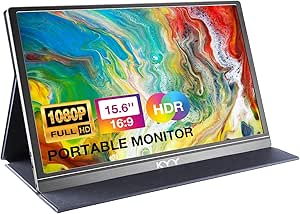 | Best Starter Pick | Screen size: 15.6 inches | Resolution: 1920 × 1080 | Display technology: IPS LCD, matte finish | VIEW LATEST PRICE | See Our Full Breakdown |
| Dell Pro 14 Plus P1425 Portable Monitor |  | Best Premium Pick | Screen size: 14 inches | Resolution: 1920 × 1200 | Aspect ratio: 16:10 | VIEW LATEST PRICE | See Our Full Breakdown |
| ASUS ZenScreen MB16AHV 15.6-Inch 1080p Portable Monitor |  | Best Warranty and Travel Durability | Screen size: 15.6 inches | Resolution: Full HD (1920 × 1080) | Panel type: IPS, anti-glare | VIEW LATEST PRICE | See Our Full Breakdown |
| Lenovo L15 15.6-Inch Full HD Portable Monitor |  | Best for Ergonomic Adjustability | Screen size: 15.6 inches | Resolution: Full HD | Panel type: IPS, LED | VIEW LATEST PRICE | See Our Full Breakdown |
| ForHelp 15.6-Inch Portable Monitor, 1080p IPS Display with USB-C and Mini HDMI |  | Best Value All-Rounder | Screen size: 15.6 inches | Resolution: 1920 × 1080 | Panel: IPS matte, 178° viewing angle | VIEW LATEST PRICE | See Our Full Breakdown |
| ASUS ZenScreen MB169CK 15.6-Inch 1080p Portable Monitor |  | Best Single-Cable Minimalist Setup | Screen size: 15.6 inches | Resolution: 1080p FHD | Panel type: IPS, anti-glare | VIEW LATEST PRICE | See Our Full Breakdown |
| InnoView 15.6-Inch FHD 1080p Portable Monitor with HDMI and USB-C |  | Best for Mixed-Device Workspaces | Screen size: 15.6 inches | Resolution: 1920 × 1080, HDR | Panel: IPS LCD, 178° viewing angle | VIEW LATEST PRICE | See Our Full Breakdown |
| portable monitors for developer | Resolution | Screen size | Weight | Refresh rate |
|---|---|---|---|---|
| InnoView 15.6-Inch Dual Portab | 1920 × 1080 per screen | — | 3.1 lbs | 60 Hz |
| VisionOwl 18.5-Inch Portable M | 1920 × 1080 | 18.5 inches | 2.6 lbs | 100 Hz |
| ZUMWALT P7 15.6-Inch FHD Lapto | 1920 × 1080 | — | 4 lbs (1.8 kg) | 60 Hz |
| Cocopar 15.6-Inch Portable Mon | 1920 × 1080 (FHD) | 15.6 inches | 1.5 lb (2.4 lb with cover) | 60 Hz |
| CIDETTY 14-Inch 1080p IPS Port | 1920 × 1080 (FHD) | 14 inches | — | — |
| 14-Inch FHD IPS Portable Lapto | 1920 × 1080 (FHD) | 14 inches | — | 60 Hz |
| MNN 15.6-Inch FHD Portable Mon | 1920 × 1080 | 15.6 inches | 1.5 pounds | 60 Hz |
| Anyuse 15.6-Inch FHD IPS Porta | 1920 × 1080 | 15.6 inches | 1.37 lbs | — |
| KYY 15.6-Inch 1080p Portable M | 1920 × 1080 | 15.6 inches | 1.7 pounds | 60 Hz |
| Dell Pro 14 Plus P1425 Portabl | 1920 × 1200 | 14 inches | — | 144 Hz |
| ASUS ZenScreen MB16AHV 15.6-In | Full HD (1920 × 1080) | 15.6 inches | 0.9 kg, 10 mm thin | — |
| Lenovo L15 15.6-Inch Full HD P | Full HD | 15.6 inches | — | 60 Hz |
| ForHelp 15.6-Inch Portable Mon | 1920 × 1080 | 15.6 inches | 1.52 lb, 0.3 inches thin | — |
| ASUS ZenScreen MB169CK 15.6-In | 1080p FHD | 15.6 inches | 0.78 kg, 11.8 mm thin | — |
| InnoView 15.6-Inch FHD 1080p P | 1920 × 1080, HDR | 15.6 inches | 2.7 pounds | 60 Hz |
More Details on Our Top Picks
InnoView 15.6-Inch Dual Portable Monitor
Most portable monitors give you one extra panel; this one gives you two 15.6-inch screens in a single foldable unit, turning a lone laptop into a three-display coding rig. For developers who live in an IDE, a terminal, and a browser at once, that layout beats a single larger panel like the VisionOwl 18.5-inch, because you can keep documentation and logs on separate screens instead of juggling windows. The matte finish is a genuine plus for long sessions under office lighting. The tradeoff is power: this setup really wants a 30 W or higher supply, and Mac users face driver installation before extended mode works, while Windows is plug-and-play.
Pros:- Two screens create a genuine multi-monitor coding layout from one laptop
- Folds flat for travel, unlike fixed dual-panel extenders
- Matte finish reduces glare during long work sessions
- Windows setup is driver-free
Cons:- Mac extended display requires driver installation
- Needs a 30 W or higher power supply for reliable performance
Best for: Developers who want a full triple-screen workstation from one laptop and don’t mind carrying extra cables and a charger
Not ideal for: Minimalist travelers or MacBook owners who want a zero-setup, single-cable experience
- Display size:Two 15.6-inch screens
- Resolution:1920 × 1080 per screen
- Panel:IPS LCD, matte finish
- Refresh rate:60 Hz
- Connectivity:USB-C and HDMI
- Weight:3.1 lbs
- Display modes:Extension, splicing, and copy
- Warranty:18 months
Our verdict“Buy this if your workflow demands three screens on the road and you can live with the power and driver requirements.”
VisionOwl 18.5-Inch Portable Monitor
Between dual-screen rigs and compact 14-inch units, this model takes the middle path: one big 18.5-inch canvas that gives code editors room to breathe without the cable sprawl of the InnoView dual setup. The 100 Hz refresh rate makes scrolling through long files smoother than the standard 60 Hz panels in this lineup, and the 125% sRGB coverage renders syntax highlighting and UI work more faithfully than the Cocopar’s 85% sRGB. Flexibility is a quiet strength here — the built-in stand plus VESA 75 × 75 mm mounting means it works on a desk arm at home and on a hotel table the next day. Just verify your laptop has a full-featured USB-C or Thunderbolt port before relying on a single-cable connection.
Pros:- Largest single screen in this batch at 18.5 inches
- 100 Hz refresh rate smooths scrolling and window movement
- 125% sRGB coverage suits color-sensitive front-end work
- Both a built-in stand and VESA mounting options
Cons:- Single-cable USB-C requires a full-featured or Thunderbolt port
- Listed weight is inconsistent between description and spec sheet
Best for: Developers who prefer one spacious screen for split-pane IDE work and want desk-arm flexibility via VESA
Not ideal for: Ultra-mobile coders with small laptop bags — the larger footprint adds bulk compared to 15.6-inch options
- Screen size:18.5 inches
- Resolution:1920 × 1080
- Panel:IPS LCD
- Refresh rate:100 Hz
- Color gamut:125% sRGB, 88% NTSC
- Ports:1 HDMI, 2 USB-C
- Mounting:75 × 75 mm VESA
- Weight:2.6 lbs
Our verdict“This pick makes the most sense for developers who want maximum screen real estate from one panel and VESA-mount versatility.”
ZUMWALT P7 15.6-Inch FHD Laptop Screen Extender, Dual Portable Monitors
Compared with the InnoView dual monitor, the ZUMWALT P7 plays a different game: it clamps onto your laptop rather than sitting beside it, framing the built-in display with two flanking 15.6-inch panels. The aluminum alloy shell feels more like premium gear than plastic-bodied rivals, and the bundled carrying bag, cables, and power adapter mean fewer surprise purchases. Compatibility is broader on paper — Windows, Mac, Chrome, and Switch on 13- to 17.3-inch laptops — but reality is messier: some machines need an extra cable and driver installation, so check your laptop’s USB-C capabilities first. At 4 lbs, it’s the heaviest option in this batch, a fair price for a triple-screen setup that assembles in seconds.
Pros:- Mounts directly to the laptop for an integrated triple-screen workspace
- Aluminum alloy construction feels sturdier than plastic alternatives
- Includes cables, power adapter, and carrying bag
- Broad compatibility with 13- to 17.3-inch laptops across Windows, Mac, and Chrome
Cons:- Some laptops require an additional cable and driver installation
- At 4 lbs, it’s the heaviest pick in this batch
Best for: Frequent travelers who want a laptop-mounted triple-screen setup with premium build and complete accessories included
Not ideal for: Owners of laptops with limited USB-C bandwidth, or anyone counting grams in a carry-on
- Display size:Two 15.6-inch displays
- Resolution:1920 × 1080
- Panel:IPS LCD
- Refresh rate:60 Hz
- Brightness:280 nits
- Shell material:Aluminum alloy
- Ports:1 HDMI, 1 USB, 1 USB 3.0
- Weight:4 lbs (1.8 kg)
Our verdict“Choose this over the InnoView if you want a self-contained triple-screen rig that travels with your laptop rather than alongside it.”
Cocopar 15.6-Inch Portable Monitor with Cover Stand
When the dual-screen rigs feel like overkill, this single 15.6-inch panel covers the fundamentals well: 1080p IPS, USB-C and HDMI, extend and mirror modes, plus a magnetic cover stand and VESA holes for mounting. The 4 mm slim profile and 1.5 lb weight (2.4 lbs with cover) make it the lightest full-size option in this batch, noticeably easier to sling into a backpack than the VisionOwl or the ZUMWALT. The compromises are honest ones — 85% sRGB coverage is fine for backend and terminal work but flat for design-heavy front-end tasks, and 60 Hz is merely standard next to the VisionOwl’s 100 Hz. USB-C video also depends on your laptop supporting Thunderbolt 3/4 or DP Alt Mode, so older machines will need the HDMI route.
Pros:- Featherlight at 1.5 lbs without the cover
- Both USB-C and HDMI plus VESA mounting
- Magnetic cover doubles as a stand
- Supports extend and mirror modes
Cons:- 85% sRGB coverage limits color accuracy for design work
- USB-C video requires Thunderbolt 3/4 or DP Alt Mode support
Best for: Developers who want a reliable second screen for code review, docs, or terminal work at a sensible weight
Not ideal for: Front-end developers doing color-critical UI work — the 85% sRGB gamut falls short of the VisionOwl
- Screen size:15.6 inches
- Resolution:1920 × 1080 (FHD)
- Panel:IPS
- Refresh rate:60 Hz
- Color gamut:85% sRGB
- Ports:2 USB-C, 1 HDMI
- Weight:1.5 lb (2.4 lb with cover)
- Thickness:4 mm at slimmest point
Our verdict“A sensible default choice for a no-frills second screen — skip it only if color fidelity or high refresh rates matter to you.”
CIDETTY 14-Inch 1080p IPS Portable Laptop Monitor Extender
Sometimes the winning feature is simply fitting in the bag you already carry. At 14 inches and just 0.24 inches thick, this is the most packable option here, and unlike the Cocopar it ships with a protective case plus every cable you’re likely to need, including an HDMI-to-USB-C adapter. The anti-glare coating and blue-light filtering are welcome for late-night debugging sessions, and built-in speakers spare you packing headphones for calls. The catch is a serious one: MacBooks with M1, M2, or M3 chips and some Surface models are incompatible, which rules out a large share of the developer market outright. Windows and Linux users get an easy plug-and-play experience, making compatibility — not quality — the deciding factor here.
Pros:- Most compact and travel-friendly option in this batch
- Anti-glare coating and blue-light filtering for long sessions
- Complete cable kit included, including HDMI-to-USB-C
- Built-in speakers avoid packing extra audio gear
Cons:- No support for M1, M2, or M3 MacBooks or some Surface devices
- 14-inch screen offers less code real estate than the 15.6- and 18.5-inch alternatives
Best for: Windows or Linux developers with small bags who want maximum portability and bundled cables
Not ideal for: Apple Silicon MacBook owners — M1, M2, and M3 chips are explicitly unsupported
- Screen size:14 inches
- Resolution:1920 × 1080 (FHD)
- Panel:IPS
- Thickness:0.24 inches
- Ports:2 USB-C, 1 HDMI-to-USB-C
- Features:Built-in speakers, anti-glare, blue-light filtering
- Compatibility:Windows, macOS, Linux, Android, PS, Xbox, Switch (excludes M1/M2/M3 MacBooks and some Surface models)
Our verdict“Grab this if you’re on Windows or Linux and prize portability above screen size — everyone else should check compatibility first.”
14-Inch FHD IPS Portable Laptop Screen Extender
Most sub-$150 portable monitors are 15.6 inches, so choosing a 14-inch panel here is a deliberate trade of screen real estate for a smaller footprint in a developer’s bag. This model stands out for its foldable design that collapses to 0.9 inches thick, making it easier to slot next to a laptop than the flat-slab MNN 15.6-inch, which relies on a floppy PU leather cover for protection. The 1080p IPS panel delivers the same 300-nit brightness and 178-degree viewing angles as its larger rivals, so text rendering side by side with a MacBook or ThinkPad stays reasonably consistent. Compared with the Anyuse 15.6-inch, though, it gives up built-in speakers and weighs noticeably more despite being smaller — a consequence of the folding shell. The adjustable viewing modes and portrait support are genuinely useful for terminal work and documentation side-by-side coding.
Pros:- Foldable design protects the panel in transit
- Portrait and extended display modes for side-by-side coding and docs
- Plug-and-play USB-C and HDMI with included cables
- 178-degree IPS viewing angles keep code readable from off-center
Cons:- HDMI connection requires a separate USB-A to USB-C power cable, adding desk clutter
- No built-in speakers unlike the KYY or Anyuse
- Listed weight is inconsistent between the description and product information
Best for: Developers with compact laptop bags who want a smaller second screen for code review or docs on the go
Not ideal for: Anyone who wants built-in audio or the maximum workspace of a 15.6-inch panel — it’s smaller and heavier than the Anyuse despite costing similar space in a backpack
- Screen size:14 inches
- Resolution:1920 × 1080 (FHD)
- Display technology:IPS
- Refresh rate:60 Hz
- Brightness:300 cd/m²
- Viewing angle:178 degrees
- Connectivity:USB-C, HDMI
- Thickness when folded:0.9 inches
Our verdict“Pick this if portability and panel protection matter more to you than screen size, but skip it if you need speakers or the extra lines of code a 15.6-inch panel affords.”
MNN 15.6-Inch FHD Portable Monitor
This is the straightforward, no-surprises choice in the roundup: a 15.6-inch 1080p IPS panel with the essentials done right and nothing gimmicky inflating the package. What separates it from the similarly sized KYY 15.6-inch is the matte screen finish, which matters more than most specs for developers — glare from office lighting or a window behind your desk is a real productivity killer when you’re staring at dark IDE themes for hours. The PU leather smart cover doubles as a stand, keeping the total kit at just 1.5 pounds, lighter than the KYY’s 1.7 pounds. HDR support is included, though at 300 nits and a 1000:1 contrast ratio it’s more of a checkbox than a visible upgrade. The one real constraint is shared by nearly every monitor here: single-cable USB-C video requires DisplayPort Alt Mode or Thunderbolt 3 on your machine.
Pros:- Matte finish reduces glare from office lighting during long coding sessions
- One-cable USB-C connection on Thunderbolt or DP Alt Mode laptops
- Featherlight 1.5-pound weight for commuting
- Smart cover protects the panel and converts into a stand
Cons:- USB-C video requires DisplayPort Alt Mode or Thunderbolt 3
- Only 300 nits of brightness, so bright environments can wash out the panel
- No built-in speakers
Best for: Budget-conscious developers who want a glare-resistant matte panel for long IDE sessions without paying for premium features
Not ideal for: Laptop owners with USB-C ports that lack DisplayPort Alt Mode — they’ll need the HDMI route and a separate power source, negating the clean one-cable setup
- Screen size:15.6 inches
- Resolution:1920 × 1080
- Display type:IPS LCD, matte finish
- Refresh rate:60 Hz
- Brightness:300 cd/m²
- Viewing angle:178 degrees
- Ports:2 USB-C, 1 HDMI
- Weight:1.5 pounds
Our verdict“This is the sensible default for developers who want a matte, lightweight second screen at a low price and don’t need audio or high brightness.”
Anyuse 15.6-Inch FHD IPS Portable Monitor
At 1.37 pounds, this is the lightest 15.6-inch option in the lineup, and for developers who fly or walk to coworking spaces daily, that difference against the KYY (1.7 pounds) or the 14-inch folding extender (2.34 pounds) is felt every single day. The panel itself is standard fare — 1080p IPS, 178-degree angles, HDR — but the built-in speakers and low blue light mode give it a leg up on the MNN for people who occasionally run video calls without headphones. Copy, extension, and second-screen modes cover the core developer workflows, from mirroring during demos to extending for documentation. The tradeoff for that thinness is rigidity: with a listed thickness of just 0.04 inches, this panel will absolutely need careful packing, and unlike the KYY there’s no mention of an included protective stand cover, so you may be buying a sleeve separately.
Pros:- Lightest 15.6-inch panel in this batch at 1.37 pounds
- Built-in speakers for video calls without headphones
- Dual USB-C plus Mini HDMI covers both modern and legacy laptops
- Low blue light mode eases long coding sessions
Cons:- No included protective cover or stand, unlike the MNN and KYY
- USB-C video requires Thunderbolt 3/4 or DP Alt Mode
- Extremely thin panel is more vulnerable to damage in transit
Best for: Frequent travelers and café-hopping developers who prioritize minimum weight and want speakers for occasional calls
Not ideal for: Anyone who tosses gear into a bag unprotected — the ultra-thin build has no included rigid cover and demands careful handling
- Screen size:15.6 inches
- Resolution:1920 × 1080
- Panel:IPS
- Viewing angle:178 degrees
- Ports:2 USB-C, 1 Mini HDMI
- Weight:1.37 lbs
- Features:HDR, low blue light, built-in speakers
Our verdict“Choose this when every ounce counts and you’re willing to supply your own case; pick the MNN instead if you want the cover and stand bundled.”
KYY 15.6-Inch 1080p Portable Monitor with Cover
For a developer buying their first portable monitor, this model gets the fundamentals right with the fewest asterisks. Like the MNN, it pairs a matte 1080p IPS panel with HDR and wide viewing angles, but it goes further with built-in stereo speakers and a 3.5 mm audio jack, so audio isn’t an afterthought. The magnetic PU leather cover doubles as a stand, which means one purchase covers protection and ergonomics — a genuine advantage over the Anyuse, which ships with neither. Its weakness is ergonomics at the margins: the cover’s stand only offers two viewing-angle grooves, so if your ideal angle sits between them, you’re out of luck, whereas the Dell Pro 14 Plus offers a continuous 10-to-90-degree tilt. At 1.7 pounds it’s also the heaviest 15.6-inch option here. Still, for a first-time buyer who wants everything in the box, the complete package is hard to argue against.
Pros:- Complete package: cover, stand, speakers, and cables included
- Matte screen with HDR handles bright office lighting well
- 3.5 mm audio jack plus stereo speakers for calls and media
- Dual full-function USB-C ports plus mini HDMI for flexible setups
Cons:- Cover stand provides only two fixed viewing angles
- Heaviest 15.6-inch option in the batch at 1.7 pounds
- One-cable USB-C operation still requires a DP Alt Mode or Thunderbolt laptop
Best for: First-time portable monitor buyers who want a complete out-of-the-box kit with speakers, cover, and stand included
Not ideal for: Ergonomics-focused developers who want precise angle control — the two-groove cover stand locks you into fixed positions
- Screen size:15.6 inches
- Resolution:1920 × 1080
- Display technology:IPS LCD, matte finish
- Refresh rate:60 Hz
- Brightness:300 cd/m²
- Ports:2 USB-C, mini HDMI, 3.5 mm audio
- Speakers:2 built-in stereo speakers
- Weight:1.7 pounds
Our verdict“The safest first purchase for developers who want everything included and don’t need fine-grained stand adjustability.”
Dell Pro 14 Plus P1425 Portable Monitor
This is the only monitor in the batch that justifies a premium price on specs developers actually feel. The 16:10 aspect ratio at 1920 × 1200 gives you extra vertical space — more lines of code, taller terminal windows — which no other option here offers, since everything else sticks to 16:9. Add a 400-nit panel, 1500:1 contrast, and a 144 Hz refresh rate with FreeSync, and it outclasses the 300-nit, 60 Hz MNN and KYY on every display metric that matters. The adjustable stand tilting from 10 to 90 degrees is the real differentiator against every cover-stand rival: instead of two fixed grooves, you get proper ergonomic positioning, plus VESA mounting for arm setups. The tradeoff is that glossy finish, which will mirror windows and overhead lights — the exact problem the matte MNN and KYY solve. Its 14-inch size also means less horizontal workspace than the 15.6-inch options.
Pros:- 16:10 aspect ratio adds vertical space for more lines of code
- 400-nit brightness and 1500:1 contrast beat every budget option here
- Adjustable 10-to-90-degree stand plus VESA mounting for real ergonomics
- 144 Hz refresh rate with FreeSync smooths scrolling through long files
Cons:- Glossy screen finish creates reflections in bright environments
- Smaller 14-inch panel offers less horizontal workspace than 15.6-inch rivals
- Premium price for features some developers won’t fully use
Best for: Developers who spend all day on a second screen and want better ergonomics, brightness, and vertical code space than budget panels provide
Not ideal for: Anyone working near windows or bright overhead lighting — the glossy panel reflects everything the matte MNN and KYY suppress
- Screen size:14 inches
- Resolution:1920 × 1200
- Aspect ratio:16:10
- Refresh rate:144 Hz
- Brightness:400 cd/m²
- Contrast ratio:1500:1
- Connectivity:HDMI, USB Type-C
- Features:Adjustable tilt stand, VESA mount, FreeSync
Our verdict“Worth the premium if your second screen is a daily workhorse and you value vertical space and stand adjustability; skip it if glare is your enemy.”
ASUS ZenScreen MB16AHV 15.6-Inch 1080p Portable Monitor
This option stands out for its anti-glare matte finish and three-year warranty with advanced replacement, a level of support most budget portables in this roundup can’t match. Compared with the ForHelp 15.6-inch, the fold-out kickstand feels more rigid than a floppy magnetic cover, and the tripod socket opens up desk-mounting options for developers who want a second screen at eye level. The tradeoff is connectivity flexibility: power delivery maxes out at 15W, so it can’t charge a laptop the way some larger models can, and the dual USB-C plus Mini-HDMI layout is versatile but still requires full-featured ports. At 0.9 kg and 10 mm thin, it slips into a laptop sleeve without adding noticeable bulk.
Pros:- Anti-glare display reduces reflections in bright workspaces
- Three-year warranty with advanced replacement beats typical budget coverage
- Fold-out kickstand and tripod socket allow flexible positioning
- Slim 10 mm profile and 0.9 kg weight travel well
Cons:- USB-C power delivery limited to 15W
- Adobe Creative Cloud offer bundled with purchase is time-limited
Best for: Freelance and contract developers who travel frequently and want long-term warranty protection and a matte screen for bright office lighting
Not ideal for: Buyers hoping to run a laptop and monitor off one high-wattage USB-C connection, since 15W power delivery won’t keep a larger laptop charged under load
- Screen size:15.6 inches
- Resolution:Full HD (1920 × 1080)
- Panel type:IPS, anti-glare
- Connectivity:Dual USB-C, Mini-HDMI
- USB-C power delivery:15W
- Weight:0.9 kg, 10 mm thin
- Stand:Fold-out kickstand, tripod socket
- Warranty:3 years
Our verdict“This pick makes the most sense for traveling developers who prioritize warranty coverage and a matte screen over single-cable power convenience.”
Lenovo L15 15.6-Inch Full HD Portable Monitor
Most portables in this lineup — the ASUS MB169CK included — force you to accept whatever angle their kickstand allows. The L15’s height-adjustable stand is the standout difference here: developers who pair a portable monitor with an external keyboard can actually position the second screen at a comfortable viewing height instead of hunching over a low panel. Where it falls short is the glossy screen finish paired with only 250 nits of brightness, a worse combination than the matte ForHelp or InnoView panels for anyone working near windows. Connectivity is also USB-C only, so older laptops or desktops without DisplayPort Alt Mode are out of luck. As a plug-and-go second screen for a modern ThinkPad or similar, the ergonomics argument is real.
Pros:- Height-adjustable stand is rare among portable monitors
- Two USB-C ports for simple single-cable setups
- Flicker-free technology supports long coding sessions
- Clean integration with modern USB-C laptops
Cons:- Glossy finish reflects ambient light
- 250-nit brightness struggles in bright environments
- USB-C only — no HDMI connectivity for legacy hardware
Best for: Developers with USB-C laptops who want to raise a second screen to proper eye level without carrying a separate stand or tripod
Not ideal for: Anyone working in bright or window-lit spaces, or whose machine lacks full-featured USB-C ports, since there is no HDMI fallback
- Screen size:15.6 inches
- Resolution:Full HD
- Panel type:IPS, LED
- Brightness:250 nits
- Refresh rate:60 Hz
- Connectivity:2 USB-C ports
- Stand:Height-adjustable
Our verdict“A sensible choice for ergonomics-minded developers on modern USB-C laptops, provided their workspace lighting is under control.”
ForHelp 15.6-Inch Portable Monitor, 1080p IPS Display with USB-C and Mini HDMI
This model covers the fundamentals better than similarly positioned budget options like the KYY 15.6-inch or MNN: a matte IPS panel, an aluminum alloy body rather than plastic, and dual full-featured USB-C ports plus Mini HDMI for flexibility across machines. The matte finish is the feature developers will actually notice — it handles overhead office lighting far better than the Lenovo L15’s glossy screen. The compromises are familiar for the price tier: the magnetic smart cover only offers two viewing-angle grooves, so fine-tuning your setup means improvising, and USB-C video requires Thunderbolt 3/4 or DP Alt Mode on the host machine. Built-in speakers are serviceable for calls but won’t replace headphones.
Pros:- Matte IPS panel with 178° viewing angles resists glare
- Aluminum alloy build feels sturdier than typical budget plastic
- Two full-function USB-C ports plus Mini HDMI cover most modern machines
- Magnetic smart cover protects the panel in transit
Cons:- Cover stand offers only two fixed viewing angles
- USB-C video requires Thunderbolt 3/4 or DP Alt Mode support
Best for: Students and junior developers building a first dual-screen setup who want matte-panel comfort and metal build without paying premium-brand prices
Not ideal for: Anyone with older HDMI-only laptops planning to skip the USB-C route, or tinkerers who want precise stand-angle adjustment
- Screen size:15.6 inches
- Resolution:1920 × 1080
- Panel:IPS matte, 178° viewing angle
- Ports:2 full-featured USB-C, 1 Mini HDMI
- Weight:1.52 lb, 0.3 inches thin
- Body material:Aluminum alloy
- Extras:Built-in speakers, magnetic smart cover stand
Our verdict“The smart budget pick for developers who care about screen finish and build quality more than stand adjustability.”
ASUS ZenScreen MB169CK 15.6-Inch 1080p Portable Monitor
Compared with its sibling the MB16AHV, this model trims the port selection down to a single USB-C cable carrying both power and video — one cable, one connection, done. That simplicity is the whole point: for developers moving between coworking desks, coffee shops, and client sites, eliminating the second cable matters more than the HDMI flexibility the MB16AHV retains. The 360-degree kickstand is also more versatile than the fixed covers on the InnoView or ForHelp, folding flat for portrait-mode code review. The catch is total dependence on a compatible USB-C host — plug into a machine without DP Alt Mode and the screen stays dark, with no HDMI escape hatch. At 0.78 kg, it is the lightest full-size option in this batch.
Pros:- Single USB-C cable handles power and video
- 360-degree kickstand supports landscape and portrait use
- Lightest full-size option here at 0.78 kg
- Flicker-free and low blue light modes for long sessions
Cons:- USB-C only — no fallback for laptops without DP Alt Mode
- Newer model with limited long-term track record compared to established ZenScreen versions
Best for: Minimalist developers with confirmed USB-C DP Alt Mode laptops who want a true one-cable second screen for frequent desk hopping
Not ideal for: Anyone with mixed or older hardware, since the lack of any HDMI input makes it useless with non-USB-C machines
- Screen size:15.6 inches
- Resolution:1080p FHD
- Panel type:IPS, anti-glare
- Connectivity:USB-C (power and video)
- Weight:0.78 kg, 11.8 mm thin
- Stand:360-degree kickstand, tripod socket
- Warranty:3 years
Our verdict“The cleanest travel setup in this batch for developers whose laptops fully support single-cable USB-C video.”
InnoView 15.6-Inch FHD 1080p Portable Monitor with HDMI and USB-C
Where the ASUS MB169CK bets everything on USB-C, this model hedges with both HDMI and dual full-function USB-C ports, making it the safest pick for developers who split time between a modern laptop and an older desktop or console-adjacent setup. Its HDR support and 178-degree IPS viewing angles put it slightly ahead of the Lenovo L15 for shared-screen code walkthroughs and presentations. The compromises sit in the details: the HDMI route requires a separate power cable that isn’t included, and the display can flicker or restart if the host device under-delivers power — an issue the pricier ASUS models sidestep with their regulated power delivery. At 2.7 pounds, it is also the heaviest panel in this batch, so daily commuters will notice it in a bag.
Pros:- HDMI plus dual USB-C ports cover both legacy and modern hardware
- HDR support and wide viewing angles suit pair-programming and demos
- Protective cover doubles as an adjustable stand
- Landscape and portrait modes supported
Cons:- Power cable for HDMI connections not included
- Can flicker or restart with hosts that supply insufficient power
- Heaviest option in this batch at 2.7 pounds
Best for: Developers juggling multiple machines — a USB-C laptop plus an HDMI desktop — who need one monitor that talks to everything
Not ideal for: Daily commuters counting grams, or buyers who expect a complete HDMI kit out of the box without buying a power adapter separately
- Screen size:15.6 inches
- Resolution:1920 × 1080, HDR
- Panel:IPS LCD, 178° viewing angle
- Brightness:250 cd/m²
- Refresh rate:60 Hz
- Ports:2 full-function USB-C, 1 HDMI
- Weight:2.7 pounds
- Power consumption:18 watts
Our verdict“The connectivity chameleon of the group — right for multi-device developers, overkill for single-laptop minimalists.”

How We Picked
I ranked these monitors through a developer’s lens rather than a general buyer’s. That meant weighting screen real estate per pound of travel weight, single-cable USB-C operation, panel consistency for long coding sessions, and stand stability when you are docked at a coffee shop table or hot desk. Resolution was held to a practical standard: 1080p is the sweet spot at these screen sizes for code readability, so the rankings differentiate on color accuracy, brightness, and viewing angles rather than chasing higher pixel counts.
Build quality and connectivity broke most ties. Models with robust hinges, included protective covers that double as stands, and clean cable management ranked above cheaper panels that felt like they might not survive a year in a backpack. Price-to-capability mattered too — but because budget 15.6-inch panels perform so similarly, I gave the edge to models offering a distinct advantage, whether that is a second screen (InnoView dual, ZUMWALT P7), corporate-grade support (Dell, Lenovo, ASUS), or genuinely lighter travel weight (CIDETTY, Dell Pro 14 Plus).
| portable monitors for developer | Panel |
|---|---|
| InnoView 15.6-Inch Dual Portab | IPS LCD, matte finish |
| VisionOwl 18.5-Inch Portable M | IPS LCD |
| ZUMWALT P7 15.6-Inch FHD Lapto | IPS LCD |
| Cocopar 15.6-Inch Portable Mon | IPS |
| CIDETTY 14-Inch 1080p IPS Port | IPS |
| 14-Inch FHD IPS Portable Lapto | — |
| MNN 15.6-Inch FHD Portable Mon | — |
| Anyuse 15.6-Inch FHD IPS Porta | IPS |
| KYY 15.6-Inch 1080p Portable M | — |
| Dell Pro 14 Plus P1425 Portabl | — |
| ASUS ZenScreen MB16AHV 15.6-In | — |
| Lenovo L15 15.6-Inch Full HD P | — |
| ForHelp 15.6-Inch Portable Mon | IPS matte, 178° viewing angle |
| ASUS ZenScreen MB169CK 15.6-In | — |
| InnoView 15.6-Inch FHD 1080p P | IPS LCD, 178° viewing angle |
Factors to Consider When Choosing Portable Monitors For Developers
Before picking a specific model, it helps to understand what actually changes your day-to-day experience as a developer. These are the factors that separated the top-ranked picks from the rest, and the common mistakes buyers make with each one.Single Panel vs. Dual Extender
The biggest structural decision is whether you want one extra screen or two. A dual extender like the InnoView or ZUMWALT P7 turns a laptop into a three-screen workstation, which is transformative for IDE-plus-terminal-plus-browser workflows — but it adds weight, demands two USB-C ports with video output, and often requires a separate power brick because most laptops cannot drive three displays on battery. A single portable monitor is lighter, cheaper, and works with almost any machine, but you are back to window juggling. A common mistake is buying a dual setup for a laptop that only supports one external display; check your laptop’s display output limits before committing, because macOS in particular handles multiple external displays poorly on older chips.
USB-C Power Delivery and Passthrough
Cable management is where cheap portable monitors quietly become daily annoyances. The ideal setup is one USB-C cable carrying video, data, and power — but if that cable also has to charge your laptop, you need a monitor with power passthrough, or you will be plugging two cables into a limited-port laptop. Many budget models support USB-C video but not charging, which forces a tangle of adapters. Before buying, count your laptop’s ports and check whether it supports DisplayPort Alt Mode over USB-C; without it, you are stuck with HDMI plus separate USB power, which is workable at a desk but miserable on the move. This single factor caused more ranking movement in my comparison than any display spec.
Panel Quality for Long Coding Sessions
Developers stare at text for eight-plus hours a day, which makes panel quality a health and productivity issue, not a luxury. What matters most at 1080p is IPS technology for stable viewing angles, decent brightness (250 nits minimum for offices, more if you sit near windows), and low flicker. Color gamut matters less for code than for design work, but inconsistent brightness across the panel — a common flaw in generic budget screens — causes eye strain over a full workday. The brand-name options from Dell, ASUS, and Lenovo consistently delivered better panel uniformity here, which is a genuine reason to pay more if this monitor is your daily driver rather than an occasional travel accessory.
Size and Weight Tradeoffs
Bigger is not better once the monitor goes into a backpack. A 15.6-inch panel around 1.7 to 2 pounds is the practical ceiling for daily commuters, while 18.5-inch models like the VisionOwl feel great at a desk but make themselves known in a bag and often need a stand to stay stable. Fourteen-inch options trade a little screen height for a meaningfully lighter carry, which suits developers who fly regularly. Measure your actual bag’s laptop sleeve too — many 18.5-inch and dual-panel setups exceed standard 16-inch sleeve dimensions. The mistake I see most often is optimizing for desk use on a monitor that was bought for travel.
Stand Design and Desk Stability
Portable monitors live or die by their stands, and this is where budget models cut the most corners. A folio cover that doubles as a stand (as on the KYY and Cocopar) is fine on a solid desk but wobbles on café tables and offers no height adjustment — a real problem if your neck is already complaining about laptop posture. Clamp-on and slide-rail extenders like the ZUMWALT P7 and CIDETTY attach to your laptop lid, which saves desk space but adds hinge stress on lighter machines. VESA mounting holes are worth seeking if you have a monitor arm at home, since they turn a travel screen into a permanent desk upgrade. Test stand stiffness mentally against your real work surfaces, not a showroom desk.
When to Pay More for Brand-Name Support
The generic 15.6-inch monitor market is fiercely similar — many models share the same panels and differ only in bezel, logo, and included accessories. That makes warranty and firmware support the real differentiator at the top of the price range. Dell, Lenovo, and ASUS back their portable monitors with real warranties and driver support, which matters if the monitor is business-critical or you plan to keep it for years. For a secondary travel screen you replace every few years, a generic panel is a reasonable bet. For your primary external display, the brand premium buys peace of mind that no spec sheet shows — and that reasoning shaped the top of my rankings.
Frequently Asked Questions
Can my laptop run a dual portable monitor setup like the InnoView or ZUMWALT P7?
It depends on your laptop’s graphics output, and this catches a lot of buyers off guard. You need two USB-C ports that both support DisplayPort Alt Mode, or a Thunderbolt port plus a second video output, and your GPU must support at least two external displays alongside the built-in screen. Many Windows laptops handle this fine, but older MacBooks with base M-series chips drive only one external display, and some ultrabooks cap out at a single monitor regardless of ports. Check your manufacturer’s spec page before buying a dual extender, because returning a two-panel setup is far more painful than a single screen. If your laptop only supports one external display, a single-panel monitor is the safer purchase.
Is 1080p enough resolution for reading code, or should I wait for higher-res portable monitors?
At 14 to 15.6 inches, 1080p produces roughly 140 pixels per inch, which is sharp enough for comfortable code reading at normal distances — comparable to a 24-inch 1080p desktop monitor in density. Higher-resolution portable monitors exist but cost considerably more and often force scaling that can blur text in some IDEs and terminals. The bigger readability factors at this size are IPS panel quality, brightness, and font rendering, which is why the brand-name 1080p models ranked above cheap panels despite identical resolution specs. Unless you do detailed design work on the side, spending extra for 1440p in a portable form factor rarely pays off for a developer. Put that budget toward a better stand or a second panel instead.
Do portable monitors drain my laptop battery when I’m working unplugged?
Yes, and by a meaningful amount — a portable monitor typically draws 5 to 10 watts over USB-C, which can cut a laptop’s battery life by 20 to 40 percent depending on the machine. Dual-panel setups roughly double that draw, which is why they usually include a separate power adapter for sustained use. Some monitors accept their own power input while still passing video from a single cable, which is the cleanest setup for long unplugged sessions. If you regularly work away from outlets, factor this into your choice: a single 14-inch panel is far gentler on battery than an 18.5-inch or dual configuration. For short coffee-shop sessions, one extra screen is usually tolerable; two often is not.
What’s the real difference between the budget 15.6-inch models like MNN, KYY, ForHelp, and Anyuse?
Far less than their listings suggest — these monitors share very similar IPS panels, resolutions, and port selections, so the practical differences come down to stand design, included accessories, brightness consistency, and quality control luck. One unit may have even backlighting and a sturdy folio; another of the same model may show dim corners or a cover that sags after a month. That unpredictability is exactly why none of them claimed the top spots, even though they are perfectly usable for occasional coding on the road. If you go this route, buy from a seller with easy returns and inspect the panel immediately. If the monitor is your daily driver, the Dell, Lenovo, or ASUS options buy consistency the generic tier cannot promise.
Are laptop-attached screen extenders like the ZUMWALT P7 or CIDETTY bad for my laptop’s hinges?
They add noticeable torque to the lid, and on thin ultrabooks that can accelerate hinge wear or prevent the lid from staying where you position it. Heavier business laptops and gaming machines handle the weight without complaint, but a 2.5-pound ultraportable with a 1.5-pound dual extender mounted is asking a lot of the hinge springs. Some extenders mitigate this with their own support arms or feet that transfer weight to the desk rather than the lid. If you own a very light laptop, a freestanding monitor with its own stand is the safer long-term choice, even though it costs desk space. Check your laptop’s lid weight tolerance honestly before mounting anything to it.
Conclusion
The right pick here depends less on specs and more on how you work. For best overall, the InnoView 15.6-Inch Dual Portable Monitor wins because two extra screens transform a laptop into a genuine development workstation, which no single panel can match. For best value, the MNN 15.6-Inch FHD Portable Monitor (or the similarly priced KYY or ForHelp) delivers the core 1080p IPS experience at the lowest commitment — just temper expectations on stand quality. For best premium, the Dell Pro 14 Plus P1425 justifies its price with superior build, panel consistency, and corporate support that generic brands cannot match. For beginners, the Cocopar 15.6-Inch with its cover stand and full accessory bundle is the easiest first purchase — everything you need is in the box with no adapter hunting.
For specific needs: choose the ZUMWALT P7 if you want a clamp-on dual setup that saves desk space; the VisionOwl 18.5-inch if you want maximum single-panel real estate and rarely travel; the CIDETTY 14-inch if you fly constantly and count every ounce; and the ASUS ZenScreen MB169CK or Lenovo L15 if you want brand-name reliability without the Dell price. Whatever you choose, verify your laptop’s display output support first — it is the one mistake that no return window fully fixes.
Fall Picks
fall essentials
As an affiliate, we earn on qualifying purchases.