
The Apple MacBook Air 13.6-inch with M5 chip takes the top spot among the best Apple products in 2026 because it balances everyday power, portability, and battery life better than anything else in this lineup. Two other standouts: the iPad Air 11-inch (M4) is the strongest tablet pick thanks to its desktop-class chip and Wi-Fi 7, and the Apple Watch SE 3 delivers the core smartwatch experience without the flagship price. The main tradeoff you’ll face is chips and memory versus cost — entry models like the iPad 11-inch and MacBook Neo keep prices down with 8GB of memory and older connectivity, while premium picks like the AirPods Max 2 and MacBook Air demand more for refinement you may or may not need. Read on for the full breakdown of what each product does best and who should skip it.

Get business pricing on monitors, keyboards and dev gear
- Business-only prices and quantity discounts
- Tax-exempt purchasing
- Multiple users, one account, clear invoices
Complete the kit


Key Takeaways
- The MacBook Air M5 with 16GB of memory is the only laptop pick here that comfortably handles multitasking and future software updates, while the cheaper MacBook Neo with 8GB suits lighter, budget-first buyers.
- The iPad Air (M4) and iPad 11-inch (A16) split the tablet decision cleanly: the Air’s M4 chip and Wi-Fi 7 justify the upgrade for creative work, while the A16 model covers streaming, browsing, and note-taking at a lower tier.
- The AirPods Max 2 in Blue and Starlight are identical acoustically — the color choice is purely aesthetic, so neither finish earns a separate ranking.
- The Apple Watch SE 3 is the lineup’s best entry point into the Apple ecosystem, but it lacks the advanced health sensors of pricier Apple Watch models.
- Across all seven products, storage capped at 128GB (both iPads) or 512GB (both laptops) emerged as the most common long-term limitation buyers should weigh before committing.


| Apple product | Battery life | Connectivity | Chip | Display |
|---|---|---|---|---|
| Apple AirPods Max 2 Wireless O | Up to 20 hours | Wireless; USB-C | Apple H2 | — |
| Apple Watch SE 3 GPS 40mm with | Up to 18 hours | GPS | — | Always-on |
| Apple MacBook Neo 13-inch Lapt | Up to 16 hours | — | — | 13-inch Liquid Retina, 1 billion colors |
| Apple AirPods Max 2 Wireless O | Up to 20 hours with ANC and Spatial Audio | Wireless; USB-C | Apple H2 | — |
| Apple iPad 11-inch with A16 Ch | — | Wi-Fi 6 | Apple A16 | 11-inch Liquid Retina with True Tone |
| Apple iPad Air 11-inch | All-day | Wi-Fi 7 with Apple N1 | Apple M4 | 11-inch Liquid Retina, P3 wide color, True Tone, ultralow reflectivity |
| Apple MacBook Air 13.6-inch La | Up to 18 hours | — | Apple M5 | 13.6-inch Liquid Retina |
More Details on Our Top Picks
Apple AirPods Max 2 Wireless Over-Ear Headphones, Blue
The AirPods Max 2 in Blue sit at the top of this lineup because they deliver the most complete listening experience Apple makes. The H2 chip powers genuinely effective Active Noise Cancellation and Adaptive Audio, which blends cancellation and Transparency based on your surroundings — a real benefit for flights and open offices. Personalized Spatial Audio with dynamic head tracking makes movies feel theatrical in a way the SE 3 or iPad speakers simply can’t replicate. The USB-C port supports lossless audio, a meaningful upgrade for listeners who care about fidelity. Compared with the Starlight version, this Blue finish is the pick for anyone who wants their headphones to stand out rather than blend in.
Pros:- Class-leading Active Noise Cancellation with Adaptive Audio and Transparency modes
- Personalized Spatial Audio with dynamic head tracking for movies and music
- Up to 20 hours of battery life with cancellation and Spatial Audio enabled
- USB-C handles both charging and lossless audio playback
Cons:- Full feature set depends on compatible Apple hardware and current software
- Live Translation is still in beta with regional and language limitations
Best for: Audio enthusiasts and frequent travelers who want best-in-class noise cancellation and deep integration with an iPhone, iPad, or Mac
Not ideal for: Android-first users — several features, including the beta Live Translation, require compatible Apple devices and software
- Color:Blue
- Connectivity:Wireless; USB-C
- Chip:Apple H2
- Audio features:Active Noise Cancellation, Adaptive Audio, Transparency mode, Personalized Spatial Audio
- Battery life:Up to 20 hours
- Weight:13.6 ounces (0.39 kg)
- Model number:MHWM4AM/A
Our verdict“Buy these if you live in the Apple ecosystem and want the richest, most immersive over-ear listening experience available — and skip them if your devices are mostly non-Apple.”
Apple Watch SE 3 GPS 40mm with Midnight Aluminum Case and Midnight Sport Band (S/M)
The Apple Watch SE 3 earns the value slot because it covers the health and safety features most buyers actually want without the premium pricing of higher-end models. Workout, sleep, heart rate, and wrist temperature tracking are all here, alongside irregular rhythm alerts and unusual heart rate notifications. The always-on display used to be a Series-only feature, and its inclusion here closes the biggest gap between the SE and pricier models. Fall and crash detection can automatically contact emergency services, which matters for older family members. Unlike the MacBook Neo or iPad in this roundup, the SE 3 depends on a paired iPhone — the GPS model needs your phone or Wi-Fi nearby for calls and messages, so it isn’t a standalone device.
Pros:- Tracks workouts, sleep, heart rate, and wrist temperature with health alerts
- Always-on display makes glanceable checks effortless
- Fall and severe car crash detection can summon emergency help
- Fast charging delivers up to 8 hours of battery in 15 minutes
Cons:- GPS-only model relies on a nearby iPhone or Wi-Fi for calls and messages
- Some advanced features require the iPhone to be within range
Best for: First-time smartwatch buyers and iPhone owners who want core fitness tracking and safety features at the lowest entry point
Not ideal for: Runners and hikers who leave their iPhone behind — the GPS model loses cellular features without the phone or Wi-Fi nearby
- Case size:40 mm
- Case material:Midnight aluminum
- Band:Midnight Sport Band, S/M
- Display:Always-on
- Connectivity:GPS
- Battery life:Up to 18 hours
- Fast charging:Up to 8 hours of battery in 15 minutes
- Weight:0.96 ounces
Our verdict“This is the smartest Apple Watch purchase for most people — full everyday functionality at a lower tier, as long as your iPhone is usually close by.”
Apple MacBook Neo 13-inch Laptop with A18 Pro Chip, 8GB Memory, 512GB SSD, Liquid Retina Display, and Touch ID (Citrus)
The MacBook Neo claims the student slot on the strength of two things: portability and up to 16 hours of battery life, enough for a full day of classes without hunting for outlets. The 13-inch Liquid Retina display supports 1 billion colors, which makes research and media work look better than most budget laptops. Compared with the MacBook Air 13.6-inch with M5 and 16GB of memory, the Neo gives up half the RAM — and that’s the tradeoff that defines it. Everyday writing, browsing, and streaming feel smooth on the A18 Pro chip, but heavy multitaskers will feel the 8GB ceiling sooner. The recycled-aluminum build in Citrus is distinctive without being loud, and Touch ID plus Apple Intelligence privacy protections suit campus life well.
Pros:- Up to 16 hours of battery life for full days away from an outlet
- Lightweight recycled-aluminum enclosure made for portability
- Vibrant 13-inch Liquid Retina display supporting 1 billion colors
- Apple Intelligence features with built-in privacy protections
Cons:- 8GB of unified memory limits demanding workloads and long-term headroom
- Side-firing speakers deliver weaker sound than the larger MacBook Air’s audio system
Best for: Students and commuters who prioritize all-day battery life, light weight, and everyday productivity in a durable aluminum chassis
Not ideal for: Video editors, developers, or heavy multitaskers — 8GB of unified memory will bottleneck demanding creative and pro workloads
- Processor:A18 Pro chip
- Display:13-inch Liquid Retina, 1 billion colors
- Memory:8GB unified memory
- Storage:512GB SSD
- Battery life:Up to 16 hours
- Camera:1080p FaceTime HD
- Security:Touch ID
- Enclosure:Recycled aluminum; 60% recycled content by weight
Our verdict“Choose the Neo for portable, battery-first computing at a lower tier — but step up to the 16GB MacBook Air if your work involves creative software or heavy multitasking.”
Apple AirPods Max 2 Wireless Over-Ear Headphones, Starlight
This Starlight AirPods Max 2 is functionally identical to the Blue version in this roundup — same H2 chip, same 20-hour battery, same Adaptive Audio and Transparency modes — so the choice between them comes down purely to finish. Starlight reads neutral and understated, pairing with everything from office wear to travel gear, where the Blue model makes a louder statement. Comfort remains a standout: the knit-mesh canopy and memory foam cushions distribute the 13.6-ounce weight well over long sessions. Like its sibling, it supports lossless audio over USB-C, which gives it a genuine edge over any Bluetooth-only competitor. The same caveats apply — the smartest features lean on Apple devices, and Live Translation remains a beta feature with regional limits.
Pros:- Adaptive listening modes with strong Active Noise Cancellation and Transparency
- Personalized Spatial Audio with dynamic head tracking
- Lossless audio support over USB-C
- Neutral Starlight finish suits professional and everyday settings
Cons:- Live Translation requires an Apple Intelligence-enabled iPhone and is still in beta
- Some features depend on compatible devices, apps, regions, or languages
Best for: Buyers who want AirPods Max 2 performance in a neutral, understated color that matches any wardrobe or workspace
Not ideal for: Anyone hoping to use the full feature set with non-Apple devices — Live Translation and other smart features require compatible Apple hardware
- Color:Starlight
- Type:Wireless over-ear headphones
- Chip:Apple H2
- Connectivity:Wireless; USB-C
- Audio features:Active Noise Cancellation, Adaptive Audio, Transparency mode, personalized Spatial Audio, lossless over USB-C
- Battery life:Up to 20 hours with ANC and Spatial Audio
- Weight:13.6 ounces (0.39 kg)
- Model number:MHWL4AM/A
Our verdict“Pick the Starlight over the Blue AirPods Max 2 purely on color preference — the hardware and experience are otherwise the same.”
Apple iPad 11-inch with A16 Chip, 128GB, Wi-Fi 6, Silver
The 11-inch iPad with A16 chip is the practical middle ground of Apple’s tablet range — more capable than a basic entertainment slate, less expensive than the iPad Air 11-inch (M4). The A16 chip handles note-taking, streaming, and light creative work without hesitation, and the Liquid Retina display with True Tone stays comfortable across lighting conditions. The 12MP Center Stage front camera is a genuine benefit for video calls, framing you automatically as you move, while the rear camera records 4K video. Accessories are the real differentiator: it supports the Apple Pencil (USB-C and 1st generation) and Magic Keyboard Folio, letting it grow into a light laptop alternative — though none are included, so budget accordingly. Compared with the Air, you give up the faster M-series chip and Wi-Fi 7, which matters mainly for demanding apps.
Pros:- A16 chip keeps everyday apps and multitasking responsive
- Bright 11-inch Liquid Retina display with True Tone
- 12MP Center Stage front camera and 4K-capable rear camera
- Supports Apple Pencil and Magic Keyboard Folio for expanded workflows
Cons:- Apple Pencil and Magic Keyboard Folio are not included and add meaningful cost
- 128GB of storage may fill quickly for offline media and large app libraries
Best for: Students, families, and casual creators who want a fast, versatile tablet for streaming, note-taking, video calls, and light productivity
Not ideal for: Power users who run demanding apps like pro video editing — the iPad Air’s M4 chip and Wi-Fi 7 are the better fit for heavy workloads
- Display:11-inch Liquid Retina with True Tone
- Chip:Apple A16
- Storage:128GB
- Connectivity:Wi-Fi 6
- Front camera:12MP Center Stage
- Rear camera:12MP Wide with True Tone flash; 4K video
- Security:Touch ID
- Compatible accessories:Apple Pencil (USB-C), Apple Pencil (1st gen), Magic Keyboard Folio
Our verdict“This is the iPad most people should buy — fast, flexible, and fairly priced — unless demanding creative software pushes you to the M4 iPad Air.”
Apple iPad Air 11-inch (M4), 128GB, Wi-Fi 7, Space Gray
The iPad Air with M4 is the pick for buyers who want tablet portability without giving up laptop-grade power. Compared with the standard iPad 11-inch with A16 chip, the M4 chip makes a real difference when editing video, running layered design apps, or juggling multiple apps in Stage Manager — tasks where the A16 model starts to feel constrained. The Liquid Retina display with P3 wide color and ultralow reflectivity is also a step up for anyone drawing with an Apple Pencil outdoors or near windows.
The tradeoff is cost creep: the Apple Pencil and Magic Keyboard are sold separately, and adding both pushes the total toward MacBook territory. And with only 128GB of base storage, creatives working with 4K footage will want to pay for a higher capacity.
Pros:- M4 chip handles demanding creative apps and heavy multitasking
- P3 wide color display with ultralow reflectivity is ideal for Pencil-based artwork
- 12MP Center Stage front camera with 12MP rear camera and 4K video
- Wi-Fi 7 with Apple N1 for fast wireless transfers
Cons:- Apple Pencil and Magic Keyboard cost extra, inflating the real price of a full setup
- 128GB base storage fills quickly for video-heavy workflows
Best for: Artists, note-takers, and creative professionals who want a powerful, portable canvas for Apple Pencil work
Not ideal for: Buyers who mainly stream and browse — the cheaper iPad 11-inch with A16 chip covers those needs at a lower cost
- Chip:Apple M4
- Display:11-inch Liquid Retina, P3 wide color, True Tone, ultralow reflectivity
- Storage:128GB
- Connectivity:Wi-Fi 7 with Apple N1
- Cameras:12MP Center Stage front, 12MP Wide rear with 4K video
- Authentication:Touch ID
- Battery life:All-day
- Color:Space Gray
Our verdict“Buy this if you want a tablet that can genuinely replace a laptop for creative work — just budget for the accessories.”
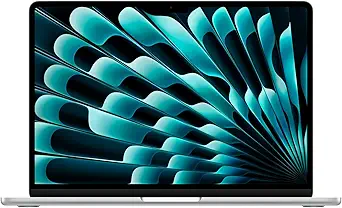
Apple MacBook Air 13.6-inch Laptop with M5 Chip, 16GB Memory, 512GB SSD, Silver
Of the two laptops in this lineup, the MacBook Air with M5 is the one most buyers should choose. Where the MacBook Neo 13-inch with A18 Pro targets casual, budget-conscious use with 8GB of memory, the M5 model’s 16GB of unified memory and 512GB SSD give it headroom for photo editing, code compilation, and years of software updates — the difference between a machine you outgrow and one you keep.
Up to 18 hours of battery life and a fanless, lightweight design make it the better travel companion, and the 12MP Center Stage camera beats most webcam-equipped portables for video calls. The compromise is port selection: only two Thunderbolt 4 ports means dongle life for anyone with multiple peripherals, and unlike the iPad Air above, there’s no touchscreen or Pencil input if that’s your workflow.
Pros:- Up to 18 hours of battery life for full workdays unplugged
- 16GB unified memory and 512GB SSD provide long-term headroom
- Liquid Retina display supports 1 billion colors
- Center Stage camera and Spatial Audio speaker system for calls and media
Cons:- Only two Thunderbolt 4 ports limits peripheral connections
- No touch or stylus input unlike Apple’s tablet lineup
Best for: Students and professionals who need a durable, long-battery laptop for sustained multitasking and creative work
Not ideal for: Buyers who need many ports or tablet-style touch and stylus input — a hub-dependent setup gets old fast
- Chip:Apple M5
- Display:13.6-inch Liquid Retina
- Unified memory:16GB
- Storage:512GB SSD
- Battery life:Up to 18 hours
- Camera:12MP Center Stage
- Wireless:Wi-Fi 7, Bluetooth 6
- Ports:Two Thunderbolt 4, MagSafe charging, headphone jack
- Color:Silver
Our verdict“This is the safest do-everything laptop pick in the roundup — powerful enough to last, portable enough to carry daily.”


How We Picked
I evaluated each product against four buyer-relevant criteria: performance headroom (whether the chip and memory can handle the next few years of software, not just today’s apps), everyday usability (battery life, comfort, display quality, and how naturally the device fits into an existing Apple setup), build and longevity, and value relative to its closest alternative in this lineup. Because every product here is an Apple device, ecosystem integration was a given — the differentiator was how much each one actually benefits from it, and whether that justifies its position.
The ranking logic is straightforward: devices with broader use cases and longer useful lifespans rank higher. That’s why the MacBook Air M5 with 16GB of memory leads the laptops and the overall list, and why the iPad Air M4 outranks the iPad 11-inch despite the price gap. Accessories like the AirPods Max 2 and Apple Watch SE 3 rank lower not because they’re weaker products, but because they’re enhancements to an ecosystem rather than its foundation — a fair distinction if you’re buying your first or only Apple device this year.
| Apple product | Color | Connectivity | Chip | Battery life |
|---|---|---|---|---|
| Apple AirPods Max 2 Wireless O | Blue | Wireless; USB-C | Apple H2 | Up to 20 hours |
| Apple Watch SE 3 GPS 40mm with | — | GPS | — | Up to 18 hours |
| Apple MacBook Neo 13-inch Lapt | — | — | — | Up to 16 hours |
| Apple AirPods Max 2 Wireless O | Starlight | Wireless; USB-C | Apple H2 | Up to 20 hours with ANC and Spatial Audio |
| Apple iPad 11-inch with A16 Ch | — | Wi-Fi 6 | Apple A16 | — |
| Apple iPad Air 11-inch | Space Gray | Wi-Fi 7 with Apple N1 | Apple M4 | All-day |
| Apple MacBook Air 13.6-inch La | Silver | — | Apple M5 | Up to 18 hours |
Factors to Consider When Choosing Best Apple Products
Choosing among the best Apple products is less about picking the most powerful option and more about matching each device’s role to how you’ll actually use it. Before you commit, these are the factors I’d weigh first.Start With Your Ecosystem Anchor Device
The most common mistake buyers make is purchasing accessories before the device those accessories depend on. A MacBook or iPad should usually come first because it defines what your AirPods Max 2 or Apple Watch SE 3 can actually do for you — features like handoff, shared clipboard, and cross-device calling only deliver value once you have a primary screen. If you already own an iPhone, the Watch SE 3 becomes far more useful as a companion than it would be to someone buying into Apple cold. Think of your purchase order as foundation first, enhancement second. Buyers who reverse this order often end up with premium accessories that duplicate functions their phone already handles adequately.
Memory and Storage Are the Real Long-Term Cost
Apple’s entry configurations are where the value trap hides. The MacBook Neo’s 8GB of memory is workable today for browsing and documents, but future macOS updates and heavier apps will strain it years before the 16GB MacBook Air M5 shows similar fatigue. The same logic applies to both iPads’ 128GB storage ceiling — once you factor in apps, photos, and downloaded media, that ceiling arrives faster than most buyers expect, and Apple’s storage isn’t upgradeable after purchase. My general rule: if you plan to keep a device four years or more, pay for memory and storage at the point of purchase. If you upgrade every two to three years, entry configurations are a defensible way to save.
Chip Tiers Matter More Than Spec Sheets Suggest
The gap between an A16, A18 Pro, M4, and M5 isn’t just benchmark numbers — it determines which professional workflows are even possible. The iPad Air’s M4 chip can run desktop-class creative apps that the iPad 11-inch’s A16 simply can’t take full advantage of, which is why the Air is the right canvas for artists and video editors. On the laptop side, the MacBook Neo’s A18 Pro is a phone-derived chip, meaning sustained heavy workloads will differ noticeably from the MacBook Air’s M5. Match the chip to your actual workload rather than the marketing tier. Paying for M-series headroom you never use is as wasteful as buying an A-series chip for work that outgrows it.
Connectivity Standards Age With the Device
Wi-Fi 7 on the iPad Air M4 versus Wi-Fi 6 on the iPad 11-inch looks like a minor spec difference today, but it’s a preview of how each device will perform on the routers you’ll own in five years. The same thinking applies to Bluetooth versions on the AirPods Max 2 and the wireless radios in the Watch SE 3. If your home network is several years old, newer standards may feel identical right now — but you’ll likely replace your router before you replace the tablet. Connectivity is one of the few specs you can’t fix later, so it deserves real weight if longevity is your priority.
Color and Finish Choices Affect Resale, Not Performance
The AirPods Max 2 in Blue versus Starlight illustrates a pattern across Apple’s lineup: finishes are acoustically and functionally identical, so the choice is purely personal — with one caveat. Neutral colors like Starlight, Silver, and Space Gray historically hold broader appeal on the resale market, while bolder finishes like Blue and the MacBook Neo’s Citrus are statements that narrower audiences want. If you tend to resell devices to fund upgrades, that matters. If you keep devices until they die, pick the color you’ll enjoy looking at every day and ignore the resale math entirely.
Know When to Skip the Premium Option
Premium Apple products earn their price only when their distinguishing features match your habits. The AirPods Max 2 make sense for someone who listens for hours daily and wants the best noise cancellation; occasional listeners get diminishing returns. The MacBook Air M5’s 16GB justifies itself for multitaskers, not for someone whose heaviest app is a browser. The discipline here is honest self-assessment: list your three most demanding regular tasks, then buy the cheapest device that handles all three with room to spare. Anything beyond that is paying for capability you’ll never touch.
Frequently Asked Questions
Should I buy the MacBook Air M5 or the cheaper MacBook Neo?
The decision comes down to memory and workload. The MacBook Air M5 with 16GB of memory is the safer long-term purchase because it can run many apps simultaneously, handle browser-heavy workflows, and absorb several years of macOS updates without strain. The MacBook Neo’s 8GB configuration is genuinely fine for writing, browsing, streaming, and light photo editing, and its A18 Pro chip is responsive for those tasks. Where the gap shows up is sustained performance — video editing, running virtualization, or keeping dozens of tabs and apps open. If you plan to keep the laptop for more than three years, the Air’s extra memory and M-series chip will feel like the better spend; if you upgrade often and work lightly, the Neo is a reasonable way to save.
Is the iPad Air M4 worth the upgrade over the iPad 11-inch with A16?
It depends entirely on whether you’ll use the extra power. The M4 chip and Wi-Fi 7 on the iPad Air put it in a different class for creative work — drawing with high-resolution canvases, editing 4K video, multitasking in Stage Manager — and it will stay capable for years longer than the A16 model. But if your tablet use is centered on streaming, reading, web browsing, and note-taking, the iPad 11-inch delivers nearly the same experience for those tasks, and the A16 handles them without complaint. Both share a 128GB base, so storage isn’t the differentiator. Creative users and future-proofers should step up to the Air; content consumers should comfortably stay with the base iPad.
Do the AirPods Max 2 in Blue and Starlight differ in any way besides color?
No — the two finishes share identical drivers, noise cancellation, battery, and features, so your choice should come down to aesthetics and one practical consideration. Lighter finishes like Starlight can show wear, oils, and minor scuffs on ear cushions and headband material more visibly over time, while darker finishes like Blue tend to hide daily wear better. There’s also the resale angle: neutral colors typically appeal to a wider pool of secondhand buyers, though this is a marginal factor for headphones. If you’re torn, pick the one that matches the devices you already own — since these sit on your head in public and on video calls, that daily visibility is worth more than any spec difference, because there isn’t one.
Is the Apple Watch SE 3 a good first Apple device?
It’s a good first companion device, but a limited first standalone one. The Watch SE 3 requires an iPhone for setup and delivers its best features — notifications, fitness tracking, Apple Pay, calls — as an extension of that phone. If you already own an iPhone, the SE 3 is the smartest entry point into the Apple ecosystem because it covers the core smartwatch experience without flagship pricing. What you give up are the advanced health sensors and always-on display found on pricier Apple Watch models, which matters if medical-grade health tracking is your priority. If you don’t own an iPhone at all, start with a MacBook, iPad, or iPhone first — the watch’s value collapses without that anchor.
Which single Apple product should I buy first in 2026 if I can only afford one?
For most people, a MacBook Air M5 or an iPad Air M4 is the strongest first purchase because laptops and tablets are self-sufficient devices that unlock the most ecosystem value on their own. Choose the MacBook Air if you write, research, or multitask heavily — the keyboard, trackpad, and 16GB of memory make it the most versatile single purchase in this lineup. Choose the iPad Air if your needs lean toward media, drawing, reading, and portability, and you’re comfortable doing lighter typing work on it. Headphones and the Watch are wonderful, but they amplify devices you already own rather than replacing anything. Buy the foundation first; the enhancements will still be there when budget allows.
Conclusion
Mapping these seven products to buyer types closes the decision cleanly. The MacBook Air 13.6-inch with M5 and 16GB of memory is my best overall pick — no other device here combines versatility, longevity, and everyday performance as convincingly. For best value, the Apple Watch SE 3 and iPad 11-inch with A16 deliver the core Apple experience at the most accessible points in the lineup. The best premium options are the AirPods Max 2 — in Blue or Starlight, since the choice is purely cosmetic — and the iPad Air M4 for those who want flagship capability.
For beginners entering the Apple ecosystem, the Watch SE 3 paired with an existing iPhone is the gentlest on-ramp, while the MacBook Neo suits budget-conscious students who need a real keyboard. And for specific needs: the iPad Air M4 for creatives, the MacBook Air M5 for multitaskers planning to keep one machine for years, and the AirPods Max 2 for anyone whose day revolves around immersive listening. Pick the role you need filled first — the rest of the ecosystem can follow.
Fall Picks
fall essentials
As an affiliate, we earn on qualifying purchases.