

Static code analysis tools catch bugs, security flaws, and maintainability problems before code ever runs, and choosing the right resource to master them can save your team months of trial and error. After comparing the leading books and guides in this space, Static Analysis Engineering: Detecting Software Defects Before They Reach Production stands out as the best overall pick for its practical, deployment-focused treatment of modern analyzers. Two other options earned spots near the top: Code Review Intelligence for teams blending automated static signals into code review workflows, and the Open Source Static Code Analysis Tool Guide for budget-conscious readers who want tool coverage without licensing costs. The main tradeoff you will face is depth versus breadth — academic references explain why analyzers work, while practitioner guides show how to run them in a CI pipeline. Read on for the full breakdown, including who each pick serves best and where each falls short.

Get business pricing on monitors, keyboards and dev gear
- Business-only prices and quantity discounts
- Tax-exempt purchasing
- Multiple users, one account, clear invoices
Key Takeaways
- Deployment guidance separated the top picks: Static Analysis Engineering ranked first because it covers analyzer rollout in production pipelines, while more theoretical references assume the tooling is already in place.
- Language coverage was the biggest differentiator among mid-tier picks — guides tied to a single ecosystem (like the Linux-focused auditing volume) serve specialists well but leave polyglot teams underserved.
- The 2020-edition open source guide remains the best value entry point, though its tool landscape has aged and readers will need to supplement it with current documentation.
- Only one pick (Code Review Intelligence) addresses change-based analysis and review prioritization, making it the clear choice for teams drowning in pull request volume rather than full-codebase audits.
- The Fagan inspections comparison volume proved the most niche: it is indispensable for organizations weighing manual review against automation, but skippable for everyone else despite its low price.
| Static Analysis Engineering: Detecting Software Defects Before They Reach Production |  | Best Overall | Format: Book (digital/physical edition) | Primary Topic: Static analysis engineering and defect detection | Focus Area: Early defect prevention before production deployment | VIEW LATEST PRICE | See Our Full Breakdown |
| The Operational Excellence Library: Mastering Code Analysis Tools |  | Best for Process-Minded Teams | Format: Book | Series: The Operational Excellence Library | Primary Topic: Code analysis tools within operational excellence | VIEW LATEST PRICE | See Our Full Breakdown |
| Open Source Static Code Analysis Tool: A Complete Guide – 2020 Edition |  | Best Value for Tool Shoppers | Format: Book | Edition: 2020 Edition | Primary Topic: Open source static code analysis tools | VIEW LATEST PRICE | See Our Full Breakdown |
| Auditing Source Code: Automated Testing, Static Analysis, and Vulnerability Patching for Linux Software |  | Best for Security Work | Format: Book (digital edition) | Primary Topic: Source code auditing and vulnerability patching | Platform Focus: Linux software | VIEW LATEST PRICE | See Our Full Breakdown |
| Comparison of Fagan inspections and static code-analysis tools (German Edition) |  | Best Niche Research Pick | Format: Book | Language: German | Primary Topic: Comparison of Fagan inspections and static code analysis | VIEW LATEST PRICE | See Our Full Breakdown |
| Code Generation, Analysis Tools, and Testing for Quality (Advances in Computer and Electrical Engineering) |  | Best Academic Reference | Format: Print / hardcover academic volume | Series: Advances in Computer and Electrical Engineering | Primary Audience: Researchers, graduate students, academics | VIEW LATEST PRICE | See Our Full Breakdown |
| Code Review Intelligence: Change Risk, Static Signals, Review Suggestions, and Defect Prevention | 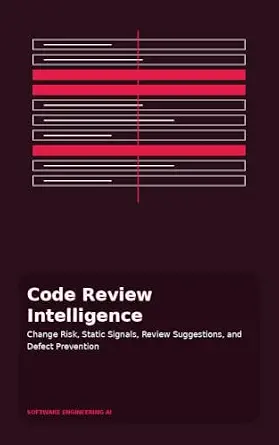 | Best for Team Process Design | Format: Book (digital/physical edition details unlisted) | Primary Audience: Engineering leads, senior developers, dev team managers | Topic Coverage: Change risk assessment, static analysis signals, review suggestions, defect prevention | VIEW LATEST PRICE | See Our Full Breakdown |
| static code analysis tool | Format | Primary Topic | Intended Audience | Language |
|---|---|---|---|---|
| Static Analysis Engineering: D | Book (digital/physical edition) | Static analysis engineering and defect detection | Software engineers and developers | English |
| The Operational Excellence Lib | Book | Code analysis tools within operational excellence | Professionals improving operational and technical processes | English |
| Open Source Static Code Analys | Book | Open source static code analysis tools | Developers and QA professionals | English |
| Auditing Source Code: Automate | Book (digital edition) | Source code auditing and vulnerability patching | Developers and security professionals | English |
| Comparison of Fagan inspection | Book | Comparison of Fagan inspections and static code analysis | Software quality assurance professionals | German |
| Code Generation | Print / hardcover academic volume | — | — | — |
| Code Review Intelligence: Chan | Book (digital/physical edition details unlisted) | — | — | — |
More Details on Our Top Picks
Static Analysis Engineering: Detecting Software Defects Before They Reach Production
Static Analysis Engineering earns the top spot because it frames static analysis as an engineering discipline rather than a checklist of tools. Where Open Source Static Code Analysis Tool: A Complete Guide catalogs scanners, this option digs into defect prevention strategy — how to build analysis into a pipeline so bugs never reach production. Compared with The Operational Excellence Library, it trades breadth of process theory for concrete methodology, which is what most engineering teams actually lack. The tradeoff is real: readers wanting tool-by-tool setup instructions or configuration examples will finish hungry, and the book assumes you already know your codebase’s weak points. This pick makes the most sense for engineers who want to understand why analysis finds (or misses) defects, not just which scanner to install.
Pros:- Grounds static analysis in engineering methodology, not just tool operation
- Focuses on preventing defects before production rather than post-hoc cleanup
- Depth that survives tool churn — the concepts outlast any specific scanner
- Written for practitioners, so the framing maps to real development work
Cons:- Sparse on practical, step-by-step application of the techniques
- No companion code, tool editions, or supplementary materials
- Assumes prior familiarity with software quality concepts
Best for: Mid-to-senior software engineers building defect-prevention workflows into CI/CD pipelines
Not ideal for: Beginners or teams wanting a hands-on tutorial for installing and configuring specific scanners
- Format:Book (digital/physical edition)
- Primary Topic:Static analysis engineering and defect detection
- Focus Area:Early defect prevention before production deployment
- Intended Audience:Software engineers and developers
- Language:English
- Skill Level:Intermediate to advanced
- Supplementary Materials:None included
Our verdict“The strongest choice for engineers who want durable methodology over tool tutorials.”
The Operational Excellence Library: Mastering Code Analysis Tools
This entry carves out a different niche than the rest of the lineup: it treats code analysis as one pillar of operational excellence rather than an isolated security or quality task. Compared with Static Analysis Engineering, which goes deep on defect-detection mechanics, this book widens the lens to organizational process — useful if your problem is adoption and workflow, not technique. The gap is noticeable, though: it lacks detailed technical examples, so a developer expecting copy-ready configurations or annotated scans will be disappointed. There are no supplementary materials either, which stings when the sibling title Auditing Source Code at least anchors its guidance in a concrete platform. This pick makes sense for leads and managers who need the ‘how do we run this’ layer.
Pros:- Connects code analysis to wider operational excellence practices
- Practical framing for teams improving processes, not just individual skills
- Broad enough to serve mixed audiences of managers and practitioners
- Structured guidance on mastering multiple analysis tools
Cons:- Light on detailed technical examples that practitioners can apply directly
- No supplementary materials or downloads to reinforce the concepts
- Breadth comes at the cost of the depth dedicated titles provide
Best for: Engineering managers and team leads rolling out code analysis as part of broader process improvement
Not ideal for: Hands-on developers who need runnable examples, sample configurations, or tool walkthroughs
- Format:Book
- Series:The Operational Excellence Library
- Primary Topic:Code analysis tools within operational excellence
- Intended Audience:Professionals improving operational and technical processes
- Language:English
- Supplementary Materials:None included
- Approach:Process-oriented rather than tool-tutorial
Our verdict“Choose this if your challenge is process adoption rather than technical depth.”
Open Source Static Code Analysis Tool: A Complete Guide – 2020 Edition
For buyers whose real question is ‘which open source scanner should I adopt,’ this is the most direct answer in the roundup. Static Analysis Engineering teaches methodology; this guide does the tool-landscape survey — covering open source options, best practices, and QA techniques at a price point that’s friendly to teams dipping a toe in. That survey approach is also its central weakness: the 2020 edition predates several current-generation analyzers, so treat its tool coverage as a foundation rather than a buying list. Compared with The Operational Excellence Library, it trades process theory for tool breadth, which most developers will find more immediately actionable. Pair it with a current release-notes habit and the age problem mostly washes out.
Pros:- Directly answers the ‘which open source tool’ question other titles avoid
- Includes best practices and QA techniques alongside the tool survey
- Accessible to both developers and quality assurance professionals
- Low-cost entry point for teams new to static analysis
Cons:- 2020 publication means tool coverage lags the current ecosystem
- No technical specifications or benchmark data for the tools discussed
- Survey format limits depth on any single analyzer
Best for: Budget-conscious developers and QA professionals comparing free, open source analysis tools
Not ideal for: Teams needing coverage of current-generation analyzers or cloud-native scanning platforms
- Format:Book
- Edition:2020 Edition
- Primary Topic:Open source static code analysis tools
- Coverage:Tool survey plus best practices and QA techniques
- Intended Audience:Developers and QA professionals
- Language:English
- License Focus:Open source tools only
Our verdict“A cheap, useful map of the open source landscape — as long as you verify each tool is still current.”
Auditing Source Code: Automated Testing, Static Analysis, and Vulnerability Patching for Linux Software
This is the security-first pick in a lineup that otherwise leans toward quality and process. Where Static Analysis Engineering targets general defect detection, this title chains static analysis to automated testing and vulnerability patching — a full audit workflow aimed at finding and fixing exploitable flaws. Its Linux focus is the differentiator and the constraint: if your stack is Linux-based C/C++ or server software, this is the most operationally useful book here; a Windows or mobile team gets little from it. The technical density also sets it apart from the friendlier Open Source Static Code Analysis Tool guide — newcomers may find the pace steep. For security professionals, that difficulty is the point.
Pros:- Full audit workflow covering testing, analysis, and patching in one place
- Anchored to a concrete platform rather than abstract theory
- Covers secure coding standards alongside analysis techniques
- Bridges the gap between finding a flaw and shipping a fix
Cons:- Linux-specific scope limits relevance for other ecosystems
- Technical difficulty is high for readers without security or systems background
- No ratings or pricing signal available to gauge community reception
Best for: Security engineers and auditors working on Linux software who need analysis tied to vulnerability remediation
Not ideal for: Beginners or teams on non-Linux platforms — the content assumes both Linux fluency and security background
- Format:Book (digital edition)
- Primary Topic:Source code auditing and vulnerability patching
- Platform Focus:Linux software
- Techniques Covered:Automated testing, static analysis, vulnerability patching
- Intended Audience:Developers and security professionals
- Language:English
- Skill Level:Advanced
Our verdict“The clear choice for Linux security auditing, and one to skip if that isn’t your stack.”
Comparison of Fagan inspections and static code-analysis tools (German Edition)
The most specialized entry here, and the only one that puts human-led Fagan inspections head-to-head with automated analysis. That comparison is genuinely hard to find elsewhere in this lineup — Static Analysis Engineering presumes automation is the answer, while this book interrogates whether formal human review still outperforms tooling in certain contexts. For a QA lead deciding how to budget reviewer time versus scanner licenses, that framing has real value. Two hard limits shape who should buy it: it’s a German-language edition, and it reads like the research text it is, denser than the practical Open Source Static Code Analysis Tool guide. For German-reading quality professionals, though, it fills a gap nothing else in this roundup touches.
Pros:- Unique side-by-side evaluation of Fagan inspections versus automated analysis
- Evidence-based framing useful for justifying QA investment decisions
- Practical insights on when each technique outperforms the other
- Fills a methodological gap no other title in this space covers
Cons:- German-only edition excludes most of the global audience
- Academic, technical tone is heavy for general readers
- Comparative focus means little guidance on actually deploying tools
Best for: German-speaking QA professionals and researchers weighing manual inspection methods against automated tools
Not ideal for: Non-German readers and practitioners wanting actionable tool recommendations rather than comparative evaluation
- Format:Book
- Language:German
- Primary Topic:Comparison of Fagan inspections and static code analysis
- Approach:Comparative evaluation of QA techniques
- Intended Audience:Software quality assurance professionals
- Style:Technical/research-oriented
- Techniques Compared:Formal human inspection vs. automated analysis
Our verdict“A narrow but valuable pick for German-reading QA professionals comparing review methods; everyone else can pass.”
Code Generation, Analysis Tools, and Testing for Quality (Advances in Computer and Electrical Engineering)
For readers who want the theoretical foundations behind static analysis rather than tool walkthroughs, this title carves out a niche none of the other picks occupy. Where The Operational Excellence Library leans practical and Open Source Static Code Analysis Tool: A Complete Guide stays tool-specific, this volume treats code generation, analysis, and testing as an interconnected research discipline, which is exactly what graduate students and engineering academics need.
The tradeoff is real, though: fewer runnable examples mean practitioners hoping to configure linters or CI pipelines should look elsewhere. Compared with Code Review Intelligence, it is broader in scope but less immediately actionable. This pick makes the most sense as a course companion or thesis reference, not a desk manual.
Pros:- Broad coverage spanning code generation, analysis, and testing in one volume
- Grounded in peer-reviewed computer and electrical engineering research
- Positions static analysis within a wider software quality framework rather than isolating it
- Useful as a citation source for academic writing on software quality
Cons:- Sparse practical examples make it hard to translate concepts into daily workflow
- Technical depth assumes prior background, creating a steep entry ramp
- Less current than tool-focused guides when it comes to specific analyzers
Best for: Graduate students, researchers, and computer engineering academics who need rigorous coverage of code analysis theory alongside testing methodology
Not ideal for: Working developers who want tool configuration recipes — the theory-heavy framing and sparse practical examples will slow them down
- Format:Print / hardcover academic volume
- Series:Advances in Computer and Electrical Engineering
- Primary Audience:Researchers, graduate students, academics
- Topic Coverage:Code generation, code analysis, software testing, quality assurance
- Discipline Focus:Computer and electrical engineering
- Content Type:Edited research collection
- Practical Examples:Limited; theory-oriented
Our verdict“Buy this if you need a scholarly, citation-worthy treatment of code analysis and testing; skip it if your goal is setting up a linter this week.”
Code Review Intelligence: Change Risk, Static Signals, Review Suggestions, and Defect Prevention
This title takes a different angle from every other entry: instead of teaching how analysis tools work, it teaches how to act on what they tell you. That makes it a natural companion to Static Analysis Engineering, which focuses on catching defects before production — this book picks up downstream, showing teams how to fold static signals into review workflow and triage change risk before merge.
Compared with Code Generation, Analysis Tools, and Testing for Quality, it is far more practitioner-oriented and workflow-focused, though it shares a similar drawback: no verified reader feedback yet, so quality is harder to gauge before buying. Engineering leads designing review standards will get the most from it; solo developers wanting tool setup will not.
Pros:- Connects static analysis output directly to review decisions rather than leaving signals uninterpreted
- Strong focus on defect prevention and change risk triage, an underserved topic
- Actionable framing oriented around improving team review workflow
- Bridges the gap between tooling guides and process management books
Cons:- No customer reviews or ratings available to validate content quality
- Unclear edition and format details make a purchase decision harder
- Assumes an existing team review culture that smaller shops may lack
Best for: Engineering leads and senior developers designing or overhauling a team’s code review process with risk-based prioritization
Not ideal for: Solo developers or small teams without a formal review process — the process-design focus has little to anchor to without reviewers in the loop
- Format:Book (digital/physical edition details unlisted)
- Primary Audience:Engineering leads, senior developers, dev team managers
- Topic Coverage:Change risk assessment, static analysis signals, review suggestions, defect prevention
- Focus Area:Code review process design
- Practical Orientation:Workflow and process strategies
- Reader Feedback:No ratings or reviews currently available
Our verdict“A sensible pick for engineering managers who want review process theory grounded in static analysis signals; buyers wanting tool tutorials should start elsewhere.”

How We Picked
My ranking logic started with a single question: which resource most directly helps a buyer choose, deploy, and get value from static code analysis tools? I weighted practical applicability most heavily — does the material translate into working pipelines, configured analyzers, and triaged findings? Resources that explain underlying theory earned credit only when that theory improved decision-making, such as understanding why certain false positive rates are unavoidable. I also judged currency of content, since static analysis tooling shifts quickly and a guide referencing deprecated tools loses value fast.
From there, I evaluated audience fit and versatility. A resource covering multiple languages and ecosystems ranked higher than one locked to a single platform, all else equal, because most engineering teams work across stacks. Finally, I factored in price-to-depth ratio: several picks cost a fraction of the premium volumes and still deliver most of the decision-relevant content, which is why value options appear high in the lineup rather than as afterthoughts. Where two picks overlapped, the one with clearer structure and more actionable checklists won the higher slot.
| static code analysis tool | Format | Primary Topic | Intended Audience | Language |
|---|---|---|---|---|
| Static Analysis Engineering: D | Book (digital/physical edition) | Static analysis engineering and defect detection | Software engineers and developers | English |
| The Operational Excellence Lib | Book | Code analysis tools within operational excellence | Professionals improving operational and technical processes | English |
| Open Source Static Code Analys | Book | Open source static code analysis tools | Developers and QA professionals | English |
| Auditing Source Code: Automate | Book (digital edition) | Source code auditing and vulnerability patching | Developers and security professionals | English |
| Comparison of Fagan inspection | Book | Comparison of Fagan inspections and static code analysis | Software quality assurance professionals | German |
| Code Generation | Print / hardcover academic volume | — | — | — |
| Code Review Intelligence: Chan | Book (digital/physical edition details unlisted) | — | — | — |
Factors to Consider When Choosing Static Code Analysis Tools
Before settling on any single resource or tool, it helps to understand the forces that shape this category. The seven picks above differ because they answer different questions — here is how to figure out which question yours is.Know Your Analysis Goal Before Choosing a Resource
The most common mistake buyers make is treating static analysis as one problem when it is really three: bug finding, security auditing, and maintainability measurement. A team chasing memory-safety defects in C code needs very different material than a team measuring cyclomatic complexity across a Java monolith. Before purchasing anything, write down the specific defect classes you want to catch — null dereferences, injection vulnerabilities, dead code — and check that a resource addresses them directly. Resources like the Linux auditing volume shine precisely because they narrow their scope to vulnerability patching. General-purpose guides cover more ground but often stop at the conceptual level for any single defect class. Buyers who skip this step frequently end up with a book that is excellent on paper and useless for their actual stack.
Freshness Matters More Than Page Count
Static analysis tooling churns quickly: analyzers get renamed, merged, abandoned, or absorbed into platforms, and a guide even two or three years old can point you toward dead projects. The open source guide in this lineup illustrates the tradeoff — its fundamental concepts remain sound, but its tool recommendations need verification against current project activity. When evaluating any resource, check whether it teaches durable principles (dataflow analysis, taint tracking, rule design) or just tool walkthroughs. Principles age well; walkthroughs do not. A practical compromise many teams use is pairing an older, cheaper conceptual guide with free, always-current vendor documentation. That combination often outperforms a single expensive volume trying to do both.
Budget by Team Role, Not Just Team Size
Pricing logic in this category is less about headcount and more about who will consume the material. A single staff engineer evaluating tools for an organization can extract most of the value from one well-chosen technical volume. A team rolling out analysis across many developers benefits from resources covering adoption psychology, finding triage, and exception handling — the areas where static analysis programs die in practice. Premium academic anthologies like the electrical engineering series volume justify their cost only when the audience includes researchers or tool builders. Spending heavily on reference material for junior developers is usually wasted; they need pipeline-integrated feedback, not theory. Map each purchase to a role before you commit.
Automation Versus Manual Review Is a Real Fork
Some organizations can and should automate nearly everything; others operate in domains where formal human inspection remains mandated or simply catches what analyzers miss. The Fagan inspections comparison in this lineup exists precisely because that fork is consequential. Manual inspection offers contextual reasoning and design-level critique but does not scale; automated analysis scales to millions of lines but produces false positives and shallow pattern matches. Mature teams usually layer both, using static tools as a first filter and reserving human review for high-risk changes — the exact strategy Code Review Intelligence documents. If your organization has not settled this question, prioritize a resource that addresses the tradeoff rather than one assuming full automation.
Watch for Integration Blind Spots
A recurring weakness across the category is thin coverage of CI/CD integration and developer experience. Many guides explain what analyzers detect but never address how findings surface to developers — incremental analysis on pull requests, baseline management for legacy code, or suppression workflows that do not rot. These integration details determine whether a static analysis program survives its first quarter. Before buying, skim the table of contents for chapters on pipeline integration, incremental scanning, or finding triage. If they are absent, plan to source that knowledge separately, because a tool deployed without a workflow is a tool that gets disabled within weeks. The best overall pick in this roundup earned its rank largely because it refuses to skip this layer.
Frequently Asked Questions
Should I start with a general static analysis book or one specific to my language?
It depends on how soon you need working coverage. A language-specific or platform-specific resource, like the Linux auditing volume, gets analyzers running fastest but locks you into one ecosystem’s assumptions and tooling. A general resource teaches transferable concepts — dataflow, taint analysis, rule tuning — that survive tool changes but delays your first meaningful scan. For teams with a single dominant stack, the specific route usually wins because early wins build the internal buy-in static analysis programs depend on. Polyglot organizations should start general and add stack-specific documentation per service. The cheapest path is often the open source guide for concepts plus free tool docs for execution.
Is an older edition of a static analysis guide still worth buying?
Usually yes, but with a discount-shaped expectation. The analytical foundations of static analysis — abstract interpretation, symbolic execution, control-flow graphs — have been stable for years, so older editions teach those reliably. What expires is the tool landscape: names, flags, licensing, and even whether a project still exists. Before buying any edition more than two years old, check the referenced tools’ repositories for recent commit activity and community health. If the majority are archived, treat the book as a theory text and budget for current documentation separately. That is exactly how I would position the 2020-edition open source guide in this lineup: strong fundamentals, stale specifics, and a price low enough to make the tradeoff easy.
Do I need a resource covering code review if I already run static analyzers?
Many teams do, because the failure mode of static analysis is rarely detection — it is what happens to findings after detection. Resources like Code Review Intelligence address pull-request-level risk scoring, prioritizing which findings block a merge versus which become follow-up tickets, and blending automated signals with human judgment. If your analyzers already run in CI and developers act on results without friction, you can skip this layer. But if you are seeing findings ignored, suppressions piling up, or review queues slowing releases, change-based analysis material fills a gap that pure tool guides leave open. It is the difference between owning a smoke detector and having a fire response plan.
Are the expensive academic anthologies worth it over practitioner books?
Only for a narrow audience. Practitioner books optimize for decisions you make this quarter: which tool, which rules, which pipeline stage. Academic anthologies like the electrical engineering series volume optimize for depth — novel algorithms, formal verification approaches, research frontiers that may not ship in commercial tools for years. If you build analysis tooling yourself, evaluate vendor claims technically, or work in a regulated domain requiring defensible methodology, the academic material earns its premium. If you are configuring off-the-shelf analyzers, most of that content will sit unread. A reasonable heuristic: if you cannot name a specific question the anthology would answer, buy the practitioner book first and revisit the reference later.
How do I choose between open source tools covered in guides versus commercial platforms?
Frame it as a maintenance-versus-capability tradeoff rather than a cost tradeoff, because open source analysis is free only until you account for the engineering time to configure, tune, and keep it running. Open source tools like those covered in the dedicated guide excel at standard bug patterns, transparency of rules, and avoiding vendor lock-in. Commercial platforms pull ahead on false-positive reduction, security rule packs with compliance mappings, and support when the tool misbehaves. Regulated industries often find commercial support contracts non-negotiable for audit purposes. A common middle path is starting open source to learn your codebase’s defect profile, then upgrading selectively where false positive rates burn developer goodwill. Whichever route you take, pick the resource that documents the route you actually chose.
Conclusion
The right pick depends less on which resource is objectively strongest and more on where your team stands today. For most engineering organizations, Static Analysis Engineering is the best overall choice — it covers selection, deployment, and production defect prevention in one place, which is why it leads this lineup. Best value goes to the Open Source Static Code Analysis Tool Guide: dated in its tool references but cheap enough that its durable fundamentals more than pay for themselves. For beginners, that same open source guide is the gentlest entry point, with the Operational Excellence Library as a step up once basics click.
On the premium end, the Advances in Computer and Electrical Engineering anthology suits tool builders and research-oriented teams who need depth no practitioner book provides. For specific needs: choose Auditing Source Code if you work in Linux and C and care primarily about vulnerability patching, Code Review Intelligence if your bottleneck is pull request volume rather than full-codebase audits, and the Fagan inspections comparison only if you are actively weighing manual review against automation. Whichever you pick, pair it with your tools’ current documentation — in this category, no book stays fresh forever, but the right one shortens your path to cleaner code considerably.
Fall Picks
fall essentials
As an affiliate, we earn on qualifying purchases.