
TL;DR

Get monitors, keyboards and dev gear delivered free — and shop member deals
- Fast, free delivery on millions of items
- Access to Prime Big Deal Days deals on October 6–7
- Prime Video, Amazon Music and more included
Siemens announced a major push into industrial AI, including the development of its Industrial Foundation Model and a strategic partnership with NVIDIA to create an Industrial AI Operating System. This marks a shift toward AI applications in manufacturing and infrastructure, emphasizing domain-specific models over chat-based AI.
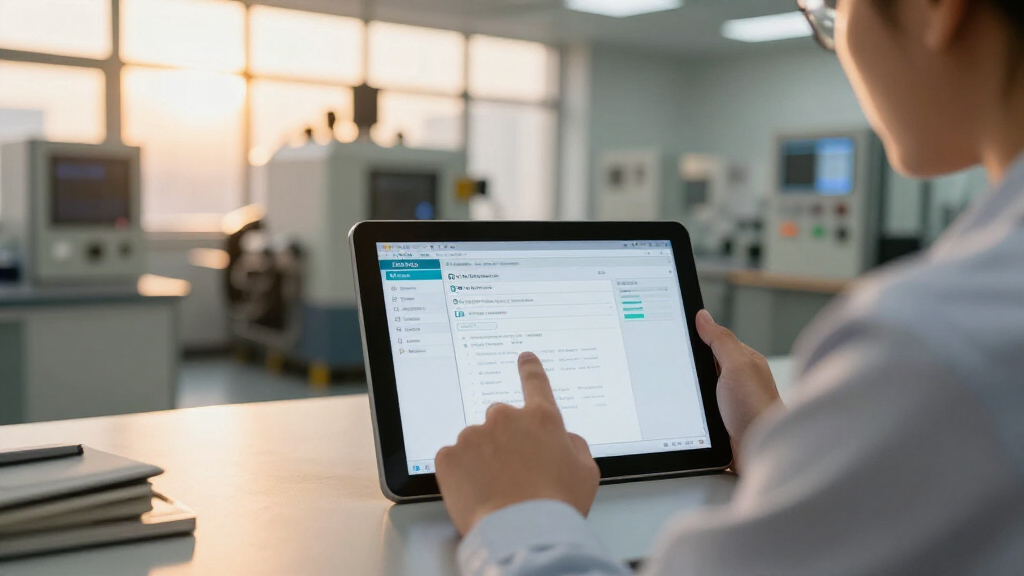
Siemens has unveiled its strategic initiative to embed artificial intelligence into manufacturing and industrial infrastructure, including the launch of its Industrial Foundation Model (IFM) and a partnership with NVIDIA to develop an Industrial AI Operating System. This move aims to shift AI focus from chatbots to physical-world applications, emphasizing domain-specific models for factories and machinery, starting in 2026.
The Industrial Foundation Model (IFM), announced at Hannover Messe 2025 and showcased at CES 2026, is designed to process and contextualize 3D models, 2D drawings, and industrial data to optimize engineering and automation processes. Siemens claims this specialized model is better suited for factory environments than general-purpose language models, which are inadequate for interpreting physical data.
Additionally, Siemens has expanded its partnership with NVIDIA to develop an Industrial AI Operating System. This platform aims to embed AI across the entire manufacturing lifecycle — from design and engineering to operations and supply chains. Key features include GPU-accelerated simulation, generative digital twins, and the launch of a fully AI-driven, adaptive factory at Siemens’ electronics plant in Erlangen, Germany, in 2026.
Early applications include Digital Twin Composer and industrial copilots, with companies like PepsiCo already testing simulation tools for facility upgrades. Siemens emphasizes that its proprietary data, domain expertise, and existing customer relationships give it a competitive edge in deploying physical AI solutions.
Implications of Siemens’ Physical AI Strategy for Manufacturing
This initiative signals a major shift in industrial AI, moving away from text-based chatbots toward models that interpret complex physical and engineering data. Siemens’ approach could lead to more accurate, real-time optimization of manufacturing processes, potentially increasing efficiency and reducing costs. The partnership with NVIDIA accelerates this transition by providing advanced simulation and AI infrastructure, but it also raises questions about dependence on U.S. technology and the pace of adoption in conservative industrial markets.
As an affiliate, we earn on qualifying purchases.
Background on Siemens’ Industrial AI Ambitions
Siemens has a 175-year history in industrial automation and software, with extensive proprietary data from factories, engineering models, and operational telemetry. Its recent focus has been on integrating AI into these assets, aiming to create domain-specific models tailored for physical environments. The company’s announcement at Hannover Messe 2025 and now at CES 2026 reflects a strategic pivot toward physical AI, distinct from the more common chat-based AI applications dominating the tech landscape.
While the concept of industrial AI is not new, Siemens’ emphasis on proprietary data and domain expertise aims to establish a durable competitive advantage. Its partnerships span various sectors, including drug discovery and autonomous driving, underscoring its broad industrial focus.
“Industrial AI is no longer a feature; it’s a force that will reshape the next century.”
— Roland Busch, Siemens CEO
As an affiliate, we earn on qualifying purchases.
Unconfirmed Aspects of Siemens’ Industrial AI Roadmap
Details on the specific hardware configurations, deployment timelines, and performance metrics of the Industrial AI Operating System remain undisclosed. The Erlangen lighthouse factory is scheduled for 2026, but the exact implementation timeline for other sites and the commercial availability of digital copilots are still unclear. Additionally, the dependence on NVIDIA’s infrastructure raises questions about sovereignty and long-term independence in industrial AI deployment.
As an affiliate, we earn on qualifying purchases.
Upcoming Milestones and Industry Adoption Timeline
Siemens plans to launch its fully AI-driven factory in Erlangen in 2026, with subsequent rollouts of digital twin tools and copilots across its customer base. The company will likely publish performance results and case studies to demonstrate the technology’s efficacy. Industry observers will watch for the adoption rate among conservative manufacturers and how competitors respond to Siemens’ physical AI focus.
As an affiliate, we earn on qualifying purchases.
Key Questions
What is Siemens’ Industrial Foundation Model?
The Industrial Foundation Model (IFM) is Siemens’ specialized AI designed to process and interpret physical data like 3D models, drawings, and sensor telemetry to optimize manufacturing and engineering processes.
How does Siemens’ partnership with NVIDIA enhance its AI capabilities?
The partnership provides GPU-accelerated simulation, physics-based AI models, and an integrated platform to embed AI across manufacturing, enabling real-time optimization and digital twin generation.
Will Siemens’ AI solutions be available globally in 2026?
While Siemens plans a major rollout starting in Germany, the timeline for global deployment depends on customer adoption, hardware availability, and regulatory considerations, which are still being finalized.
What are the risks of Siemens’ reliance on NVIDIA technology?
Dependence on NVIDIA’s infrastructure could impact Siemens’ sovereignty and long-term independence, especially for European customers concerned about reliance on U.S. technology providers.
How significant is this development compared to current industrial AI efforts?
Siemens’ focus on proprietary data, domain expertise, and physical models positions it uniquely in the industrial AI space, potentially setting a new standard for manufacturing AI applications.
Source: ThorstenMeyerAI.com
Halloween Picks
halloween
As an affiliate, we earn on qualifying purchases.