
TL;DR

Get business pricing on monitors, keyboards and dev gear
- Business-only prices and quantity discounts
- Tax-exempt purchasing
- Multiple users, one account, clear invoices
AI-powered digital twins are increasingly used in cities for planning and management, raising questions about governance, privacy, and social impact. Key developments include shared ownership models and privacy-preserving architectures.
Urban digital twins powered by artificial intelligence are becoming central to city management, with cities like Rotterdam exploring shared ownership models to prevent vendor lock-in. This shift impacts governance, privacy, and civic trust, making it a critical development in urban oversight.
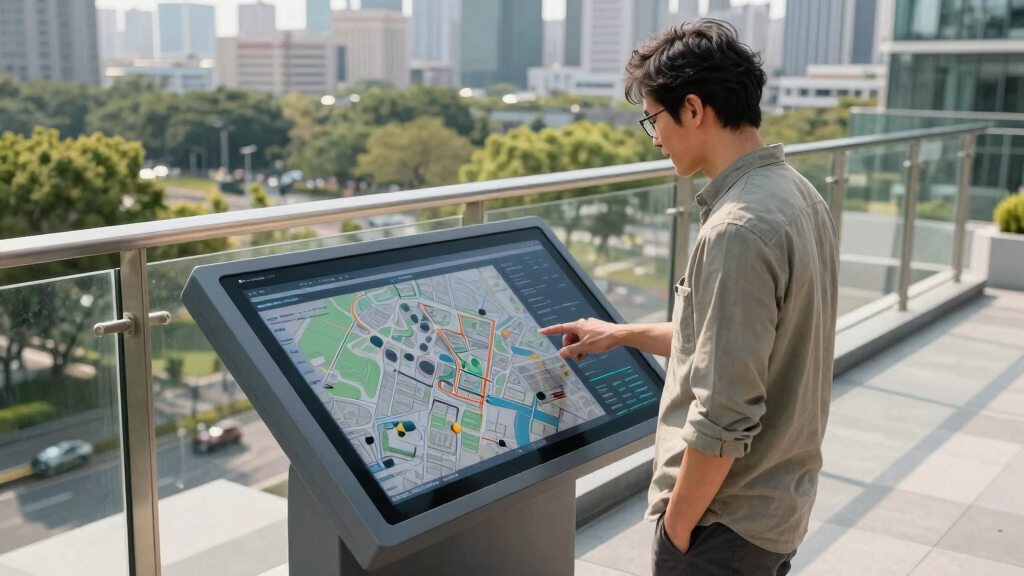
Digital twins are virtual, continuously-updated representations of cities, fed by sensors, satellite imagery, and mobility data. They are increasingly used for flood response, traffic management, and urban planning. The dominant business model involves platform vendors with long-term lock-in, raising concerns about dependency and social costs, as highlighted by Thorsten Meyer.
Recent initiatives like Rotterdam’s shared ownership structure aim to create publicly governed digital twins, contrasting with traditional vendor relationships. Meanwhile, cities such as Barcelona face scrutiny over opaque data processing and privacy concerns, especially under European data laws like GDPR. Privacy-preserving architectures, including differential privacy, are emerging but remain in early stages.
Societally, the use of digital twins extends from infrastructure to monitoring citizens’ behaviors, with potential risks of surveillance, algorithmic bias, and erosion of civic contestability. The ethical debate centers on balancing operational benefits against social and privacy costs, as discussed by scholars and industry experts.
Implications of AI-Driven Digital Twins for Urban Governance
This development signifies a shift toward more data-driven, automated city management, which can improve emergency responses, reduce emissions, and optimize urban services. However, it also raises critical questions about public oversight, privacy rights, and the social trust in civic institutions. The way cities govern these technologies will determine whether they enhance or undermine civic participation and accountability.
digital twin city planning software
As an affiliate, we earn on qualifying purchases.
As an affiliate, we earn on qualifying purchases.
Evolution of Urban Digital Twins and Governance Models
Since 2018, digital twins of cities have transitioned from experimental models to integral tools for urban planning and crisis management. Early implementations focused on flood modeling and traffic optimization. The concept expanded rapidly, with Gartner tracking the development of digital twins of citizens and governments by 2022. The dominant business model involves proprietary platforms, leading to concerns over vendor lock-in and dependency, as highlighted by Meyer.
Some cities, like Rotterdam, are experimenting with shared ownership models to mitigate these risks, while others face scrutiny over data privacy. European law, especially GDPR, complicates data management, prompting the development of privacy-preserving architectures. The societal implications include potential surveillance and algorithmic bias, fueling ongoing ethical debates.
“The governance problem looks different when you follow the money, liability, and social costs, revealing more tractable solutions.”
— Thorsten Meyer
privacy-preserving data analytics tools
As an affiliate, we earn on qualifying purchases.
As an affiliate, we earn on qualifying purchases.
Unresolved Questions About Governance and Privacy
It is still unclear whether shared ownership models like Rotterdam’s will be widely adopted or effective in preventing vendor lock-in. Additionally, the maturity and deployment of privacy-preserving architectures in operational city twins remain limited, raising questions about actual privacy protections and regulatory compliance. The societal impacts of widespread surveillance through digital twins are also still being debated, with no consensus on acceptable limits or oversight mechanisms.
As an affiliate, we earn on qualifying purchases.
Future Developments in Urban Digital Twin Governance
Next steps include monitoring whether shared ownership models become a standard, assessing the adoption of enforceable purpose limitations, and observing if enterprises demand contractual rights over data ingestion. Policy developments at the city and EU levels will shape governance frameworks. Technological advances in privacy-preserving methods will also influence how cities balance operational benefits with social and privacy concerns.
AI-powered city management platforms
As an affiliate, we earn on qualifying purchases.
As an affiliate, we earn on qualifying purchases.
Key Questions
How do digital twins improve city management?
Digital twins enable real-time simulation and analysis of urban systems, improving emergency responses, traffic flow, and infrastructure planning.
What are the privacy risks associated with city digital twins?
They include potential surveillance, data misuse, and erosion of civic privacy, especially if citizens’ movements and behaviors are monitored without clear consent or oversight.
Can shared ownership models prevent vendor lock-in?
Shared ownership models, like Rotterdam’s, aim to make city digital twins publicly governed, reducing dependency on single vendors, but their effectiveness remains to be seen.
What is the role of regulation in managing digital twin risks?
Regulations like GDPR set standards for data privacy, but enforcement and technical compliance vary; future policies may establish clearer governance frameworks for city twins.
Are privacy-preserving architectures widely used now?
They are emerging, with some implementations retaining high utility under privacy constraints, but widespread adoption in operational city platforms is still developing.
Source: ThorstenMeyerAI.com
Fall Picks
fall essentials
As an affiliate, we earn on qualifying purchases.