
TL;DR

Get business pricing on monitors, keyboards and dev gear
- Business-only prices and quantity discounts
- Tax-exempt purchasing
- Multiple users, one account, clear invoices
In 2026, several mirrorless cameras with advanced AI features have been announced, promising improved autofocus, scene recognition, and user assistance. These developments are set to transform photography and videography workflows.
Several leading camera brands have announced their most advanced mirrorless cameras for 2026, featuring integrated artificial intelligence (AI) capabilities designed to improve autofocus, scene recognition, and user assistance. For a detailed overview, see the original analysis of top mirrorless cameras. These models aim to set new standards for professional and enthusiast photography, making complex tasks easier and more precise.
The new lineup includes models from Sony, Canon, Nikon, and other manufacturers, each integrating AI-driven features such as real-time subject tracking, automatic scene optimization, and intelligent autofocus systems. To explore some of the best options, see the top mirrorless cameras for 2026. For example, Sony’s Alpha 7 IV successor is reported to include a new AI engine that enhances eye, face, and animal detection in both photos and videos, according to industry sources.
While specific specifications vary, these cameras are expected to leverage machine learning algorithms to adapt to different shooting conditions, assist with composition, and even suggest optimal settings. Notably, these AI features are designed to be user-friendly, aiming to benefit both professional photographers and casual users.
Manufacturers have confirmed that these models will support seamless integration with existing ecosystems, including cloud-based updates and third-party AI plugins, to continually improve performance over time. For more insights, refer to the comprehensive review of mirrorless cameras.
The 10 picks
- 1
 Sony Alpha 1 II Full-Frame Mirrorless Interchangeable Lens Camera (Body) BundleView on Amazon →
 - 2
 Sony Alpha 7 IV Full-Frame Mirrorless Camera with 28-70mm Zoom Lens KitView on Amazon →
 - 3
 Nikon Z50 II with Two Lenses – Compact Mirrorless Camera with 20.9MP Sensor,…View on Amazon →
 - 4
 Canon EOS RP Full-Frame Mirrorless Camera with RF24-105mm Lens KitView on Amazon →
 - 5
 Canon EOS R50 Mirrorless Camera with RF-S 18-45mm F4.5-6.3 IS STM Lens KitView on Amazon →
 - 6
 Sony Alpha a6400 Mirrorless Camera with 16-50mm LensView on Amazon →
 - 7
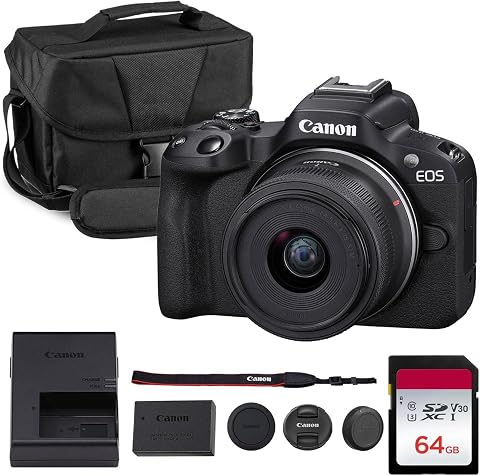 Canon EOS R50 Mirrorless Camera Kit with 18-45mm Lens, 4K Video, Dual Pixel A…View on Amazon →
 - 8
 Canon EOS R100 Mirrorless Camera with RF-S 18-45mm f/4.5-6.3 IS STM LensView on Amazon →
 - 9
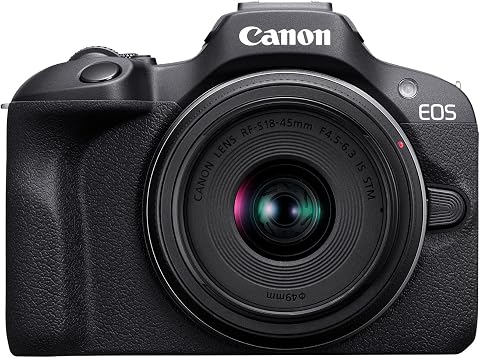 Canon EOS R100 Mirrorless Camera RF-S 18-45mm F4.5-6.3 IS STM Lens KitView on Amazon →
 - 10
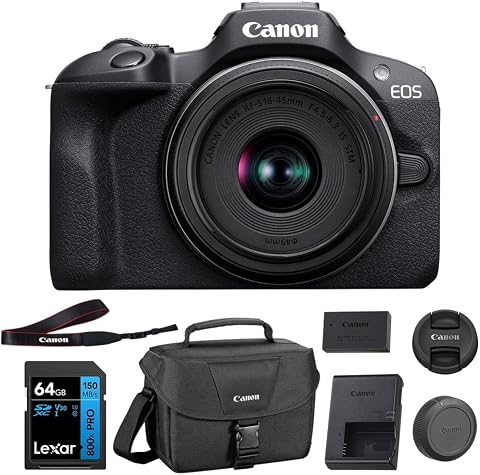 Canon EOS R100 Mirrorless Camera with RF-S18-45mm F4.5-6.3 IS STM Lens Kit, 2…View on Amazon →
Impact of AI-Enhanced Mirrorless Cameras in 2026
The integration of advanced AI features in mirrorless cameras marks a significant shift in photography technology, potentially reducing the learning curve for beginners and enhancing productivity for professionals. These developments could lead to faster shooting workflows, more accurate autofocus, and smarter scene analysis, ultimately changing how images are captured and processed.
For consumers, this means access to more intuitive tools that help achieve professional-quality results with less technical expertise. For the industry, it signals a move toward smarter, more autonomous camera systems that leverage artificial intelligence to push creative boundaries.
2023-2025 Developments Leading to 2026 AI Cameras
Prior to 2026, camera manufacturers progressively integrated AI-driven features into their models, primarily focusing on autofocus and scene recognition. Sony’s Alpha series, Canon’s EOS R line, and Nikon’s Z series introduced basic AI functions that improved tracking and autoexposure.
In late 2025, industry insiders reported that major brands were developing more sophisticated AI engines, with prototypes demonstrating real-time scene analysis, subject detection, and adaptive settings. These advancements were driven by breakthroughs in machine learning and increased processing power in compact form factors.
While some features were initially limited to flagship models, leaks and early reviews suggested that AI capabilities would soon become standard across a broader range of devices in 2026, making advanced photography tools more accessible.
“Our new Alpha 7 IV successor incorporates a cutting-edge AI engine designed to deliver unparalleled autofocus and scene recognition capabilities.”
— Sony spokesperson
Unconfirmed Details About AI Capabilities and Release Dates
While manufacturers have announced plans for AI-enhanced cameras in 2026, specific details about the final feature sets, performance benchmarks, and release timelines remain unclear. It is also uncertain how widespread adoption will be across different price segments and whether some features will be limited to flagship models initially.
Additionally, the long-term reliability and user experience of these AI systems are still to be fully tested in real-world scenarios, and updates or software issues could influence their effectiveness.
Upcoming Launches and Software Updates Expected in 2026
Manufacturers are expected to unveil their new AI-enabled mirrorless cameras throughout the first half of 2026, with detailed specifications and demos at major photography expos. Post-launch, firmware updates and AI feature improvements are anticipated to roll out, enhancing performance and expanding capabilities.
Industry analysts predict that user feedback and third-party app development will further refine AI functionalities, making these cameras more adaptable and intelligent over the year.
Key Questions
What are the main AI features in 2026 mirrorless cameras?
Key features include real-time subject tracking, automatic scene optimization, intelligent autofocus, and adaptive image processing powered by machine learning algorithms.
Will these AI features be available on all models?
Most likely, high-end models will debut with the full suite of AI capabilities, while some mid-range and entry-level cameras may receive limited features initially, with updates over time.
How will AI improve my photography experience?
AI can help identify subjects more accurately, suggest optimal settings, and assist with complex scenes, making photography easier and more consistent, especially for beginners.
Are there privacy concerns with AI in cameras?
While AI features often involve data processing, manufacturers state that user privacy is a priority, with most AI functions operating locally on the device and only limited data sent to cloud services if enabled.
Source: ThorstenMeyerAI.com
Fall Picks
fall essentials
As an affiliate, we earn on qualifying purchases.