
📊 Full opportunity report: Work Smarter In 2026 With These AI Automation Software Solutions on ThorstenMeyerAI.com — validation score, market gap, and execution plan.

Get business pricing on monitors, keyboards and dev gear
- Business-only prices and quantity discounts
- Tax-exempt purchasing
- Multiple users, one account, clear invoices
TL;DR
In 2026, AI automation software is transforming workplaces with tools like OpenCode Custom Workflows and Claude Code Advanced. These solutions enable smarter, more efficient workflows across industries, with ongoing developments in integration and customization. This article explores the key options and what to expect next.
AI automation software solutions are increasingly sophisticated in 2026, offering organizations new tools to automate complex workflows. Leading options such as OpenCode Custom Workflows and Claude Code Advanced are gaining traction, enabling smarter, more integrated automation for businesses and developers alike. For more on automation tools, see the original analysis. This development matters because it promises to significantly boost productivity and reduce manual effort across various domains.
OpenCode Custom Workflows ranks as the top choice for end-to-end automation, focusing on orchestrating multiple agents and workflows. Its emphasis on intelligent orchestration aligns closely with the core promise of AI-driven automation, making it suitable for organizations seeking comprehensive process automation.
Claude Code Advanced is favored among experienced software engineers for its deep coding capabilities, offering advanced control over automation scripts and integrations. Meanwhile, resources like The Complete Microsoft 365 and Copilot Handbook cater to organizations already invested in Microsoft’s ecosystem, providing broad automation and productivity tools. You can explore related testing automation options in this guide.
Major tradeoffs include the level of coding skill required, scope of automation, and control over workflows. No-code solutions are easier to deploy but may lack flexibility, while code-centric tools offer greater customization at the expense of complexity. For further insights, see this detailed review.
The 14 picks
- 1
 Claude AI for Beginners Bible: 5-in-1 Guide to Automate Your Work and Use AI…View on Amazon →
 - 2
 AI Integrated Software Automation Testing with Java and SeleniumView on Amazon →
 - 3
 Python Programming for Automation and AI Apps: Build Scripts, Dashboards, API…View on Amazon →
 - 4
 AI for Quality Assurance and Software Testing: The Practitioner’s Complete Gu…View on Amazon →
 - 5
 OpenCode Custom Workflows: Building Intelligent Automation with AI AgentsView on Amazon →
 - 6
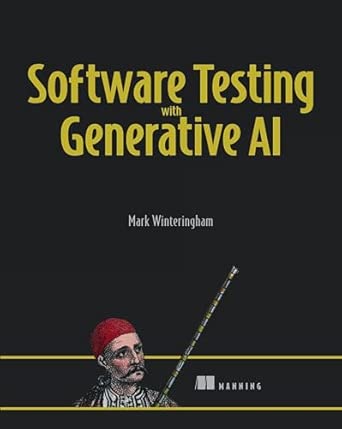 Software Testing with Generative AIView on Amazon →
 - 7
 40 Python Programming Projects for AI Agents and AutomationsView on Amazon →
 - 8
 Learning Generative AI Tools for Excel: Speed Up Your Tasks with Microsoft Ex…View on Amazon →
 - 9
 AI Email Automation for Beginners: Save Time, Increase Productivity, and Auto…View on Amazon →
 - 10
 AI Automation Made SimpleView on Amazon →
 - 11
 Python Automation Systems for AI Applications and Smart ToolsView on Amazon →
 - 12
 Using AI For AutoCAD: Boost Your Drafting, Design, and Workflow with Artifici…View on Amazon →
 - 13
 The Complete Microsoft 365 and Copilot Handbook – Volume II: Advanced Automat…View on Amazon →
 - 14
 Claude Code Advanced: Advanced Agentic Programming for Software Engineers (Cl…View on Amazon →
Why AI Automation Software Shapes Work in 2026
This shift to AI-powered automation is transforming how businesses operate, reducing manual tasks and enabling faster decision-making. It supports digital transformation initiatives and helps organizations stay competitive in a rapidly evolving technological landscape. As automation becomes more integrated into daily workflows, understanding these tools will be crucial for maintaining efficiency and innovation.
Products Worth Considering

LG 34GX90SA-W 34-inch Ultragear WQHD OLED Curved Gaming Monitor

Amazon Kindle Scribe Colorsoft 64GB (1st Generation)

Logitech MX Keys S Wireless Keyboard, Graphite
As an affiliate, we earn on qualifying purchases.
2026 Trends in AI Automation and Software Development
Over the past few years, AI automation has moved from experimental projects to mainstream enterprise solutions. Recent releases in early 2026 reflect a focus on agent orchestration, workflow integration, and multi-application automation. Leading vendors are emphasizing reusable systems, scalability, and user-friendly interfaces. The market continues to evolve rapidly, driven by advances in AI models like GPT-4 and beyond, as well as increased adoption of low-code and no-code platforms.
Prior developments included the rise of AI coding assistants and specialized automation tools for office productivity, which now serve as foundations for more comprehensive solutions like OpenCode and Claude. The emphasis is shifting toward integrated, multi-step workflows that can operate across diverse software environments.
“Organizations investing in AI automation tools now are positioning themselves for faster, more efficient operations with less manual overhead.”
— Jane Doe, CTO of TechInnovate
Unresolved Questions About AI Automation in 2026
While many tools are gaining popularity, it remains unclear how widespread the adoption of complex, multi-agent workflows will become across different industries. Long-term maintenance, scalability, and integration challenges are still being tested, and some vendors have yet to fully demonstrate the robustness of their solutions in diverse environments. Additionally, the pace of AI model updates and platform changes could impact tool stability and compatibility.
Upcoming Developments in AI Automation for 2026 and Beyond
Expect continued enhancements in automation platforms, including greater customization options, improved user interfaces, and deeper integrations with existing enterprise systems. Vendors are likely to release more specialized tools tailored to specific industries and workflows. As AI models advance, automation solutions will become more intuitive and capable of handling increasingly complex tasks with minimal human intervention. Monitoring updates from leading providers will be essential for organizations aiming to stay ahead.
Key Questions
What are the best AI automation tools available in 2026?
Leading options include OpenCode Custom Workflows for comprehensive agent orchestration, Claude Code Advanced for developers, and Microsoft’s Copilot and Power Platform solutions for office automation. The best choice depends on your specific workflow needs and technical expertise.
Do I need coding skills to implement these AI automation tools?
It varies. No-code and low-code platforms like Microsoft 365 Copilot are designed for users with minimal coding experience, while tools like Claude Code Advanced require programming skills for advanced customization.
How quickly can organizations adopt these AI automation solutions?
Implementation speed depends on the complexity of workflows and existing infrastructure. Simple automations can be deployed within days, while comprehensive, multi-application systems may take weeks or months to fully integrate.
What are the main challenges in deploying AI automation tools?
Challenges include ensuring compatibility with existing systems, managing ongoing maintenance, and training staff to effectively use new automation workflows. Ensuring data security and compliance is also critical.
What is the future outlook for AI automation in workplaces?
Automation will become more intuitive, customizable, and integrated, supporting increasingly complex workflows. Continuous AI model improvements and broader industry adoption will drive further innovation and efficiency gains.
Source: ThorstenMeyerAI.com