
📊 Full opportunity report: Capital: The Lever Beneath the Levers on ThorstenMeyerAI.com — validation score, market gap, and execution plan.
TL;DR
In 2026, major AI companies like SpaceX, Anthropic, and OpenAI have gone public with multi-trillion-dollar valuations, exposing the central role of capital. This funding cycle creates risks of demand mispricing and economic fragility, with a few firms controlling the flow.
On June 12, 2026, SpaceX, which now includes xAI, listed on the Nasdaq with a valuation near $1.77 trillion, briefly surpassing $2 trillion in early trading, and creating the world’s first trillionaire. This move marked the culmination of a wave of major AI companies going public, revealing how capital funding underpins the entire AI infrastructure buildout.
The public listings of SpaceX, Anthropic, and OpenAI in 2026 represent a combined private valuation approaching $4 trillion. These offerings, heavily oversubscribed, transferred significant risk from early investors to the public market, with insiders already cashing out billions before the IPOs. The funding cycle feeds into a circular flow: Microsoft, Amazon, and Google invest heavily into Nvidia, which supplies the chips used by AI companies, creating a closed loop of demand.
This circular demand is fragile. Microsoft has begun to step back from its commitment to supply OpenAI’s compute needs, signaling caution amid an overheated cycle. Meanwhile, private credit fuels an estimated $3 trillion in global data-center spending from 2025-2028, with only about 3% of consumers paying for AI services, raising concerns about demand sustainability. The entire system is vulnerable to demand shocks, which could trigger cascading failures across the industry.
Capital: The Lever Beneath the Levers
Every chokepoint costs money — so whoever can fund the buildout decides who builds at all. In 2026 the bill came due in public: a trillion-dollar IPO wave, financed by a circle of firms paying each other, now sold to everyone else.
The meta-chokepoint: it gates the other five, because you can’t build any of them without clearing the capital bar. A synchronized machine has no natural brake — no one can slow first — and the IPO wave moves the risk to the public as insiders take gains. The hedge is solvency that doesn’t depend on the music playing: sane burn, own what’s cheap, self-host where you can.
Why Capital Control is a Critical AI Industry Leverage
This development underscores that funding and capital flow are the ultimate determinants of AI infrastructure expansion. The concentration of funding among a few mega-firms means that any shift in capital availability or investor sentiment could rapidly destabilize the industry. The reliance on debt-financed capex and circular demand also amplifies systemic risks, potentially impacting broader economic stability.

The Data Center Engineering Handbook: A Practical Guide to Infrastructure Design, Power Systems, Cooling, Security, Compliance, and Operational Excellence
As an affiliate, we earn on qualifying purchases.
As an affiliate, we earn on qualifying purchases.
The Financial Foundations of AI’s Rapid Expansion
The 2026 wave of IPOs and private valuations reflects a decade-long trend where private investments in AI soared, culminating in a concentrated transfer of risk to the public markets. Major firms like SpaceX, Anthropic, and OpenAI have raised trillions, with insiders cashing out early. Meanwhile, tech giants continue to pour billions into Nvidia and cloud services, creating a self-reinforcing demand cycle that is now showing signs of strain.
“There’s more greed than fear right now, and liquidity remains abundant — but that could change rapidly.”
— Goldman Sachs CEO
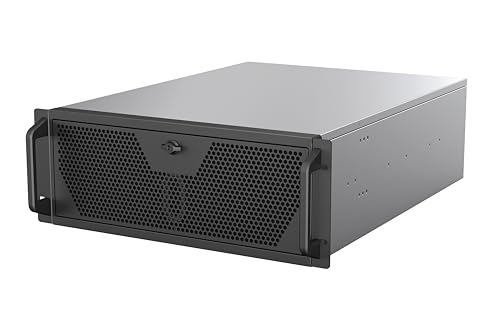
Rosewill 4U Rackmount Server Chassis | Supports up to 2 x 3.5 HDD & 4 x 2.5 SSD | E-ATX & SSI-EEB Compatible | 360mm AIO Support | 3 x 120mm PWM Fans | USB 3.2 Type-C | RSV-L4620
Engineered for High-Performance Computing: Supports E-ATX motherboards for multi-GPU setups and top-tier hardware, making it a solid foundation…
As an affiliate, we earn on qualifying purchases.
As an affiliate, we earn on qualifying purchases.
Unresolved Risks and Potential Market Instabilities
It remains unclear how long the current funding cycle can sustain without a demand correction. The extent to which private credit can absorb potential shocks and whether the public market valuations will hold if investor sentiment shifts are still unknown. Additionally, the impact of any slowdown from key players like Microsoft on the entire circular demand loop is uncertain.

X-Protector GPU Support Bracket – Small GPU Sag Bracket 1" – 2" – Premium GPU Stand with Rubber Pad – Metal Anti-Sag GPU Brace – Ideal Graphics Card Support for The Most Set Ups!
✌️ Worried About Your GPU Sagging and Getting Damaged Over Time? Want a Simple Fix? It’s Easy with…
As an affiliate, we earn on qualifying purchases.
As an affiliate, we earn on qualifying purchases.
Next Steps for Monitoring AI Funding and Market Stability
Regulators and industry analysts will closely watch the upcoming earnings reports, funding rounds, and policy developments. Market watchers expect increased scrutiny of valuation sustainability and demand signals, especially if macroeconomic conditions deteriorate. The next major milestone is the quarterly earnings season and any signs of slowing investment activity or valuation corrections.

Agentic AI with Microsoft Foundry: Design and develop intelligent AI solutions and autonomous agents with Microsoft's Agent Framework
As an affiliate, we earn on qualifying purchases.
As an affiliate, we earn on qualifying purchases.
Key Questions
Why are AI companies going public now?
They aim to capitalize on high valuations driven by investor enthusiasm and to fund ongoing infrastructure expansion amid intense competition.
What risks does the current funding cycle pose?
The cycle’s reliance on circular demand, private debt, and limited paying customers creates vulnerabilities to demand shocks and potential economic instability.
Who controls the flow of capital in AI infrastructure?
Major tech firms like Microsoft, Amazon, Google, and Nvidia are the primary actors shaping the flow of capital and demand within the industry.
How might a slowdown affect the industry?
A slowdown could trigger cascading demand reductions, impact valuations, and threaten the fragile economic balance underpinning AI infrastructure growth.
Source: ThorstenMeyerAI.com