
📊 Full opportunity report: The Free-Download Question: When Running Your Own Model Actually Beats Paying on ThorstenMeyerAI.com — validation score, market gap, and execution plan.
TL;DR
Recent advances show that running open-weight AI models locally can be more cost-effective than paid API services at scale. The shift is driven by hardware improvements and open model performance catching up with proprietary models, challenging the traditional cost assumptions.
Recent developments in open-weight AI models and hardware have made running these models locally potentially more cost-effective than subscribing to paid API services, challenging the traditional view that cloud APIs are always cheaper for high-volume use.
Open-weight models such as DeepSeek V4 Pro and Kimi K2.6 have closed much of the performance gap with proprietary models like GPT-5.5 and Claude Opus 4.6, now reaching within 5-15 percentage points on key benchmarks. These open models cost roughly one-seventh to one-fifth of their proprietary counterparts per million tokens, making them increasingly attractive for sustained, high-volume tasks.
Hardware improvements, particularly Apple Silicon’s unified memory architecture and sparse mixture-of-experts models, have lowered the cost barrier for local inference. A Mac Studio with 192GB RAM can now run 70-billion-parameter models efficiently, and models like Qwen3.6-35B can activate only parts of their parameters, reducing memory and processing costs.
These technological shifts mean that for many organizations, owning and operating open models locally could surpass the economics of API-based solutions, especially when considering total cost of ownership, including hardware, electricity, and engineering effort.
The free-download question: when running your own actually beats paying
“Why pay for on-prem when you could run Qwen free?” The download is free — running it well is not. The honest comparison is total cost of ownership vs. per-token API. And there’s a real, moving crossover.
“Free” means the download, not the running
When someone says an open model is free, they mean the weights. They’re not counting the hardware, power, ops time, the quality gap, or depreciation. For most workloads, those are the entire cost.
- Hardware — the machine to hold & run it
- Electricity — sustained inference draws real power
- Ops time — updates, queue health, tuning, 2 a.m. breakage
- The harness — context, persistence, retries (not optional)
- Quality gap — 6–12 mo behind frontier on hardest tasks
- Depreciation — frontier hardware dates in ~3 years
Where owning beats renting
Below some usage level the API wins decisively. Above some sustained, predictable volume, owned hardware wins — and the meter never restarts. Drag the volume; toggle the task and sovereignty needs.
API vs. own-hardware — monthly cost balance
An illustrative model, not a quote. The point is the shape: a real crossover that moves with your inputs.
Two regional pools, a 5–25× price gap
The “you trade away too much capability” objection got much weaker. Open weights have closed to within 5–15 points of the closed frontier — and on some tasks drawn level.
What you own when you own the inference
Apple Silicon’s unified memory rewired the math — a 192GB Mac Studio holds a 70B model in memory; MoE models (e.g. 35B total / ~3B active) make frontier-adjacent capability runnable on a desk. But owning inference means owning all of this:
The true-cost line items the “free” framing skips
Lived from a small Mac fleet running Qwen on MLX for a high-volume publishing pipeline: at sustained volume it pays for itself against the per-token meter — but every item below is real.
Hardware capex
The fleet up front. Depreciates — dates in ~3 years even if no invoice shows it.
Electricity
Sustained inference draws real power. At fleet scale it’s a monthly bill, not a rounding error.
Operational burden
Model updates, quantizations, queue health, throughput tuning, 2 a.m. breakage you now own.
The harness
Context, persistence, retries, tool routing. Not optional — the model is only half the system.
No per-token meter
The payoff: once owned, inference cost stops scaling with use. The meter never restarts.
Data never leaves
Nothing sent to strangers. Sovereignty is structural, not a contractual promise.
The crossover zone is real — and growing
The “just run Qwen” dismissal and the “you need a vendor” reflex are both too simple. The local path wins in a specific, identifiable zone — and that zone is bigger than a year ago.
Which way it tips
Implications of Cost-Effective Local AI Deployment
This shift impacts how organizations approach AI deployment, especially those with high-volume, long-term needs. It questions the long-held assumption that cloud APIs are always the most economical choice, potentially leading to a reevaluation of AI infrastructure strategies. For smaller operators and enterprises alike, the ability to run near-frontier models locally at a fraction of the cost could democratize access to advanced AI capabilities, reducing reliance on proprietary cloud services and fostering more independent development.
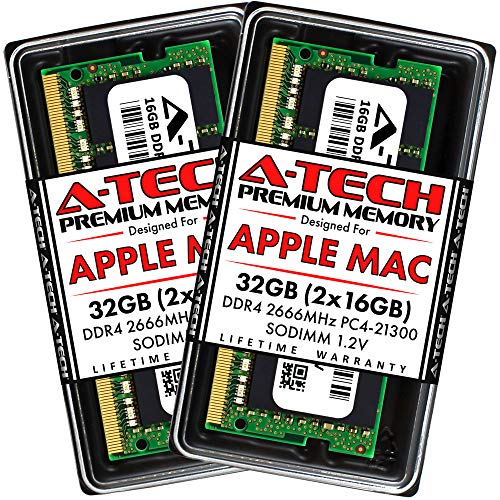
A-Tech 32GB Kit (2x16GB) RAM for Apple iMac & Mac mini (2018, 2019 & 2020) | DDR4 2666 MHz SODIMM PC4-21300 / PC4-21333 260-Pin SO-DIMM Memory Upgrade
- Total Capacity: 32GB (2x16GB) RAM kit
- Memory Speed: DDR4 2666/2667 MHz
- Form Factor: 260-Pin SO-DIMM
As an affiliate, we earn on qualifying purchases.
As an affiliate, we earn on qualifying purchases.
Evolution of Open Models and Hardware Advances
Until recently, open-weight models lagged behind proprietary models in performance and were considered less suitable for production use. However, by mid-2026, open models like DeepSeek V4 Pro and Kimi K2.6 have achieved performance levels within striking distance of top-tier models, on benchmarks relevant to real-world tasks. Simultaneously, hardware improvements, especially Apple Silicon’s unified memory and sparse architectures, have drastically lowered the cost of local inference, making on-prem deployment viable for smaller operators. These developments mark a significant turning point in the economics of AI deployment.
“The gap between ‘free to download’ and ‘cheap to operate’ is the real battleground for AI economics.”
— Thorsten Meyer

AI Robotic Arm Kit Hiwonder SO-ARM101 Embodied Imitation Learning Open Source 6-Axis Robot Arm 12 High-Torque Bus Servo Motors AI Vision Recognition (Advanced Kit, Included 3D Printed Part, Assembled)
- Imitation Learning Platform: Compatible with Lerobot open-source framework
- Dual-Camera System: Supports precise manipulation and environment awareness
- High-Torque Bus Servos: 12 magnetic feedback motors for smooth motion
As an affiliate, we earn on qualifying purchases.
As an affiliate, we earn on qualifying purchases.
Remaining Questions on Long-Term Cost and Performance
While recent benchmarks are promising, it remains unclear how open models will perform on the most demanding, long-horizon tasks compared to proprietary models. The performance gap may still widen in certain areas, and the real total cost of ownership depends on factors like engineering effort, model tuning, and hardware upgrades. Additionally, the pace of hardware development and model improvements could alter the current economic calculus.

ASUS ROG Astral GeForce RTX 5090 OC Edition Quad Fan Graphics Card, 32GB GDDR7, 3352 AI Tops, 512-bit, DLSS 4, AI Content Creation, Local LLM Inference, DP 2.1b x3, HDMI 2.1b x2, with GPU Holder
- AI Processing Power: 3352 AI TOPS with 5th Gen Tensor Cores
- Large VRAM: 32GB GDDR7 for AI and creative tasks
- High-Performance Memory: 28 Gbps, 512-bit memory interface
As an affiliate, we earn on qualifying purchases.
As an affiliate, we earn on qualifying purchases.
Next Steps for Organizations Considering Open-Weight Models
Organizations should monitor ongoing benchmark developments and hardware innovations, assessing their own workload volumes and performance needs. Pilot deployments of open models on upgraded hardware could reveal whether local inference is now more economical than cloud APIs. Further research and real-world testing will clarify the optimal balance between open deployment and API use, especially as models continue to improve.

SURAIELEC Outlet Watt Meter, 90-250V Wide Range Power Meter Cost Calculator
- Electric Usage Monitoring: Measures power, voltage, current, and more
- Wide Voltage Range: Supports 90-250V, 0-16A, 0-3680W
- High Accuracy Standard: Class 1.0 with precise readings
As an affiliate, we earn on qualifying purchases.
As an affiliate, we earn on qualifying purchases.
Key Questions
When does running open-weight models become more cost-effective than paid APIs?
It becomes more cost-effective at high, predictable volumes where the total cost of hardware, electricity, and engineering effort is lower than ongoing API subscription costs. The crossover point varies depending on workload and hardware costs but is approaching for many use cases in 2026.
Are open-weight models now comparable to proprietary models in performance?
Yes, recent benchmarks show open models like DeepSeek V4 Pro and Kimi K2.6 approaching within 5-15 percentage points of top proprietary models on key tasks, with some tasks even reaching parity.
What hardware improvements have enabled local inference of large models?
Apple Silicon’s unified memory architecture and sparse mixture-of-experts models allow large models to run efficiently on desktops, reducing the need for data center hardware and lowering costs.
What are the main challenges still facing open-weight deployment?
Challenges include performance gaps on the most complex tasks, the need for sophisticated model harnessing, and the ongoing requirement for engineering expertise to optimize deployment and inference reliability.
How might this shift influence the AI industry in the coming years?
It could democratize access to powerful AI models, reduce reliance on proprietary cloud services, and accelerate innovation by enabling more organizations to deploy and customize models locally.
Source: ThorstenMeyerAI.com