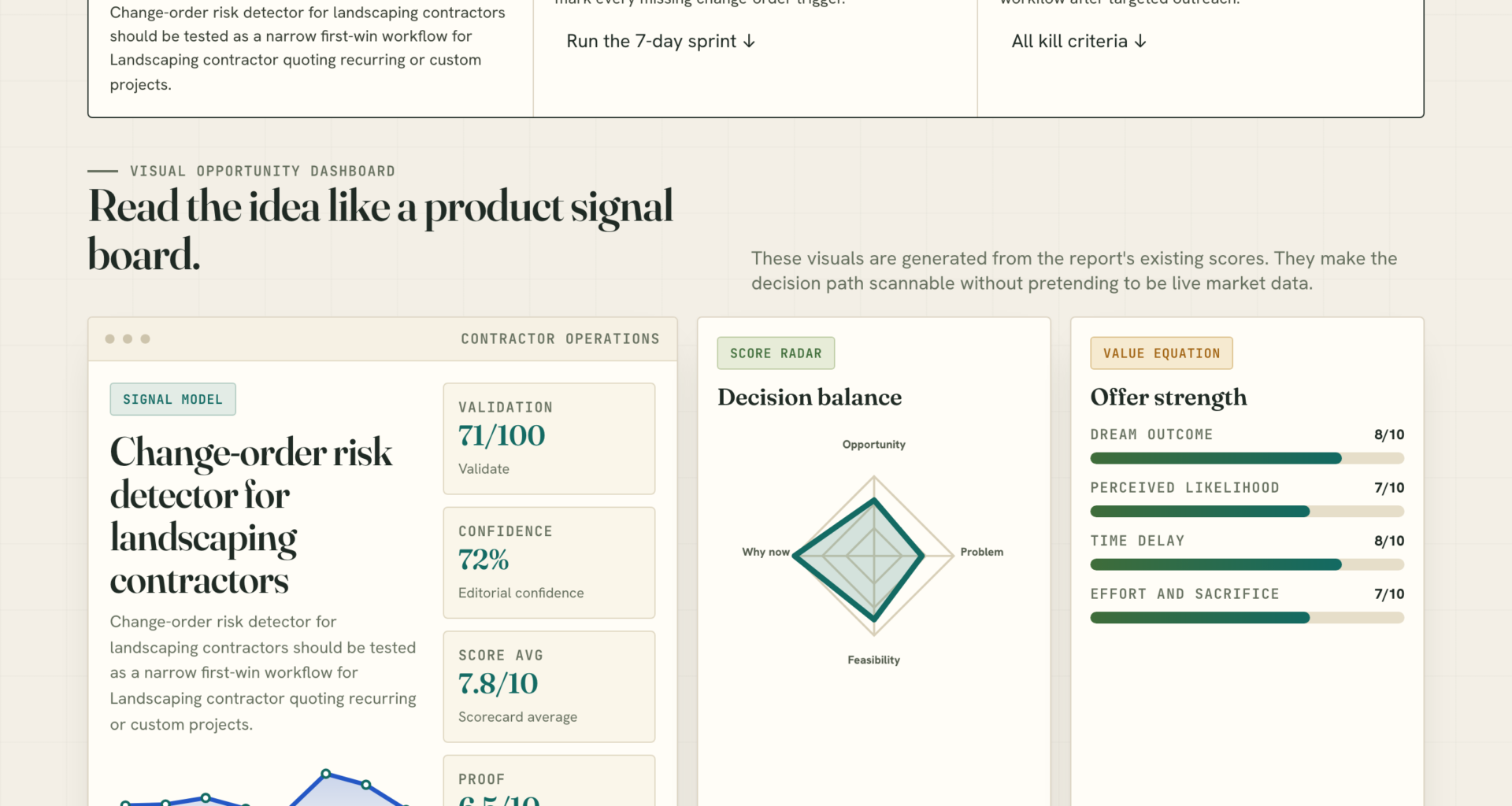

📊 Full opportunity report: Change-order risk detector for landscaping contractors on IdeaNavigator AI — validation score, market gap, and execution plan.

Get business pricing on monitors, keyboards and dev gear
- Business-only prices and quantity discounts
- Tax-exempt purchasing
- Multiple users, one account, clear invoices
TL;DR
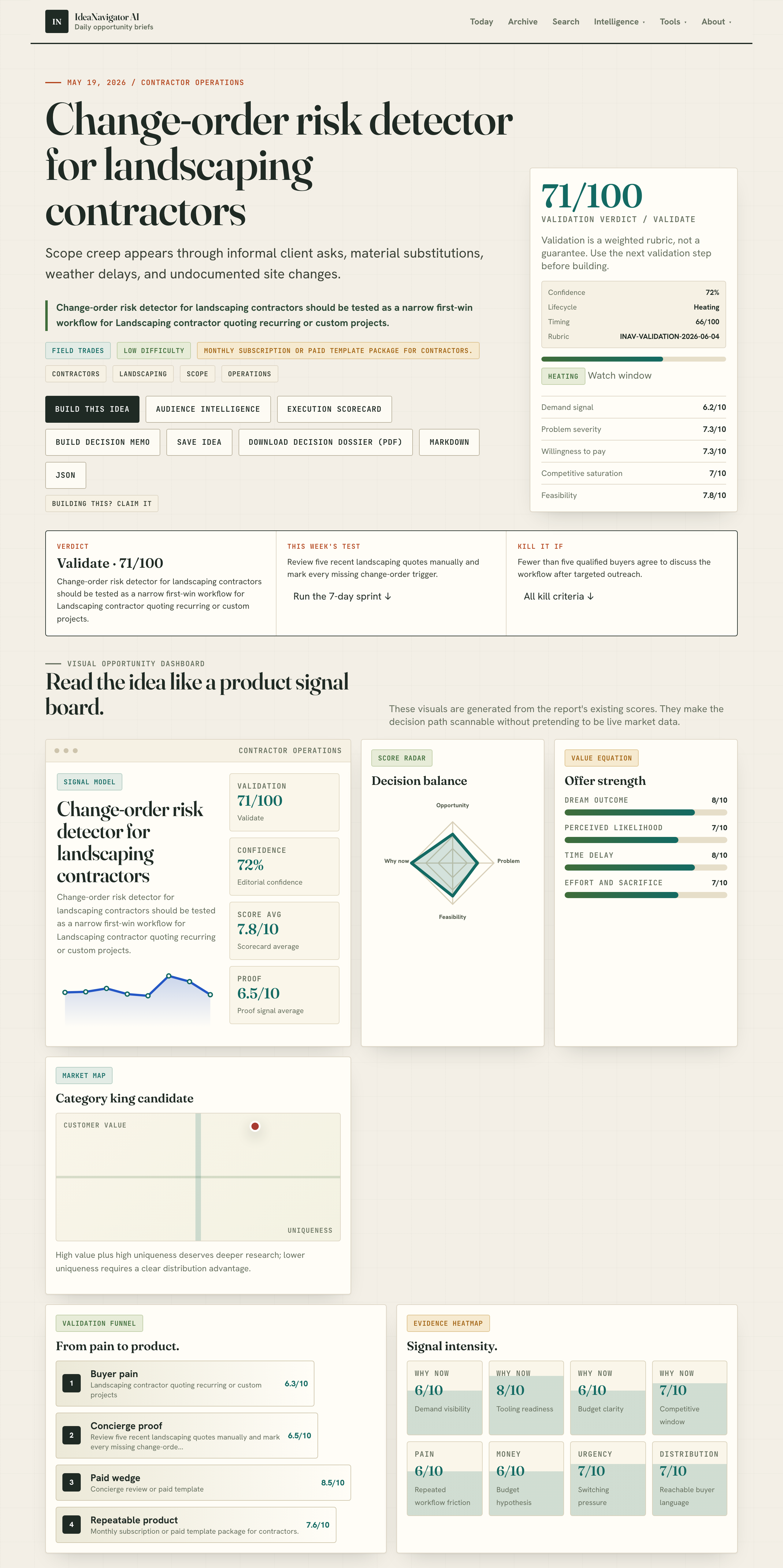
A proposed change-order risk detector for landscaping contractors is being tested as a workflow tool to flag scope creep risks during project quoting. It aims to help small contractors manage margins amid high uncertainty in labor and materials.
A change-order risk detector designed for landscaping contractors is being developed and tested as a targeted workflow tool to identify potential scope creep during project quoting.
The proposed tool aims to assist contractors in managing margin risks by flagging missing exclusions, change-order triggers, and approval language in quotes and project notes. This initiative is driven by the need for small contractors to better control margins amid ongoing uncertainty in labor costs, material prices, and scheduling delays.
The initial focus is on recurring or custom landscaping projects, where scope creep often occurs through informal client requests, material substitutions, weather delays, and undocumented site changes. The tool will be tested by reviewing five recent landscaping quotes manually and marking missing change-order triggers to validate its effectiveness.
Why This Change-Order Risk Detector Matters for Small Contractors
This development is significant because it addresses a critical pain point for small landscaping contractors—controlling project margins in an environment of high uncertainty. By proactively identifying scope creep risks during quoting, contractors can reduce unexpected costs, improve profitability, and strengthen client relationships. The tool’s success could lead to broader adoption in contractor operations, setting a new standard for project risk management in the industry.
Products Worth Considering

Logitech MX Master 4 for Mac

Samsung 27-Inch Odyssey G5 QHD Gaming Monitor (G51F)

DJI Mic Wireless Lavalier Microphone System with 2 Transmitters, 1 Receiver, and Charging Case
As an affiliate, we earn on qualifying purchases.
Landscape Contracting Market and Scope Creep Challenges
Small landscaping contractors face ongoing challenges related to scope creep, which can erode margins if not properly managed. Scope creep often results from informal client asks, substitutions, delays, and undocumented site changes, making it difficult to control project costs. Currently, many contractors rely on manual review of quotes, which is time-consuming and prone to oversight. The development of a dedicated risk detector aims to automate and improve this process, providing early alerts to potential issues before project commitments are finalized.
“The tool is designed to be a simple, effective way for contractors to spot potential scope creep before it impacts margins.”
— an anonymous researcher
Uncertainties Around Tool Effectiveness and Adoption
It is not yet clear how accurately the risk detector will identify scope creep triggers during real-world quoting, or how widely it will be adopted by small contractors. The validation process involves reviewing five recent quotes, but broader testing and user feedback are still needed to confirm its practical value and ease of use.
Next Steps for Testing and Industry Adoption
The next phase involves testing the workflow tool with a small group of contractors, analyzing its ability to flag missing change-order triggers reliably. If successful, the developers plan to release a subscription-based model or paid template package. Further validation and user feedback will determine whether the tool becomes a standard part of contractor quoting processes.
Key Questions
How does the change-order risk detector work?
The tool reviews quotes and project notes to identify missing exclusions, change-order triggers, and approval language, alerting contractors to potential scope creep risks before project approval.
Is this tool available for use now?
Currently, it is in the testing phase with a small group of contractors. A broader release is not yet available.
Will this tool help all types of landscaping projects?
The initial focus is on recurring and custom projects where scope creep is most common. Its effectiveness for other project types remains to be seen.
How much will the subscription or template cost?
Pricing details are still under development; the plan is to offer a monthly subscription or paid template package for contractors.
What are the main benefits for contractors?
The tool aims to improve margin control, reduce unexpected costs, and streamline the quoting process by flagging potential scope issues early.
Source: IdeaNavigator AI