

📊 Full opportunity report: Week Three — Foundation model vs Brownian motion. Kronos on five-minute BTC. on ThorstenMeyerAI.com — validation score, market gap, and execution plan.
TL;DR
A recent test comparing Kronos, a foundation model, with a Brownian motion baseline for 5-minute Bitcoin predictions found no statistically significant advantage for Kronos. The experiment aimed to determine if modern models outperform traditional assumptions in short-term crypto forecasting.
Recent testing shows that Kronos, an open-source foundation model for financial time series, does not outperform a traditional Brownian motion baseline in predicting 5-minute Bitcoin price movements.
Researchers conducted a rigorous offline comparison of Kronos-small, a foundation model trained on global exchange data, against a geometric Brownian motion model used as a baseline for short-term Bitcoin prediction. Using historical trade data from Polybot, which simulated trading over 497 instances, they assessed each model’s predictive accuracy through metrics such as Brier score, log-loss, and hypothetical profit and loss.
The results showed that Kronos’s predictive performance was statistically indistinguishable from Brownian motion on both the full sample and a strictly out-of-sample subset. Specifically, on the out-of-sample trades, the Brier scores for Kronos and Brownian were nearly identical, with a negligible difference of 0.0011, well within the margin of statistical noise. Consequently, the study concluded that, at least in this context, the modern foundation model does not offer a clear advantage over the traditional Brownian assumption for 5-minute BTC predictions.
Foundation model
vs Brownian motion.
Kronos on five-minute BTC.
all BTC · 5-min Up/Down markets
249 trades · statistically indistinguishable
signature of confident wrong predictions
the paradox · 60.7% vs 49.1% win rates
fairValuePUp(spot, openPrice, secondsLeftFrac, windowVol) formula. Matches scipy.stats.norm.cdf to three decimal places.(p_brownian, p_market, p_kronos, actual_outcome, P&L). Score on Brier + log-loss + hypothetical P&L. Sort chronologically · split into first/second half · report on both halves separately.docs/RESEARCH_PIPELINE.md. Any future candidate model gets a sibling directory in research/<model>/, reuses the same Brownian baseline, the same trade-log loader, the same OHLCV fetcher, the same metrics, the same out-of-sample split. Same gauntlet, different model, same discipline.
lower is better
lower is better
inside the noise band
docs/RESEARCH_PIPELINE.md. Publishing reproducible parameter recipes for strategies that might be marginally profitable encourages people to copy them with real money, and the prior on real-money outcomes when copying retail strategies is “they lose.” Publishing the methodology lets the next person test their own model honestly without inheriting any of mine.
By probabilistic standards · Kronos is a worse forecaster. By operational standards · Kronos is the better trader. Both interpretations are honest. Neither earns the model a place in Polybot. One of them might earn it a place, later, in TradingAgents.Thorsten Meyer AI · Week 3 · Foundation Model vs Brownian Motion
Implications for Short-Term Crypto Prediction Models
This finding is significant because it challenges the assumption that modern, learned models will automatically outperform traditional mathematical approximations like Brownian motion in high-frequency trading scenarios. For traders and developers, it suggests that sophisticated models may not always translate into better short-term forecasts, especially when market dynamics deviate from the assumptions embedded in the models. It underscores the importance of rigorous testing and validation before integrating advanced models into live trading systems.

Bitcoin Coin and Grey Divot Repair Tool with Removable Bitcoin Ball Marker
- Collector's Edition Design: Luxurious, meticulously crafted crypto symbol
- Versatile Uses: Multiple ways to enjoy and display
- Foldable Divot Tool: Spring-loaded, easy to open and close
As an affiliate, we earn on qualifying purchases.
As an affiliate, we earn on qualifying purchases.
Background on Model Testing in Crypto Markets
Over recent years, there has been a growing interest in applying machine learning and foundation models to financial markets, aiming to improve prediction accuracy and trading performance. Kronos, an open-source model trained on millions of candles from global exchanges, emerged as a promising candidate. Prior research has shown that traditional models like geometric Brownian motion, which assume independent, normally-distributed log returns, are often used as baselines due to their simplicity and theoretical foundations. However, whether these models can be surpassed by modern learning algorithms remains an open question. This latest test builds on two weeks of previous experiments where a simple bot using Brownian motion was evaluated against real market data, revealing that most “edges” found were artifacts rather than genuine predictive advantages.
“Our results show that, at least for 5-minute BTC predictions, the foundation model does not outperform the traditional Brownian baseline in a statistically significant way.”
— Thorsten Meyer, researcher behind the test
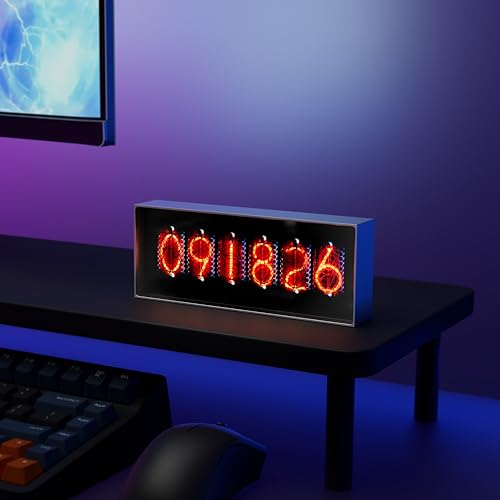
Electronic Display for Real-Time Cryptocurrency/Bitcoin/Stock Market Data, Time, Weather & Temperature, 164*28*65mm, Supports Image Upload and 30s Video Playback, App-Controlled, 960*360 Resolution
- Real-Time Data Display: Cryptocurrency, stock, time, weather updates
- Custom Image & Video Upload: Upload images and 30s videos
- App-Controlled Management: Control content and display modes
As an affiliate, we earn on qualifying purchases.
As an affiliate, we earn on qualifying purchases.
Limitations and Unanswered Questions in Model Performance
While the test was thorough, it is limited to the specific context of 5-minute BTC predictions and the particular models evaluated. It remains unclear whether different foundation models, larger training sets, or alternative configurations could yield different results. Additionally, market conditions and the nature of short-term volatility may influence model effectiveness, and these factors could change over time. The study does not address long-term predictive capabilities or performance in different assets or timeframes.

Trading Log Book: A Great Way To Organize Your Investments With This Trading Log By Keeping Your Stock Analysis Log, Records & Information All In One Notebook
As an affiliate, we earn on qualifying purchases.
As an affiliate, we earn on qualifying purchases.
Future Directions for Short-Term Crypto Forecasting
Further research is needed to explore whether other models, training data, or feature sets can outperform Brownian motion in short-term crypto prediction. Researchers may also examine different market conditions, asset classes, or longer prediction horizons. Additionally, integrating real-time data and adaptive learning techniques could provide new insights. For now, the results suggest caution in assuming that advanced models will automatically provide an edge in high-frequency crypto trading.

Prediction of univariate financial series: Between econometric and connectionist approaches
As an affiliate, we earn on qualifying purchases.
As an affiliate, we earn on qualifying purchases.
Key Questions
Does this mean foundation models are useless for crypto trading?
No, this specific test shows they do not outperform a simple Brownian motion baseline in 5-minute BTC predictions. Other models or longer-term strategies may still have value.
Could different model sizes or training data improve performance?
Potentially, but the current study used a specific size (24.7M parameters) and training data. Further experiments are needed to determine if larger or differently trained models can do better.
Is the result specific to Bitcoin or applicable to other assets?
This study focused on Bitcoin at 5-minute intervals. Results may differ for other assets or timeframes, requiring separate testing.
What does this imply for traders using machine learning models?
It suggests that relying solely on complex models without rigorous validation may not lead to better short-term predictions, especially in volatile markets like crypto.
Source: ThorstenMeyerAI.com