
Choosing the right automated software testing framework can significantly impact your development speed and software quality. The best frameworks balance ease of use, flexibility, and scalability, but often require tradeoffs between complexity and features. Jest and Cypress stand out as the top overall picks for their robust ecosystems and ease of integration, while Playwright offers unmatched cross-browser capabilities. However, selecting the perfect framework depends on your specific projects, team skills, and long-term goals. Continue reading for a detailed comparison that helps you make an informed choice.

Get business pricing on monitors, keyboards and dev gear
- Business-only prices and quantity discounts
- Tax-exempt purchasing
- Multiple users, one account, clear invoices
Key Takeaways
- The top frameworks excel in balancing ease of setup with powerful testing features, making them suitable for both small teams and large enterprises.
- Frameworks like Playwright and Cypress stand out for their ability to handle modern web app testing efficiently, but often come with steeper learning curves.
- Performance and scalability are critical factors; frameworks with modular architectures tend to support larger test suites more effectively.
- Ease of integration with CI/CD pipelines often separates beginner-friendly options from more complex, enterprise-grade solutions.
- Pricing and licensing models vary widely, influencing total cost of ownership—free, open-source tools dominate, but premium options offer advanced support.
| Automated Software Testing: From Zero to Secure Deploy: The Practical Guide to Mastering Jest, Cypress, TDD, and CI/CD to Eliminate Production Bugs and Boost Your Developer Career |  | Best Overall for Practical Mastery | Focus Areas: Jest, Cypress, TDD, CI/CD | Skill Level: Intermediate to advanced | Format: Practical guidebook | VIEW LATEST PRICE | See Our Full Breakdown |
| Unit Testing Principles, Practices, and Patterns: C# Examples |  | Best for C# Developers Focused on Reliable Automation | Focus: C# testing principles, patterns, mocking | Format: Book | Difficulty: Intermediate to advanced | VIEW LATEST PRICE | See Our Full Breakdown |
| Hands-On Automated Testing with Playwright: Create Fast, Reliable Tests for Modern Web Apps |  | Best for Modern Web App Testing | Framework Focus: Playwright | Application Type: Web apps | Coverage: Speed, scalability, cross-browser testing | VIEW LATEST PRICE | See Our Full Breakdown |
| Automated Software Testing: Foundations, Applications and Challenges (Services and Business Process Reengineering) |  | Best for Organizational and Process-Level Insights | Focus: Foundations, applications, organizational challenges | Application Area: Services, business process reengineering | Depth: Strategic and technical | VIEW LATEST PRICE | See Our Full Breakdown |
| API Testing and Development with Postman: A practical guide to creating, testing, and managing APIs for automated software testing |  | Best for API-Centric Automation | Focus: API testing and management | Tool: Postman | Application: API automation, microservices | VIEW LATEST PRICE | See Our Full Breakdown |
| Design Patterns for High-Quality Automated Tests: Clean Code for Bulletproof Tests |  | Best for Developers Focused on Test Maintainability and Code Quality | Target Audience: Experienced testers and developers | Focus Area: Test design patterns and clean code | Difficulty Level: Advanced | VIEW LATEST PRICE | See Our Full Breakdown |
| Software Testing Unlocked – A Beginner’s Guide to QA & Automation: 20-Step Journey from Beginner to Your First QA Job |  | Best for Absolute Beginners Transitioning into QA and Automation | Target Audience: Beginners and career switchers | Focus Area: QA fundamentals and entry-level automation | Difficulty Level: Beginner | VIEW LATEST PRICE | See Our Full Breakdown |
| AI-Powered Software Testing: Practical Techniques for Quality Assurance with Generative AI | 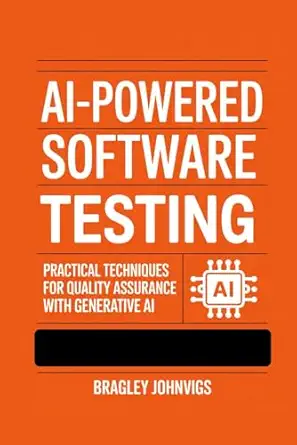 | Best for Innovators Exploring AI-Driven Automation Techniques | Target Audience: Automation teams exploring AI | Focus Area: AI-driven testing techniques | Difficulty Level: Intermediate to advanced | VIEW LATEST PRICE | See Our Full Breakdown |
| Guide to Test Automation Architecture: A roadmap for building sustainable test automation frameworks for modern software (English Edition) |  | Best for Strategic Architects Building Maintainable Automation Frameworks | Target Audience: Test architects and senior QA managers | Focus Area: Test architecture and sustainability | Difficulty Level: Advanced | VIEW LATEST PRICE | See Our Full Breakdown |
More Details on Our Top Picks
Automated Software Testing: From Zero to Secure Deploy: The Practical Guide to Mastering Jest, Cypress, TDD, and CI/CD to Eliminate Production Bugs and Boost Your Developer Career
This comprehensive guide stands out for its hands-on approach to integrating popular testing tools like Jest and Cypress within CI/CD pipelines. Unlike more theoretical resources, it emphasizes real-world application, making it ideal for developers seeking immediate results. The book balances foundational concepts with advanced practices, but its dense content may challenge newcomers. Its focus on TDD and continuous integration offers a clear path to more reliable deployments, though it requires a solid programming background to fully benefit. Compared to products like Hands-On Automated Testing with Playwright, it covers a broader spectrum of tools and practices, making it better suited for those wanting an end-to-end testing strategy.
Pros:- Covers popular frameworks (Jest, Cypress) with real-world examples
- Focuses on integrating testing into CI/CD pipelines for faster deployment
- Emphasizes practical skills that directly improve production stability
- Helps elevate developer career by mastering modern testing workflows
Cons:- Requires prior programming and basic DevOps knowledge
- Can be dense and overwhelming for complete beginners
Best for: Intermediate to advanced developers looking to deepen their practical knowledge of automated testing frameworks and CI/CD integration.
Not ideal for: Absolute beginners or testers primarily interested in GUI or manual testing methods, as the content assumes coding proficiency and DevOps familiarity.
- Focus Areas:Jest, Cypress, TDD, CI/CD
- Skill Level:Intermediate to advanced
- Format:Practical guidebook
- Coverage:Test automation, deployment pipelines
- Target Audience:Software developers and DevOps engineers
Bottom line: This guide is ideal for developers who want a comprehensive, practice-oriented approach to automated testing and deployment workflows.
Unit Testing Principles, Practices, and Patterns: C# Examples
This book excels in providing detailed principles, patterns, and practical C# examples for effective unit and integration testing. Compared with Hands-On Automated Testing with Playwright, which emphasizes web UI tests, it offers deeper insights into testing architecture at the code level. While its focus on C# makes it a perfect fit for .NET teams, this specialization can be a drawback for teams working with other languages or frameworks. It emphasizes best practices and testing patterns that lead to reliable automation, but its technical depth may be daunting for absolute beginners. Overall, it’s a strong choice for teams seeking structured, pattern-based testing strategies for enterprise-level C# applications.
Pros:- In-depth coverage of unit testing, mocking, and integration testing in C#
- Includes practical, real-world examples for reliable automation
- Teaches essential testing patterns and best practices for enterprise quality
- Helps improve test maintainability and robustness
Cons:- Too technical for complete beginners without prior testing experience
- Limited to C#; less applicable for teams using other languages
Best for: C# developers and .NET teams aiming to implement robust, pattern-driven automated tests in their projects.
Not ideal for: Teams working primarily with JavaScript, Python, or mobile platforms, as the content is narrowly focused on C# and .NET frameworks.
- Focus:C# testing principles, patterns, mocking
- Format:Book
- Difficulty:Intermediate to advanced
- Application:Unit and integration testing in C#
- Target Audience:Software engineers and QA specialists working with C#
Bottom line: This resource is best suited for C# developers seeking to craft reliable, pattern-based automated tests within complex enterprise environments.
Hands-On Automated Testing with Playwright: Create Fast, Reliable Tests for Modern Web Apps
This book makes a strong case for using Playwright to build scalable, reliable web tests with its practical, example-driven approach. Compared to the more comprehensive but broader guide Automated Software Testing: From Zero to Secure Deploy, this pick zeroes in on web-specific testing, making it ideal for frontend teams. Its focus on performance optimization and cross-browser testing ensures fast, dependable results, though it doesn’t address mobile or desktop app testing. The requirement of basic programming knowledge makes it less suitable for complete beginners, but it’s perfect for teams that want quick, effective web automation with cutting-edge tools.
Pros:- Practical, example-based approach to Playwright testing
- Focus on speed, reliability, and cross-browser compatibility
- Helps build scalable tests suited for complex web apps
- Emphasizes performance tuning and test stability
Cons:- Limited to web application testing, no mobile or desktop focus
- Assumes some programming experience, limiting accessibility for absolute beginners
Best for: Web development teams seeking to implement scalable, high-performance testing for modern web applications using Playwright.
Not ideal for: Teams needing mobile or desktop testing support or those new to automation without programming background.
- Framework Focus:Playwright
- Application Type:Web apps
- Coverage:Speed, scalability, cross-browser testing
- Skill Level:Intermediate
- Format:Hands-on guide
Bottom line: This book is ideal for front-end developers and QA teams who want to leverage Playwright for fast, reliable web testing in modern development environments.
Automated Software Testing: Foundations, Applications and Challenges (Services and Business Process Reengineering)
This book provides a broad perspective on the theoretical foundations and practical challenges of automated testing within organizational contexts. Unlike more tool-specific guides like Hands-On Automated Testing with Playwright, it emphasizes the strategic aspects, such as integrating testing into business process reengineering efforts. Its coverage of challenges and applications makes it valuable for organizations planning large-scale automation, but it might lack the detailed, step-by-step implementation guidance that developers prefer. Technical depth and focus on services may overwhelm beginners, but it’s highly relevant for managers and QA leads aiming to align testing with business goals.
Pros:- Covers foundational concepts and strategic applications
- Focuses on challenges faced during automation in organizational contexts
- Bridges technical testing with business process reengineering
- Helps align testing efforts with organizational goals
Cons:- Lacks detailed, practical implementation steps
- Can be too abstract or technical for beginners or small teams
Best for: QA managers, business analysts, and organizational leaders involved in large-scale testing strategy and process automation.
Not ideal for: Individual developers or small teams looking for hands-on, tool-specific tutorials, as the book leans more towards strategic and organizational insights.
- Focus:Foundations, applications, organizational challenges
- Application Area:Services, business process reengineering
- Depth:Strategic and technical
- Target Audience:QA managers, business analysts, organizational leaders
Bottom line: This book suits organizations and leaders seeking to integrate automated testing into broader business and process improvement efforts.
API Testing and Development with Postman: A practical guide to creating, testing, and managing APIs for automated software testing
This guide makes API testing approachable for automation teams, focusing on creating, executing, and managing API tests with Postman. Compared to the broader test automation frameworks like those covered in Automated Software Testing: From Zero to Secure Deploy, this book specializes in API testing, which is crucial for backend microservices and integration-heavy architectures. Its practical examples help teams improve test reliability and manage complex API workflows, but it may fall short for teams seeking in-depth UI automation or full-stack testing. It’s a perfect pick for API-focused projects or teams integrating API tests into CI pipelines, though it relies heavily on Postman’s specific tools and ecosystem.
Pros:- Clear, practical instructions for creating and managing API tests
- Helps automate API workflows within CI/CD pipelines
- Enhances test reliability for microservices architectures
- Leverages familiar Postman environment for ease of use
Cons:- Limited to API testing; does not cover UI or mobile testing
- Depends on Postman ecosystem, which may limit flexibility
Best for: Backend developers, QA engineers, and DevOps teams focused on API testing and automation with Postman.
Not ideal for: Teams seeking comprehensive UI or end-to-end testing frameworks, as this resource concentrates solely on API testing.
- Focus:API testing and management
- Tool:Postman
- Application:API automation, microservices
- Skill Level:Intermediate
- Format:Practical guide
Bottom line: This guide is highly recommended for teams prioritizing API automation and integration, especially within microservice environments using Postman.
Design Patterns for High-Quality Automated Tests: Clean Code for Bulletproof Tests
This book stands out for its focus on crafting maintainable and robust automated tests through well-defined design patterns, making it ideal for teams aiming to improve code quality. Compared to the more practical and beginner-friendly Software Testing Unlocked, this resource dives deep into architecture and clean coding principles, which can be overwhelming for newcomers but invaluable for experienced testers seeking durable test suites. It emphasizes best practices that reduce long-term maintenance costs, though it may lack straightforward implementation guidance for those new to automation frameworks. The detailed approach helps prevent flaky tests and technical debt, but it requires a solid foundation in testing concepts and some coding experience.
Pros:- Focuses on clean, readable, and reusable test code
- Provides practical design patterns for test architecture
- Helps reduce technical debt and flaky tests
- Emphasizes long-term maintainability
Cons:- Requires prior knowledge of testing and coding
- Less emphasis on practical implementation or step-by-step setup
Best for: Test automation engineers and developers who want to write high-quality, maintainable tests with clear design patterns.
Not ideal for: Beginners or those seeking a quick-start guide, as it assumes familiarity with testing fundamentals and coding skills.
- Target Audience:Experienced testers and developers
- Focus Area:Test design patterns and clean code
- Difficulty Level:Advanced
- Content Type:Theoretical with practical examples
Bottom line: This book is best suited for experienced automation testers aiming to elevate code quality and test robustness.
Software Testing Unlocked – A Beginner’s Guide to QA & Automation: 20-Step Journey from Beginner to Your First QA Job
This guide makes the most sense for newcomers seeking a structured, step-by-step approach to entering the QA field. Compared with the more technical Guide to Test Automation Architecture, which assumes prior knowledge and focuses on long-term strategies, this book is tailored to absolute beginners, covering both manual testing basics and foundational automation concepts. Its 20-step roadmap simplifies complex topics, but it may lack depth in advanced automation frameworks or coding exercises, which could limit growth for those looking to develop advanced skills quickly. This resource is perfect for those starting from scratch but less suitable for experienced testers seeking detailed technical guidance.
Pros:- Comprehensive coverage of manual and automated testing basics
- Structured 20-step learning path simplifies complex topics
- Designed specifically for absolute beginners
- Helpful for career transition into QA
Cons:- Lacks depth on advanced automation frameworks
- No practical coding exercises included
Best for: Individuals new to software testing who want a clear, beginner-friendly roadmap to start their QA careers.
Not ideal for: Experienced testers or automation engineers looking for in-depth technical frameworks or advanced strategies.
- Target Audience:Beginners and career switchers
- Focus Area:QA fundamentals and entry-level automation
- Difficulty Level:Beginner
- Content Type:Step-by-step guide
Bottom line: This book serves as an excellent starting point for newcomers eager to understand QA fundamentals and take their first steps into automation.
AI-Powered Software Testing: Practical Techniques for Quality Assurance with Generative AI
This offering appeals to teams interested in integrating artificial intelligence into their testing processes, providing practical techniques that leverage generative AI to optimize test creation and defect detection. Unlike the more strategic Guide to Test Automation Architecture, which emphasizes sustainable frameworks, this book focuses on applying cutting-edge AI tools for immediate testing gains. Its practical approach makes it suitable for those already familiar with basic automation who want to experiment with AI enhancements, but it may fall short for organizations needing a comprehensive automation architecture. The reliance on AI tools and techniques could also require additional technical expertise and resources.
Pros:- Introduces innovative AI techniques for test automation
- Offers practical guidance for implementing AI in testing
- Enhances test coverage and defect detection with AI tools
- Keeps pace with emerging automation trends
Cons:- Requires familiarity with AI concepts and tools
- Limited coverage of long-term automation architecture
Best for: Test teams eager to adopt AI-powered automation and improve testing efficiency with generative AI techniques.
Not ideal for: Traditional automation teams without AI experience or those seeking foundational testing principles without AI focus.
- Target Audience:Automation teams exploring AI
- Focus Area:AI-driven testing techniques
- Difficulty Level:Intermediate to advanced
- Content Type:Practical techniques and case studies
Bottom line: This book is ideal for teams looking to incorporate AI into their testing workflows to boost efficiency and innovation.
Guide to Test Automation Architecture: A roadmap for building sustainable test automation frameworks for modern software (English Edition)
This book provides a clear pathway for developing sustainable and scalable test automation frameworks, making it highly suitable for teams focused on long-term effectiveness. Compared with the more beginner-oriented Software Testing Unlocked, it emphasizes architectural decisions, best practices, and strategies aligned with modern development methodologies. Its focus on maintainability and efficiency makes it less suitable for those without prior testing experience or those looking for quick implementation guidance. While it covers modern practices, the absence of practical code examples might challenge readers without a solid technical background, requiring them to bridge theory with hands-on application.
Pros:- Provides a comprehensive roadmap for test architecture
- Focuses on sustainability and long-term maintainability
- Addresses modern software development practices
- Helps prevent technical debt in automation projects
Cons:- Requires prior knowledge of testing concepts
- No practical code examples included
Best for: Test architects and senior QA leads aiming to design scalable, maintainable automation frameworks aligned with modern software practices.
Not ideal for: Beginners or teams lacking prior testing knowledge, as it assumes familiarity with foundational concepts and architecture principles.
- Target Audience:Test architects and senior QA managers
- Focus Area:Test architecture and sustainability
- Difficulty Level:Advanced
- Content Type:Strategic guidance and best practices
Bottom line: This roadmap is perfect for experienced teams seeking to build durable, scalable automation frameworks aligned with current development trends.

How We Picked
Our evaluation focused on several key criteria: performance under large test loads, ease of setup, flexibility for different testing needs, integration with development workflows, and community support. We prioritized tools that are widely adopted in the industry and have proven reliability in real-world scenarios. The rankings reflect a balance between feature richness and usability, ensuring that both small teams and large organizations find suitable options. We also considered the long-term maintainability of frameworks and their ability to adapt to evolving tech stacks.Factors to Consider When Choosing Automated Software Testing Frameworks
Choosing the right automated testing framework involves understanding your project needs, team skills, and future growth plans. Here are some critical factors to consider to make an informed decision that aligns with your goals.Compatibility and Ecosystem Support
Ensure the framework integrates seamlessly with your existing development environment, programming languages, and CI/CD tools. A vibrant ecosystem with plugins, community support, and frequent updates reduces maintenance overhead and troubleshooting time. For example, frameworks like Cypress and Playwright have extensive plugin ecosystems that simplify complex testing scenarios.
Ease of Use and Learning Curve
Consider your team’s familiarity with the framework’s language and architecture. A steeper learning curve can delay project timelines, especially if your team is new to automation. For beginners, frameworks with clear documentation and simple APIs will accelerate adoption and improve test reliability.
Scalability and Performance
Assess whether the framework can handle the scale of your testing needs. Large projects require frameworks that support parallel execution, distributed testing, and fast feedback cycles. Some frameworks optimize for speed and concurrency, reducing test suite runtimes in continuous deployment pipelines.
Flexibility and Extensibility
Look for frameworks that support a variety of test types—unit, integration, UI, and API testing—and allow customization. Extensibility through plugins or scripting enables tailoring the framework to unique project requirements, reducing the need for additional tools.
Cost and Licensing
Balance your budget against the feature set. Open-source frameworks often provide great value but may lack dedicated support, whereas commercial tools can offer professional assistance and advanced features at a premium. Think about the total cost of ownership, including training, maintenance, and support.
Frequently Asked Questions
How do I choose a testing framework that scales with my team?
Scalability depends on the framework’s ability to handle large test suites efficiently through parallel execution and distributed testing. Look for tools that support cloud-based test farms or grid integrations, which can distribute loads across multiple machines. Also, consider how well the framework integrates into your CI/CD pipeline to ensure tests run smoothly as your team and codebase grow.
Is it better to pick a popular open-source framework or a paid enterprise option?
Open-source frameworks like Cypress and Playwright offer flexibility and community support, making them ideal for many projects. However, paid enterprise solutions often include dedicated support, training, and advanced features that can reduce long-term maintenance costs. Your choice should align with your project’s complexity, available support infrastructure, and budget constraints.
What should I prioritize if my team is new to automation?
Ease of use and clear documentation should be your primary focus. Frameworks designed with beginners in mind typically feature simple APIs, extensive tutorials, and active communities. Starting with a user-friendly tool minimizes onboarding time and helps your team produce reliable tests faster, building confidence in automation efforts.
How important is integration with CI/CD pipelines in selecting a testing framework?
Seamless integration with CI/CD pipelines is crucial for maintaining rapid feedback loops and automating deployment processes. A framework that supports popular CI/CD tools and provides straightforward configuration reduces manual effort and minimizes pipeline failures. This integration directly impacts the efficiency of your testing process and overall software delivery speed.
When should I consider investing in a premium testing framework?
If your project involves complex testing needs, large-scale test automation, or requires dedicated support, investing in a premium framework can pay off. These solutions often offer advanced features, better scalability, and professional support, which can save time and reduce risks in mission-critical environments. For smaller projects or teams just starting out, open-source options might suffice initially.
Conclusion
For organizations seeking a reliable, all-around solution, Jest or Cypress stand out as the best overall options due to their balance of features and ease of use. Teams prioritizing value should consider open-source tools like Playwright for their flexibility and community support. Enterprises with complex needs and resources may prefer premium options that offer dedicated support and advanced capabilities. Beginners and smaller teams will find frameworks with simpler APIs and better documentation more suitable, helping them get started quickly. Ultimately, aligning your choice with your project scale, technical expertise, and long-term goals will lead to the best results.
Halloween Picks
halloween
As an affiliate, we earn on qualifying purchases.