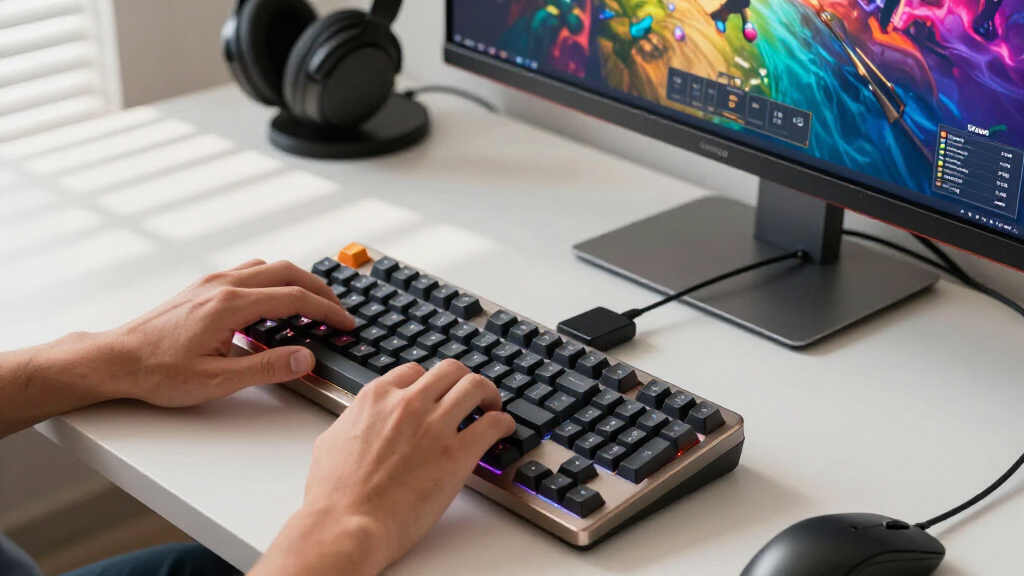

🔍 Read the full analysis: 9 Mechanical Keyboards For Gaming Performance Without A Wired Setup on ThorstenMeyerAI.com

Get business pricing on monitors, keyboards and dev gear
- Business-only prices and quantity discounts
- Tax-exempt purchasing
- Multiple users, one account, clear invoices
TL;DR
ThorstenMeyerAI.com presents nine mechanical keyboards for people seeking gaming performance without a wired setup, weighing wireless options against typing comfort and flexibility. Its source highlights the AULA F75 Pro, Logitech MX Mechanical, Turtle Beach Vulcan II XP Air and Redragon K671, but does not provide a complete list of nine models or detailed specifications for each.
ThorstenMeyerAI.com has published a guide to nine mechanical keyboards aimed at players who want to game without a wired connection, comparing wireless convenience with responsiveness, typing feel and everyday usability. The supplied material names four models but does not identify all nine picks or provide enough model-by-model data to verify the complete ranking.
The source calls the AULA F75 Pro its best overall choice, citing tri-mode connectivity—2.4GHz, Bluetooth and wired—and sound-dampening construction. It describes the Turtle Beach Vulcan II XP Air as a gaming-focused option with low-latency wireless performance. The Logitech MX Mechanical is recommended for quieter shared environments, with tactile switches, while the Redragon K671 is presented as a budget-oriented hot-swappable board.
ThorstenMeyerAI.com says it evaluated build quality, connection stability, switch performance, acoustic behavior and ergonomics. The guide favors boards it considers versatile for both work and gaming, while also weighing customization and longer-term value. These are the source’s selection criteria and assessments; the material provided does not include independent test results or measured latency, battery-life figures, prices or a testing protocol.
The guide argues that the connection type should match the use case. It identifies 2.4GHz dongles as preferable for gaming responsiveness and Bluetooth as useful for connecting to multiple devices. It also discusses switch types, hot-swappable sockets, keyboard layouts and software support. Those general comparisons do not establish how each of the nine models performs in practice.
The 9 picks
- 1
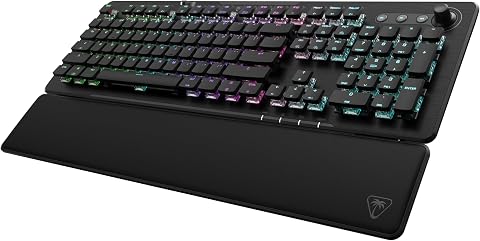 Turtle Beach Vulcan II XP Air Wireless Mechanical Gaming KeyboardView on Amazon →
- 2
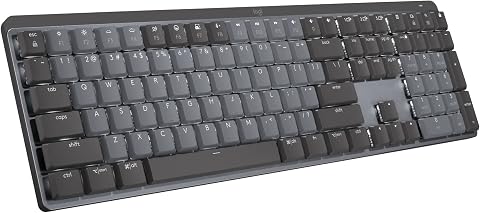 Logitech MX Mechanical Wireless Illuminated Keyboard, Tactile Quiet, GraphiteView on Amazon →
- 3
 Keychron V6 Max Wireless QMK Mechanical KeyboardView on Amazon →
- 4
 KEMOVE K94 Wireless Mechanical KeyboardView on Amazon →
- 5
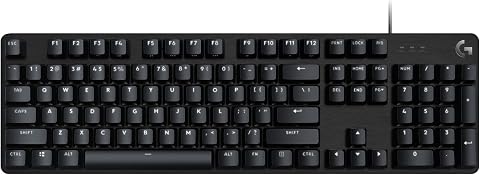 Logitech G413 SE Full-Size Mechanical Gaming KeyboardView on Amazon →
- 6
 AULA F75 75% Wireless Mechanical Keyboard, White and BrownView on Amazon →
- 7
 AULA F75 Pro 75% Tri-Mode Wireless Mechanical KeyboardView on Amazon →
- 8
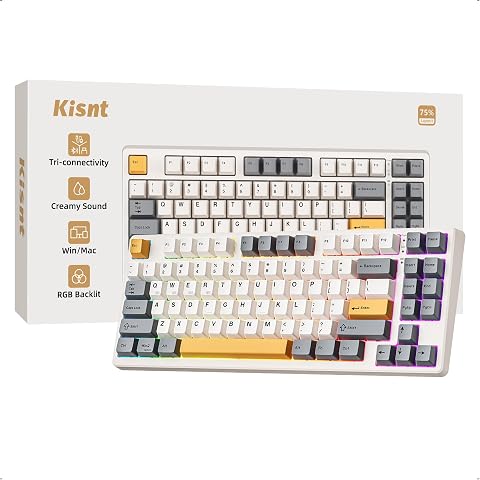 Kisnt KN85 Wireless Mechanical Gaming Keyboard, 75% Layout with RGB Backlit,…View on Amazon →
- 9
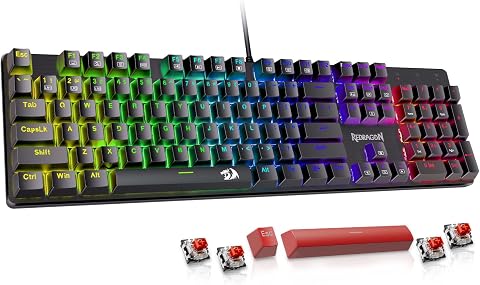 Redragon K671 Wired Mechanical Gaming Keyboard with Hot-Swappable Red SwitchesView on Amazon →
Wireless Choices Shape Gaming Setups
Wireless keyboards can reduce cable clutter and give players more flexibility in desk setup, but the guide highlights a practical tradeoff: convenience alone does not establish gaming performance. A dedicated 2.4GHz connection may better suit play where responsiveness matters, while Bluetooth may be more useful for switching between a computer and other devices. Buyers need to check which modes a specific model supports rather than assume every wireless keyboard offers both.
The recommendations also show why a gaming keyboard may need to serve more than one purpose. A compact layout can leave more room for mouse movement, but removing keys can make work tasks less convenient. Switch feel and sound matter in shared spaces, and hot-swappable sockets can let owners change switches instead of replacing the board. The source offers a decision framework, but its incomplete model list makes the specific nine-way comparison difficult to assess.
Products Worth Considering

Logitech MX Mechanical Wireless Illuminated Keyboard, Tactile Quiet, Graphite

Logitech MX Keys S Combo Wireless Keyboard and Mouse, Graphite

Apple AirPods Pro 3 Wireless Earbuds with Active Noise Cancellation
As an affiliate, we earn on qualifying purchases.
The Guide’s Selection Criteria
The source frames its rankings around versatility, giving preference to keyboards intended for both gaming and typing rather than single-purpose devices. It says acoustic performance and ergonomics affected its choices alongside build quality, connectivity and switch behavior. The supplied text does not state when the guide was published, whether products were tested in-house, or how the rankings were scored.
It also contrasts linear, tactile and clicky switches: linear switches have a smooth press, tactile switches provide a bump, and clicky switches add audible feedback. Its layout overview distinguishes full-size boards, which retain a number pad, from 75% layouts that keep function and arrow keys in a smaller footprint and 60% layouts that remove more keys. These are general descriptions, not claims that a particular layout or switch is best for every player.
For customization, the guide distinguishes open firmware options such as QMK/VIA from proprietary software used by brands including Logitech and Razer. It says hot-swapping can allow switches to be replaced without soldering. The provided excerpt ends during its software discussion, so it does not supply the full buying guide or all nine product entries.
“The AULA F75 Pro stands out as the best overall pick for its versatile tri-mode connectivity and sound-dampening construction.”
— ThorstenMeyerAI.com
Missing Models and Test Data
The supplied source material does not name five of the nine promised keyboards, nor does it provide a complete ranking, prices, battery-life figures, measured latency or detailed specifications for the named models. It is also unclear whether the products were tested directly or assessed using manufacturer information and other sources. Readers should treat descriptions such as “low-latency” and “best overall” as the guide’s judgments, not independently verified findings.
The source’s general statement that 2.4GHz models tend to offer better power efficiency than Bluetooth models is not accompanied by model-specific measurements or a testing window. Actual battery life can vary with lighting, usage and connection mode, but the supplied text does not quantify those factors. The excerpt also does not establish whether each keyboard can operate wirelessly while gaming or which features require software running on a computer.
Verify Each Model Before Buying
The supplied material gives no publication date, update schedule or announced follow-up. Before relying on the list as a complete nine-product comparison, readers would need the full guide, including the missing five models and product-level specifications. For any purchase, check current manufacturer details for supported connection modes, layout, switch type, hot-swapping, software compatibility and battery information.
Those details matter because the source’s recommendations depend on use: competitive players may prioritize a 2.4GHz receiver, while people switching between devices may value Bluetooth. Until the full entries and testing methods are available, the named picks can be understood as starting points rather than a verified ranking of nine keyboards.
Key Questions
Which keyboard does the guide name as its best overall pick?
ThorstenMeyerAI.com names the AULA F75 Pro, citing tri-mode connectivity and sound-dampening construction. The supplied material does not include independent measurements supporting the ranking.
Which model is aimed at competitive gaming?
The source highlights the Turtle Beach Vulcan II XP Air for what it describes as low-latency wireless performance. It does not provide a latency figure or testing method.
Does the source provide all nine keyboard recommendations?
No. The supplied text names the AULA F75 Pro, Logitech MX Mechanical, Turtle Beach Vulcan II XP Air and Redragon K671, but does not identify the other five models.
Should wireless gaming keyboards use Bluetooth or 2.4GHz?
The guide says 2.4GHz is generally preferable when gaming responsiveness is the priority, while Bluetooth can help with multi-device use. Check the individual keyboard’s supported modes and performance details before buying.
Source: ThorstenMeyerAI.com