

The best code review resources in 2026 split into two camps: practical guides for humans reviewing code and systems for reviewing AI-generated code, and the right pick depends entirely on which problem dominates your pull request queue. My best overall pick is Unclogging the PR Queue, because it tackles the bottleneck most engineering teams actually face — slow, blocked reviews — with concrete automation strategies. Two other standouts: Code Review for AI-Generated Code is the strongest choice if assistants like Copilot or Claude are writing a growing share of your codebase, and Looks Good To Me is the best purely human-focused option for teams that want more constructive review culture rather than more tooling. The core tradeoff across this category is depth versus workflow: books that teach review judgment rarely fix process bottlenecks, and books that automate reviews rarely improve reviewer skill. Keep reading for the full breakdown of which option fits your team.

Get business pricing on monitors, keyboards and dev gear
- Business-only prices and quantity discounts
- Tax-exempt purchasing
- Multiple users, one account, clear invoices
Key Takeaways
- The lineup splits cleanly into three approaches — human review culture (Looks Good To Me, My Code Review), AI-code verification (Code Review for AI-Generated Code, The Solo Developer’s AI Code Review Guide), and automation/workflow (Unclogging the PR Queue, the two Claude Code guides) — and picking the wrong approach wastes money even if the book is excellent.
- Unclogging the PR Queue ranked best overall because it targets the most expensive failure mode: blocked pull requests, which no amount of reviewer skill alone solves.
- The two Claude Code titles overlap heavily; the hands-on workflow guide serves practitioners while the 2.0 edition suits teams evaluating broader AI adoption.
- CodeQL for Secure and Efficient Software Analysis is the most technical pick and only makes sense for teams with security-analysis requirements — most small teams should skip it.
- Solo developers were poorly served by traditional code review advice until The Solo Developer’s AI Code Review Guide, which is the only entry written for people with no second reviewer.
- AI-Augmented Software Engineering predicts where review is heading but offers the least immediately actionable material, which is why it sits lower despite being well written.
| Looks Good To Me: Constructive Code Reviews |  | Best for Human Review Culture | Format: Book (print/ebook) | Primary Focus: Human code review practices | Target Audience: Developers and team leads | VIEW LATEST PRICE | See Our Full Breakdown |
| Code Review for AI-Generated Code: A Practical Review System for Bugs, Security, Architecture, Tests, Dependencies, and Engineering Control |  | Best for AI-Assisted Teams | Format: Book (ebook/print) | Primary Focus: Reviewing AI-generated code | Review Domains: Bugs, security, architecture, tests, dependencies, engineering controls | VIEW LATEST PRICE | See Our Full Breakdown |
| Claude Code 2.0 for Developers: Automate Your Coding, Debugging, and Documentation with AI-Driven Tools for Maximum Efficiency |  | Best Tool-Specific Workflow Guide | Format: Book (ebook/print) | Primary Focus: Claude Code 2.0 workflows | Core Topics: Automated coding, debugging, documentation, code review, productivity | VIEW LATEST PRICE | See Our Full Breakdown |
| CodeQL for Secure and Efficient Software Analysis: The Complete Guide for Developers and Engineers |  | Best for Security-Driven Analysis | Format: Book (ebook/print) | Primary Focus: CodeQL static analysis | Core Topics: Security analysis, code queries, performance, best practices | VIEW LATEST PRICE | See Our Full Breakdown |
| Unclogging the PR Queue: How Engineering Leads Use AI to Automate Code Reviews, Eliminate Pull Request Bottlenecks, and Prevent Code Slop | 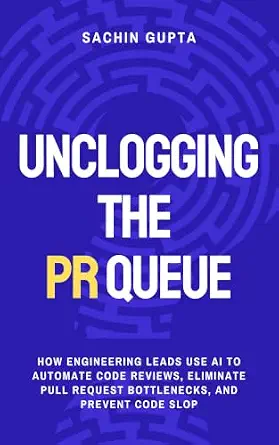 | Best for Engineering Managers | Format: Book (ebook/print) | Primary Focus: AI-automated code review processes | Core Topics: PR bottleneck elimination, review automation, code slop prevention, workflow efficiency | VIEW LATEST PRICE | See Our Full Breakdown |
| AI-Augmented Software Engineering: Coding Assistants, LLM-Driven Code Review, Automated Testing, and the Future Developer Workflow |  | Best Big-Picture Read | Format: Book (digital) | Topic Focus: AI in software engineering, LLM-driven code review, automated testing | Audience Level: Intermediate to advanced | VIEW LATEST PRICE | See Our Full Breakdown |
| My Code Review: A Practical Guide to Code Quality |  | Best for Team Culture | Format: Book (digital) | Topic Focus: Code review process and code quality best practices | Audience Level: Beginner to intermediate | VIEW LATEST PRICE | See Our Full Breakdown |
| Claude Code for Software Development: Hands-On Guide to AI Coding Workflows, Code Review, Debugging, Testing, and Developer Productivity |  | Best Hands-On AI Guide | Format: Book (digital) | Topic Focus: Claude Code workflows: review, debugging, testing, productivity | Audience Level: Intermediate to advanced | VIEW LATEST PRICE | See Our Full Breakdown |
| The Solo Developer’s AI Code Review Guide: Catch What AI Coding Assistants Miss — Bugs, Security Issues, and Technical Debt |  | Best for Solo Developers | Format: Book (digital) | Topic Focus: Solo code review of AI-assisted code: bugs, security, technical debt | Audience Level: Intermediate | VIEW LATEST PRICE | See Our Full Breakdown |
| code review tool | Format | Primary Focus | Target Audience | Technical Depth |
|---|---|---|---|---|
| Looks Good To Me: Constructive | Book (print/ebook) | Human code review practices | Developers and team leads | Practical and conceptual, not tool-specific |
| Code Review for AI-Generated C | Book (ebook/print) | Reviewing AI-generated code | Professional developers in AI-assisted workflows | Systematic framework, intermediate to advanced |
| Claude Code 2.0 for Developers | Book (ebook/print) | Claude Code 2.0 workflows | Developers using Claude Code | Hands-on, tool-specific |
| CodeQL for Secure and Efficien | Book (ebook/print) | CodeQL static analysis | Security engineers and experienced developers | Advanced, engineering-focused |
| Unclogging the PR Queue: How E | Book (ebook/print) | AI-automated code review processes | Engineering leads and managers | Strategic and process-oriented |
| AI-Augmented Software Engineer | Book (digital) | — | — | — |
| My Code Review: A Practical Gu | Book (digital) | — | — | — |
| Claude Code for Software Devel | Book (digital) | — | — | — |
| The Solo Developer’s AI Code R | Book (digital) | — | — | — |
More Details on Our Top Picks
Looks Good To Me: Constructive Code Reviews
Among a lineup crowded with AI-focused titles, this book is the one that steps back and fixes the human side of code review. Where Code Review for AI-Generated Code assumes the hard part is catching machine-written bugs, this pick argues that most review failures are communication failures — and gives readers a framework for delivering feedback that teammates actually act on. Compared with Unclogging the PR Queue, which targets engineering leads optimizing throughput, this option is better suited to individual reviewers and team leads who want fewer arguments and better mentorship inside pull requests. The tradeoff: it stays at the level of practice and culture rather than tooling, so readers hoping for checklists tied to specific linters or AI assistants will find it thin on concrete examples.
Pros:- Practical, actionable advice on giving constructive review feedback
- Directly improves team collaboration and reduces review friction
- Raises overall code quality through better reviewer habits
- Timeless guidance that won’t go stale as AI tools change
Cons:- Lacks detailed worked examples and annotated code samples
- Too technical in framing for non-engineering managers or beginners
Best for: Senior developers and team leads who want to raise review quality and collaboration on a traditional, human-driven team
Not ideal for: Tool-focused buyers who want concrete configurations, scripts, or AI pipelines — this is a culture book, not a manual
- Format:Book (print/ebook)
- Primary Focus:Human code review practices
- Target Audience:Developers and team leads
- Core Topics:Constructive feedback, review etiquette, code quality, collaboration
- Technical Depth:Practical and conceptual, not tool-specific
- AI Coverage:None — focused on manual review culture
Our verdict“Buy this if your review bottleneck is people and communication, not tooling.”
Code Review for AI-Generated Code: A Practical Review System for Bugs, Security, Architecture, Tests, Dependencies, and Engineering Control
This is the most systematic review framework in the batch. Instead of treating AI-generated code as a novelty, it builds a repeatable checklist covering bugs, security, architecture, tests, dependencies, and engineering controls — the six places where machine-written code quietly fails. Compared with The Solo Developer’s AI Code Review Guide, which serves one developer catching what their assistant missed, this pick is built for teams that need a shared, enforceable process across many contributors. Relative to Looks Good To Me, it sacrifices soft-skill coaching in exchange for structure and coverage. The tradeoff is density: beginners may find the multi-layer system heavy to adopt all at once, and the description promises breadth that only pays off if readers commit to the full framework.
Pros:- Covers the full risk surface of AI-generated code, not just bugs
- Strong emphasis on security and architectural review
- Provides a repeatable process teams can standardize on
- Addresses dependency and engineering-control risks most guides ignore
Cons:- Sparse concrete code examples to anchor the framework
- Dense and potentially overwhelming for review newcomers
Best for: Engineering teams standardizing how they review AI-assisted pull requests across security, architecture, and dependency risk
Not ideal for: Solo hobbyists or developers new to code review — the six-pillar system is overkill without a team to enforce it
- Format:Book (ebook/print)
- Primary Focus:Reviewing AI-generated code
- Review Domains:Bugs, security, architecture, tests, dependencies, engineering controls
- Target Audience:Professional developers in AI-assisted workflows
- Technical Depth:Systematic framework, intermediate to advanced
- AI Coverage:Central focus of the entire book
Our verdict“The right choice if your team needs one shared system for vetting AI-generated code end to end.”
Claude Code 2.0 for Developers: Automate Your Coding, Debugging, and Documentation with AI-Driven Tools for Maximum Efficiency
Where most entries here teach a review philosophy, this one teaches a specific toolchain. It walks through Claude Code 2.0 for automating coding, debugging, and documentation — review is one workflow among several rather than the whole story. Compared with Claude Code for Software Development, the earlier hands-on guide in this roundup, this sequel-style pick makes sense for developers already committed to Anthropic’s ecosystem who want version-current automation recipes instead of foundational walkthroughs. Against Code Review for AI-Generated Code, it trades review depth for breadth: you get productivity across the whole dev loop, but less rigor on catching security flaws. The tradeoff is lock-in — its advice is tied to one vendor’s product, so it ages fast and helps nobody using rival assistants.
Pros:- Covers coding, debugging, and documentation automation in one place
- Concrete productivity gains for committed Claude Code users
- Version-current content reflecting Claude Code 2.0 capabilities
- Bridges AI assistance into day-to-day developer workflow
Cons:- Vendor lock-in — useless if your team uses a different AI assistant
- Sparse detail on compatibility and feature limitations
- Steeper learning curve for developers new to agentic AI tools
Best for: Developers already using or evaluating Claude Code who want to automate their entire workflow, not just reviews
Not ideal for: Tool-agnostic readers or teams on other AI assistants — the guidance is specific to Claude Code 2.0
- Format:Book (ebook/print)
- Primary Focus:Claude Code 2.0 workflows
- Core Topics:Automated coding, debugging, documentation, code review, productivity
- Target Audience:Developers using Claude Code
- Technical Depth:Hands-on, tool-specific
- Vendor Dependency:Anthropic Claude Code 2.0
Our verdict“Pick this only if Claude Code is your stack and you want one guide covering the full automation loop.”
CodeQL for Secure and Efficient Software Analysis: The Complete Guide for Developers and Engineers
This is the only entry in the lineup that treats code review as a queryable, automatable analysis problem. CodeQL lets you write queries that find vulnerability patterns across an entire codebase — a fundamentally different approach from the checklist-style guidance in Code Review for AI-Generated Code, which depends on human discipline. For security engineers, that shift matters: instead of hoping reviewers spot the flaw, you codify the flaw as a query and run it everywhere. Compared with Claude Code 2.0 for Developers, this pick is narrower but deeper — no documentation or productivity features, just finding real vulnerabilities at scale. The tradeoff is a real learning curve: CodeQL’s query language demands investment, and this guide is aimed squarely at engineers, not general developers wanting quick review tips.
Pros:- Teaches a scalable, automatable approach to finding security flaws
- Deep, complete treatment of CodeQL for developers and engineers
- Codifies review knowledge into repeatable queries rather than manual checks
- Directly improves security posture, not just code style
Cons:- Steep learning curve — CodeQL queries require real commitment to master
- Narrow scope: security analysis only, not general review practice
Best for: Security engineers and platform teams who want to automate vulnerability detection across large codebases
Not ideal for: General developers seeking everyday review advice — learning a query language is overkill for typical pull request feedback
- Format:Book (ebook/print)
- Primary Focus:CodeQL static analysis
- Core Topics:Security analysis, code queries, performance, best practices
- Target Audience:Security engineers and experienced developers
- Technical Depth:Advanced, engineering-focused
- Tool Dependency:GitHub CodeQL
Our verdict“The clear choice if your review problem is finding security vulnerabilities systematically across a large codebase.”
Unclogging the PR Queue: How Engineering Leads Use AI to Automate Code Reviews, Eliminate Pull Request Bottlenecks, and Prevent Code Slop
Every other pick here is written for the person doing the review; this one is written for the person managing the pipeline. It frames code review as a throughput problem — pull requests piling up, senior engineers drowning in review load, and AI as the lever to fix both. Compared with Looks Good To Me, which improves individual reviews one conversation at a time, this option offers organizational strategies: where to insert automation, what to delegate to AI, and how to stop low-quality “code slop” from reaching reviewers at all. Relative to Code Review for AI-Generated Code, it sits a level higher — process design over review technique. The tradeoff: hands-on reviewers will find little tactical guidance, and the strategic focus means fewer implementable details for individual contributors.
Pros:- Targets the organizational bottleneck, not just individual reviews
- Draws on real strategies from engineering leadership
- Addresses review speed and code slop prevention together
- Practical framing of where AI automation fits the workflow
Cons:- Light on tactical, implementable technical content
- Little value for individual reviewers improving their own skills
Best for: Engineering leads and CTOs whose teams suffer slow pull request turnaround and want AI-driven process fixes
Not ideal for: Individual contributors wanting review techniques — this is process strategy, not hands-on skill-building
- Format:Book (ebook/print)
- Primary Focus:AI-automated code review processes
- Core Topics:PR bottleneck elimination, review automation, code slop prevention, workflow efficiency
- Target Audience:Engineering leads and managers
- Technical Depth:Strategic and process-oriented
- AI Coverage:Central — AI-driven review automation
Our verdict“Buy this if you own your team’s delivery velocity and PR queue health, not if you’re the one clicking approve.”
AI-Augmented Software Engineering: Coding Assistants, LLM-Driven Code Review, Automated Testing, and the Future Developer Workflow
This book earns its spot as the strategic overview pick for anyone trying to understand where AI fits into the software lifecycle. Compared with The Solo Developer’s AI Code Review Guide, which narrows in on catching bugs one PR at a time, this title zooms out to cover coding assistants, LLM-driven review, and automated testing as parts of one evolving workflow. That breadth is the whole point — it helps engineering managers and architects frame decisions before picking tools. The tradeoff is real, though: readers who want copy-paste checklists or runnable examples will find it too theoretical, and hands-on practitioners will get more from Claude Code for Software Development. This pick makes the most sense for planners, not implementers.
Pros:- Broad coverage connecting AI assistants, code review, and automated testing into one coherent picture
- Strong on future trends, helping readers anticipate where developer workflows are heading
- Useful framing for teams evaluating AI adoption strategies rather than single tools
- Accessible to readers without deep AI background
Cons:- No code examples or technical implementation details
- Too theoretical for developers wanting hands-on review processes
- Concepts may age quickly as AI tooling evolves rapidly
Best for: Engineering managers and architects who need to understand AI’s role across the full development lifecycle before committing to specific tools
Not ideal for: Developers seeking immediate, actionable code review techniques — the conceptual focus won’t translate directly into daily practice
- Format:Book (digital)
- Topic Focus:AI in software engineering, LLM-driven code review, automated testing
- Audience Level:Intermediate to advanced
- Approach:Conceptual and strategic overview
- Code Examples:Not provided
- Primary Use Case:Understanding AI-augmented developer workflows
Our verdict“Choose this if you’re planning your team’s AI strategy — skip it if you need a review checklist for tomorrow’s pull request.”
My Code Review: A Practical Guide to Code Quality
Where most entries in this lineup chase the AI angle, this guide doubles down on the human fundamentals of code review. That alone makes it stand out: it covers best practices, common pitfalls, and strategies for maintaining quality — the process layer that AI-assisted books like Claude Code for Software Development tend to assume you already have. For team leads building review culture, that foundation matters more than tooling. Compared with the AI-Augmented Software Engineering title, it trades breadth of vision for immediately applicable process advice. The weakness is uneven depth — some sections lack detailed examples, so junior reviewers may still need mentoring to apply the principles. This option stands out for establishing a review baseline before layering automation on top of it.
Pros:- Practical, process-oriented guidance on running effective reviews
- Addresses common pitfalls that erode code quality over time
- Equally useful for developers and team leads shaping review culture
- Tool-agnostic advice that won’t go stale as AI tools change
Cons:- Some sections lack the detailed examples needed to apply the advice
- Doesn’t address AI-generated code or AI-assisted review workflows
- More experienced reviewers may find portions too elementary
Best for: Team leads and senior developers who want to establish or repair a constructive code review process independent of any AI tooling
Not ideal for: Solo developers or AI-heavy workflows looking for automation strategies — this book stays firmly in human-process territory
- Format:Book (digital)
- Topic Focus:Code review process and code quality best practices
- Audience Level:Beginner to intermediate
- Approach:Practical process guide
- Coverage:Best practices, common pitfalls, quality strategies
- AI Content:None — focused on human review
Our verdict“This is the book for teams fixing how they review code, not what tools they review it with.”
Claude Code for Software Development: Hands-On Guide to AI Coding Workflows, Code Review, Debugging, Testing, and Developer Productivity
This is the most implementation-focused AI title in the batch. It splits the difference between AI-Augmented Software Engineering (too abstract) and My Code Review (no AI at all), delivering hands-on workflows for review, debugging, and testing with Claude Code. That practical orientation is its strength: instead of debating whether AI belongs in review, it shows how to wire it into daily productivity. The tradeoffs deserve attention — no customer ratings are available yet to gauge community reception, and beginners may find the pace too technical without prior AI-tool exposure. Compared with the similarly AI-focused Solo Developer’s guide, this one suits teams and full workflows rather than individual bug-hunting. It’s the right pick when you’ve decided on AI and now need to operate it well.
Pros:- Hands-on coverage spanning code review, debugging, and testing in one resource
- Directly actionable workflows rather than high-level theory
- Productivity-focused framing that maps to daily developer tasks
- More current and tool-specific than general AI engineering overviews
Cons:- No customer ratings available to validate quality
- Content may be too technical for developers new to AI tooling
- Tightly coupled to one tool — less useful if your team uses different assistants
Best for: Working developers who have already chosen Claude Code and want to integrate it into review, debugging, and testing workflows efficiently
Not ideal for: Beginners new to AI coding tools, and teams still undecided on AI adoption who’d benefit from a more strategic book first
- Format:Book (digital)
- Topic Focus:Claude Code workflows: review, debugging, testing, productivity
- Audience Level:Intermediate to advanced
- Approach:Hands-on, tool-specific guide
- Tool Coverage:Claude Code
- Ratings:Not yet available
- Primary Use Case:Integrating AI into daily development workflows
Our verdict“If Claude Code is your tool of choice, this is the operating manual; if you’re still evaluating AI, start with a broader title.”
The Solo Developer’s AI Code Review Guide: Catch What AI Coding Assistants Miss — Bugs, Security Issues, and Technical Debt
Most code review books assume a team; this one fills the gap for developers reviewing alone. Its premise is pointed: AI assistants write code fast but miss bugs, security vulnerabilities, and technical debt — and when you’re solo, nobody else catches them. Compared with My Code Review, which builds team process, this guide gives one person a defensive review strategy. Compared with Claude Code for Software Development, it’s a counterweight rather than a companion: where that book teaches you to lean on AI, this teaches you where the lean fails. The main drawback is thin supporting detail — some strategies need more elaboration to apply confidently, so readers may supplement it. This pick makes the most sense for indie hackers and freelancers shipping without a second pair of eyes.
Pros:- Targets a genuinely underserved audience: developers without teammates to review their work
- Focuses specifically on failure modes of AI-generated code, including security issues
- Practical review strategies tailored to one-person workflows
- Covers technical debt, which most AI-focused guides ignore
Cons:- Sparse detail in places — some strategies lack the depth to apply directly
- Limited supplementary material or specifications available
- Narrow audience; team-based developers will find little new ground
Best for: Solo developers and freelancers who rely on AI coding assistants and need a personal safety net for bugs and security gaps
Not ideal for: Teams with established review processes and shared ownership — the solo framing and duplication of effort make it a poor fit
- Format:Book (digital)
- Topic Focus:Solo code review of AI-assisted code: bugs, security, technical debt
- Audience Level:Intermediate
- Approach:Practical review strategies for individuals
- AI Content:Focused on AI assistant blind spots
- Primary Use Case:Independent developers maintaining quality without a team
Our verdict“If you ship code alone with an AI assistant beside you, this is the second opinion you don’t have.”

How We Picked
I evaluated each entry against five buyer-relevant criteria. First, actionability: does the reader finish with a process, checklist, or configuration they can apply on Monday, or just theory? Second, audience fit: a guide written for engineering leads is a poor purchase for a solo developer, so I weighted how precisely each entry defined and served its reader. Third, AI coverage: with AI-generated code now a majority of new commits at many companies, entries that address reviewing machine-written code scored higher on future-proofing. Fourth, depth on real failure modes — blocked PRs, rubber-stamp approvals, security blind spots — rather than generic advice about being nice in comments.
Ranking follows a simple logic: options that solve the most common and most expensive problems land highest, while specialized or forward-looking options rank lower on the main list even when their quality is high. That is why a workflow-focused guide for engineering leads outranks an excellent but narrower security-analysis guide, and why the two Claude Code titles are separated by practicality rather than quality — they serve overlapping audiences at different stages of AI adoption.
| code review tool | Format | Primary Focus | Target Audience | Technical Depth |
|---|---|---|---|---|
| Looks Good To Me: Constructive | Book (print/ebook) | Human code review practices | Developers and team leads | Practical and conceptual, not tool-specific |
| Code Review for AI-Generated C | Book (ebook/print) | Reviewing AI-generated code | Professional developers in AI-assisted workflows | Systematic framework, intermediate to advanced |
| Claude Code 2.0 for Developers | Book (ebook/print) | Claude Code 2.0 workflows | Developers using Claude Code | Hands-on, tool-specific |
| CodeQL for Secure and Efficien | Book (ebook/print) | CodeQL static analysis | Security engineers and experienced developers | Advanced, engineering-focused |
| Unclogging the PR Queue: How E | Book (ebook/print) | AI-automated code review processes | Engineering leads and managers | Strategic and process-oriented |
| AI-Augmented Software Engineer | Book (digital) | — | — | — |
| My Code Review: A Practical Gu | Book (digital) | — | — | — |
| Claude Code for Software Devel | Book (digital) | — | — | — |
| The Solo Developer’s AI Code R | Book (digital) | — | — | — |
Factors to Consider When Choosing Code Review Tools
Before choosing from the lineup above, it helps to understand what actually differentiates code review resources — because the most common buying mistake in this category is purchasing for the wrong problem, not the wrong quality.Identify Your Actual Bottleneck First
Most buyers assume they need better review technique when their real problem is review throughput. If pull requests sit open for days, a book on writing kinder comments will not help — you need workflow automation or policy changes. If reviews happen fast but bugs still ship, the problem is reviewer skill or missing checklists, and automation would just speed up bad approvals. Audit two weeks of your PR history before buying: measure median time-to-review and count post-merge bug fixes. The pattern in that data tells you which half of this roundup to shop from, and it takes thirty minutes.
Match the Guide to Who Writes Your Code
A guide written for reviewing human-authored code assumes reviewers with judgment, intent, and accountability — assumptions that break down when an assistant generated the diff. AI-written code tends to fail differently: plausible-looking implementations with subtle security holes, invented dependencies, and missing tests that look complete. If AI assistants contribute more than a quarter of your codebase, prioritize entries that address machine-generated code specifically. Teams reviewing mostly human code get more value from culture and communication-focused guides, since those problems — ego, ambiguity, inconsistent standards — are uniquely human.
Beware the Automation Trap
The biggest mistake in this category is treating automation as a replacement for review judgment rather than an accelerator for it. Automated review catches linting issues, missing tests, and known vulnerability patterns very well — and misses architectural drift, business-logic errors, and design decisions that conflict with product intent. Teams that automate first and skip process design end up with rubber-stamped approvals at machine speed, which is worse than slow reviews because it manufactures false confidence. The stronger play is automating the mechanical layers so human attention concentrates on the judgments machines cannot make. Any resource worth buying should make this distinction explicitly.
Security Depth: When to Pay for It
Deep security analysis — static analysis, query-based scanning, taint tracking — is the most expensive and most technical content in this category, and most teams overbuy here. If you handle payments, personal data, or run infrastructure, dedicated security-analysis knowledge pays for itself the first time it catches an injection flaw before production. If you build internal tools or early-stage prototypes, a chapter on common vulnerability patterns inside a general review guide is usually enough. A useful heuristic: if nobody on your team can name the OWASP Top Ten, you need more security coverage than you think — but probably still less than the full specialist treatment.
Team Size Changes Everything
Advice calibrated for a fifty-person org with formal review policies actively harms a solo developer or two-person startup, and vice versa. Solo developers need self-review systems and AI as a second pair of eyes, since there is no teammate to catch anything. Small teams benefit most from lightweight checklists and turnaround-time norms. Large organizations need policy, metrics, and queue management — the soft-skills material barely moves the needle at scale. Check the author’s assumed team size before buying; most guides state it in the first chapter, and ignoring it is the second most common purchasing error in this category.
Frequently Asked Questions
Do I still need code review skills if AI handles my reviews?
Yes, but the skills shift. AI review tooling reliably catches syntax errors, missing tests, and known vulnerability patterns, which means human reviewers add less value on the mechanical layers and more on the judgment layers: architecture, product intent, and edge cases the model has never seen. The practical skill gap is knowing what AI reviewers miss — subtle business-logic bugs, invented dependencies, and code that works but creates maintenance debt. That is why entries focused on reviewing AI-generated code ranked so well in this comparison; they teach you where to spend your human attention. Teams that skip this and fully delegate review tend to discover the blind spots in production.
Which option is best if my pull requests keep getting stuck?
That specific problem — PRs sitting unreviewed for days — is a workflow and incentives problem, not a reviewer-skill problem, and only one entry in this lineup targets it directly: Unclogging the PR Queue. It covers queue management, automation policies, and the organizational habits that keep reviews flowing. If your PRs move fast but bugs still slip through, that guide is the wrong purchase and a review-quality or AI-verification guide will serve you better. Diagnosing which of those two problems you have is worth more than any single book, because the fixes are almost opposites: one adds process, the other improves judgment.
Is a dedicated security-analysis guide like CodeQL worth it for a small team?
Usually not, unless you handle sensitive data or run customer-facing infrastructure. Query-based static analysis has a real learning curve, and the payoff depends on having enough code and enough risk surface to justify the setup time. For a small team shipping internal tools or early products, the security chapters inside the broader review guides in this lineup cover the realistic threat model — injection, auth mistakes, leaked secrets — without the overhead. Where the CodeQL guide earns its price is regulated industries, fintech, or any team where a single vulnerability class could be existential. If you cannot articulate your compliance obligations, start with a general guide and graduate to security-specific tooling later.
I’m a solo developer — is code review even possible?
Traditional code review assumes a second person, so as a solo developer you need a substitute reviewer, and in 2026 that means structuring AI as your second pair of eyes rather than just your code writer. The Solo Developer’s AI Code Review Guide is the one entry in this lineup written exactly for this situation: it covers self-review checklists plus using AI assistants to critique your own work, including the failure modes assistants themselves introduce. The mistake most solo developers make is using the same AI tool to write and review code without any independent verification step, which creates a closed loop where errors confirm themselves. A simple pattern — write, wait a day, review against a checklist, then run a separate AI critique — catches a surprising share of what a human teammate would.
Should I buy both Claude Code guides or just one?
One is almost always enough because the two titles overlap heavily — both cover AI-driven coding, debugging, and review workflows. Choose based on your intent: if you want hands-on workflows you can copy into your daily routine, the hands-on software development guide goes deeper on practical integration with your review and testing pipeline. If you are evaluating AI adoption for a team or want the broader feature set of the newer release, the 2.0 edition covers more ground with less hand-holding. Buying both makes sense only if you are building internal training material for engineers at different experience levels, since the duplication is real and the marginal value of the second book is low.
Conclusion
The right pick from this lineup depends less on quality — most entries are competent — and more on which code review problem you actually have. For best overall, Unclogging the PR Queue wins because blocked reviews are the most common and most expensive failure mode in modern engineering teams, and it is the only entry that addresses queue management head-on. For best value, Looks Good To Me delivers the highest practical payoff per dollar for teams that need better review conversations, not more tooling. For best premium pick, Code Review for AI-Generated Code justifies its depth for any team where assistants write a meaningful share of production code — the six-domain review system it teaches is the most rigorous framework in the lineup. For beginners, My Code Review assumes no prior review process and builds one from scratch without drowning the reader in tooling. And for specific needs: solo developers should go straight to The Solo Developer’s AI Code Review Guide, security-focused teams need CodeQL for Secure and Efficient Software Analysis, and AI-Augmented Software Engineering suits engineering leaders planning their team’s next two years rather than their next sprint. Diagnose your bottleneck first, and the choice above becomes obvious.
Halloween Picks
halloween
As an affiliate, we earn on qualifying purchases.