

The best code review software tools in 2026 are no longer just static analyzers — the strongest options now blend AI coding agents, automated review workflows, and spec-driven guardrails. My top overall pick is Claude Code for Software Development, because it covers the full review loop — reading diffs, flagging defects, debugging, and running tests — with a workflow most teams can adopt immediately. Agentic Coding is the best value choice for teams that want reliable agent-driven reviews without enterprise pricing, and Beyond Code stands out if your priority is controlling AI reviewers with mechanical gates so nothing slips through unchecked. The main tradeoff in this category is convenience versus control: fully autonomous reviewers save time but need guardrails, while gated, spec-driven approaches are slower to set up but far more predictable. Read on for the full breakdown of all eight options.

Get business pricing on monitors, keyboards and dev gear
- Business-only prices and quantity discounts
- Tax-exempt purchasing
- Multiple users, one account, clear invoices
Key Takeaways
- Claude Code won best overall because it is the only pick that handles code review, debugging, and testing in one continuous workflow, rather than treating review as an isolated step.
- The biggest differentiator across this lineup was not AI capability but control: guides built around mechanical gates and context engineering (Beyond Code, Spec-Driven AI Engineering) consistently promised more predictable review outcomes than purely agent-driven approaches.
- 50 AI Workflows for Engineers delivered the most breadth for the money — 50 ready-made review and automation workflows — making it the clear value pick for teams that want templates over theory.
- Beginners should start with AI Coding in 300 Questions; its Q&A format answers the exact questions newcomers ask before they can follow the denser agent-architecture material.
- The GPT-5 Codex Handbook earned the premium slot for long-horizon reviews and large-scale refactoring audits, but it is overkill for teams doing simple pull-request reviews.
| Pair Programming with GPT-6 Astra: Using an AI Coding Agent for Planning, Implementation, Code Review, and Refactoring | 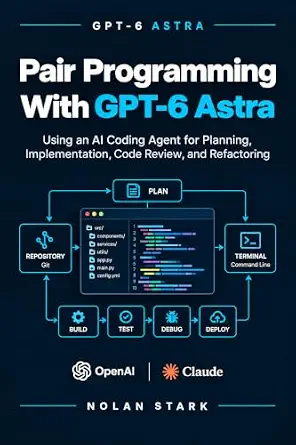 | Best for Agent-Specific Workflows | Format: Kindle / Digital book | Primary topic: AI agent-assisted development with GPT-6 Astra | Coverage areas: Planning, implementation, code review, refactoring | VIEW LATEST PRICE | See Our Full Breakdown |
| Claude Code for Software Development: Hands-On Guide to AI Coding Workflows, Code Review, Debugging, Testing, and Developer Productivity |  | Best for Claude Code Users | Format: Kindle / Digital book | Primary topic: Claude Code software development workflows | Coverage areas: Code review, debugging, testing, developer productivity | VIEW LATEST PRICE | See Our Full Breakdown |
| Beyond Code: Build Reliable AI-Assisted Software with Context Engineering, Mechanical Gates, and AI Agent Control |  | Best for Reliability Engineering | Format: Print / traditionally published (ISBN 1808342038) | Primary topic: Reliable AI-assisted software engineering | Core concepts: Context engineering, mechanical gates, AI agent control | VIEW LATEST PRICE | See Our Full Breakdown |
| Spec-Driven AI Engineering: Build Reliable Software from Requirements to Code with AI Agents, Tests, and Production Workflows |  | Best for Process-First Teams | Format: Kindle / Digital book | Primary topic: Specification-driven AI engineering | Coverage areas: Requirements, AI agents, testing, production workflows | VIEW LATEST PRICE | See Our Full Breakdown |
| Agentic Coding: Building Reliable Software with AI Agents |  | Best Value Introduction to Agent Reliability | Format: Kindle / Digital book | Primary topic: Reliable software development with AI agents | Coverage areas: Agent methodologies, best practices, reliability | VIEW LATEST PRICE | See Our Full Breakdown |
| 50 AI Workflows for Engineers: From Debugging to System Design, Code Review & Engineering Automation |  | Best Breadth of Coverage | Format: Book (digital) | Number of workflows: 50 | Topics covered: Debugging, system design, code review, engineering automation | VIEW LATEST PRICE | See Our Full Breakdown |
| Gpt-5 Codex Handbook: Master OpenAI’s Agentic Coding Model for Autonomous Code Generation, Large-Scale Refactoring, Code Reviews, Long-Horizon Tasks, and Software Engineering Workflows |  | Best for OpenAI-Centered Teams | Format: Book (digital) | Tool covered: OpenAI GPT-5 Codex | Key topics: Autonomous code generation, large-scale refactoring, code reviews, long-horizon tasks | VIEW LATEST PRICE | See Our Full Breakdown |
| AI Coding in 300 Questions: Learn AI-Assisted Software Development and Coding Agents |  | Best for Interview Prep | Format: Book (digital) | Number of questions: 300 | Topics covered: AI-assisted software development, coding agents, practical scenarios | VIEW LATEST PRICE | See Our Full Breakdown |
| code review software tool | Format | Tool focus | Primary topic | Audience level |
|---|---|---|---|---|
| Pair Programming with GPT-6 As | Kindle / Digital book | Single agent (GPT-6 Astra) | AI agent-assisted development with GPT-6 Astra | Intermediate to advanced developers |
| Claude Code for Software Devel | Kindle / Digital book | Single tool (Claude Code) | Claude Code software development workflows | Working developers, all experience levels with AI |
| Beyond Code: Build Reliable AI | Print / traditionally published (ISBN 1808342038) | Platform-agnostic | Reliable AI-assisted software engineering | Advanced engineers and architects |
| Spec-Driven AI Engineering: Bu | Kindle / Digital book | Platform-agnostic methodology | Specification-driven AI engineering | Intermediate to advanced, team-oriented |
| Agentic Coding: Building Relia | Kindle / Digital book | Platform-agnostic | Reliable software development with AI agents | Developers newer to agentic coding |
| 50 AI Workflows for Engineers: | Book (digital) | Tool-agnostic | — | — |
| Gpt-5 Codex Handbook: Master O | Book (digital) | — | — | — |
| AI Coding in 300 Questions: Le | Book (digital) | — | — | — |
More Details on Our Top Picks
Pair Programming with GPT-6 Astra: Using an AI Coding Agent for Planning, Implementation, Code Review, and Refactoring
Among the books in this roundup, this one stands out for its tight focus on a single AI agent — GPT-6 Astra — rather than abstract principles. Where Agentic Coding discusses agents in general terms, this guide walks through planning, implementation, code review, and refactoring as concrete, sequential workflows with one tool. That makes it the most immediately actionable pick for developers who already know which model they’ll be using day to day. The tradeoff is durability: a book anchored to one specific agent risks aging quickly as the model evolves, and readers working with Claude or other platforms will find portions of the material less relevant. The content also assumes existing engineering fluency, so it sits closer to Beyond Code on the difficulty curve than to entry-level titles like AI Coding in 300 Questions.
Pros:- Workflow-structured guidance covering the full cycle from planning to refactoring
- Code review treated as a first-class topic rather than an afterthought
- Directly actionable for anyone using the GPT-6 Astra agent
- Shorter conceptual preamble than theory-heavy alternatives
Cons:- Tied to one AI agent, so value drops if you switch tools or the model changes
- Technical depth may overwhelm developers new to AI-assisted workflows
Best for: Developers already committed to GPT-6 Astra who want workflow-level guidance for code review and refactoring with that specific agent
Not ideal for: Beginners or teams using other AI platforms — the single-agent focus and technical depth assume both experience and tool commitment
- Format:Kindle / Digital book
- Primary topic:AI agent-assisted development with GPT-6 Astra
- Coverage areas:Planning, implementation, code review, refactoring
- Tool focus:Single agent (GPT-6 Astra)
- Audience level:Intermediate to advanced developers
- Style:Practical workflow guide
Our verdict“Buy this if you’ve standardized on GPT-6 Astra and want a practical playbook for its code review and refactoring capabilities; skip it if you need platform-agnostic guidance.”
Claude Code for Software Development: Hands-On Guide to AI Coding Workflows, Code Review, Debugging, Testing, and Developer Productivity
This is the counterpart to Pair Programming with GPT-6 Astra for the Anthropic ecosystem, and the two books make a useful comparison pair: both are tool-specific, but this one casts a wider net across the development lifecycle, folding in debugging, testing, and productivity alongside code review. That breadth is its main advantage over narrower titles — a developer who wants one book to cover their entire Claude-assisted workflow gets more mileage here than from a refactoring-focused guide. The cost of that breadth is depth: individual topics get less exhaustive treatment than they would in a specialized book, and the hands-on framing means less attention to the reliability engineering that Beyond Code and Spec-Driven AI Engineering treat as their central concern. It’s the pragmatic middle pick — tool-locked like the GPT-6 book, but broader in scope.
Pros:- Broad lifecycle coverage: code review, debugging, testing, and productivity in one place
- Hands-on structure suited to learning by doing
- Directly usable by Claude Code subscribers without translation to other tools
- Productivity framing helps justify AI adoption to skeptical teams
Cons:- Breadth comes at the expense of depth on any single practice like code review
- Claude-specific instructions don’t transfer cleanly to other AI agents
Best for: Developers or small teams standardized on Claude Code who want a single guide spanning code review, debugging, and testing
Not ideal for: Readers seeking platform-neutral methodology or deep reliability theory — this is a practical tool manual, not an engineering treatise
- Format:Kindle / Digital book
- Primary topic:Claude Code software development workflows
- Coverage areas:Code review, debugging, testing, developer productivity
- Tool focus:Single tool (Claude Code)
- Audience level:Working developers, all experience levels with AI
- Style:Hands-on practical guide
Our verdict“The right choice if Claude Code is your daily driver and you want one broad, practical manual; choose a more specialized or theoretical title if you need depth on reliability.”
Beyond Code: Build Reliable AI-Assisted Software with Context Engineering, Mechanical Gates, and AI Agent Control
Where most entries in this roundup teach you how to use AI agents, this one teaches you how to trust but verify them. Its core concepts — context engineering, mechanical gates, and agent control — address the failure modes that tool-specific books gloss over: agents that drift, hallucinate, or produce plausible-but-wrong code that sails through review. Compared with Claude Code for Software Development, which shows workflows as they should run, this book is about the guardrails that catch them when they don’t. The tradeoff is accessibility: the material is the most conceptually demanding in this batch, and the shortage of detailed worked examples means readers have to do the work of translating theory into their own pipelines. It also carries an ISBN rather than being Kindle-only, suggesting a more formal publishing treatment — appropriate for a book positioned as reference material rather than a quick-start guide.
Pros:- Unique focus on reliability and control, a gap in most AI coding books
- Mechanical gates concept translates directly into automated review checks
- Platform-agnostic principles outlast any single AI model
- Formal publishing treatment suits long-term reference use
Cons:- Few detailed practical examples to anchor the theory
- Conceptual difficulty well above beginner-friendly titles
Best for: Senior engineers and tech leads responsible for CI quality gates and AI safety in production pipelines
Not ideal for: Developers wanting quick, example-driven tutorials — the abstract framing and sparse code samples demand effort to apply
- Format:Print / traditionally published (ISBN 1808342038)
- Primary topic:Reliable AI-assisted software engineering
- Core concepts:Context engineering, mechanical gates, AI agent control
- Tool focus:Platform-agnostic
- Audience level:Advanced engineers and architects
- Style:Conceptual engineering reference
Our verdict“Pick this if your concern is keeping AI-generated code trustworthy at scale; skip it if you need a hands-on introduction to any specific agent.”
Spec-Driven AI Engineering: Build Reliable Software from Requirements to Code with AI Agents, Tests, and Production Workflows
This title occupies the end-to-end process niche in the roundup: rather than starting at the code editor like Pair Programming with GPT-6 Astra, it starts at requirements and follows the pipeline through specs, agents, tests, and production workflows. For teams whose code review problems actually originate in vague specifications, that framing is the real differentiator — review stops being a checkpoint and becomes part of a specification-driven chain of verification. Compared with Beyond Code, which is stronger on control theory, this book is more prescriptive about process: it tells you what artifacts to produce and in what order. The tradeoff is that it demands organizational discipline a solo hacker or startup may not have, and like Agentic Coding, it leans conceptual where some readers will want copy-ready examples. It suits established teams more than individuals.
Pros:- Covers the full lifecycle from requirements to production, not just coding
- Specification-driven approach catches defects upstream of code review
- Testing integrated as a verification layer rather than an afterthought
- Team-oriented practices that scale beyond individual productivity
Cons:- Process-heavy methodology feels like overhead for solo or small-team work
- Beginners may struggle without prior exposure to formal engineering practices
Best for: Engineering teams with defined SDLC processes who want AI agents governed by specifications and tests from requirements onward
Not ideal for: Solo developers or small startups without formal processes — the spec-heavy methodology adds overhead that lightweight workflows won’t support
- Format:Kindle / Digital book
- Primary topic:Specification-driven AI engineering
- Coverage areas:Requirements, AI agents, testing, production workflows
- Tool focus:Platform-agnostic methodology
- Audience level:Intermediate to advanced, team-oriented
- Style:End-to-end process guide
Our verdict“The best fit for teams that want AI agents embedded in a disciplined, spec-driven pipeline; individuals should start with a tool-focused guide instead.”
Agentic Coding: Building Reliable Software with AI Agents
Think of this as the entry point to the reliability conversation that Beyond Code takes to an advanced level. It covers the same core question — how to build dependable software when AI agents write the code — but with less theoretical machinery, making it the more approachable on-ramp before committing to denser material. Against tool-specific picks like Claude Code for Software Development, its advantage is longevity: nothing here breaks when a model version changes. Its weakness is the mirror image of that strength — the methodology stays general, with few concrete technical examples, so readers finish understanding the principles of agent reliability without a clear picture of implementation. Pairing it with one of the tool-specific books in this roundup is the practical play: this one for the mental model, the other for the daily mechanics.
Pros:- Accessible introduction to agent reliability concepts
- Platform-agnostic content that survives tool and model changes
- Solid conceptual foundation for progressing to advanced titles
- Methodology framing useful for team alignment discussions
Cons:- Lacks detailed technical examples to bridge theory and practice
- Too advanced for complete beginners despite being the gentlest reliability title here
Best for: Developers new to agentic coding who want foundational methodology before investing in tool-specific or advanced books
Not ideal for: Engineers who already run AI agents in production — the general treatment and thin examples will feel like review rather than new material
- Format:Kindle / Digital book
- Primary topic:Reliable software development with AI agents
- Coverage areas:Agent methodologies, best practices, reliability
- Tool focus:Platform-agnostic
- Audience level:Developers newer to agentic coding
- Style:Methodology overview
Our verdict“A sensible first book on building reliable software with AI agents — buy it for the fundamentals, then add a tool-specific guide for hands-on code review work.”
50 AI Workflows for Engineers: From Debugging to System Design, Code Review & Engineering Automation
Where most books in this roundup anchor to a single tool — like Claude Code for Software Development or the GPT-5 Codex Handbook — this one spreads across 50 distinct workflows spanning debugging, system design, code review, and automation. That breadth is its whole value proposition: instead of mastering one agent deeply, readers get a repeatable playbook they can apply across the engineering lifecycle. The code review workflows here are treated as one chapter of a larger automation strategy, which makes this a better fit for engineers who want AI woven into everything they do rather than a dedicated review pipeline. The tradeoff is depth. Compared with Spec-Driven AI Engineering, which goes narrow and deep on requirements-to-code reliability, this book stays practical and surface-level, and it assumes readers already understand both AI fundamentals and engineering practice.
Pros:- Covers 50 workflows across the full engineering lifecycle, not just code review
- Practical, real-world examples rather than abstract theory
- Tool-agnostic approach that survives vendor changes better than single-agent guides
- Strong on automation patterns beyond review, including debugging and system design
Cons:- Breadth comes at the cost of depth — no single workflow gets exhaustive treatment
- Assumes prior AI and engineering knowledge, with no detailed technical specs or reference data included
Best for: Mid-to-senior engineers who want a broad, reusable library of AI workflows covering review, debugging, and automation across their whole workflow
Not ideal for: Beginners or engineers new to AI tooling — the book assumes prior AI and engineering knowledge and offers little foundational hand-holding
- Format:Book (digital)
- Number of workflows:50
- Topics covered:Debugging, system design, code review, engineering automation
- Target audience:Practicing engineers with AI familiarity
- Approach:Practical workflow playbook
- Tool focus:Tool-agnostic
- Experience level:Intermediate to advanced
Our verdict“Pick this if you want one book that touches every stage of AI-assisted engineering; skip it if you need deep, tool-specific code review mastery.”
Gpt-5 Codex Handbook: Master OpenAI’s Agentic Coding Model for Autonomous Code Generation, Large-Scale Refactoring, Code Reviews, Long-Horizon Tasks, and Software Engineering Workflows
This is the most tool-committed pick in the lineup. Unlike 50 AI Workflows for Engineers, which stays vendor-neutral, this handbook goes all-in on GPT-5 Codex — its agentic code generation, large-scale refactoring, and long-horizon task handling. For teams already standardized on OpenAI’s stack, that specificity pays off: the code review chapters show exactly how to delegate autonomous reviews to one model rather than assembling a generic process. Compared with Pair Programming with GPT-6 Astra, which covers similar ground on a different OpenAI generation, this book leans harder into long-horizon, multi-session tasks — reviews and refactors that stretch across days, not single prompts. The obvious risk is shelf life and vendor lock-in: a handbook this tightly bound to one model ages fast when OpenAI ships the next release, and the lack of ratings or pricing transparency makes it harder to judge value before committing.
Pros:- Deep, model-specific coverage of GPT-5 Codex rather than generic AI advice
- Strong treatment of long-horizon tasks that most AI coding books ignore
- Concrete patterns for autonomous code generation and large-scale refactoring
- Directly maps AI capabilities onto real software engineering workflows
Cons:- Tight OpenAI coupling means content can become outdated quickly
- No pricing or customer ratings available to help gauge value before buying
Best for: Developers and AI practitioners already committed to the OpenAI ecosystem who want deep, model-specific guidance on agentic reviews and long-running refactors
Not ideal for: Teams using mixed or non-OpenAI tooling, or anyone who prefers vendor-neutral guidance that won’t age out with the next model release
- Format:Book (digital)
- Tool covered:OpenAI GPT-5 Codex
- Key topics:Autonomous code generation, large-scale refactoring, code reviews, long-horizon tasks
- Target audience:Developers and AI practitioners on the OpenAI stack
- Approach:Model-specific hands-on handbook
- Vendor dependency:High — OpenAI only
- Experience level:Intermediate to advanced
Our verdict“This is the right choice only if GPT-5 Codex is your daily driver and you want review and refactoring workflows built specifically around it.”
AI Coding in 300 Questions: Learn AI-Assisted Software Development and Coding Agents
Every other entry in this roundup — from Agentic Coding to Beyond Code — teaches through narrative and projects. This one flips the format: 300 questions designed to drill AI-assisted development concepts and coding-agent behavior into recall-ready form. That makes it the clear pick for a job market where interviewers now ask about AI-assisted code review and agent workflows as standard material. The question-based structure is genuinely better than chapters for self-testing and identifying knowledge gaps, and it covers practical scenarios rather than pure theory. But it is a supplement, not a substitute. Compared with 50 AI Workflows for Engineers, there’s far less hands-on guidance for actually running reviews day to day, and the sparse documentation — no edition or publisher details, thin content description — makes it harder to trust the sourcing. Buyers should treat it as a study aid layered on top of a fuller guide.
Pros:- Question-based format is ideal for self-testing and interview drilling
- Covers both AI-assisted development concepts and coding-agent scenarios
- Breadth across 300 prompts surfaces knowledge gaps chapters can hide
- Practical scenario framing rather than pure definition memorization
Cons:- Lacks the depth and hands-on instruction of project-based books in this roundup
- Sparse metadata — no edition or publisher info and a thin content description
Best for: Job seekers and students preparing for technical interviews covering AI-assisted development and coding agents
Not ideal for: Practitioners who need project-based, hands-on instruction for building real code review pipelines — this is a study tool, not a workflow guide
- Format:Book (digital)
- Number of questions:300
- Topics covered:AI-assisted software development, coding agents, practical scenarios
- Primary purpose:Technical interview preparation
- Structure:Question-and-answer study format
- Target audience:Students and job-seeking developers
- Experience level:Beginner to intermediate
Our verdict“Buy this alongside a deeper guide if interviews on AI coding are on your horizon; don’t expect it to teach you the workflows themselves.”

How We Picked
I judged each option through one lens: how well it helps a team run effective, reliable code reviews in an AI-assisted workflow. That meant scoring four factors — review depth (does it catch real defects, not just style issues?), workflow fit (how easily it slots into planning, implementation, and refactoring?), reliability controls (mechanical gates, tests, and context management that keep agents honest), and practicality (how fast can a working team get value from it?). Options that treated review as a checkbox scored lower than those that embedded review into the full development loop.
Ranking then came down to audience fit. Claude Code took the top spot for breadth and immediate usability, while Beyond Code and Spec-Driven AI Engineering ranked close behind for teams where predictability matters more than speed. Value picks were chosen by cost-to-coverage ratio, and the beginner pick by how gently it introduces concepts before asking the reader to build anything. Where two options seemed equally capable, I favored the one with clearer, more repeatable review workflows.
| code review software tool | Format | Primary topic | Coverage areas | Tool focus |
|---|---|---|---|---|
| Pair Programming with GPT-6 As | Kindle / Digital book | AI agent-assisted development with GPT-6 Astra | Planning, implementation, code review, refactoring | Single agent (GPT-6 Astra) |
| Claude Code for Software Devel | Kindle / Digital book | Claude Code software development workflows | Code review, debugging, testing, developer productivity | Single tool (Claude Code) |
| Beyond Code: Build Reliable AI | Print / traditionally published (ISBN 1808342038) | Reliable AI-assisted software engineering | — | Platform-agnostic |
| Spec-Driven AI Engineering: Bu | Kindle / Digital book | Specification-driven AI engineering | Requirements, AI agents, testing, production workflows | Platform-agnostic methodology |
| Agentic Coding: Building Relia | Kindle / Digital book | Reliable software development with AI agents | Agent methodologies, best practices, reliability | Platform-agnostic |
| 50 AI Workflows for Engineers: | Book (digital) | — | — | Tool-agnostic |
| Gpt-5 Codex Handbook: Master O | Book (digital) | — | — | — |
| AI Coding in 300 Questions: Le | Book (digital) | — | — | — |
Factors to Consider When Choosing Code Review Software Tools
Choosing among code review software tools in 2026 is less about picking the smartest AI and more about matching the tool or guide to your team’s risk tolerance, stack, and review maturity. Before committing, weigh these factors.Autonomy Level and Guardrails
The single biggest decision is how much review authority you hand to an AI agent. Fully autonomous reviewers will approve, comment, and merge with minimal oversight, which saves hours per week — but a wrong approval can ship a defect that a human would have caught. The most common mistake I see is teams flipping on autonomy before establishing mechanical gates like mandatory test passes, linting thresholds, and context limits. A middle path works best for most: let the agent draft the review, but require a human sign-off on anything touching security, data, or public APIs. Ask any vendor or guide author explicitly what happens when the agent is wrong — the good ones have an answer.
Context Handling and Codebase Awareness
A reviewer that only sees the diff will miss architectural violations, duplicated logic, and broken invariants — the exact bugs humans care most about. Stronger approaches use context engineering: feeding the reviewer specs, past decisions, and relevant modules so its comments reflect the whole system, not ten changed lines. This is why spec-driven guides ranked so highly in my comparison. When evaluating options, check whether the tool ingests requirements documents, architecture notes, or test suites as review inputs. If it only reads the pull request, expect shallow nitpicks and missed regressions. Teams with large or legacy codebases should weight this factor more heavily than raw model intelligence.
Integration With Your Existing Workflow
The best reviewer in the world is useless if developers route around it. Look for options that fit where your team already works — pull request templates, CI pipelines, IDE plugins, or chat-based agent sessions. A tool that requires a new process will face quiet resistance; one that enhances the existing review step gets adopted. Pay attention to whether the approach supports your repository size and branching model, since some agent workflows degrade on monorepos or long-lived branches. My advice: pilot with one team and one repo for two weeks before rolling anything out org-wide. Adoption friction kills more review tools than missing features ever will.
Learning Curve Versus Team Experience
There is a real gap between options written for engineers meeting AI review for the first time and those assuming comfort with agent architecture, retrieval, and test harnesses. Buying the advanced option for a novice team produces shelfware; buying the beginner option for senior engineers wastes their time on concepts they already know. Match the depth to your team’s current AI fluency, not to where you hope they’ll be in a year. Q&A-format and workflow-recipe resources are ideal for onboarding many people quickly, while architecture-heavy guides suit the one or two engineers who will build your internal review system.
Cost Structure and Long-Term Value
Costs in this category fall into two buckets: subscription fees for hosted review tools and one-time spending on guides and training that build internal capability. Subscriptions scale with headcount and can quietly become your third-largest dev tooling line item. Training-oriented resources cost more upfront in engineer hours but compound — once your team internalizes review gates and agent control patterns, you own that capability regardless of vendor. For teams under 20 developers, building on a guide plus an API is often cheaper within a year. For larger orgs needing audit trails and compliance, a managed tool usually pays for itself in reduced incident cost.
Reliability Evidence and Failure Modes
Every vendor will claim their reviewer catches bugs; few will show you what it misses. Before choosing, ask for or construct a failure-mode test: feed the reviewer a pull request with a subtle race condition, a broken migration, or a security regression and see what it reports. Guides deserve the same scrutiny — do they teach you to measure false positive rates, or only to celebrate catches? The strongest materials in this space openly discuss when agents hallucinate findings or approve bad code, and give you mitigation patterns. Any resource that promises flawless automated review is selling you something that does not exist.
Frequently Asked Questions
Can an AI code reviewer fully replace human review?
For most teams, no — and the better options in this space are honest about that. AI reviewers excel at mechanical checks: style violations, missing tests, obvious bugs, and duplicated logic across a codebase. They struggle with business intent, product tradeoffs, and whether a change is the right change rather than merely a correct one. The model that works in practice is AI-first, human-final: the agent produces the initial pass and a human reviews its flagged items plus anything risky. This typically cuts human review time by half while keeping accountability where it belongs. Teams that went fully autonomous without gates generally rolled back within months.
Is a guide-based approach better than buying a subscription tool?
It depends on whether you want capability or convenience. Guides and handbooks teach your team to build review workflows on top of APIs you already pay for, which costs less over time and gives you full control over behavior. Subscription tools give you a polished experience on day one, with support, integrations, and updates handled for you. If you have one engineer who can own the internal system, the guide route usually wins within a year. If no one has that bandwidth, a subscription is cheaper than a half-built internal tool nobody maintains. Many teams actually start with a subscription, then graduate to a guide-driven internal approach once volumes justify it.
What size team benefits most from agentic code review?
The payoff curve is clearest for teams of roughly five to fifty developers. Below that, a small team with strong conventions can review manually without much pain, though AI still helps with tedious checks. Above fifty, you will likely need enterprise features — audit logs, permissions, compliance reporting — that consumer-grade options don’t provide. The mid-range is where agents shine: enough pull requests that manual review creates bottlenecks, but not so many that you need custom infrastructure. If your team merges fewer than ten pull requests a week, invest in review culture first and tooling second.
How do I stop an AI reviewer from producing noisy, useless comments?
Noise is usually a context and configuration problem, not a model problem. Start by narrowing the reviewer’s scope to files and rules that matter, and require it to cite the specific violation for every comment. Feed it your style guide and architecture decisions so it stops flagging intentional patterns. Mechanical gates help here too: route hard rules like formatting and test coverage to deterministic tools, and reserve the AI for judgment calls where it adds real value. Teams that tune comment thresholds during a two-week pilot routinely cut noise by more than half — the ones that skip tuning are the ones who abandon the tool.
Which pick should I choose if my team is new to AI-assisted review?
Start with a foundational resource like AI Coding in 300 Questions to build shared vocabulary, then move to a workflow-oriented pick such as 50 AI Workflows for Engineers for ready-made review patterns. Resist the temptation to begin with the architecture-heavy options — they assume familiarity with agent design that newcomers don’t have yet, and the result is usually confusion rather than adoption. Run the first workflows on low-stakes repositories, such as internal tooling, before pointing agents at production code. Once the team is comfortable, the spec-driven and gate-based approaches become much easier to digest and far more valuable.
Conclusion
The right choice comes down to what your team needs from code review this year. For best overall, Claude Code for Software Development covers review, debugging, and testing in one coherent workflow that fits nearly any team. For best value, 50 AI Workflows for Engineers packs the most reusable review and automation patterns per dollar. The best premium option is the GPT-5 Codex Handbook, aimed at teams running long-horizon reviews and large-scale refactoring audits where its depth justifies the investment. For beginners, AI Coding in 300 Questions is the gentlest on-ramp in the lineup. If your priority is control and predictability, Beyond Code is the pick for mechanical gates and agent oversight, while Spec-Driven AI Engineering suits teams that want reviews anchored to requirements from the start, and Agentic Coding fits those building reliable agent-driven review systems from the ground up. Match the pick to your team’s maturity and risk tolerance, and you’ll get reviews that are faster without being less trustworthy.
Halloween Picks
halloween
As an affiliate, we earn on qualifying purchases.