

TL;DR

Get business pricing on monitors, keyboards and dev gear
- Business-only prices and quantity discounts
- Tax-exempt purchasing
- Multiple users, one account, clear invoices
In 2026, the top AI camera lenses are those that combine versatility, low-light performance, and advanced stabilization. The Sony FE 24-70mm F/2.8 GM II leads for balanced professional use, while Canon offers specialized options. These lenses are set to redefine all-in-one solutions for photographers.
Camera lens manufacturers are unveiling a new lineup for 2026, emphasizing AI-driven features designed to optimize performance across all shooting conditions. These lenses aim to meet the evolving needs of professional and amateur photographers, offering smarter autofocus, enhanced stabilization, and adaptive optical adjustments. The most notable models include the Sony FE 24-70mm F/2.8 GM II, Canon RF 28-70mm F/2 L USM, and long-range zooms like the Canon RF100-400mm F/5.6-8 IS USM.
The Sony FE 24-70mm F/2.8 GM II is confirmed as the leading versatile zoom for 2026, combining a broad focal range, fast aperture, and AI-assisted autofocus that adapts to subjects and lighting conditions. Canon’s RF 28-70mm F/2 L USM is highlighted for its superior low-light capabilities, though it is heavier and more expensive, targeting professionals needing optimal performance in challenging environments.
Long-range options such as the Canon RF100-400mm F/5.6-8 IS USM are also part of the new lineup, offering extended reach for wildlife and sports photography, albeit with slower apertures. Manufacturers are emphasizing AI integration to improve autofocus speed, subject tracking, and stabilization, making these lenses more adaptable than previous models.
While these models are officially announced, detailed specifications and pricing are still emerging. It is also unclear how widespread AI features will be across all lens categories and whether some models will include proprietary software updates post-launch.
The 6 picks
- 1
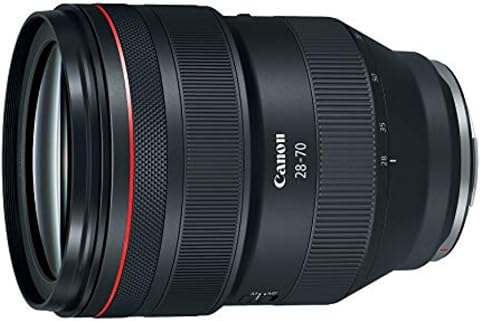 Canon RF28-70mm F2 L USM Lens, Zoom Lens for EOS R Series, BlackView on Amazon →
 - 2
 Sony FE 24-70mm F/2.8 GM II Full Frame E-Mount Standard Zoom LensView on Amazon →
 - 3
 Canon RF 24-70mm F2.8L IS USM Lens for Canon EOS R Series Mirrorless CamerasView on Amazon →
 - 4
 Canon RF 24-105mm f/4L IS USM Zoom Lens for EOS R SeriesView on Amazon →
 - 5
 Canon RF100-400mm F5.6-8 IS USM Telephoto Lens for EOS R Series CamerasView on Amazon →
 - 6
 Canon EF 50mm f/1.8 STM Lens for Canon EOS DSLR CamerasView on Amazon →
Why 2026’s AI Lenses Will Transform Photography
The introduction of AI-enhanced lenses in 2026 is set to significantly improve image quality, focus accuracy, and usability across diverse environments. For professionals, this means more reliable gear that adapts in real-time, reducing missed shots and post-processing time. For enthusiasts, it offers more accessible high-quality results without extensive technical expertise. The overall impact is a step toward smarter, more intuitive camera systems that could redefine standards for versatility and performance in photography.Development of AI Features in Camera Lenses
Over the past few years, lens manufacturers have integrated AI elements into camera systems, primarily in autofocus and image stabilization. The 2026 release marks a shift toward embedding AI directly into lenses, enabling real-time adaptive adjustments based on scene analysis. Previous models from Sony and Canon have demonstrated preliminary AI capabilities, but this year’s offerings promise broader, more sophisticated functionalities. Industry insiders expect these innovations to influence future camera and lens designs, emphasizing automation and intelligent optimization.“Our new RF lenses incorporate cutting-edge AI features designed to assist photographers in capturing sharp, well-exposed images effortlessly, even in complex lighting.”
— Canon spokesperson
Remaining Questions About AI Lens Capabilities
It is not yet clear how extensively AI features will be integrated across all lens models in 2026, or how firmware updates might expand capabilities post-launch. Pricing and availability details are still forthcoming, and user feedback on real-world performance remains to be seen.Upcoming Releases and Industry Impact in 2026
Manufacturers will continue unveiling detailed specifications and pricing for these AI lenses throughout early 2026. Field testing by professional photographers and early reviews will shape consumer expectations. Industry analysts anticipate that these innovations will push competitors to accelerate AI integration in their own lens lines, potentially leading to a new standard for all-in-one, adaptive camera gear by the end of the year.
Key Questions
Which brands are leading the AI lens innovation in 2026?
Major players include Sony with its FE series and Canon with its RF lineup, both emphasizing AI features designed to improve autofocus, stabilization, and scene adaptation.
Will these AI lenses be compatible with existing camera bodies?
Most new AI lenses are designed for specific mounts, such as Sony E-mount and Canon RF. Compatibility with older models depends on mount adapters and firmware updates, which are still being detailed by manufacturers.
What advantages do AI-enhanced lenses offer over traditional lenses?
AI features improve autofocus speed and accuracy, enable real-time scene adjustments, and enhance stabilization, resulting in sharper images and better performance in challenging conditions.
Are AI lenses more expensive than standard lenses?
Typically, yes. The integration of AI technology and advanced optics tends to increase costs, but manufacturers are also offering a range of options to suit different budgets.
Source: ThorstenMeyerAI.com
Columbus Day / Indigenous Peoples' Day Picks
long weekend sales
As an affiliate, we earn on qualifying purchases.