
For developers seeking to streamline workflows, programmable macro pads offer a powerful way to automate repetitive tasks and improve productivity. The best models combine extensive customization options with durable build quality, but they also vary in size, key count, and feature sets. The overall best pick is the Logitech MX Keypad for its versatile LCD screen and seamless software integration. For more specialized needs, the KiiBOOM Cybrix with its multiple knobs stands out, while the SIKAI CASE 6-Key offers a compact, cost-effective option for quick access. As you evaluate, consider tradeoffs like size versus functionality and price versus expandability. Continue reading for a detailed breakdown to find your ideal macro pad.

Get monitors, keyboards and dev gear delivered free — and shop member deals
- Fast, free delivery on millions of items
- Access to Prime Big Deal Days deals on October 6–7
- Prime Video, Amazon Music and more included
Key Takeaways
- Top picks balance build quality, customization options, and ease of use for developers.
- Most advanced macro pads include knobs and LCD screens to enhance workflow flexibility.
- Size and key count vary significantly, influencing suitability for different workspaces.
- Software compatibility and programmability are critical for seamless integration into a developer’s setup.
- Higher-priced options generally provide more features, but some budget models still deliver solid performance.
| SIKAI CASE 6-Key Programmable Macro Mechanical Keypad with Custom Knob |  | Best Compact Starter | Keys: 6 | Connectivity: USB-C | Switch compatibility: Cherry MX compatible; hot-swappable | VIEW LATEST PRICE | See Our Full Breakdown |
| X-keys XK-24 Programmable USB Keyboard, 24 Keys, Black and White |  | Best for a Large Shortcut Grid | Model: XK-1483-UABK24-R | Keys: 24 programmable, relegendable keys | Connectivity: USB-A | VIEW LATEST PRICE | See Our Full Breakdown |
| KiiBOOM Cybrix 16 VIA Programmable Macro Pad with 16 Keys and 3 Knobs |  | Best for Layered Controls | Keys: 16 | Rotary knobs: 3 | Functional layers: 5 | VIEW LATEST PRICE | See Our Full Breakdown |
| 12-Key Programmable Mechanical Macro Pad with RGB Backlighting and Dual Knobs |  | Best for Wireless Desk Flexibility | Keys: 12 | Knobs: 2 programmable knobs | Connectivity: USB-C wired and wireless receiver | VIEW LATEST PRICE | See Our Full Breakdown |
| Koolertron 12-Key Programmable Mechanical Macro Keypad with 2 Knobs | 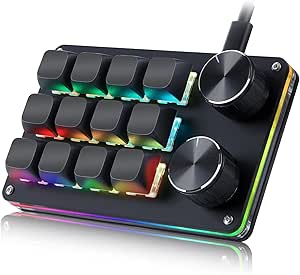 | Best for Long Macros and Layers | Keys: 12 | Knobs: 2 | Macro capacity: Up to 16 macros, 500 characters each | VIEW LATEST PRICE | See Our Full Breakdown |
| Sehawei N4 Pro 10-Key LCD Macro Pad with 4 RGB Knobs |  | Best for Knob-Heavy Workflows | Brand and model: Sehawei N4 Pro | LCD keys: 10 | Additional controls: 4 RGB backlit knobs with touch displays and an editable TouchBar | VIEW LATEST PRICE | See Our Full Breakdown |
| Logitech MX Keypad Programmable LCD Macro Pad, Graphite |  | Best for Developer App Integrations | Customizable keys: 9 full-color LCD keys | Connectivity: USB-C cable | Compatibility: Recent versions of Windows and macOS | VIEW LATEST PRICE | See Our Full Breakdown |
| Doohoeek 25-Key Programmable Macro Keypad for Windows | 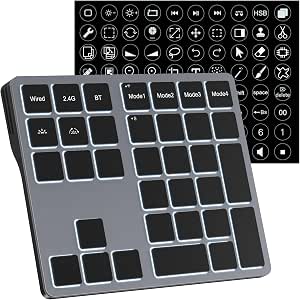 | Best for Large Shortcut Sets | Number of keys: 25 | Connectivity: Bluetooth 5.0, 2.4 GHz wireless, or wired | Compatibility: Windows; minimum operating system listed as Windows 11 | VIEW LATEST PRICE | See Our Full Breakdown |
| KEEBMONKEY Megalodon 16-Key Programmable Macro Pad with Triple Knobs |  | Best for VIA Customization | Keys: 16, hot-swappable | Programmable knobs: 3 | Layers: 4 | VIEW LATEST PRICE | See Our Full Breakdown |
| ActionRing Stream Dock N1 Macro Pad with 15 Customizable LCD Keys |  | Best for Desk-Space Versatility | Keys: 15 customizable LCD keys | Connectivity and power: USB; USB-powered | Modes: Shortcut keys, calculator, and numeric keypad | VIEW LATEST PRICE | See Our Full Breakdown |
| NLOFIN 16-Key Programmable Macro Pad with Triple Knob and OLED Screen |  | Best for Layered Developer Workflows | Keys: 16 programmable keys | Customizable layers: 6 | Controls: 3 knobs and OLED display | VIEW LATEST PRICE | See Our Full Breakdown |
| HUION Keydial Mini Bluetooth Programmable Keypad with Dial |  | Best for Portable Shortcut Control | Shortcut keys: 18 programmable keys | Dial: Programmable, up to 3 functions | Connectivity: Bluetooth 5.0 | VIEW LATEST PRICE | See Our Full Breakdown |
| VSD M18 Programmable Macro Pad with 18 Keys |  | Best for Visual App and Stream Controls | Keys: 18 total: 15 LCD keys and 3 physical buttons | Connectivity: USB-C | Power: USB powered | VIEW LATEST PRICE | See Our Full Breakdown |
| MOSHOU 12-Key Programmable Macro Pad with Knobs and RGB Backlighting |  | Best for Wireless Flexibility | Keys: 12 | Knobs: 2 programmable | Macro layers: Up to 3 | VIEW LATEST PRICE | See Our Full Breakdown |
| X-keys XK-24 Programmable 24-Key USB Keypad |  | Best for a Dedicated Command Bank | Keys: 24 programmable keys | Connectivity: Wired USB-A | Keycaps: Relegendable | VIEW LATEST PRICE | See Our Full Breakdown |
| programmable macro pads for developer | Connectivity | Keys |
|---|---|---|
| SIKAI CASE 6-Key Programmable | USB-C | 6 |
| X-keys XK-24 Programmable USB | USB-A | 24 programmable, relegendable keys |
| KiiBOOM Cybrix 16 VIA Programm | Wired USB-C | 16 |
| 12-Key Programmable Mechanical | USB-C wired and wireless receiver | 12 |
| Koolertron 12-Key Programmable | USB-C | 12 |
| Sehawei N4 Pro 10-Key LCD Macr | USB-A and USB-C | — |
| Logitech MX Keypad Programmabl | USB-C cable | — |
| Doohoeek 25-Key Programmable M | Bluetooth 5.0, 2.4 GHz wireless, or wired | — |
| KEEBMONKEY Megalodon 16-Key Pr | Wired USB-C | 16, hot-swappable |
| ActionRing Stream Dock N1 Macr | — | 15 customizable LCD keys |
| NLOFIN 16-Key Programmable Mac | Wired USB-C | 16 programmable keys |
| HUION Keydial Mini Bluetooth P | Bluetooth 5.0 | — |
| VSD M18 Programmable Macro Pad | USB-C | 18 total: 15 LCD keys and 3 physical buttons |
| MOSHOU 12-Key Programmable Mac | USB wired, Bluetooth, 2.4 GHz wireless | 12 |
| X-keys XK-24 Programmable 24-K | Wired USB-A | 24 programmable keys |
More Details on Our Top Picks
SIKAI CASE 6-Key Programmable Macro Mechanical Keypad with Custom Knob
The SIKAI CASE is the smallest, simplest way in this group to dedicate a few physical keys to recurring developer tasks. Its six onboard shortcuts can travel between Windows, Mac, and Linux once configured, so a Windows setup machine does not have to stay connected. Hot-swappable Cherry MX compatible switches let me change the feel without replacing the whole pad. That simplicity comes with a firm ceiling: macros are limited to five characters, which suits short triggers better than longer text snippets or elaborate command sequences. Compared with the 12-key Koolertron, it takes less desk space but offers far fewer assignments and layers. I’d choose it for a handful of predictable shortcuts; developers building a broad tool palette should look at the X-keys XK-24 instead.
Pros:- Onboard memory stores six shortcuts for use across supported operating systems
- Hot-swappable switches fit Cherry MX compatible options
- Small footprint suits a focused set of recurring commands
Cons:- Macro length is limited to five characters
- Initial macro configuration requires Windows
- Six assignments offer less room than the X-keys XK-24
Best for: Developers who want six frequently used shortcuts on a small desk and can configure them on a Windows computer.
Not ideal for: Linux-only developers who cannot access Windows for setup, or anyone needing long text macros and many dedicated commands.
- Keys:6
- Connectivity:USB-C
- Switch compatibility:Cherry MX compatible; hot-swappable
- Onboard memory:Stores six custom shortcuts
- Maximum macro length:5 characters
- Configuration:Requires Windows
- Compatible operating systems:Windows, Mac, Linux, Vista
- Hand orientation:Ambidextrous
Our verdict“Choose the SIKAI CASE if a few short, portable shortcuts matter more than room for a larger command set.”
X-keys XK-24 Programmable USB Keyboard, 24 Keys, Black and White
For developers who want a labeled bank of commands in reach, the X-keys XK-24 offers 24 programmable, relegendable keys—twice the count of the KiiBOOM Cybrix 16 and four times the SIKAI CASE. That extra grid can separate editor actions, terminal commands, and application launches without relying on layers. Individual white backlighting helps distinguish the keys at a glance, while replaceable legends make a changing workflow easier to map. The tradeoff is a more utilitarian setup: it connects over USB-A, uses a plastic enclosure, and has no knobs for continuous controls such as scrolling or volume. Linux users also need to pre-program Hardware Mode. I’d pick it over the smaller pads when direct, visible access to many commands matters more than a compact footprint or rotary controls.
Pros:- 24 programmable keys provide more direct assignments than the 12- and 16-key alternatives
- Relegendable keys can reflect a changing shortcut map
- Individual white backlighting aids key recognition
- Supports Windows and macOS, with Linux available through Hardware Mode
Cons:- Linux requires Hardware Mode configuration before use
- USB-A connection may require an adapter on newer laptops
- No rotary knobs for continuous controls
Best for: Developers who want a directly labeled, backlit grid for many editor, terminal, and application shortcuts.
Not ideal for: Developers who need knobs, a small travel pad, or a setup process that works on Linux without pre-programming.
- Model:XK-1483-UABK24-R
- Keys:24 programmable, relegendable keys
- Connectivity:USB-A
- Backlighting:Individual white backlighting
- Switch type:Tactile
- Compatible operating systems:Windows, macOS, Linux
- Linux setup:Pre-program in Hardware Mode
- Enclosure material:Plastic
Our verdict“Choose the XK-24 when a broad, labeled shortcut grid is more useful than knobs or a compact layout.”
KiiBOOM Cybrix 16 VIA Programmable Macro Pad with 16 Keys and 3 Knobs
The KiiBOOM Cybrix 16 packs a useful mix of 16 keys, three knobs, and five functional layers into a compact wired pad. For developer workflows, layers let the same physical surface serve different tools or contexts, while the knobs add tactile control for tasks such as scrolling or adjusting audio. Compared with the X-keys XK-24, the Cybrix gives up eight direct keys but gains three rotary controls and a more customizable switch setup. Its hot-swappable PCB accepts 3-pin and 5-pin switches, and the CNC aluminum case gives it a sturdier material profile than the plastic X-keys. The main caveat is platform clarity: the supplied compatibility data lists Windows, despite the VIA name and broader device list. I’d favor it for a Windows-centered desk where layers and knobs matter more than a large labeled grid.
Pros:- Five layers expand what 16 physical keys can control
- Three rotary knobs add continuous input controls
- Hot-swappable PCB supports 3-pin and 5-pin switches
- Aluminum enclosure with customizable RGB lighting
Cons:- Compatibility information lists Windows, leaving Mac support unclear
- Wired USB-C limits placement flexibility
- Fewer direct keys than the 24-key X-keys XK-24
Best for: Windows-based developers who want layered shortcuts, rotary controls, and the option to change switches.
Not ideal for: Developers who need confirmed Mac or Linux support, wireless placement, or more direct keys than layers provide.
- Keys:16
- Rotary knobs:3
- Functional layers:5
- Connectivity:Wired USB-C
- Switch compatibility:3-pin and 5-pin; hot-swappable
- Backlighting:Customizable RGB
- Enclosure material:Aluminum
- Listed operating system:Windows
Our verdict“Choose the Cybrix 16 for a Windows desk where layered commands and three knobs beat a larger key grid.”
12-Key Programmable Mechanical Macro Pad with RGB Backlighting and Dual Knobs
This 12-key pad earns its place through USB-C wired and wireless receiver connectivity, letting me move it around a desk without giving up a wired option. Two programmable knobs complement the keys for controls that benefit from turning rather than repeated taps, and onboard storage keeps configurations available when I switch computers. Its listed compatibility covers Windows, macOS, Linux, and Raspberry Pi, a broader stated range than the Windows-only listing for the KiiBOOM Cybrix 16. The tradeoff is setup: software must be extracted on a computer, and initial configuration happens on Windows. The clicky switches may also be distracting in a shared workspace. Compared with the Koolertron, this model adds wireless operation and Raspberry Pi compatibility, while the Koolertron specifies six layers and longer macro capacity. I’d choose this one when placement flexibility is the deciding factor.
Pros:- Supports wired USB-C and a wireless receiver
- Onboard memory retains configurations across computers
- Two programmable knobs complement 12 keys
- Listed compatibility includes Windows, macOS, Linux, and Raspberry Pi
Cons:- Initial configuration requires Windows
- Setup software must be extracted on a computer
- Clicky switches may be noisy in shared work areas
Best for: Developers who move a compact macro pad between workstations and want both wireless and wired use.
Not ideal for: Linux-only users who cannot perform Windows setup, or developers who need documented long macros and multiple stored layers.
- Keys:12
- Knobs:2 programmable knobs
- Connectivity:USB-C wired and wireless receiver
- Switch type:Clicky
- Backlighting:Adjustable RGB
- Power:Battery powered
- Compatible systems:Windows, macOS, Linux, Raspberry Pi
- Configuration:Initial setup performed on Windows
Our verdict“Choose this 12-key model if wireless placement and cross-computer onboard settings matter more than extensive macro specifications.”
Koolertron 12-Key Programmable Mechanical Macro Keypad with 2 Knobs
The Koolertron is the most clearly specified choice here for developers who need longer macros and multiple command layers: it supports up to 16 macros of 500 characters each and stores six layers of settings. That gives it a broader command profile than the SIKAI CASE, whose macros stop at five characters, while keeping a manageable 12-key, two-knob layout. Its hot-swappable blue switches and RGB lighting add customization, though the clicky blue switch type may not suit quiet offices. Setup is available through a web interface or software on Windows and macOS, but Linux is not supported, a notable limit beside the multi-OS X-keys XK-24. The plastic enclosure is also less premium in material than the KiiBOOM’s aluminum case. I’d put this ahead of simpler pads when command depth matters more than Linux support or a quiet typing sound.
Pros:- Supports up to 16 macros of 500 characters each
- Six setting layers organize commands for different workflows
- Hot-swappable blue mechanical switches
- Configuration available through a web interface or Windows and macOS software
Cons:- Linux is not supported
- Blue mechanical switches can be noisy
- Plastic enclosure and 12 keys may not suit buyers seeking a larger or more substantial pad
Best for: Windows or macOS developers who want substantial text macros and separate shortcut layers for different tools.
Not ideal for: Linux developers, quiet-office users sensitive to clicky switches, or anyone needing a larger number of physical keys.
- Keys:12
- Knobs:2
- Macro capacity:Up to 16 macros, 500 characters each
- Setting layers:6
- Switch type:Blue mechanical; hot-swappable
- Connectivity:USB-C
- Compatible operating systems:Windows and macOS; Linux not supported
- Enclosure material:Plastic
Our verdict“Choose the Koolertron for long macros and six layers if you work on Windows or macOS and can accept clicky switches.”
Sehawei N4 Pro 10-Key LCD Macro Pad with 4 RGB Knobs
The Sehawei N4 Pro suits developers who want shortcuts alongside hands-on control of levels, scrolling, or other adjustable settings. Its 10 LCD keys, four touch-display knobs, and editable TouchBar offer more varied controls than the nine-key Logitech MX Keypad, which focuses on app-aware keys and developer integrations. The plugin library, including OBS, Discord, and Spotify support, also makes it useful for people who move between coding and streaming or communication tools. Setup is designed to support multi-step workflows without coding, which lowers the barrier to customizing common tasks. The tradeoff is that it depends on a USB connection and compatible Windows or macOS software. Its included hub adds ports, but it is non-powered, so it cannot replace a powered hub for devices that need their own power.
Pros:- LCD keys can hold shortcuts, commands, text, and GIFs
- Four touch-display knobs provide more direct controls than key-only pads such as the Logitech MX Keypad
- Supports multi-step workflows without requiring coding
- Includes an adjustable stand and a USB hub
Cons:- The included USB hub is non-powered
- Requires a USB connection to a compatible Windows or macOS computer
- Its larger set of controls may be unnecessary for developers who only need a few shortcuts
Best for: Developers who want several physical dials for app controls, plus programmable keys for coding and streaming workflows
Not ideal for: Laptop users who need a powered USB hub or a wireless keypad for a less cluttered desk
- Brand and model:Sehawei N4 Pro
- LCD keys:10
- Additional controls:4 RGB backlit knobs with touch displays and an editable TouchBar
- Connectivity:USB-A and USB-C
- USB hub:2 × USB 3.0 and 1 × USB-C; non-powered
- Compatibility:Windows 10+ and macOS 11.0+
- Supported software:OBS; plugin support includes Discord and Spotify
- Included components:Adjustable stand and USB hub
Our verdict“Choose the N4 Pro if you want LCD shortcuts and multiple physical controls in one developer desk setup.”
Logitech MX Keypad Programmable LCD Macro Pad, Graphite
The Logitech MX Keypad earns its place through a developer-focused software story: its app-aware profiles and integrations include VS Code, IntelliJ, and GitHub Copilot. That makes it a more targeted choice for switching shortcuts as you move between coding tools than the Sehawei N4 Pro, whose standout hardware is its four knobs and editable TouchBar. Nine full-color LCD keys can launch shortcuts, scripts, or macros, while multi-page profiles extend the available actions beyond the key count. The Logi Actions SDK gives developers a route to custom plugins. The tradeoff is dependence on Logi Options+ for setup, and some AI features need an internet connection and a third-party account. Buyers seeking dials or a wireless connection should look at other options.
Pros:- Integrates with VS Code, IntelliJ, and GitHub Copilot
- App-aware profiles can switch shortcuts automatically
- Full-color LCD keys support shortcuts, scripts, and macros
- Logi Actions SDK supports custom plugins
Cons:- Requires Logi Options+ for setup and customization
- Some AI features require an internet connection and a third-party account
- Has no knobs and offers fewer physical keys than the 25-key Doohoeek keypad
Best for: Developers who work across VS Code, IntelliJ, and GitHub Copilot and want app-specific shortcut profiles
Not ideal for: Developers who want physical knobs, wireless connectivity, or a keypad that can be customized without Logi Options+
- Customizable keys:9 full-color LCD keys
- Connectivity:USB-C cable
- Compatibility:Recent versions of Windows and macOS
- Software:Logi Options+
- Developer integrations:VS Code, IntelliJ, and GitHub Copilot
- Customization:Macros, scripts, multi-page profiles, and Logi Actions SDK
- Color:Graphite
Our verdict“Pick the MX Keypad if app-specific developer integrations matter more to you than knobs or a larger key array.”
Doohoeek 25-Key Programmable Macro Keypad for Windows
With 25 programmable keys and four saved layouts, the Doohoeek is the capacity pick for developers who want many commands visible at once. It offers substantially more physical keys than the Logitech MX Keypad’s nine LCD buttons, while trading away the Logitech’s listed developer app integrations and full-color displays. Bluetooth 5.0 and 2.4 GHz wireless give it flexible day-to-day connections after setup, and onboard memory stores layouts on the device. That can suit a Windows workstation shared across tasks or projects. The key limitation is platform scope: this model is designed for Windows 11 or later, and customization requires wired mode. Its seven-color backlighting and shortcut stickers help with identification, but it is a less app-aware option than the Logitech.
Pros:- 25 programmable keys provide room for a large shortcut set
- Four layouts can be stored in onboard memory
- Bluetooth 5.0, 2.4 GHz wireless, and wired connection modes
- Seven-color backlighting and shortcut stickers support key identification
Cons:- Designed for Windows devices, with Windows 11 listed as the minimum
- Key customization must be done over a wired connection
- Does not list the app-aware developer integrations offered by the Logitech MX Keypad
Best for: Windows developers who want many dedicated shortcuts, text snippets, and separate saved layouts
Not ideal for: Mac or Linux developers, and anyone who expects to program the keypad wirelessly
- Number of keys:25
- Connectivity:Bluetooth 5.0, 2.4 GHz wireless, or wired
- Compatibility:Windows; minimum operating system listed as Windows 11
- Layouts:4
- Backlighting:7 colors with high, medium, and low brightness
- Keyboard layout:QWERTY
- Programming mode:Wired
- Onboard memory:Yes
- Color:Black
Our verdict“Choose the Doohoeek if you need a large, multi-layout shortcut board for a Windows development setup.”
KEEBMONKEY Megalodon 16-Key Programmable Macro Pad with Triple Knobs
The KEEBMONKEY Megalodon is the pick for developers who prefer a configurable mechanical pad over a software-led LCD controller. Its 16 hot-swappable keys, three programmable knobs, and four layers let you shape different command sets, while VIA support gives customization a familiar route for users of compatible keyboard tools. The 0.91-inch OLED provides a small status display, and the aluminum alloy and acrylic body gives it a sturdier, more compact footprint than the 25-key Doohoeek. In exchange, it is wired only, and its compatibility listing names VIA, Windows, and PC without specifying broader operating system support. Compared with the LCD-based Sehawei N4 Pro, this model offers mechanical switches and layer flexibility, but lacks the same screen-per-key approach and broad plugin positioning.
Pros:- 16 hot-swappable keys let owners change switches
- Three programmable knobs and four layers expand the available controls
- VIA support and an OLED display aid configuration and status feedback
- Compact aluminum alloy and acrylic construction
Cons:- Wired USB-C connectivity only
- Compatibility beyond Windows and PC is not specified
- Does not provide the per-key LCD customization of the Sehawei N4 Pro
Best for: Developers who want a compact mechanical macro pad with swappable switches, layers, and VIA configuration
Not ideal for: People who need wireless use, per-key LCD labels, or clearly specified support beyond Windows and PC
- Keys:16, hot-swappable
- Programmable knobs:3
- Layers:4
- Display:0.91-inch OLED
- Connectivity:Wired USB-C
- Compatibility:VIA, Windows, and PC
- Switches:Gateron Yellow; linear, clicky, or tactile switch types listed
- Body and dimensions:Aluminum alloy and acrylic; 5.61 × 3.79 × 1.3 in
- Weight and backlighting:320 g; RGB
Our verdict“Pick the Megalodon if mechanical switches, layers, and VIA support matter more to you than wireless use or LCD keys.”
ActionRing Stream Dock N1 Macro Pad with 15 Customizable LCD Keys
The ActionRing Stream Dock N1 is a flexible desk accessory for developers who want programmable shortcuts alongside occasional number entry or calculations. Its 15 customizable LCD keys provide more dedicated actions than the Logitech MX Keypad’s nine, and its shortcut, calculator, and numeric keypad modes give it a broader role when coding tasks include entering values. The vertical design keeps its footprint narrow, which may suit a crowded workstation better than the wider Doohoeek 25-key board. It supports Windows and macOS, plus downloadable plugins for productivity and creative apps. The tradeoff is that customization and plugins require software setup, and the listed system requirements are specific: Windows 10 and macOS 14 Sonoma. Developers wanting mechanical switches or knobs should consider other pads.
Pros:- Three modes combine shortcuts, calculator functions, and numeric keypad use
- Vertical design helps conserve desk space
- 15 customizable LCD keys support app shortcuts and personalized images
- Compatibility is listed for Windows and macOS
Cons:- Software setup is required to customize keys and use plugins
- Listed system requirements specify Windows 10 and macOS 14 Sonoma
- ABS construction and USB connectivity may not suit buyers seeking a mechanical or wireless pad
Best for: Developers with limited desk space who want LCD shortcuts plus a calculator and numeric keypad mode
Not ideal for: Developers who want physical knobs, mechanical keys, or a wider range of stated operating system versions
- Keys:15 customizable LCD keys
- Connectivity and power:USB; USB-powered
- Modes:Shortcut keys, calculator, and numeric keypad
- Compatibility:Windows 10 and macOS 14 Sonoma
- Keyboard layout:QWERTY
- Dimensions:5.89 × 2.98 × 1.43 in
- Material:ABS
- Warranty:24 months
Our verdict“Choose the Stream Dock N1 if a narrow desk footprint and calculator or number pad modes are as useful as programmable shortcuts.”
NLOFIN 16-Key Programmable Macro Pad with Triple Knob and OLED Screen
The NLOFIN makes a strong case for developers who want frequent commands and adjustable controls in one compact wired pad. Its 16 keys, three knobs, OLED screen, and six QMK/VIAL layers let me assign different command sets to coding, debugging, and meetings without giving up desk space. Compared with the MOSHOU 12-Key, it offers more keys, more layers, and a display, while MOSHOU adds wireless modes. The swappable low-profile switches also give this pick more room for personal tuning than a fixed-switch keypad. Its tradeoff is a USB-C tether, and the listed compatibility details name Windows and iOS but leave broader platform support unclear. I’d choose it for a desk-bound developer who values deep remapping over wireless flexibility.
Pros:- Six customizable layers support distinct command sets for different tasks.
- Three knobs and an OLED add tactile controls and at-a-glance feedback.
- Swappable Gateron low-profile switches allow hardware customization.
- Compact aluminum case and detachable USB-C cable suit a fixed desk setup.
Cons:- Requires a wired USB-C connection.
- Compatibility details beyond Windows and iOS are limited.
Best for: Developers who keep a wired desk setup and want separate macro layers for coding, debugging, and communication tools.
Not ideal for: Laptop users who need wireless portability or buyers who require clearly documented support for their operating system.
- Keys:16 programmable keys
- Customizable layers:6
- Controls:3 knobs and OLED display
- Switches:Swappable Gateron low-profile linear
- Connectivity:Wired USB-C
- Case:Aluminum
- Lighting:RGB
- Keycap profile:DSA
Our verdict“Choose the NLOFIN if layered QMK/VIAL remapping and three knobs matter more to your workflow than wireless use.”
HUION Keydial Mini Bluetooth Programmable Keypad with Dial
The HUION Keydial Mini is the portable pick for developers who want a small wireless shortcut surface beside a laptop. It has 18 programmable scissor keys and a dial that can handle up to three functions, making it suited to app commands and continuous adjustments without adding another full-size keyboard. Its Bluetooth connection and stated battery life of up to 70 hours set it apart from the wired NLOFIN 16-Key, which offers deeper QMK/VIAL layering and mechanical switches. That difference matters: HUION’s compact ABS body and ambidextrous layout favor easy placement, while its customization depends on the HUION driver and on software supporting the shortcut. I’d pick it for a mobile setup built around supported creative or productivity apps; developers seeking open remapping options should look elsewhere.
Pros:- Bluetooth 5.0 avoids adding a cable to a portable setup.
- 18 shortcut keys and a programmable dial provide several control options in a compact body.
- Up to 70 hours of stated battery life supports extended use between charges.
- Ambidextrous design works on either side of a laptop.
Cons:- Custom shortcuts require the HUION driver.
- Shortcut customization depends on support in the target software.
- Scissor switches offer a different feel from the mechanical options in this roundup.
Best for: Laptop-based developers who want a compact Bluetooth keypad and dial for shortcuts in apps that support HUION customization.
Not ideal for: Developers seeking mechanical switches, QMK/VIAL remapping, or macros that work independently of the HUION driver and app support.
- Shortcut keys:18 programmable keys
- Dial:Programmable, up to 3 functions
- Connectivity:Bluetooth 5.0
- Battery life:Up to 70 hours
- Switch type:Scissor switch
- Anti-ghosting:Up to 5 keys
- Dimensions:5.74 × 3.65 × 0.42 in
- OS compatibility:Mac OS 10.12 or later; Windows 7 or later
Our verdict“Pick the HUION for portable Bluetooth shortcuts in supported apps, and choose the NLOFIN if layered remapping and mechanical switches matter more.”
VSD M18 Programmable Macro Pad with 18 Keys
The VSD M18 suits developers who want each command labeled on the device itself. Its 15 LCD keys can show custom images or animations, and it supports multi-step macros for app launches, shortcuts, media, or OBS scene changes. That visual approach makes it easier to identify a growing command set than the text-based remapping on the X-keys XK-24, whose relegendable keys offer a simpler labeling method. The M18 also includes three physical buttons and utility plugins, but its LCD-rich layout trades dedicated programmable key count for visual cues. It connects by USB-C and supports Windows 11 or newer and macOS 11 or newer; Linux lacks native plug-and-play support. I’d choose it for a developer who also manages streaming or many app-specific actions and accepts that platform boundary.
Pros:- LCD keys display custom images and animations for easier command recognition.
- Multi-step macros can combine several actions into one press.
- Three physical buttons supplement the 15 LCD keys.
- Built-in utility plugins include clock, calendar, weather, and timer functions.
Cons:- No native Linux plug-and-play support.
- Custom RGB tones require a firmware upgrade.
- USB-powered operation does not offer wireless placement.
Best for: Developers who want labeled, multi-step controls for coding tools, media, or OBS on a supported Windows or macOS computer.
Not ideal for: Linux users seeking plug-and-play operation or buyers who prefer a straightforward bank of programmable physical keys.
- Keys:18 total: 15 LCD keys and 3 physical buttons
- Connectivity:USB-C
- Power:USB powered
- Key image formats:JPG, PNG, GIF
- Lighting:RGB light ring
- Operating systems:Windows 11 or newer; macOS 11.0 or newer
- Linux support:No native plug-and-play support
- Water resistance:Water repellent
Our verdict“Choose the VSD M18 when visible labels and multi-step controls help manage a mixed development and streaming workflow.”
MOSHOU 12-Key Programmable Macro Pad with Knobs and RGB Backlighting
The MOSHOU 12-Key is the clearest choice here for developers who move between devices or want to keep a cable off the desk. It combines USB, Bluetooth, and 2.4 GHz wireless with two programmable knobs and up to three macro layers. That makes it more flexible to place than the wired NLOFIN 16-Key, though NLOFIN offers more keys, six layers, an OLED, and QMK/VIAL remapping. MOSHOU’s hot-swappable mechanical switches and support for Windows, macOS, and Linux suit a mixed-platform setup, but custom settings must first be configured and saved in wired mode. RGB modes are also limited to wired use. I’d pick it when connection choice and cross-platform compatibility outweigh having the largest command bank or screen-based labels.
Pros:- Three connection modes support varied desk and device setups.
- Two programmable knobs add tactile controls for adjustable actions.
- Up to three macro layers organize multiple command sets.
- Hot-swappable mechanical switches and broad OS compatibility suit customization.
Cons:- Custom settings must be configured and saved in wired mode before wireless use.
- RGB lighting modes are available only when wired.
- The 12-key layout has fewer keys and layers than the NLOFIN 16-Key.
Best for: Developers who use Windows, macOS, or Linux and want to move a macro pad between wired and wireless setups.
Not ideal for: Users who need the full lighting feature set wirelessly or want more than three macro layers and 12 keys.
- Keys:12
- Knobs:2 programmable
- Macro layers:Up to 3
- Connectivity:USB wired, Bluetooth, 2.4 GHz wireless
- Switches:Hot-swappable mechanical
- Operating systems:Windows, macOS, Linux
- Backlighting:RGB; lighting modes available in wired mode
- Enclosure:Acrylic
Our verdict“Choose the MOSHOU if wireless options and Windows, macOS, and Linux compatibility matter more than a larger key bank or display.”
X-keys XK-24 Programmable 24-Key USB Keypad
The X-keys XK-24 puts the largest straightforward key bank in this batch: 24 relegendable keys that can carry labels for commands, shortcuts, or macros. That makes it a practical fit for developers who prefer a visible, stable layout over a screen-based interface. Compared with the VSD M18, it offers more physical keys but lacks LCD labels and the listed multi-step macro and utility features. Its USB-A wired connection and rubber dome switches keep the design simple, though they limit flexibility for users building a mechanical-key setup. Windows and macOS are supported, while Linux users need to pre-program it in Hardware Mode. I’d select it for a fixed workstation with a well-defined command map, and skip it if wireless use or richer visual feedback is part of the plan.
Pros:- 24 programmable keys provide a larger direct command bank than the other products in this batch.
- Relegendable keycaps let users label their shortcuts.
- Addressable blue and red backlighting helps distinguish keys in low-light setups.
- Works with Windows and macOS.
Cons:- Linux use requires pre-programming in Hardware Mode.
- Rubber dome switches may not suit users who prefer mechanical keys.
- USB-A wired connectivity limits placement and portability.
Best for: Developers who want a fixed, labeled 24-key bank for frequently used shortcuts on Windows or macOS.
Not ideal for: Linux users who want immediate plug-and-play setup, or developers seeking wireless connectivity, mechanical switches, or LCD labels.
- Keys:24 programmable keys
- Connectivity:Wired USB-A
- Keycaps:Relegendable
- Switch type:Rubber dome
- Backlighting:Blue and red addressable
- OS compatibility:Windows XP–11; macOS 10.14–13; Linux with Hardware Mode pre-programming
- Dimensions:3.8 × 0.94 × 5.8 in
- Weight:10 oz
Our verdict“Choose the XK-24 for a stable, labeled 24-key command bank if USB-A and rubber dome switches suit your workstation.”
How We Picked
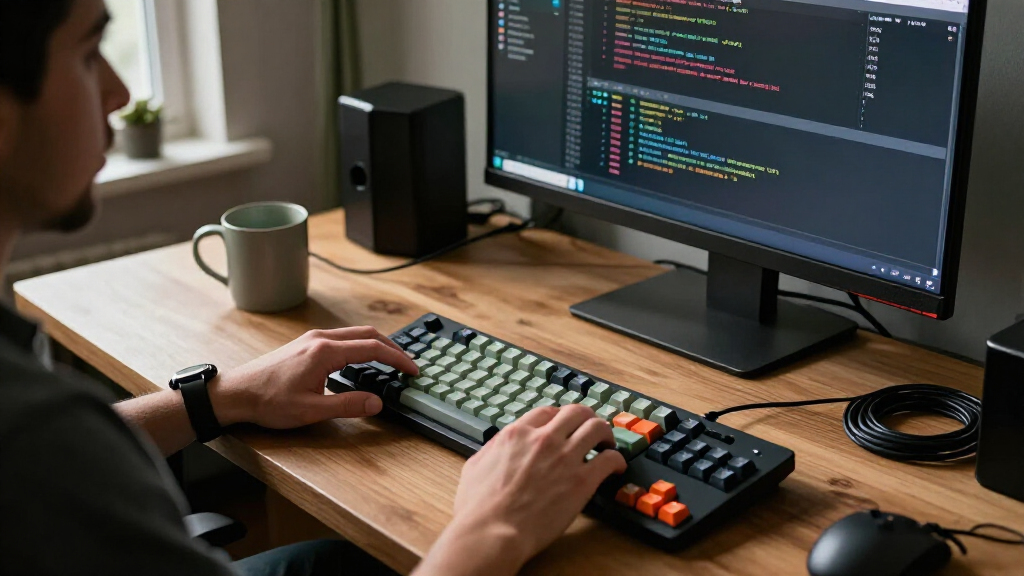
Products were selected based on their configurability, durability, and suitability for developer workflows. We prioritized models with extensive programmability, high build quality, and features like screens or knobs that improve efficiency. Ease of setup and software support also played key roles, ensuring that these macro pads can be integrated smoothly into various development environments. The ranking reflects a balance of value, feature set, and user versatility, with a preference for options that suit both beginner and advanced users alike.Factors to Consider When Choosing Programmable Macro Pads For Developers
Choosing the right programmable macro pad involves considering several factors that directly impact your workflow and setup. Beyond just key count, look at build quality, software compatibility, and expandability. Size and key layout influence portability and desk space, while features like knobs or screens can add valuable functionality. Be mindful of your specific needs—whether you require a compact device for limited space or a feature-rich pad for complex automation. Understanding these factors helps avoid common pitfalls like overspending on unnecessary features or selecting too limited a model for your tasks.Size and Key Count
The physical size and number of keys significantly impact how you use a macro pad. Larger models with more keys offer greater customization but can take up valuable desk space and be less portable. Compact options excel for limited setups or frequent movement, though they may sacrifice some functionality. Consider your workflow and space constraints to choose a size that enhances efficiency without cluttering your workspace.
Programmability and Software Compatibility
Effective macro pads must be easily programmable through reliable software compatible with your operating system. Some models offer drag-and-drop editors, while others require scripting or complex configuration. Compatibility with popular development tools or hardware like Windows, macOS, or Linux can streamline integration. A user-friendly interface reduces setup time and ensures you can quickly customize functions to match your workflow.
Build Quality and Durability
Developers often leave macro pads on their desks for long periods, so a sturdy build is essential. Look for models with high-quality switches, robust casing, and reliable connectors. Cheaper plastic models may feel flimsy or wear out quickly, impacting longevity. Investing in a well-constructed device can improve your experience and prevent frustration from hardware failure over time.
Features like Knobs and Screens
Additional features such as rotary knobs and LCD screens provide dynamic control and real-time feedback, adding depth to automation. Knobs can be used for volume, scrolling, or parameter adjustments, while screens display current status or custom information. These features are especially useful for workflows involving audio, video, or complex scripting, but they often increase cost and complexity.
Price and Expandability
Budget considerations are important, but opting for the cheapest model may limit future expandability or durability. Higher-end macro pads often support firmware updates, additional modules, or software extensions that grow with your needs. Evaluate whether the initial investment justifies the long-term benefits—sometimes paying more upfront results in better performance and longevity.
Frequently Asked Questions
Can I use these macro pads on multiple operating systems?
Most programmable macro pads support Windows and macOS, with some offering Linux compatibility. Software support varies, so checking for cross-platform compatibility before purchasing is essential. Some models include native drivers, while others rely on third-party tools or open-source firmware that work across different OSes. This flexibility allows you to integrate the macro pad into diverse development setups, but verifying software support ensures a smoother experience.
Are programmable macro pads suitable for gaming as well as development?
While primarily designed for productivity and automation, many macro pads are versatile enough for gaming. Mechanical switches and customizable keys can improve in-game commands, and some models include RGB lighting for aesthetic appeal. However, features like screens and knobs are usually more beneficial for development tasks. If gaming is a secondary concern, look for models that balance both functionalities without compromising durability or responsiveness.
How difficult is it to program these macro pads for complex workflows?
The complexity of programming depends on the model and its software. Entry-level options often feature simple drag-and-drop interfaces, suitable for basic macros. More advanced models support scripting or custom firmware, allowing highly tailored workflows but requiring a steeper learning curve. Consider your comfort level with configuration tools and the complexity of your automation needs when selecting a macro pad, ensuring it aligns with your technical skills.
Do I need additional software to utilize all features of these macro pads?
Most macro pads come with dedicated software that unlocks full programmability, including key remapping, macro recording, and feature customization. Some models also support third-party tools or open-source firmware for more advanced control. Basic features may be accessible without extra software, but to utilize advanced functions like scripting or multi-layer configurations, you’ll likely need to install and learn the provided software. Compatibility and ease of use of this software are key factors to consider.
Is it worth investing in a macro pad with a screen or knobs?
Adding a screen or knobs can significantly enhance workflow, offering immediate visual feedback or dedicated controls. For developers working with multimedia, audio, or complex scripting, these features can reduce reliance on multiple tools and streamline operations. However, they also increase the cost and complexity of setup. Assess whether these features align with your workflow demands; if you frequently need quick visual cues or tactile control, investing in a feature-rich model is justified.
Conclusion
For developers prioritizing overall versatility and seamless integration, the Logitech MX Keypad remains the best choice due to its intuitive software and LCD display. Those seeking maximum customization and advanced features might prefer the KiiBOOM Cybrix with its knobs and multiple controls. Budget-conscious users or those with limited space will find the SIKAI CASE 6-Key or similar compact models suitable. For newcomers, models with simple setup and straightforward software provide a gentle entry into programmable macro pads. Ultimately, your choice should align with your workflow complexity, space, and feature needs, ensuring a tool that enhances productivity rather than complicates it.
As an affiliate, we earn on qualifying purchases.Halloween Picks
halloween