Software testing books range from certification manuals to practical guides on automation, agile teams, and exploratory testing. I rank Effective Software Testing: A Developer’s Guide as the best overall pick for its practical, developer-focused approach; Lessons Learned in Software Testing stands out for context-driven judgment, while Software Testing Unlocked offers an approachable starting point for beginners. The main tradeoff is choosing between structured theory, hands-on methods, and focused coverage of a specific tool or testing environment. A book that suits an ISTQB exam candidate may not help much with a Playwright project or AI-powered product. Read on for the full breakdown and guidance on choosing the right book for your goals.

Get business pricing on monitors, keyboards and dev gear
- Business-only prices and quantity discounts
- Tax-exempt purchasing
- Multiple users, one account, clear invoices
Key Takeaways
- Practical guidance leads this roundup: Effective Software Testing earns the overall pick by connecting testing concepts to developer decisions rather than focusing only on certification study.
- Exam preparation and job skills are different goals: The ISTQB-focused titles offer a more structured syllabus, while context-driven and practical guides emphasize judgment and application.
- Beginner-friendly does not mean broadly useful at every level: Software Testing Unlocked is a gentler entry point, but experienced readers may prefer books with deeper methods or specialist scope.
- Specialized books solve narrower problems: Web Automation Testing Using Playwright and Testing AI-Powered Applications address specific technical needs that general testing texts cannot cover in the same detail.
- Several titles complement rather than replace each other: Agile Testing, Full Stack Testing, and Lessons Learned in Software Testing focus on different team contexts, so readers may benefit from pairing a broad foundation with a targeted guide.
| Software Testing Essentials: An ISTQB® Foundation Guide |  | Best for ISTQB Foundation Study | Subject: Software testing | Certification focus: ISTQB Foundation level | Format: Book | VIEW LATEST PRICE | See Our Full Breakdown |
| Effective Software Testing: A Developer’s Guide |  | Best for Working Developers | Subject: Software testing | Intended audience: Developers | Focus: Effective testing practice | VIEW LATEST PRICE | See Our Full Breakdown |
| Taking Testing Seriously: The Rapid Software Testing Approach |  | Best for Rapid Software Testing | Subject: Rapid Software Testing approach | Format: Book | Product title: Taking Testing Seriously: The Rapid Software Testing Approach | VIEW LATEST PRICE | See Our Full Breakdown |
| Foundations of Software Testing: ISTQB Certification, 4th Edition |  | Best Established Edition for Certification Study | Subject: Software testing | Certification focus: ISTQB certification | Edition: 4th edition | VIEW LATEST PRICE | See Our Full Breakdown |
| Lessons Learned in Software Testing: A Context-Driven Approach |  | Best for Context-Driven Testing Perspectives | Subject: Software testing | Approach: Context-driven | Format: Not specified in supplied product data | VIEW LATEST PRICE | See Our Full Breakdown |
| The Complete Software Tester: Concepts, Skills, and Strategies for High-Quality Testing |  | Best for Building a Broad Testing Foundation | Format: Book | Subject: Software testing | Focus: Concepts, skills, and strategies | VIEW LATEST PRICE | See Our Full Breakdown |
| Agile Testing: A Practical Guide for Testers and Agile Teams |  | Best for Agile Team Collaboration | Format: Book | Subject: Agile software testing | Audience: Testers and agile teams | VIEW LATEST PRICE | See Our Full Breakdown |
| Software Testing |  | Best for Readers Seeking a General-Topic Reference | Format: Not specified | Subject: Software testing | Focus: Not specified | VIEW LATEST PRICE | See Our Full Breakdown |
| Introduction to Software Testing: A Practical Guide to Testing, Design, Automation, and Execution |  | Best for Practical Testing Workflow Coverage | Format: Book | Subject: Software testing | Guide type: Practical guide | VIEW LATEST PRICE | See Our Full Breakdown |
| Web Automation Testing Using Playwright |  | Best for Playwright-Based Web Testing | Format: Book | Language: English | Subject: Web automation testing | VIEW LATEST PRICE | See Our Full Breakdown |
| Software Testing Unlocked: A Beginner’s Guide to QA and Automation |  | Best for Career Changers | Format: Guide | Audience: Beginners | Subject: Software quality assurance | VIEW LATEST PRICE | See Our Full Breakdown |
| Testing AI-Powered Applications: Ensuring Quality in the Age of Intelligent Software |  | Best for AI Application Testing | Subject: Testing AI-powered applications | Coverage: AI testing methodologies and quality challenges | Examples: Case studies and practical examples | VIEW LATEST PRICE | See Our Full Breakdown |
| Testing Computer Software | 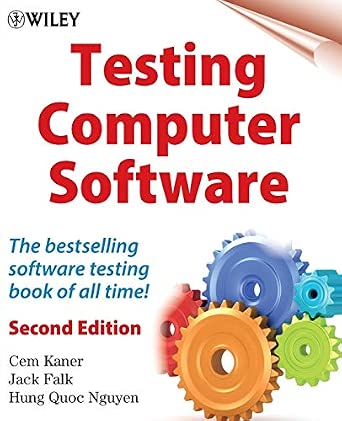 | Best for Classic Testing Foundations | Title: Testing Computer Software | Subject indicated by title: Computer software testing | ASIN: 0471358460 | VIEW LATEST PRICE | See Our Full Breakdown |
| Full Stack Testing: A Practical Guide for Delivering High Quality Software |  | Best for Full-Stack Quality Strategy | Format: Book | Subject: Full-stack testing | Positioning: Practical guide | VIEW LATEST PRICE | See Our Full Breakdown |
| software testing book | ASIN | Subject | Format |
|---|---|---|---|
| Software Testing Essentials: A | B0DR25XDS7 | Software testing | Book |
| Effective Software Testing: A | B0B5FK314T | Software testing | Book |
| Taking Testing Seriously: The | 1394253192 | Rapid Software Testing approach | Book |
| Foundations of Software Testin | 1473764793 | Software testing | Book |
| Lessons Learned in Software Te | 0471081124 | Software testing | Not specified in supplied product data |
| The Complete Software Tester: | B09NGVVCJ9 | Software testing | Book |
| Agile Testing: A Practical Gui | 0321534468 | Agile software testing | Book |
| Software Testing | 0672327988 | Software testing | Not specified |
| Introduction to Software Testi | 1484295137 | Software testing | Book |
| Web Automation Testing Using P | 9365898005 | Web automation testing | Book |
| Software Testing Unlocked: A B | B0FSYMKDJK | Software quality assurance | Guide |
| Testing AI-Powered Application | B0DJSPTX4J | Testing AI-powered applications | — |
| Testing Computer Software | 0471358460 | — | Not provided |
| Full Stack Testing: A Practica | 1098108132 | Full-stack testing | Book |
More Details on Our Top Picks
Software Testing Essentials: An ISTQB® Foundation Guide
I’d choose this guide when the main goal is building a foundation around the ISTQB Foundation level. Its certification-oriented framing gives it a clearer study purpose than Effective Software Testing: A Developer’s Guide, which is aimed at developers improving their testing work rather than preparing around a named syllabus. That distinction helps buyers pick a book based on their next step: structured foundation study here, or a developer-focused approach there. The tradeoff is that the available description confirms the level and alignment but gives no detail about exercises, coverage, or teaching style, so I can’t judge how well it supports practice or exam preparation. I’d favor it for readers who want a certification-aligned starting point, but compare it with Foundations of Software Testing: ISTQB Certification, 4th Edition if edition information matters to your choice.
Pros:- Explicitly aligned with the ISTQB Foundation level
- Provides a clear certification-study focus
- A direct fit for readers beginning formal software testing study
Cons:- The supplied description does not specify its coverage, exercises, or study aids
- May be less relevant to developers seeking hands-on, code-centered testing guidance
Best for: New testers or career changers who want a book explicitly aligned with ISTQB Foundation-level study.
Not ideal for: Developers seeking guidance centered on testing in their day-to-day coding work, or readers who need confirmed details about practice questions and chapter coverage.
- Subject:Software testing
- Certification focus:ISTQB Foundation level
- Format:Book
- Product title:Software Testing Essentials: An ISTQB® Foundation Guide
- ASIN:B0DR25XDS7
- Edition:Not specified in supplied product data
Our verdict“Choose this guide if ISTQB Foundation alignment is your main requirement and you are comfortable checking the book’s contents before relying on it as a complete study plan.”
Effective Software Testing: A Developer’s Guide
This is the most directly developer-oriented choice in the group: the title frames testing as part of a developer’s work, rather than as certification study. I’d put it ahead of Software Testing Essentials: An ISTQB® Foundation Guide for programmers looking to improve how they approach testing, while the ISTQB guide makes more sense when a formal foundation syllabus is the priority. That focus gives the book a practical audience, but the supplied description does not identify programming languages, techniques, or the balance between principles and examples. Buyers should not assume it covers a particular stack or automation tool without checking the book’s contents. Compared with Taking Testing Seriously: The Rapid Software Testing Approach, its stated audience is narrower and more developer-centered; readers seeking a broader testing approach may prefer that alternative.
Pros:- Clearly targets developers as its primary audience
- Centers the subject on effective software testing
- Offers a distinct alternative to certification-led study
Cons:- The supplied description does not name languages, tools, or specific testing techniques
- No edition or format details are provided in the product data
Best for: Software developers who want a testing book framed around improving their own testing practice rather than earning a certification.
Not ideal for: ISTQB candidates who need a syllabus-aligned study guide, or buyers who require confirmed language-specific examples and tool coverage.
- Subject:Software testing
- Intended audience:Developers
- Focus:Effective testing practice
- Format:Book
- Product title:Effective Software Testing: A Developer’s Guide
- ASIN:B0B5FK314T
Our verdict“Pick this book if you are a developer seeking testing guidance for your role, not a certification-first reference or a tool-specific manual.”
Taking Testing Seriously: The Rapid Software Testing Approach
I’d select this book for readers specifically interested in the Rapid Software Testing approach, rather than a general certification path. That makes it a more approach-centered pick than Foundations of Software Testing: ISTQB Certification, 4th Edition, whose stated purpose is tied to software testing and ISTQB certification. The difference is useful: one title signals a distinct testing approach, while the other signals formal exam-oriented coverage. The product data does not explain the approach’s techniques, intended experience level, or how much practical material the book includes, so buyers should verify that its treatment matches their needs. Compared with Effective Software Testing: A Developer’s Guide, this book is identified by its testing approach rather than by a developer audience, making it a better fit for readers who want to explore that named method.
Pros:- Clearly identifies the Rapid Software Testing approach as its subject
- Provides an approach-focused alternative to certification guides
- Useful for readers comparing distinct ways to think about software testing
Cons:- The supplied description does not detail the approach’s methods or practical exercises
- No edition, audience level, or broader topic coverage is specified
Best for: Testers and software quality practitioners who specifically want to study the Rapid Software Testing approach.
Not ideal for: Readers preparing for ISTQB certification or developers seeking confirmed language-specific testing examples.
- Subject:Rapid Software Testing approach
- Format:Book
- Product title:Taking Testing Seriously: The Rapid Software Testing Approach
- ASIN:1394253192
- Edition:Not specified in supplied product data
- Intended audience:Not specified in supplied product data
Our verdict“Choose this book when the Rapid Software Testing approach is your specific learning goal, and look elsewhere for a clearly documented certification syllabus.”
Foundations of Software Testing: ISTQB Certification, 4th Edition
The standout detail here is its fourth edition and explicit connection to ISTQB certification. I’d consider it alongside Software Testing Essentials: An ISTQB® Foundation Guide when choosing a certification-focused book: both point toward formal study, but this title clearly identifies its edition, while the Essentials guide specifies Foundation-level alignment. That makes this a stronger fit for buyers who value a named edition and certification focus, though the supplied data does not establish which syllabus version it follows. It is less directly suited to developers wanting role-specific guidance like Effective Software Testing: A Developer’s Guide. The main limitation is the sparse description: beyond its subject and certification connection, details about exercises, chapter coverage, and intended exam level are not provided.
Pros:- Identifies itself as the fourth edition
- Explicitly covers software testing and ISTQB certification
- Offers a certification-focused alternative to developer-oriented books
Cons:- The supplied data does not identify the specific ISTQB syllabus version or level
- No information is provided about exercises, examples, or chapter coverage
Best for: ISTQB certification candidates who want a clearly identified fourth-edition software testing text and will confirm syllabus fit before buying.
Not ideal for: Readers who need confirmed Foundation-level syllabus alignment, detailed exercise information, or developer-centered examples.
- Subject:Software testing
- Certification focus:ISTQB certification
- Edition:4th edition
- Format:Book
- Product title:Foundations of Software Testing: ISTQB Certification, 4th Edition
- ASIN:1473764793
Our verdict“This is a sensible certification-study candidate if its fourth edition matches your syllabus, but verify the exam-level fit before choosing it over the Foundation-specific guide.”
Lessons Learned in Software Testing: A Context-Driven Approach
This title points readers toward a context-driven approach, which gives it a different role from the two ISTQB-focused books in this group. I’d choose it for readers interested in how testing lessons relate to context, rather than those who need a certification syllabus or a developer-specific guide. That distinction sets it apart from Software Testing Essentials: An ISTQB® Foundation Guide, whose stated purpose is Foundation-level alignment, and from Effective Software Testing: A Developer’s Guide, which names developers as its audience. The supplied product information includes no description of the book’s structure, examples, or intended reader level, so I can’t claim how it develops its approach. It is best treated as a perspective-led choice, not a confirmed exam-prep or tool-instruction book.
Pros:- Clearly signals a context-driven perspective on software testing
- Offers a distinct alternative to ISTQB certification texts
- May suit readers interested in lessons and judgment shaped by testing context
Cons:- The supplied product data contains no description of its content or structure
- No edition, format, audience level, or certification alignment is specified
Best for: Experienced testers and quality practitioners who want to explore context-driven thinking about software testing.
Not ideal for: Beginners seeking a clearly described step-by-step curriculum, or certification candidates needing explicit ISTQB syllabus coverage.
- Subject:Software testing
- Approach:Context-driven
- Format:Not specified in supplied product data
- Edition:Not specified in supplied product data
- Product title:Lessons Learned in Software Testing: A Context-Driven Approach
- ASIN:0471081124
Our verdict“Choose this title for its context-driven perspective, but favor a certification guide or developer-focused text if you need a clearly defined study path.”
The Complete Software Tester: Concepts, Skills, and Strategies for High-Quality Testing
The Complete Software Tester is the broadest fit here for readers who want to connect testing concepts with the skills and strategies behind higher-quality work. Its stated focus is wider than Web Automation Testing Using Playwright, which concentrates on a specific tool and web-testing methods. That makes this book a better match for someone shaping a general testing approach rather than learning one automation stack. The tradeoff is that the available description does not identify particular exercises, frameworks, or audience level, so readers seeking a clearly defined hands-on path may prefer Introduction to Software Testing, whose title promises design, automation, and execution. I would choose this for breadth of subject matter, while recognizing that the product details provided do not establish how deeply each topic is treated.
Pros:- Covers both testing concepts and tester skills
- Focuses on strategies aimed at high-quality testing
- Broader subject scope than the Playwright-focused automation book
Cons:- The available description does not name specific techniques, tools, or exercises
- Reader level and depth of coverage are not specified
Best for: Testers seeking a broad grounding in testing concepts, professional skills, and strategies for improving software quality
Not ideal for: Readers who need a clearly documented, tool-specific tutorial or a confirmed beginner syllabus, since the available details do not specify those elements
- Format:Book
- Subject:Software testing
- Focus:Concepts, skills, and strategies
- Stated aim:High-quality testing
- Product type:Book
- ASIN:B09NGVVCJ9
Our verdict“Choose this if you want a general software-testing foundation rather than a tutorial centered on one tool or workflow.”
Agile Testing: A Practical Guide for Testers and Agile Teams
Agile Testing earns its place for readers who need testing practices to work across an agile team, not just within a tester’s individual workflow. Its practical techniques, step-by-step guidance, and real-world examples give it a more team-oriented emphasis than The Complete Software Tester, whose description centers on broad testing concepts and strategies. The examples can help readers connect testing decisions to day-to-day agile work, while the collaboration focus makes the book relevant to testers and other team members. The main tradeoff is its assumed familiarity with agile concepts: newcomers may find the material dense before they can apply it. Readers focused mainly on Playwright automation will also get a more targeted tool guide from Web Automation Testing Using Playwright.
Pros:- Offers actionable, step-by-step testing practices
- Addresses collaboration between testers and agile teams
- Uses real-world case studies and examples
- Connects testing practice to agile workflows
Cons:- Assumes some prior knowledge of agile concepts
- Dense material may be difficult for beginners
- Its agile focus is less suitable for readers seeking a general testing reference
Best for: Testers and developers already working in agile teams who want actionable practices for coordinating testing across the workflow
Not ideal for: Readers new to both agile and software testing, or buyers seeking a focused Playwright automation tutorial
- Format:Book
- Subject:Agile software testing
- Audience:Testers and agile teams
- Approach:Practical guide
- Content:Testing techniques, case studies, and examples
- Workflow focus:Integrating testing into agile workflows
- ASIN:0321534468
Our verdict“Pick this for practical testing guidance shared across an agile team, provided you already have some familiarity with agile ways of working.”
Software Testing
Software Testing has the most minimal product information in this group: the supplied data gives a title but no description, format details, or stated coverage. That makes it hard to recommend for a particular method or skill level. Compared with Agile Testing, which is explicitly framed around team practices and real-world examples, this book does not offer enough confirmed detail to signal a similarly clear use case. Its broad title could appeal to readers browsing for a general testing book, but I would not assume it covers automation, certification, or hands-on exercises without further information. The key tradeoff is uncertainty: it may suit an exploratory purchase, while readers with a defined goal are better served by a book in this lineup with a documented focus.
Pros:- Title directly identifies software testing as its subject
- Could suit readers browsing for a general-topic testing book
- Does not signal a narrow tool focus in the supplied product data
Cons:- No description is provided to verify topics or depth
- Audience level and practical content are unspecified
- Harder to match confidently to a specific testing goal than Agile Testing
Best for: Readers who are open to a general software-testing title and can verify the book’s contents before choosing it
Not ideal for: Buyers who need a confirmed beginner curriculum, agile practices, automation instruction, or other clearly stated coverage
- Format:Not specified
- Subject:Software testing
- Focus:Not specified
- Audience:Not specified
- Language:Not specified
- Edition:Not specified
- ASIN:0672327988
Our verdict“Consider it only if you can confirm its contents and want a general testing title rather than a clearly scoped guide.”
Introduction to Software Testing: A Practical Guide to Testing, Design, Automation, and Execution
Introduction to Software Testing stands out for naming a connected workflow: testing, design, automation, and execution. That makes it a more explicit match for readers who want to understand how test ideas become runnable checks than The Complete Software Tester, whose supplied description emphasizes concepts, skills, and strategies without naming automation or execution. The title’s practical framing suggests an applied guide, but the available product data gives no further detail about tools, exercises, or the depth of each topic. I would treat it as a promising choice for broad workflow coverage, not as a confirmed automation manual. Readers specifically focused on browser-based end-to-end, API, accessibility, and visual checks have a clearer subject match in Web Automation Testing Using Playwright.
Pros:- Names testing design, automation, and execution as coverage areas
- Practical-guide framing suits readers looking for applied material
- Connects planning tests with carrying them out
- Broader workflow scope than a single-tool Playwright guide
Cons:- No further product details confirm tools, examples, or exercises
- The reader level and depth of coverage are not stated
- Not clearly specialized in agile team practices like Agile Testing
Best for: Learners and working testers who want a practical overview connecting test design with automation and execution
Not ideal for: Readers seeking a documented framework-specific tutorial or detailed evidence about exercises and tools before buying
- Format:Book
- Subject:Software testing
- Guide type:Practical guide
- Coverage:Testing
- Coverage:Test design
- Coverage:Automation and execution
- ASIN:1484295137
Our verdict“Choose this for a stated practical path from test design to execution, but look elsewhere if you need a confirmed tool-specific course.”
Web Automation Testing Using Playwright
Web Automation Testing Using Playwright is the most specialized choice in this set, with coverage spanning end-to-end, API, accessibility, and visual testing. That scope makes it a better fit for readers building browser-based automation than Introduction to Software Testing, which presents a broader workflow from test design through execution but does not name a tool. The range of testing types also means the book is not limited to clicking through user journeys; its stated coverage reaches service checks and visual or accessibility concerns. The tradeoff is that Playwright’s focus may be too narrow for someone seeking general testing principles or agile team practices, such as those emphasized in Agile Testing. Product details beyond its language and subject are limited, so the depth of examples and prerequisites are not confirmed.
Pros:- Covers end-to-end web automation testing
- Includes API testing alongside browser testing
- Addresses accessibility and visual testing
- Provides a more focused tool match than the general testing titles
Cons:- Playwright specialization is less useful to readers seeking tool-neutral principles
- No additional details confirm depth, examples, or required prior knowledge
- Does not have the stated team-collaboration emphasis of Agile Testing
Best for: Web testers and developers who want Playwright-centered guidance across end-to-end, API, accessibility, and visual testing
Not ideal for: Readers seeking a tool-neutral testing foundation, agile team guidance, or confirmed details about exercises and prerequisites
- Format:Book
- Language:English
- Subject:Web automation testing
- Tool focus:Playwright
- Coverage:End-to-end and API testing
- Coverage:Accessibility and visual testing
- ASIN:9365898005
Our verdict“Pick this if Playwright is your target and you want coverage beyond browser journeys; choose a broader title for general testing foundations.”
Software Testing Unlocked: A Beginner’s Guide to QA and Automation
A clear first step into QA, this guide is framed as a 20-step journey from testing fundamentals toward preparing for a first QA job. That structure gives beginners a sequence to follow, unlike Testing Computer Software, whose established testing title is a better fit for readers seeking a broader testing reference. Its combination of manual QA foundations and automation can help career changers connect core concepts with the direction many entry-level roles take. The tradeoff is that a step-by-step guide may not offer the depth or range of a specialist text, and the supplied details do not identify specific tools, exercises, or programming languages. I’d choose it for orientation and job preparation, not as a stand-alone source for advanced automation practice.
Pros:- Designed for readers starting from QA basics
- Covers both quality assurance and test automation
- Organizes learning into a 20-step path
- Connects study with preparation for a first QA job
Cons:- The supplied description does not identify specific tools, languages, or practical exercises
- Its beginner and job-entry focus may not meet experienced testers’ needs
Best for: Beginners and career changers who want a guided route through QA fundamentals, automation, and preparation for a first testing job
Not ideal for: Experienced QA engineers seeking advanced techniques, or learners who need confirmed hands-on code samples and named tool coverage
- Format:Guide
- Audience:Beginners
- Subject:Software quality assurance
- Automation coverage:Test automation
- Learning structure:20-step journey
- Career focus:Preparing for a first QA job
- ASIN:B0FSYMKDJK
Our verdict“Choose this as a structured starting point if you are new to QA and want your learning to lead toward an entry-level role.”
Testing AI-Powered Applications: Ensuring Quality in the Age of Intelligent Software
Specialized AI testing coverage gives this book a distinct place in a roundup otherwise centered on broader software testing skills. It addresses quality challenges in intelligent applications through described methodologies, case studies, practical examples, checklists, and tool recommendations. That focus makes it a stronger match than Full Stack Testing: A Practical Guide for Delivering High Quality Software for readers whose immediate concern is testing AI-powered systems rather than software across the stack. The tradeoff is its technical level: the description warns that beginners may find it challenging, while limited code samples may leave hands-on learners wanting more. I’d treat it as a focused resource for teams developing AI testing practices, not as a first book on software QA or a coding workbook.
Pros:- Focuses on testing challenges specific to AI-driven applications
- Described as including case studies and practical examples
- Offers checklists and tool recommendations for QA teams
- Addresses emerging AI technologies and testing methods
Cons:- Technical depth may be difficult for readers without testing experience
- Limited code samples may constrain hands-on practice
Best for: QA engineers, developers, and test leads who need methods and team guidance for evaluating AI-powered applications
Not ideal for: New testers seeking foundational QA instruction, or developers who need extensive runnable code examples
- Subject:Testing AI-powered applications
- Coverage:AI testing methodologies and quality challenges
- Examples:Case studies and practical examples
- Team resources:Checklists and tool recommendations
- Intended audience:QA engineers, developers, and managers
- Technical level:May challenge beginners
- Code samples:Limited
- ASIN:B0DJSPTX4J
Our verdict“Choose this for focused AI application testing guidance, but pair it with a more hands-on resource if you need substantial coding practice.”
Testing Computer Software
A classic-title pick for broad testing foundations, this option earns a place for readers who want a general software testing book rather than a guide tied to AI or an entry-level career plan. The supplied product data provides the title and identifier but no description, edition, contents, or format details, so I can’t verify its specific methods or how well its material addresses current tools. Compared with Software Testing Unlocked, it is the less explicitly career-oriented choice; compared with Testing AI-Powered Applications, it is not presented as a specialist resource for intelligent systems. That breadth may suit readers looking for a general reference, but the missing detail makes it harder to recommend for a particular workflow. Buyers should check the edition and contents before choosing it for current practice.
Pros:- Directly focused on computer software testing
- A distinct general-testing alternative to the lineup’s AI and career-entry titles
- May suit readers seeking a broad testing reference
- Can be compared with more specialized books to clarify learning needs
Cons:- No description or contents information was supplied for this listing
- Edition, format, and current tool coverage are not confirmed
Best for: Readers seeking a general software testing title and willing to verify the edition and contents before purchase
Not ideal for: Beginners who need a confirmed step-by-step learning path, or practitioners looking for verified current tooling and AI-specific techniques
- Title:Testing Computer Software
- Subject indicated by title:Computer software testing
- ASIN:0471358460
- Format:Not provided
- Edition:Not provided
- Description:Not provided
Our verdict“Consider it as a general testing title only after checking its edition and contents against your learning goals.”
Full Stack Testing: A Practical Guide for Delivering High Quality Software
Its full-stack focus points toward readers who want to think about software quality across an application rather than concentrate on a single specialty. The title promises a practical guide to delivering high-quality software, but the supplied listing offers no chapter details, tools, examples, or testing levels, so I can’t tell how the book builds that approach. Compared with Testing AI-Powered Applications, it is the broader choice by stated scope; compared with Software Testing Unlocked, it is not described as a beginner’s career path. The practical framing may appeal to developers and testers working across layers, but buyers should verify the contents to see whether the book matches their stack and preferred level of detail. It is a less certain choice than books with a fuller description.
Pros:- Explicitly framed around full-stack testing
- Practical guide positioning may suit applied learning
- Focuses on delivering high-quality software
- Offers a broader stated scope than the AI-specific testing title
Cons:- No chapter list, examples, or testing methods were supplied
- Specific tools, technical level, and stack coverage are unconfirmed
Best for: Developers and QA practitioners seeking a practical, application-wide perspective on software quality who can verify the book’s detailed contents
Not ideal for: Readers needing confirmed tutorials, named tools, or a clearly defined beginner curriculum
- Format:Book
- Subject:Full-stack testing
- Positioning:Practical guide
- Stated goal:Delivering high-quality software
- Detailed contents:Not provided
- Tools and examples:Not specified
- ASIN:1098108132
Our verdict“Choose it if full-stack quality is your goal, but check the contents first because the supplied details do not establish its practical depth.”

How We Picked
I compared the 14 titles by the buyer problem each one appears best suited to solve: learning testing fundamentals, preparing for certification, applying techniques on a software team, or building skills in a specific area such as browser automation. I gave greater weight to books with a clear audience and a practical path from concepts to decisions. I also looked at how well each title could serve beyond a single immediate task, since a useful reference should remain relevant after a course or project ends.
The ranking favors breadth with practical value, then distinguishes focused books by how directly they match a reader’s goal. That puts Effective Software Testing first as a strong bridge between concepts and developer practice, while specialist, certification, and beginner titles rank according to their narrower roles. No single book wins for every reader: syllabus alignment matters for exam candidates, accessible explanations matter for newcomers, and technical specificity matters when a team needs guidance on Playwright or AI testing.
| software testing book | Format |
|---|---|
| Software Testing Essentials: A | Book |
| Effective Software Testing: A | Book |
| Taking Testing Seriously: The | Book |
| Foundations of Software Testin | Book |
| Lessons Learned in Software Te | Not specified in supplied product data |
| The Complete Software Tester: | Book |
| Agile Testing: A Practical Gui | Book |
| Software Testing | Not specified |
| Introduction to Software Testi | Book |
| Web Automation Testing Using P | Book |
| Software Testing Unlocked: A B | Guide |
| Testing AI-Powered Application | — |
| Testing Computer Software | Not provided |
| Full Stack Testing: A Practica | Book |
Factors to Consider When Choosing Software Testing Books
Before choosing among software testing books, decide what you need the book to change: your grasp of fundamentals, your exam readiness, your daily testing habits, or your ability to work with a specific tool or product type. The factors below can help prevent a common mismatch: buying a respected title that answers a different question from the one you have.
Match the Book to Your Immediate Goal
Start by naming a concrete outcome, such as passing a certification exam, improving test design, joining an agile team, or automating browser checks. These goals call for different kinds of explanation and practice, even when the books share the same broad subject. A syllabus-led text can give exam candidates a predictable structure, while a practice-oriented guide may better support decisions at work. A common mistake is treating a broad title as a substitute for a specialist resource. If your goal is likely to change soon, favor a foundational book that leaves room to add focused reading later.
Choose the Right Learning Level
Look for a match between the book’s assumed knowledge and what you already understand about software development and QA. A beginner guide can make unfamiliar terminology less intimidating, but it may move too slowly for a reader already writing tests. Conversely, a dense certification or methodology text can frustrate a newcomer who needs examples before formal definitions. Check whether the book teaches concepts in sequence or expects you to know the basics already. When uncertain, choose the level that challenges you without requiring you to decode every page before learning from it.
Separate Testing Principles from Tool Instructions
Books about testing principles can stay useful as frameworks and tools change, while tool-specific titles offer concrete guidance for a narrower task. Neither type replaces the other: principles help you decide what to test, and technical instructions help you implement a particular approach. A frequent buying error is choosing a tool manual when the real difficulty is designing meaningful coverage. The opposite mistake is relying on general testing theory when a project requires practical setup and workflow guidance. Pair the two only when your role calls for both judgment and implementation.
Check Whether the Book Fits Your Team Context
Testing practices vary across agile teams, full-stack products, regulated projects, and exploratory work, so examples and assumptions matter. A book shaped around one team model may not map neatly to a group with different release cycles or ownership boundaries. Look for an approach that helps you adapt its ideas rather than copy a process without examining your constraints. If your team is changing how it works, a context-focused or agile-oriented text may offer more useful discussion than a general reference. For a personal study plan, broad foundations may be more valuable than a detailed account of one workplace setup.
Decide How Much Specialization You Need
Specialist books can provide depth in areas such as Playwright automation or testing AI-powered applications, but their scope may be too narrow for someone still learning core concepts. Buy a focused title when you can identify a real project or skill gap it addresses. If you are exploring a field rather than applying it yet, begin with broader testing principles and add specialist material when the need becomes concrete. Also ask whether the subject changes quickly: a tool-focused book may need more frequent checking against current documentation. This helps balance useful depth against the risk of a book serving only one short-lived task.
Build a Reading Pair Instead of Expecting One Book to Do Everything
Software testing includes foundations, communication, test design, automation, and team practice, so one volume rarely covers every need well. A sensible pair might combine a general guide with a book dedicated to certification, agile collaboration, or a technical specialty. Avoid buying several books that repeat the same introductory material before identifying what is missing from your current knowledge. Use the table of contents and sample pages to spot overlap and differences in emphasis. A focused combination can be more useful than choosing a single title based only on its broadest promise.
Frequently Asked Questions
Which software testing book should I choose if I want practical skills rather than certification?
Choose a book whose emphasis is applying testing ideas to development work, not one organized mainly around an exam syllabus. In this roundup, Effective Software Testing is the strongest starting point for developer-oriented practice, while Lessons Learned in Software Testing can help readers think through context and judgment. If your work centers on a particular method or tool, a focused title may be a better second book. Check the contents for examples and decision-making guidance, not just definitions and terminology. Certification material can still help with vocabulary, but it should not be your only resource for day-to-day practice.
Should I read an ISTQB book even if I do not plan to take the exam?
An ISTQB-focused book can provide an organized introduction to testing terms and foundational concepts, which may help if you want a structured curriculum. It is less likely to be the best sole choice if your priority is hands-on testing decisions or tool-specific work. Compare the syllabus structure with your learning goal before choosing it. If you want both a common vocabulary and practical application, use the certification text as a reference and pair it with a practice-oriented guide. Skip the exam-centered approach if its format would distract from the skills you need now.
Is a beginner software testing book enough to start a QA career?
A beginner book can establish vocabulary and explain basic testing concepts, but a career also calls for practice, communication, and familiarity with real product workflows. Treat the book as a starting framework rather than proof of job readiness. After learning the basics, practice writing test ideas, reporting clear defects, and exploring an application systematically. Add a focused resource when you know whether your target work involves automation, agile collaboration, or another specialty. This staged approach is more useful than trying to learn every testing discipline from one introductory text.
Should I buy a Playwright book or a general automation testing book?
Choose a Playwright-specific title when you already have a project or learning goal tied to that tool and need concrete guidance for browser automation. A general testing book is the better first step if you are unsure what should be automated or how to design useful checks. Tool knowledge can help you implement tests, but it does not by itself teach good test selection or maintenance judgment. If both gaps apply, start with principles and then move to the Playwright guide. Check that any tool-specific advice matches the version and practices used in your project.
Can one book cover software testing for agile, full-stack, and AI products?
A broad book can introduce ideas that apply across product types, but the needs of agile collaboration, full-stack coverage, and AI behavior are distinct. Agile work often raises questions about team roles and feedback, while full-stack testing concerns coverage across application layers. AI-powered products add uncertainty around outputs and behavior that may not fit conventional checks. Choose a general foundation first if you need an overall map, then add a specialist title for the area you actually work in. Expecting one book to provide equal depth across all three settings can leave important practical questions unanswered.
Conclusion
Best overall: I recommend Effective Software Testing: A Developer’s Guide for readers who want practical testing guidance connected to software development. Best value in learning coverage: Lessons Learned in Software Testing is a strong choice for readers who want context-driven lessons that can inform many testing situations. Best for beginners: Software Testing Unlocked offers an accessible entry point, while the ISTQB titles make more sense for readers seeking a structured certification path. Best premium-style specialist pick: Testing AI-Powered Applications is the most targeted option for readers whose work involves intelligent software. For narrower needs, choose Web Automation Testing Using Playwright for browser automation, Agile Testing for team practice, or Full Stack Testing for coverage across application layers. My recommendation is to select one book for your current goal, then add a specialist title only when a clear skill gap remains.