

Automated testing software only delivers on its promise if the people building the test suites know what they are doing, and that is exactly where most teams stall. After comparing the leading resources in this space, Hands-On Automated Testing with Playwright stands out as the best overall pick because it combines a modern, well-supported framework with practical, scalable test design. Two other options deserve early attention: Complete Guide to Test Automation for framework-agnostic depth on long-term maintenance, and AI-Driven Software Testing for teams betting on machine learning to reduce manual test effort. The central tradeoff across this category is framework specificity versus transferable fundamentals — Playwright-focused books get you productive fast but tie your skills to one tool, while pattern and practice guides age better but demand more upfront effort. Keep reading for the full breakdown of which resource fits your stack, budget, and experience level.

Get business pricing on monitors, keyboards and dev gear
- Business-only prices and quantity discounts
- Tax-exempt purchasing
- Multiple users, one account, clear invoices
Key Takeaways
- Playwright dominates this lineup: four of the eleven picks center on it, confirming it has become the default modern choice for web automation over Selenium-based alternatives.
- The best overall pick won on practical depth, but the best value came from pattern-focused guides that outlast framework churn — skills-based books cost less over time because you replace them less often.
- AI-driven testing titles split into two camps: genuinely practical spec-driven workflows versus conceptual overviews, and the difference matters if you want CI/CD integration today.
- Beginners are better served by single-framework, hands-on books rather than ‘complete guide’ titles, which assume you already understand manual testing workflows.
- Two entries in this roundup overlap heavily in scope but differ sharply in depth, so choosing between them comes down to team size rather than content coverage.
| Web Automation Testing Using Playwright: End-to-end, API, accessibility, and Visual Testing Using Playwright (English Edition) |  | Best Overall Playwright Resource | Format: Paperback / eBook (English Edition) | Primary Tool: Microsoft Playwright | Testing Types Covered: End-to-end, API, accessibility, visual | VIEW LATEST PRICE | See Our Full Breakdown |
| OpenCode Projects Handbook: Build Real Software with AI Coding Agents, Custom Agents, Skills, MCP, Local Models, Context Engineering, Testing, and Automated Workflows | 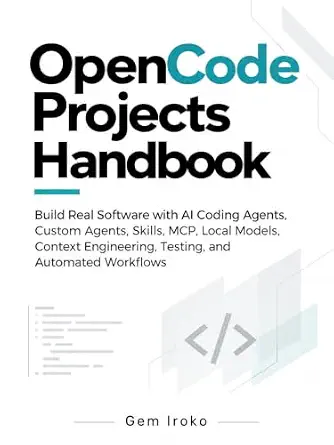 | Best for AI-Native Workflows | Format: eBook / digital handbook | Primary Focus: AI-assisted software development and testing | Key Topics: AI coding agents, MCP, local models, context engineering, automated workflows | VIEW LATEST PRICE | See Our Full Breakdown |
| Design Patterns for High-Quality Automated Tests: High-Quality Test Attributes and Best Practices | 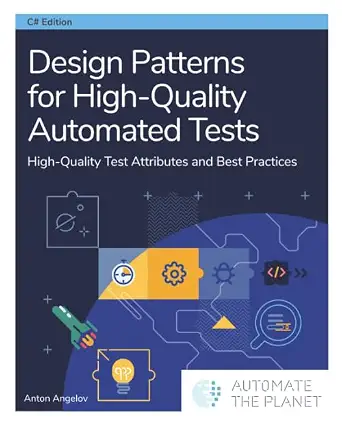 | Best for Test Architecture and Maintainability | Format: Paperback / eBook | Primary Focus: Test design patterns and quality attributes | Tool Dependency: Tool-agnostic | VIEW LATEST PRICE | See Our Full Breakdown |
| Hands-On Automated Testing with Playwright: Create Fast, Reliable, and Scalable Tests for Modern Web Apps with Microsoft’s Automation Framework |  | Best Hands-On Pick for Web Testers | Format: Paperback / eBook | Primary Tool: Microsoft Playwright | Focus: End-to-end web test automation | VIEW LATEST PRICE | See Our Full Breakdown |
| Full Stack Testing: A Practical Guide for Delivering High Quality Software |  | Best for Whole-Pipeline Quality Strategy | Format: Paperback / eBook | Primary Focus: End-to-end full stack testing strategy | Coverage: Frontend, backend, integration, and delivery practices | VIEW LATEST PRICE | See Our Full Breakdown |
| Playwright Automation Testing: Complete Guide with TypeScript |  | Best Framework-Specific Guide | Format: Digital book (Kindle) | Topic: Automated testing with Playwright | Language Focus: TypeScript | VIEW LATEST PRICE | See Our Full Breakdown |
| Complete Guide to Test Automation: Techniques, Practices, and Patterns for Building and Maintaining Effective Software Projects |  | Best for Strategy and Fundamentals | Format: Digital book (Kindle) | Topic: Test automation techniques and practices | Focus: Patterns for building and maintaining tests | VIEW LATEST PRICE | See Our Full Breakdown |
| AI-Driven Software Testing: Transforming Software Testing with Artificial Intelligence and Machine Learning |  | Best for AI Test Innovation | Format: Digital book (Kindle) | Topic: AI and ML in software testing | Focus: Innovative techniques and applications | VIEW LATEST PRICE | See Our Full Breakdown |
| Spec-Driven Software Testing with AI: Build Reliable Test Suites from Specifications with AI, Test Automation, TDD, API Testing, and CI/CD |  | Best for Modern Pipeline Integration | Format: Digital book (Kindle) | Topic: Spec-driven testing with AI | Coverage: AI, test automation, TDD, API testing, CI/CD | VIEW LATEST PRICE | See Our Full Breakdown |
| Automated Testing Engineering Fundamentals, Volume 1 |  | Best Entry Point for Beginners | Format: Digital book (Kindle) | Series: Volume 1 — Automated Testing Engineering | Topic: Automated testing fundamentals | VIEW LATEST PRICE | See Our Full Breakdown |
| Implementing Automated Software Testing: How to Save Time and Lower Costs While Raising Quality |  | Best for Business-Minded Managers | Format: Paperback / Digital | Focus: Test automation strategy and implementation | Audience Level: Managers and experienced practitioners | VIEW LATEST PRICE | See Our Full Breakdown |
| automated testing software | Format | Audience Level |
|---|---|---|
| Web Automation Testing Using P | Paperback / eBook (English Edition) | — |
| OpenCode Projects Handbook: Bu | eBook / digital handbook | — |
| Design Patterns for High-Quali | Paperback / eBook | — |
| Hands-On Automated Testing wit | Paperback / eBook | — |
| Full Stack Testing: A Practica | Paperback / eBook | — |
| Playwright Automation Testing: | Digital book (Kindle) | Beginner to experienced |
| Complete Guide to Test Automat | Digital book (Kindle) | Beginner to experienced |
| AI-Driven Software Testing: Tr | Digital book (Kindle) | Intermediate to advanced |
| Spec-Driven Software Testing w | Digital book (Kindle) | Intermediate to advanced |
| Automated Testing Engineering | Digital book (Kindle) | Beginner to professional |
| Implementing Automated Softwar | Paperback / Digital | Managers and experienced practitioners |
More Details on Our Top Picks
Web Automation Testing Using Playwright: End-to-end, API, accessibility, and Visual Testing Using Playwright (English Edition)
Web Automation Testing Using Playwright earns the top spot because it treats Playwright as a complete testing platform rather than just an end-to-end tool. Coverage of API, accessibility, and visual testing means one book can replace three narrower ones. Compared with Hands-On Automated Testing with Playwright, which stays focused on building reliable web test suites, this option takes a wider lens that suits teams consolidating their testing stack. Compared with Playwright Automation Testing: Complete Guide with TypeScript, the API and accessibility chapters give it a practical edge for teams facing compliance requirements. The tradeoff is breadth over depth: readers wanting exhaustive TypeScript exercises may find some sections move quickly, and the multi-topic scope assumes comfort with JavaScript fundamentals.
Pros:- Covers four testing disciplines — end-to-end, API, accessibility, and visual — in one volume
- Practical, technique-driven guidance rather than pure theory
- Accessibility testing coverage is rare among Playwright books
- Serves as a long-term team reference, not a one-time read
Cons:- Breadth across four domains means less depth in each than single-topic books
- No customer ratings available to gauge community validation
- Assumes prior JavaScript knowledge without a ramp-up chapter
Best for: QA engineers and developers who want a single Playwright reference covering functional, API, accessibility, and visual testing in one place
Not ideal for: Absolute beginners to web automation — the multi-domain coverage assumes existing JavaScript and testing knowledge
- Format:Paperback / eBook (English Edition)
- Primary Tool:Microsoft Playwright
- Testing Types Covered:End-to-end, API, accessibility, visual
- Audience:Developers and QA engineers
- Experience Level:Intermediate
- Language Assumed:JavaScript/TypeScript familiarity
- Use Case:Team reference and multi-discipline test strategy
Our verdict“This is the pick for teams that want one Playwright book to anchor an entire web testing strategy across functional and non-functional domains.”
OpenCode Projects Handbook: Build Real Software with AI Coding Agents, Custom Agents, Skills, MCP, Local Models, Context Engineering, Testing, and Automated Workflows
Where most books in this roundup teach testing a tool, the OpenCode Projects Handbook teaches a workflow — one where AI coding agents write and verify tests as part of automated pipelines. That makes it a natural companion to titles like AI-Driven Software Testing, but with a sharper project-based angle: readers build working software with MCP servers, local models, and custom agents rather than studying concepts. Compared with Spec-Driven Software Testing with AI, this book is broader and less testing-obsessed, which is both its appeal and its weakness. Testing is one chapter among many, so readers who want deep test-design theory should pair it with Design Patterns for High-Quality Automated Tests. The fast-moving AI tooling landscape also means some material will age quickly.
Pros:- Step-by-step projects using current AI tooling including MCP and local models
- Treats automated testing as part of a real development pipeline, not an isolated topic
- Covers context engineering, a topic most testing books ignore entirely
- Project-based structure makes abstract AI concepts concrete
Cons:- AI tooling evolves fast, so specific workflows may become dated
- Light on stated prerequisites, which can leave less-experienced developers guessing
- Testing coverage is shallower than dedicated titles in this lineup
Best for: Mid-career developers wiring AI agents into CI/CD pipelines who want testing treated as part of an automated build workflow
Not ideal for: Readers seeking a dedicated testing manual — testing here is one component of a larger AI development stack
- Format:eBook / digital handbook
- Primary Focus:AI-assisted software development and testing
- Key Topics:AI coding agents, MCP, local models, context engineering, automated workflows
- Audience:Developers integrating AI agents into real projects
- Experience Level:Intermediate to advanced
- Structure:Project-based, step-by-step
- Testing Coverage:One component within a broader AI workflow
Our verdict“Buy this if your testing questions are really AI-workflow questions; skip it if you need a focused test-automation curriculum.”
Design Patterns for High-Quality Automated Tests: High-Quality Test Attributes and Best Practices
Most titles here teach you how to automate; this one teaches you how to keep automated tests worth maintaining. Design Patterns for High-Quality Automated Tests focuses on the attributes — maintainability, reliability, readability — that separate test suites people trust from suites people delete. Compared with Web Automation Testing Using Playwright, it is tool-agnostic: the patterns apply whether your suite runs on Playwright, Selenium, or an in-house framework. That longevity is the selling point, but also the tradeoff — readers expecting copy-paste framework code will not find it here. It pairs well with Hands-On Automated Testing with Playwright, which supplies the framework mechanics this book deliberately leaves to other resources. Think of it as the architecture layer on top of any tool-specific book in this roundup.
Pros:- Tool-agnostic principles that outlast any specific framework version
- Directly addresses flakiness and maintenance cost, the two biggest test-suite killers
- Frames quality as measurable test attributes, giving teams shared vocabulary
- Complements any tool-focused book in this lineup without overlap
Cons:- No hands-on framework exercises or runnable code examples tied to a specific tool
- Sparse edition and format information makes purchase planning awkward
- Conceptual density may frustrate readers who learn best by building
Best for: Engineers inheriting a fragile, flaky test suite who need principles for restructuring it
Not ideal for: Readers wanting tool-specific tutorials or ready-to-run scripts — this is pattern theory, not framework walkthroughs
- Format:Paperback / eBook
- Primary Focus:Test design patterns and quality attributes
- Tool Dependency:Tool-agnostic
- Core Topics:Maintainability, reliability, test attributes, best practices
- Audience:Test architects and senior automation engineers
- Experience Level:Intermediate to advanced
- Best Use:Improving or restructuring existing test suites
Our verdict“This is the layer every automated suite eventually needs — buy it when your tests work but keep breaking.”
Hands-On Automated Testing with Playwright: Create Fast, Reliable, and Scalable Tests for Modern Web Apps with Microsoft’s Automation Framework
Of the two Playwright books in this batch, Hands-On Automated Testing with Playwright is the practitioner’s choice. Its subtitle tells you the priorities — fast, reliable, and scalable — and the content leans into building test suites that survive production traffic. Compared with Web Automation Testing Using Playwright, it trades that book’s accessibility and visual testing breadth for deeper mechanics on making suites scale, which matters more for teams with hundreds of tests than teams exploring Playwright’s surface. The hands-on framing also makes it friendlier to learn from than the pattern-heavy Design Patterns for High-Quality Automated Tests, though it offers less transferable theory. The drawback is scope: outside web end-to-end testing, it has little to say about API or accessibility work.
Pros:- Practical, exercise-driven approach that gets readers writing tests quickly
- Explicit focus on scalability and reliability for large test suites
- Grounded in Microsoft’s actively maintained Playwright framework
- Well suited to modern single-page web application testing
Cons:- Narrower scope than multi-discipline Playwright books in this roundup
- No customer ratings yet to confirm how well examples hold up
- Web-only focus leaves mobile and API testing untouched
Best for: Web developers and QA engineers building production-scale Playwright suites who learn by doing
Not ideal for: Teams needing API, accessibility, or visual testing coverage — this book stays inside web end-to-end territory
- Format:Paperback / eBook
- Primary Tool:Microsoft Playwright
- Focus:End-to-end web test automation
- Key Emphasis:Speed, reliability, scalability
- Audience:Web developers and test automation engineers
- Experience Level:Beginner to intermediate
- Learning Style:Hands-on, project-driven
Our verdict“If your job is building a web test suite that scales, this focused, practical guide beats the broader alternatives.”
Full Stack Testing: A Practical Guide for Delivering High Quality Software
Full Stack Testing takes the widest view in this roundup: not one tool or framework, but the entire quality pipeline from unit tests through deployment. That makes it the natural choice for readers deciding where automation fits, while books like Hands-On Automated Testing with Playwright handle the how for a specific tool. Compared with Design Patterns for High-Quality Automated Tests, it is less architectural and more strategic — methodologies, tool selection, and delivery practices aimed at developers and QA working together. The breadth is real: you get coverage spanning frontend, backend, and integration concerns. The cost is depth — some topics get survey-level treatment, and beginners may find the assumed technical background steep. It works best as the map, with a tool-specific book as the vehicle.
Pros:- Covers the full testing pipeline rather than a single layer or tool
- Practical delivery focus connects testing decisions to shipping software
- Written for mixed developer/QA audiences, supporting cross-functional teams
- Strong companion piece that frames which specialized tools to adopt next
Cons:- Breadth means some topics lack detailed worked examples
- Assumes technical background that beginners may not have
- No deep dives into any single framework or tool
Best for: Developers and QA leads who own quality across an entire application stack and need a strategy-level view
Not ideal for: Complete newcomers to software testing — the broad scope and assumed technical context can overwhelm early learners
- Format:Paperback / eBook
- Primary Focus:End-to-end full stack testing strategy
- Coverage:Frontend, backend, integration, and delivery practices
- Tool Dependency:Multi-tool, methodology-driven
- Audience:Developers and QA professionals on cross-functional teams
- Experience Level:Intermediate
- Best Use:Quality strategy and pipeline design
Our verdict“Buy this to build your quality strategy first, then pick a tool-specific book from this list to execute it.”
Playwright Automation Testing: Complete Guide with TypeScript
Among the Playwright titles in this lineup, this one takes the framework-first approach: it commits fully to TypeScript, which matters because typed test code catches selector and assertion errors before a test run ever starts. Where Hands-On Automated Testing with Playwright leans on JavaScript examples and broader walkthroughs, this guide pushes into setup, best practices, and advanced techniques aimed at teams building maintainable suites rather than quick scripts. The tradeoff is depth over breadth — readers wanting general automation strategy will get more from Complete Guide to Test Automation, since this book assumes Playwright is already your choice. The material is dense in places, so a complete newcomer may want a gentler on-ramp first.
Pros:- Full coverage of Playwright paired with TypeScript’s type safety
- Balances beginner setup guidance with advanced techniques
- Practical examples and best practices reflect real workflows
- Suits both new testers and experienced engineers moving to Playwright
Cons:- Dense early chapters can overwhelm complete beginners
- No concrete technical specifications or version details provided
Best for: QA engineers and developers who have already chosen Playwright and want a TypeScript-native, production-grade workflow guide
Not ideal for: Teams still evaluating frameworks or working in Python or Java — the TypeScript focus will feel restrictive
- Format:Digital book (Kindle)
- Topic:Automated testing with Playwright
- Language Focus:TypeScript
- Coverage:Setup, best practices, advanced techniques
- Audience Level:Beginner to experienced
- Includes Examples:Yes
Our verdict“If Playwright plus TypeScript is your stack, this is the most targeted guide in the roundup.”
Complete Guide to Test Automation: Techniques, Practices, and Patterns for Building and Maintaining Effective Software Projects
This is the big-picture pick in the roundup. Rather than teaching one framework, it focuses on techniques, practices, and patterns — the layer that stays useful long after a tool becomes obsolete. Compared with Automated Testing Unleashed: Volume 1, which covers similar fundamentals, this book goes further into maintenance strategy, which is where most real-world automation effort actually goes. The drawback is abstraction: readers who want copy-paste code will find fewer worked examples here than in Playwright Automation Testing: Complete Guide with TypeScript, and the description offers no edition details, so buyers should verify currency before purchasing. For engineering leads planning a testing practice, that abstraction is exactly the point.
Pros:- Tool-agnostic patterns that outlast any single framework
- Strong emphasis on maintaining automation long-term, not just building it
- Accessible to both beginners and experienced testers
- Covers reliability and efficiency strategy, not just technique lists
Cons:- Fewer concrete technical examples than framework-specific guides
- No edition or publication date listed, raising currency concerns
Best for: QA leads and engineers designing a test automation strategy across tools and teams
Not ideal for: Hands-on learners who need immediate code examples to follow along with
- Format:Digital book (Kindle)
- Topic:Test automation techniques and practices
- Focus:Patterns for building and maintaining tests
- Scope:Tool-agnostic
- Audience Level:Beginner to experienced
- Includes Examples:Limited, pattern-focused
Our verdict“The right choice when you need a durable automation mindset rather than a single tool’s manual.”
AI-Driven Software Testing: Transforming Software Testing with Artificial Intelligence and Machine Learning
For teams tracking where testing is headed, this book covers how AI and machine learning are reshaping test generation, prioritization, and defect prediction. Next to Spec-Driven Software Testing with AI, which is workflow-heavy and pipeline-oriented, this title reads more like a survey of the field — innovative techniques and practical applications explained at a conceptual level. That breadth is its strength and its weakness: it explains why AI matters for testing better than anything else in this lineup, but it skips detailed implementation steps, so engineers expecting runnable code will need a second resource. The assumed background is also higher than Complete Guide to Test Automation, making this a poor first book on the subject.
Pros:- Covers cutting-edge AI and ML applications in testing
- Explains efficiency and accuracy gains in practical terms
- Broad survey of modern testing methods in one place
- Good for strategic planning and tool evaluation
Cons:- Lacks detailed technical implementation steps
- Too advanced for readers new to automation
Best for: Senior testers and engineering managers evaluating how AI can fit into their testing practice
Not ideal for: Beginners or practitioners wanting step-by-step implementation guidance
- Format:Digital book (Kindle)
- Topic:AI and ML in software testing
- Focus:Innovative techniques and applications
- Depth:Conceptual and strategic
- Audience Level:Intermediate to advanced
- Includes Examples:Illustrative, not step-by-step
Our verdict“A forward-looking read for decision-makers, not a hands-on manual for daily test writing.”
Spec-Driven Software Testing with AI: Build Reliable Test Suites from Specifications with AI, Test Automation, TDD, API Testing, and CI/CD
This is the most pipeline-aware book in the batch. It connects AI-assisted test generation to TDD, API testing, and CI/CD, meaning readers finish with a workflow that fits directly into a delivery pipeline — something AI-Driven Software Testing gestures at but never operationalizes. Its spec-driven angle also solves a real problem: tests derived from specifications tend to be more stable and better aligned with requirements than tests written ad hoc after the fact. The cost is complexity. Compared with Automated Testing Unleashed: Volume 1, this book assumes you already understand automation fundamentals and are comfortable stitching multiple practices together, so newcomers will struggle without a foundations text first.
Pros:- Ties AI testing directly to TDD, API testing, and CI/CD
- Spec-driven approach produces requirements-aligned, stable suites
- Covers the full workflow from specification to pipeline
- Practical guidance for integrating automation into delivery
Cons:- Assumes substantial prior technical knowledge
- Broad scope means some individual topics get shallow treatment
Best for: DevOps-minded engineers who want AI-generated tests flowing through automated CI/CD pipelines
Not ideal for: Readers without prior automation experience — the multi-practice scope moves fast
- Format:Digital book (Kindle)
- Topic:Spec-driven testing with AI
- Coverage:AI, test automation, TDD, API testing, CI/CD
- Approach:Specification-driven test suite construction
- Audience Level:Intermediate to advanced
- Includes Examples:Yes, workflow-oriented
Our verdict“The pick for engineers who want AI testing embedded in a real delivery pipeline end to end.”
Automated Testing Engineering Fundamentals, Volume 1
As Volume 1 of a fundamentals series, this book positions itself as the on-ramp — the place to learn what automated testing is before picking a tool. That sets it apart from every other title here: Playwright Automation Testing assumes a framework choice, and Spec-Driven Software Testing with AI assumes engineering maturity, while this one starts from first principles with detailed explanations suitable for career-switchers and junior engineers. The tradeoff is obvious and deliberate: fundamentals mean no deep coverage of any single tool or cutting-edge technique, and experienced testers will find little new. Sparse reviews and missing details also make it harder to gauge quality in advance, so it works best paired with a more specialized follow-up from this list.
Pros:- Starts from first principles with no assumed background
- Detailed explanations make concepts stick for newcomers
- Serves both beginners and professionals refreshing basics
- Natural stepping stone to more specialized volumes
Cons:- No tool-specific or advanced techniques covered
- Few reviews and little detail available to judge quality beforehand
Best for: Career-switchers and junior engineers building a foundation before choosing a framework
Not ideal for: Experienced testers — the fundamentals-level content will repeat what they already know
- Format:Digital book (Kindle)
- Series:Volume 1 — Automated Testing Engineering
- Topic:Automated testing fundamentals
- Depth:Foundational, tool-agnostic
- Audience Level:Beginner to professional
- Includes Examples:Practical insights and explanations
Our verdict“A sensible first purchase for newcomers, provided a specialized follow-up comes next.”
Implementing Automated Software Testing: How to Save Time and Lower Costs While Raising Quality
Among a lineup heavy on hands-on tooling guides like Hands-On Automated Testing with Playwright, this book takes a different lane: it’s about the strategy of automation, not the syntax. That focus makes it the pick for readers who need to justify, plan, and budget an automation initiative rather than write the tests themselves. Where Design Patterns for High-Quality Automated Tests digs into code-level attributes, this one argues the cost and quality case to stakeholders — useful for anyone building a roadmap. The tradeoff is real, though: developers expecting scripts and walkthroughs will find the high-level treatment thin, and the material predates modern frameworks like Playwright entirely. Compared with Complete Guide to Test Automation, it’s narrower but more directly aimed at the ROI conversation.
Pros:- Frames automation around measurable time and cost savings
- Practical, strategy-first guidance for process optimization
- Accessible to non-technical stakeholders and decision makers
- Covers quality-improvement outcomes alongside efficiency gains
Cons:- Lacks detailed technical implementation steps and code examples
- Content predates modern frameworks like Playwright, so tooling references feel dated
- Too high-level for engineers expecting a hands-on tutorial
Best for: QA managers, team leads, and engineering directors who need to build a business case and rollout strategy for test automation
Not ideal for: Hands-on testers wanting code examples or framework tutorials — this stays at the planning and strategy level
- Format:Paperback / Digital
- Focus:Test automation strategy and implementation
- Audience Level:Managers and experienced practitioners
- Primary Topics:Cost reduction, time savings, quality improvement
- Code Examples:Minimal — strategy-focused, not tutorial-style
- Best Use:Planning and justifying automation initiatives
- Currency:Pre-dates modern frameworks such as Playwright
Our verdict“Buy this if you’re leading an automation effort and need the strategy and ROI story — skip it if you want to write tests tomorrow.”

How We Picked
I evaluated each option against four buyer-relevant criteria. Framework relevance came first: resources tied to actively maintained tools like Playwright scored higher than those built around aging stacks. Practical applicability was second — I favored material that walks through real test suites, CI/CD integration, and maintenance scenarios over abstract theory. Durability of the material mattered too, because testing books that teach transferable patterns stay useful for years while tool-specific tutorials expire with each major release. Finally, I weighed audience fit, since a QA engineer automating a large regression suite needs very different guidance than a developer adding tests to a side project.
The ranking order reflects a simple logic: options that balance modern tooling with durable practices rank highest, followed by specialized picks that excel for narrower audiences. Books that lean too heavily on either raw tool tutorials or pure theory landed lower, not because they are bad, but because they serve fewer buyers well. Where two entries overlap in scope, I ranked the one with deeper maintenance and scaling guidance higher, since that is where most automated testing efforts actually fail.
| automated testing software | Format | Audience Level |
|---|---|---|
| Web Automation Testing Using P | Paperback / eBook (English Edition) | — |
| OpenCode Projects Handbook: Bu | eBook / digital handbook | — |
| Design Patterns for High-Quali | Paperback / eBook | — |
| Hands-On Automated Testing wit | Paperback / eBook | — |
| Full Stack Testing: A Practica | Paperback / eBook | — |
| Playwright Automation Testing: | Digital book (Kindle) | Beginner to experienced |
| Complete Guide to Test Automat | Digital book (Kindle) | Beginner to experienced |
| AI-Driven Software Testing: Tr | Digital book (Kindle) | Intermediate to advanced |
| Spec-Driven Software Testing w | Digital book (Kindle) | Intermediate to advanced |
| Automated Testing Engineering | Digital book (Kindle) | Beginner to professional |
| Implementing Automated Softwar | Paperback / Digital | Managers and experienced practitioners |
Factors to Consider When Choosing Automated Testing Software
Choosing the right automated testing resource is less about finding the most comprehensive title and more about matching the material to your stack, your team’s maturity, and how long you need the knowledge to stay relevant. These are the factors that separate a smart purchase from a shelf ornament.Match the Framework to Your Stack Before Anything Else
The single most common mistake buyers make is grabbing a general automation guide when their team has already committed to a specific framework. If your engineering group works in TypeScript and uses Playwright, a Playwright-specific resource will get you writing maintainable tests in days rather than weeks. General guides teach transferable concepts, but you will spend extra time translating every example into your tool’s syntax. My advice: buy one framework-specific resource for daily productivity and one patterns-based guide for the concepts that survive framework migrations. Teams that skip the second book often find themselves rewriting their entire test approach when they switch tools.
Weigh Longevity Against Speed to Productivity
Tool-specific tutorials depreciate fast — a book written for Playwright 1.20 may have outdated patterns within two years. Design-pattern and test-quality guides, by contrast, stay useful across generations of frameworks because they teach what makes tests reliable rather than how to call a specific API. The tradeoff is real: patterns books rarely get you running your first test suite quickly. If you are under pressure to deliver automation this quarter, prioritize hands-on material and accept the shorter shelf life. If you are investing in a career or a long-lived testing practice, weight durability more heavily.
Honest Budgeting for AI-Driven Testing Claims
AI-focused testing titles vary enormously in substance, and buyers should be skeptical of anything promising test generation without maintenance. The credible material treats AI as an accelerator for spec-driven test design and flaky-test triage, not a replacement for test strategy. Before paying a premium for AI-focused content, check whether it covers integration with real CI/CD pipelines and whether its examples produce tests you would actually keep. Resources that only explain concepts without implementation paths tend to disappoint teams expecting immediate workflow changes. The practical AI titles in this category earned their spots precisely because they show where AI helps and where it still fails.
Assess Your Team’s Starting Point Realistically
A guide pitched at experienced QA architects will frustrate a junior tester, and a beginner-friendly walkthrough will bore a senior engineer into abandoning it. Books that assume prior manual testing knowledge move too fast for people new to QA entirely, while truly introductory material spends chapters on concepts experienced readers already know. The sweet spot for most buyers is a resource that includes a skills checklist or early chapters you can skim confidently. If you lead a team with mixed experience, consider a layered approach: one hands-on beginner title and one advanced patterns title, then assign each person the appropriate entry point.
Prioritize Maintenance and Scaling Coverage
Most automation efforts do not fail at writing the first tests — they fail six months later when the suite becomes slow, flaky, and unmaintained. This is why I weighted maintenance chapters so heavily in the ranking. Look for material covering test attributes like independence, repeatability, and clarity, plus practical topics like parallel execution and selective test runs. A book that only teaches test creation is teaching you half the job. Buyer’s rule of thumb: if a resource dedicates less than a quarter of its content to keeping tests healthy over time, it is a starter tool at best.
Full-Stack Coverage: Useful or Dilution?
Several options in this space promise end-to-end coverage — unit, API, UI, performance, and accessibility testing in one package. That breadth sounds like value but often means each area gets shallow treatment. Buyers building a dedicated automation practice usually get more from a focused resource that goes deep on the layer where their bugs actually escape. Full-stack guides make the most sense for solo developers or small teams where one person owns testing across the entire stack. Before choosing breadth, ask which test layer currently lets the most defects reach production, and buy depth there first.
Frequently Asked Questions
Should I learn automated testing with Playwright or pick a framework-agnostic resource?
If you have a concrete project starting soon, learn through Playwright — it has become the default modern web automation tool, has strong multi-language support, and four of the resources in this roundup focus on it for good reason. The risk of framework-specific learning is obsolescence if your team later switches tools, which is why I recommend pairing a Playwright book with a design-patterns guide. The patterns resource teaches test independence, maintainability, and structure that transfer to Cypress, Selenium, or whatever comes next. Most successful automation engineers I would describe as senior hold exactly this combination: one strong tool plus transferable fundamentals. If budget only allows one, choose based on urgency — deadline pressure favors the tool-specific path.
Are AI-driven testing guides worth the premium pricing?
They can be, but only the ones grounded in implementation rather than hype. The valuable AI-focused resources show concrete workflows: generating test cases from specifications, using machine learning to detect flaky tests, and integrating AI-assisted generation into CI/CD pipelines. Titles that stop at explaining what AI could theoretically do will leave you with no changes to your daily process. Right now AI genuinely helps with test case generation and triage, but it does not eliminate the need for human test design judgment. If your team has already mastered conventional automation and wants efficiency gains, an AI title is a reasonable next purchase — as a first automation book, it is the wrong starting point.
What separates a good automation book from one I’ll abandon after two chapters?
The abandoned books almost always share the same flaw: they teach test creation without teaching test maintenance. You write your first twenty tests happily, then the suite slows down, tests start failing randomly, and the book has nothing to say about it. Good resources dedicate real space to test attributes — independence, repeatability, clarity — and to practical scaling concerns like parallel execution and selective runs. Another predictor of stickiness is whether examples build into a realistic application rather than toy demo pages. Check the table of contents for maintenance and CI/CD chapters before buying; their presence is the strongest signal the author has shipped real automation, not just written about it.
I’m a developer, not a QA specialist. Do I need a different kind of resource?
Yes, and the difference matters more than most buyers expect. Developers typically want automation woven into their existing workflow — tests running in CI on every pull request, TypeScript examples matching their codebase, and guidance on what to automate versus what to leave to code review. QA-focused resources spend considerable time on test case management, traceability, and release-cycle processes that developers can safely skip. For developers, the TypeScript-based Playwright guides in this roundup are the strongest fit because they read like engineering documentation rather than QA training material. Save the full-stack and process-heavy guides for when your role expands toward owning quality across a team.
Is one comprehensive guide enough, or should I buy multiple resources?
One guide is enough to get started, but the buyers who get lasting value almost always end up with two complementary titles. The effective pairing is a hands-on, framework-specific book for daily reference plus a patterns-and-practices book for the decisions the tool-focused material glosses over. Buying three or more before you have written any tests is a common trap — knowledge without practice decays quickly in this field. A reasonable sequence: start with one book, build a real test suite for a month, then buy the second resource to fix the problems you have personally encountered. That second purchase will be far more targeted because you will know exactly which gaps to fill.
Conclusion
The right choice here depends less on which title is objectively best and more on where you are starting from. For best overall, Hands-On Automated Testing with Playwright delivers the strongest combination of modern tooling, practical depth, and scalability guidance. The best value pick is Design Patterns for High-Quality Automated Tests — it costs less over time because its lessons survive every framework migration you will ever face. For beginners, the TypeScript-based Playwright Automation Testing: Complete Guide offers the gentlest on-ramp without dumbed-down content. Teams investing in the future of the field should look at AI-Driven Software Testing or Spec-Driven Software Testing with AI as the best premium bets. And for specific needs: solo full-stack developers get the most from Full Stack Testing, while QA leads maintaining large suites should reach for Complete Guide to Test Automation. Whatever you choose, commit to actually building a test suite within the first month — the resource matters far less than the practice.
Halloween Picks
halloween
As an affiliate, we earn on qualifying purchases.