

🔍 Read the full analysis: 11 Best AI Productivity Software In 2026 on ThorstenMeyerAI.com

Get monitors, keyboards and dev gear delivered free — and shop member deals
- Fast, free delivery on millions of items
- Access to Prime Big Deal Days deals on October 6–7
- Prime Video, Amazon Music and more included
TL;DR
In 2026, AI productivity software continues to evolve, with 11 standout tools offering automation, integration, and customization. Microsoft Copilot remains the top choice, while others like Claude AI cater to niche needs. These tools significantly boost workplace efficiency, but their suitability varies based on user needs and technical skill.
In 2026, the landscape of AI productivity software is dominated by 11 leading tools that significantly enhance work efficiency through automation, integration, and customization. These solutions are shaping how professionals and organizations manage tasks, collaborate, and optimize workflows, with Microsoft Copilot maintaining its position as the overall top pick due to its extensive integration capabilities. This review provides a detailed look at each software’s strengths and target audiences, helping users identify the best fit for their needs.
The 11 best AI productivity tools of 2026 span a range of functionalities, from broad platform integrations to niche applications. Microsoft Copilot continues to lead the market, offering seamless integration with Microsoft 365 apps, making it ideal for enterprise users seeking comprehensive automation and AI assistance within familiar environments. Claude AI stands out for its powerful prompt engineering capabilities, targeting professionals who require advanced customization and control over AI outputs. Other notable mentions include Notion AI for project management, GrammarlyGO for writing enhancement, and Otter.ai for transcription and note-taking.
Pricing varies widely among these tools, with some offering free tiers suitable for casual users, while enterprise solutions come with premium plans that unlock deeper automation and support features. Many of these tools prioritize ease of use, with intuitive interfaces designed for beginners, but also offer advanced options for power users. The emphasis on integration with existing tools like Microsoft 365 remains a common theme, maximizing productivity gains across different workflows.
While these tools promise substantial productivity improvements, some tradeoffs exist. Highly sophisticated platforms may require a learning curve or higher investment, whereas simpler options might lack advanced features necessary for complex workflows. The choice ultimately depends on user needs, technical comfort, and budget constraints.
The 11 picks
- 1
 Claude AI for Microsoft 365 for Beginners: Practical Guide to Mastering Produ…View on Amazon →
 - 2
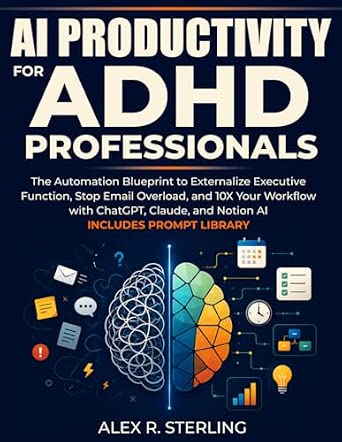 AI Productivity for ADHD Professionals: Automation Blueprint to Externalize E…View on Amazon →
 - 3
 Mastering Claude AI: The Complete Practical Guide to Prompt Engineering, Proj…View on Amazon →
 - 4
 AI Prompts for Productivity and Time Management: 500 Powerful Prompts to Work…View on Amazon →
 - 5
 Master AI for Beginners: Develop Artificial Intelligence Basics, Understand M…View on Amazon →
 - 6
 AI Tools for Everyone: Your Guide to Artificial IntelligenceView on Amazon →
 - 7
 AI-Powered Productivity & Prompt Engineering: A Practical System to Work Smar…View on Amazon →
 - 8
 Microsoft Copilot: A Practical Guide to Using AI in Word, Excel, PowerPoint,…View on Amazon →
 - 9
 AI Productivity Made Simple: How to Use ChatGPT, Automation Tools, Prompts, a…View on Amazon →
 - 10
 AI Tools for Productivity: Microsoft Copilot at Work for BeginnersView on Amazon →
 - 11
 How To Master Generative AI: Master AI Tools, Write Better Prompts, Boost Pro…View on Amazon →
Why AI Productivity Software Matters in 2026
These AI tools are transforming workplaces by automating routine tasks, enabling smarter collaboration, and providing tailored automation that saves time and reduces errors. For businesses, adopting top AI productivity software can lead to increased efficiency, cost savings, and competitive advantage. For individual professionals, these tools offer the ability to focus on higher-value work, improve accuracy, and manage workload more effectively. As AI integration becomes more widespread, understanding the best options available in 2026 helps users maximize their productivity and adapt to changing work environments.
Evolution of AI Productivity Tools in Recent Years
Over the past few years, AI productivity software has shifted from niche experimental tools to essential components of modern workflows. In 2024, Microsoft introduced Copilot for its Office suite, setting a new standard for integrated AI assistance. Since then, the market has expanded rapidly, with specialized solutions emerging for niche needs like prompt engineering, transcription, and task automation. Industry evaluations in early 2026 show a focus on seamless integration, user-friendly interfaces, and customizable automation as key differentiators. The ongoing development of large language models and automation frameworks continues to drive innovation, making AI tools more accessible and powerful than ever.
Remaining Questions About AI Productivity Tools in 2026
While the top tools have been evaluated based on features, integration, and user feedback, some uncertainties remain. It is not yet clear how these tools will evolve with upcoming AI model updates or how they will handle data privacy and security concerns at scale. Additionally, the long-term cost-effectiveness and user adoption rates across different industries are still being observed. The rapid pace of AI development suggests that new features or competitors could emerge within the next year, potentially reshaping the landscape.
Future Developments in AI Productivity Software
Expect continued innovation in AI productivity tools, with upcoming updates focusing on deeper integration with enterprise systems, enhanced automation capabilities, and improved user interfaces. Developers are likely to release more niche solutions targeting specific industries or workflows, alongside broader platforms that cater to both beginners and power users. As AI models become more sophisticated, features like real-time collaboration, predictive task management, and enhanced security are anticipated to become standard. Monitoring user feedback and industry trends will be key to understanding how these tools will evolve in the coming months.
Key Questions
How do I choose the best AI productivity software for my needs?
Assess your work requirements, technical comfort, and budget. Consider integration with your current tools, ease of use, and whether you need broad platforms like Microsoft Copilot or specialized tools like Claude AI. Prioritize solutions that align with your workflow and offer sufficient support and customization options.
Are free AI productivity tools effective for professional use?
Many free options can handle basic automation and prompt generation, suitable for casual or low-stakes tasks. However, for professional environments requiring reliability, advanced features, and support, paid plans typically offer better value and scalability.
What are the main benefits of AI productivity tools in 2026?
They automate routine tasks, improve collaboration, enable smarter workflows, and save time. These tools help users focus on high-value work, reduce errors, and adapt to increasingly digital work environments.
Will AI tools replace human workers in the near future?
While AI can automate many repetitive tasks, current tools primarily enhance human productivity rather than replace workers. They serve as assistants, enabling humans to focus on strategic, creative, or complex decision-making roles.
How secure are AI productivity tools regarding data privacy?
Data security varies across providers. Leading solutions implement encryption, compliance standards, and privacy controls, but users should review each tool’s policies and choose those with robust security features, especially for sensitive information.
Source: ThorstenMeyerAI.com
Halloween Picks
halloween
As an affiliate, we earn on qualifying purchases.