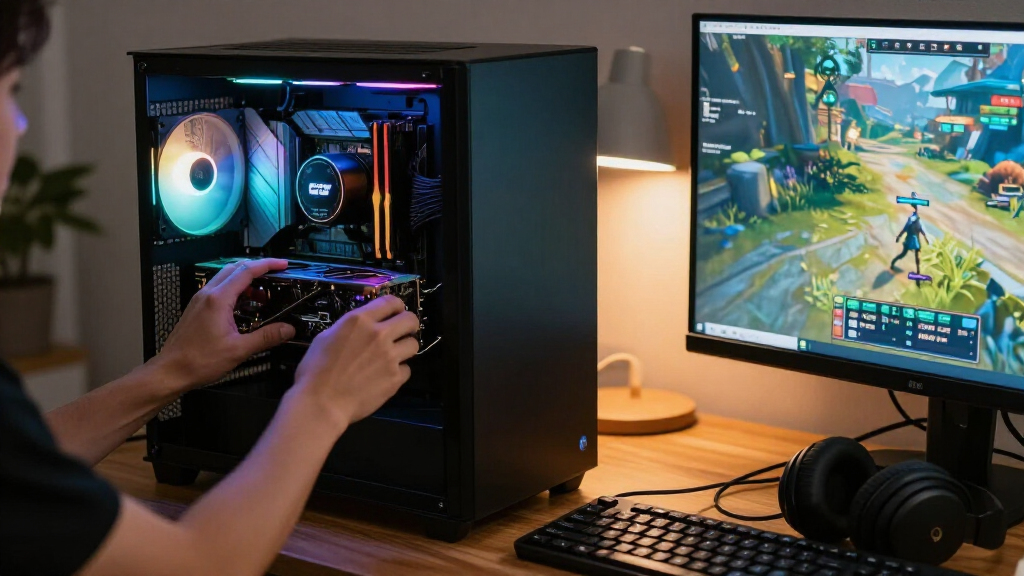

🔍 Read the full analysis: 10 Best Graphics Cards For Gaming And Everyday Use In 2026 on ThorstenMeyerAI.com

Get business pricing on monitors, keyboards and dev gear
- Business-only prices and quantity discounts
- Tax-exempt purchasing
- Multiple users, one account, clear invoices
TL;DR
A newly published 2026 graphics-card roundup ranks ten cards by intended use, led by the GIGABYTE RX 9070 XT Gaming OC and premium RTX 5080 variants, with the ASUS RTX 5070 as a measured mid-range option. Legacy GT 730, GT 740, and RX 580 cards are flagged as targeted upgrades for display or older-system needs rather than modern gaming solutions.
A new 2026 graphics-card ranking from ThorstenMeyerAI.com names the GIGABYTE Radeon RX 9070 XT Gaming OC 16G as the starting point for most gaming PC builds, leading a ten-card list that spans current-generation gaming GPUs down to legacy display cards. The guide groups the field into a high-performance tier of RX 9070 XT and RTX 5080 models with 16GB of memory, a more restrained ASUS Prime GeForce RTX 5070, and older GT 730, GT 740, and RX 580 cards that serve narrow upgrade needs. The ranking matters because it sorts cards by the job a buyer actually needs done, rather than by model names or memory figures alone.
The author states the ranking method directly: cards were ranked “by how well they suit the likely job implied by a graphics-card purchase” — current gaming, upgrading an older PC, or adding display support. Weighting favored GPU generation, memory capacity, and position within the product family, with cooler design and physical fit used to separate variants. The ten picks, in the guide’s order of recommendation:
1. GIGABYTE Radeon RX 9070 XT Gaming OC 16G
The overall recommendation for most gaming PCs, pairing a current-generation GPU with 16GB of memory. The guide treats it as the default choice for a modern gaming build.
2. ASUS Prime Radeon RX 9070 XT
Shares the same GPU class as the GIGABYTE card; the guide advises buyers to compare the two as separate board designs, since cooler design, card dimensions, and case fit differ more than the name suggests.
3. ASUS ROG Astral GeForce RTX 5080 (White)
The first of three RTX 5080 options, described as a premium variant that emphasizes a distinctive build appearance alongside high-end performance and 16GB of memory.
4–5. Additional RTX 5080 Variants
The remaining two RTX 5080 models are positioned as premium variants of the same GPU; the guide recommends comparing cooler performance and physical fit rather than assuming interchangeability.
6. ASUS Prime GeForce RTX 5070
A “more measured option” — a current-generation card with a step down in memory capacity and positioning compared with the 16GB tier, for buyers with less demanding targets.
7. Radeon RX 580 (8GB)
Placed between the legacy display cards and modern gaming GPUs. Its 8GB of memory may suit an older budget system, but the guide warns its age makes platform condition and game expectations the deciding factors.
8. GeForce GT 740 (Low-Profile)
Its low-profile format addresses a physical constraint for compact cases that full-size gaming cards cannot — a display and compact-PC solution, not a gaming card.
9. GeForce GT 730
Serves buyers who need multiple display outputs rather than gaming capability, according to the guide.
10. Remaining Legacy Option
The guide’s lower-ranked cards round out the list as targeted upgrades; all are explicitly described as “not direct substitutes” for the newer GPUs.
The guide also sets out four buying checks: match the GPU to your games and display resolution; measure case fit before choosing a cooler variant; confirm power supply capacity and connectors, especially for RTX 5080 and RX 9070 XT cards; and choose memory for the workload rather than the largest number, since “more memory alone does not make an older GPU fast.”
The 10 picks
- 1
 ASUS ROG Astral GeForce RTX 5080 16GB GDDR7 White OC Edition Graphics CardView on Amazon →
- 2
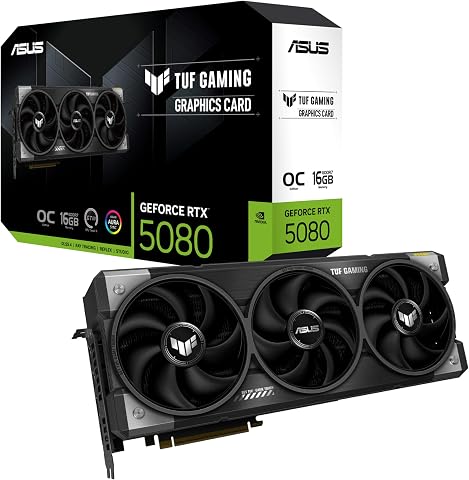 ASUS TUF Gaming GeForce RTX 5080 16GB GDDR7 OC Edition Graphics CardView on Amazon →
- 3
 GIGABYTE GeForce RTX 5080 Gaming OC 16G Graphics CardView on Amazon →
- 4
 ASUS Prime NVIDIA GeForce RTX 5070 OC Edition Graphics CardView on Amazon →
- 5
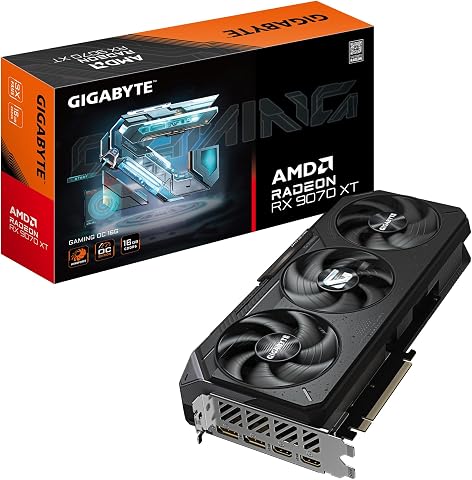 GIGABYTE Radeon RX 9070 XT Gaming OC 16G Graphics CardView on Amazon →
- 6
 ASUS Prime Radeon RX 9070 XT 16GB GDDR6 OC Edition Gaming Graphics CardView on Amazon →
- 7
 ASRock Radeon RX 9070 Challenger 16GB OC Graphics Card, RDNA 4, 2520MHz Boost…View on Amazon →
- 8
 Kelinx AISURIX RX 580 8GB GDDR5 Graphics Card with Dual HDMI and DisplayPortView on Amazon →
- 9
 GT 730 Graphics Card 4GB DDR3 64-bit with HDMI, DisplayPort, VGAView on Amazon →
- 10
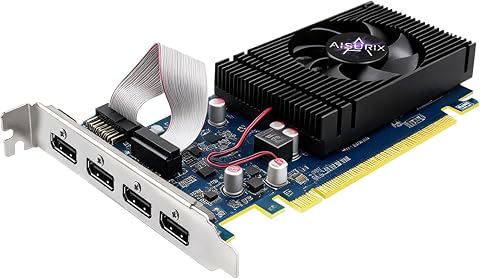 AISURIX GT 740 4GB GDDR5 Low-Profile Graphics Card with 4 HDMI PortsView on Amazon →
Why the Right Pick Saves a Build
Graphics cards remain one of the most expensive and least forgiving components in a PC build. A mismatch produces one of two failures the guide repeatedly warns about: a card that physically does not fit the case, or a power supply that cannot support the upgrade, which can stall or destabilize a build. The ranking’s practical value is in forcing buyers past model-name comparison toward checks the author calls decisive — game-specific performance tests, exact card dimensions, and manufacturer power recommendations with headroom for the rest of the system. For budget buyers, the guide’s demotion of the GT 730, GT 740, and RX 580 to “targeted upgrades” is a caution against assuming older hardware with attractive prices can meet modern gaming expectations.
The 2026 GPU Landscape Behind the List
The list reflects a market split between current-generation RDNA and RTX hardware — the RX 9070 XT and RTX 50-series families, both offering 16GB memory at the top tier — and a long tail of legacy cards still sold for compact and multi-monitor use. Within each GPU class, board partners such as ASUS, GIGABYTE, and ROG sell multiple variants that differ mainly in cooler design, size, and appearance rather than core performance, which is why the guide compares the two RX 9070 XT boards as distinct products rather than interchangeable packages. The memory range across the ten picks spans from 4GB to 16GB, with the RX 580’s 8GB marking the middle ground between display cards and modern gaming GPUs.
“I’d start with the GIGABYTE Radeon RX 9070 XT Gaming OC 16G, which pairs a current-generation GPU with 16GB of memory.”
— ThorstenMeyerAI.com guide author
What the Ranking Leaves Open
The guide is a single outlet’s editorial assessment, not a benchmark-based comparison — it contains no frame-rate numbers, pricing, or test results, and advises readers to seek performance tests for their specific games and resolution. Exact specifications for three of the ten picks are not fully itemized in the source material, including the identity of two of the three RTX 5080 variants and the tenth-ranked legacy card. Availability and street pricing for 2026 models are not addressed, and conclusions about cooler noise and temperatures are presented as design cues rather than measured findings.
Before You Order, Verify Three Things
Buyers following the guide should confirm exact card dimensions against their case, verify power supply wattage and connectors against manufacturer recommendations with headroom for the CPU and other components, and review independent performance tests for the games and resolution they actually use. The guide also suggests planning for the next display upgrade when choosing a card, provided the rest of the PC can keep pace. Updated rankings and pricing may follow as 2026 GPU availability and newer models develop.
Key Questions
Which graphics card does the 2026 guide recommend most?
The GIGABYTE Radeon RX 9070 XT Gaming OC 16G is the guide’s starting point for most gaming PCs, offering a current-generation GPU with 16GB of memory.
Is the RX 580 still a good gaming buy in 2026?
Only for narrow cases. The guide says its 8GB of memory may suit an older budget system, but its age and platform condition make game expectations the deciding factor — it is not a substitute for modern GPUs.
What is the difference between the RX 9070 XT boards on the list?
They share the same GPU class. The guide advises comparing the ASUS Prime and GIGABYTE Gaming OC as separate board designs, since cooler design, dimensions, and case fit differ more than the model names suggest.
Do I need a new power supply for an RTX 5080 or RX 9070 XT?
Possibly. The guide says powerful RTX 5080 and RX 9070 XT cards deserve particular attention on power supply capacity and connectors, with headroom left for the processor and rest of the system.
Why would anyone buy a GT 730 or GT 740 in 2026?
For display support and compact builds, not gaming. The guide says the GT 730’s multiple display outputs and the GT 740’s low-profile format address needs that full-size gaming cards do not.
Source: ThorstenMeyerAI.com
Fall Picks
fall essentials
As an affiliate, we earn on qualifying purchases.